
The Linguistic Bottleneck in Electronic Procurement
In the fast-paced world of electronic component sourcing, the gap between engineering design and procurement execution is often widened by a surprisingly simple barrier: language. While datasheets and schematic symbols are universal, the verbal and textual communication required to source these components is fraught with ambiguity. Nowhere is this more evident than in the potentiometer pronunciation and the subsequent shorthand used by engineering teams. When a design engineer dictates a Request for Quote (RFQ) or uses voice-to-text software to update an Enterprise Resource Planning (ERP) system, the phonetic complexities of this 14-letter word frequently trigger cascading sourcing errors, inventory mismatches, and delayed production runs.
For hardware startups and enterprise manufacturing teams alike, understanding how linguistic friction impacts the supply chain is critical. A mispronounced or poorly transcribed component name doesn't just result in a typo; it results in the wrong taper, the wrong form factor, or entirely irrelevant inventory being procured from global distributors. This guide explores the intersection of component nomenclature, phonetic transcription errors, and actionable strategies for standardizing your procurement database.
Decoding Potentiometer Pronunciation: Regional and Phonetic Variations
Before addressing the supply chain impact, we must establish the baseline phonetic variations of the word. According to Merriam-Webster, the standard American English pronunciation is transcribed as pō-ˌten(t)-shē-ˈä-mə-tər. However, in practice, the pronunciation varies wildly across engineering floors, university labs, and international manufacturing hubs.
The "Sh" vs. "S" Dilemma
The most common point of failure in verbal communication is the medial consonant cluster. While the correct pronunciation relies on a soft "sh" sound (po-TEN-shee-OM-eh-ter), many junior engineers and non-native English speakers default to a hard "s" (po-TEN-see-OM-eh-ter). When communicating with overseas distributors or using voice-recognition software trained on generalized conversational datasets, the hard "s" often leads to transcription errors like "potential meter" or "potentiasometer," completely breaking automated search queries in platforms like Octopart or Digi-Key's parametric search engine.
Regional Shorthand and Lab Slang
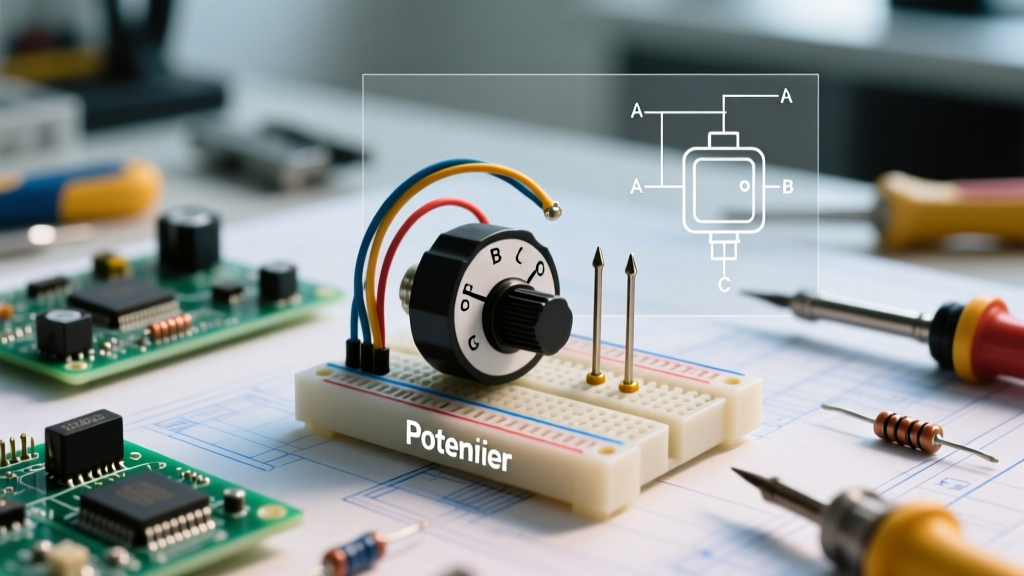
In North American and European labs, the word is almost universally truncated to "pot." In the UK and parts of the Commonwealth, you may also hear "variable resistor" used interchangeably in verbal briefings, though technically, a variable resistor is a two-terminal rheostat configuration, whereas a potentiometer is a three-terminal voltage divider. This semantic overlap is a primary driver of procurement errors when buyers are not electrically trained.
Voice Dictation and ERP Search Failures
Modern procurement relies heavily on digital PLM (Product Lifecycle Management) systems like Arena or Agile, and ERP platforms like SAP. Engineers frequently use voice dictation on mobile devices to log inventory requests or send quick RFQ emails to brokers. The phonetic ambiguity of potentiometers and their sub-types creates severe transcription failures.
Below is a breakdown of common voice-to-text and ERP search errors that occur when engineering shorthand is processed by non-specialized software:
| Intended Spoken Term | Common Voice-to-Text Error | ERP / Distributor Search Result | Sourcing Impact |
|---|---|---|---|
| "Ten-K Pot" | "Ten-K Pot" / "Ten Case" | Potting compounds, cookware | Wrong category; delayed RFQ |
| "Log Pot" | "Lug Pot" / "Log" | Terminal lugs, data logging modules | Audio taper missed; linear ordered |
| "Trimpot" | "Trim pot" / "Trim pot" | Mechanical hardware, gardening | Irrelevant inventory flagged |
| "Rheostat" | "Reostat" / "Rio stat" | No match / Obsolete parts | Sourcing bottleneck; manual override |
| "Potentiometer" | "Potential meter" | Voltage testers, multimeters | Wrong test equipment ordered |
As the table illustrates, relying on the spoken word or casual shorthand without strict textual standardization leads to massive inefficiencies. A buyer searching for "trim pots" on an industrial supply site might be presented with mechanical trimming pots for manufacturing machinery rather than the Bourns 3296 series cermet trimmers the engineer actually needs.
Shorthand Nomenclature: Pots, Trimmers, and Rheostats
To eliminate sourcing errors, procurement teams must enforce strict nomenclature guidelines that map spoken engineering slang to exact manufacturer terminologies. Understanding the functional differences—and how they are documented in distributor catalogs—is essential for accurate inventory management.
1. The Standard Potentiometer (Panel Mount)
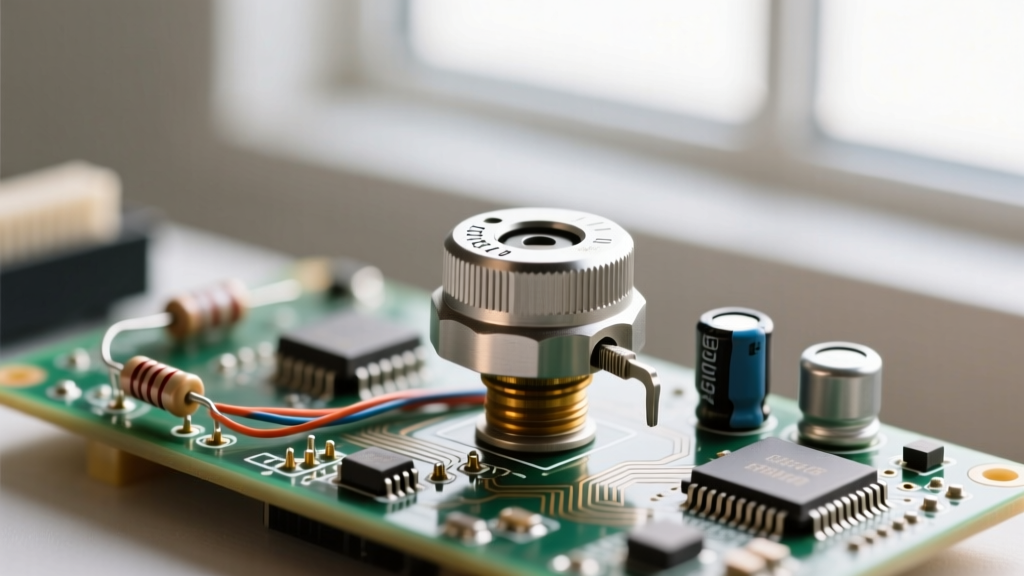
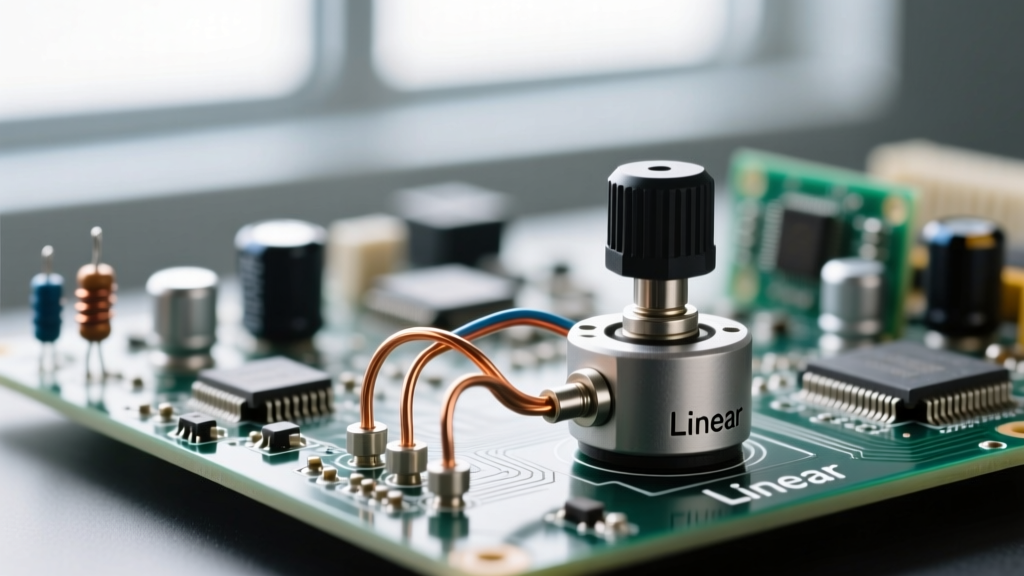
Often called a "panel pot," these are user-facing components like volume knobs. The industry standard for audio applications is the Alps Alpine RK09 series. When an engineer asks for a "audio pot," the buyer must translate this to Logarithmic Taper (Audio Taper). If the buyer simply searches for "10K potentiometer" without specifying the taper, they will likely receive Linear Taper (B-Taper) components, which will cause severe volume curve issues in the final audio product.
2. Trimmers (Trimpots)
Used for board-level calibration, these are rarely adjusted after initial setup. The term "trimpot" is actually a portmanteau trademarked decades ago but now used generically. Sourcing agents must look for terms like Cermet Trimmer or Multi-Turn Precision Potentiometer. A classic example is the Bourns 3296W-1-103LF, a 10k ohm, top-adjust, 25-turn cermet trimmer. Dictating this part number over a phone call to a broker is nearly impossible; it must be communicated via exact alphanumeric strings.
3. Rheostats
Technically a two-terminal configuration used for current control (like a heavy-duty dimmer switch), engineers often mispronounce this as "ree-oh-stat" or "rye-oh-stat." High-power wirewound rheostats are highly specialized. If a buyer misinterprets the phonetic spelling, they may source low-wattage carbon film components that will instantly burn out under load.
Overcoming Language Barriers in Global Supply Chains
When sourcing from Asian manufacturing hubs, such as the Huaqiangbei electronics markets in Shenzhen or dealing with overseas contract manufacturers, English pronunciation becomes entirely irrelevant. Relying on phonetic English translations of component names will result in severe miscommunications.
Pro-Tip for Global Sourcing: When communicating with PCB assembly houses in China, abandon the word "potentiometer" entirely. Instead, use the standardized Mandarin technical term: 可变电阻 (kě biàn diàn zǔ), which translates directly to "variable resistor." Providing the exact Chinese characters alongside the manufacturer part number (MPN) in your Bill of Materials (BOM) eliminates all ambiguity and prevents the factory from substituting a cheap linear slider for a precision rotary dial.
Furthermore, always rely on the Manufacturer Part Number (MPN) rather than descriptive text. Descriptive text like "10K Ohm Pot, Right Angle, Knurled Shaft" leaves too much room for interpretation. The MPN acts as the universal linguistic bridge across all global supply chains.
Standardizing Your Inventory Database
To prevent potentiometer pronunciation and shorthand from corrupting your inventory database, engineering and procurement leads must implement strict aliasing rules within their CAD libraries and ERP systems.
Actionable Steps for PLM and ERP Setup:
- Disable Fuzzy Search for Critical Components: Configure your ERP to require exact MPN matches for active components. Fuzzy searching "pot" will inevitably pull in potting compounds, solder pots, and test equipment.
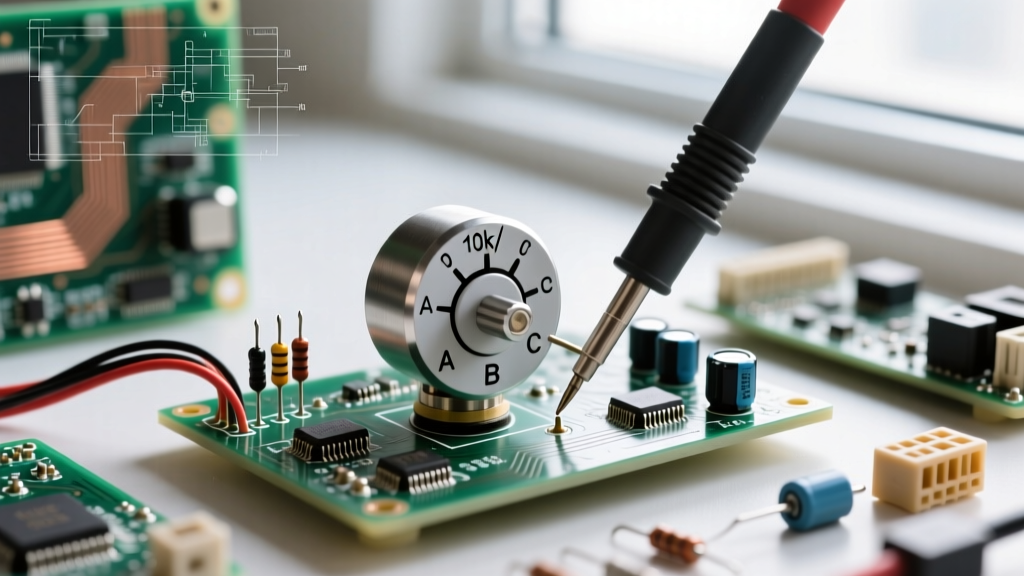
- Standardize Taper Nomenclature: Force a drop-down selection for taper types in your BOM management software. Options should be strictly limited to: Linear (B), Logarithmic/Audio (A), and Reverse Logarithmic (C). Never allow free-text entry like "log pot."
- CAD Library Aliasing: In Altium 365 or KiCad, ensure the component symbol name is the exact MPN (e.g., 3296W-1-103LF), while the descriptive comment field reads TRIMMER, CERMET, 10K, 25-TURN. This ensures that when the BOM is exported to a CSV for the purchasing team, the descriptive text aligns with distributor parametric filters.
- Create a Cross-Reference Glossary: Maintain an internal wiki mapping lab slang to procurement terms. (e.g., "Slider" = Slide Potentiometer; "Joystick Pot" = Dual-Axis Analog Stick; "Soft Pot" = Membrane Linear Touch Sensor).
Summary Checklist for Distributor Communication
The next time you need to source a variable resistor, remember that your verbal shorthand is the enemy of efficient procurement. Before submitting an RFQ or updating an inventory request, verify the following:
- Have I replaced the word "pot" with "potentiometer" or "trimmer" in all written communications?
- Is the taper explicitly defined (Linear/B vs. Audio/A) rather than implied by the word "volume"?
- Have I provided the exact Manufacturer Part Number (MPN) to bypass all phonetic and translation errors?
- If sourcing internationally, have I included the localized technical term or universal schematic symbol to ensure factory comprehension?
By treating component nomenclature with the same precision as your schematic routing, you eliminate the linguistic bottlenecks that cause costly sourcing delays. In modern electronics manufacturing, clear data always outperforms spoken shorthand.