
The Core Physics: Defining What Is Electrically Charged
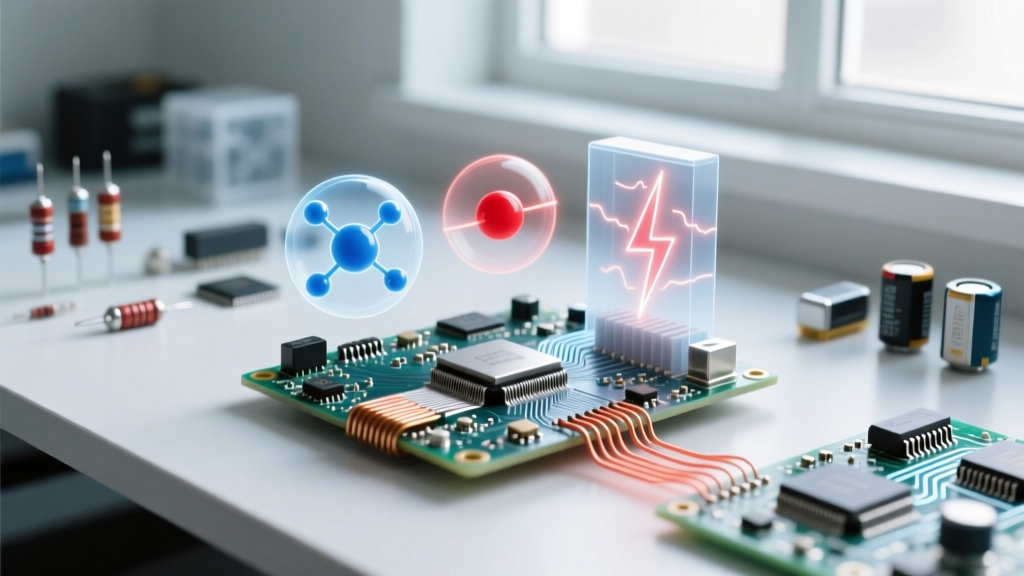
When electronics hobbyists, electrical engineers, and physics students ask what is electrically charged, they are probing one of the most fundamental properties of matter. At the subatomic level, electrical charge is a physical property that causes particles to experience a force when placed in an electromagnetic field. There are two primary types of charge: positive (carried by protons) and negative (carried by electrons).
A critical misconception in DIY electronics is that both protons and electrons move to create charge imbalances. In solid conductors like copper wire, protons are locked tightly within the atomic nucleus. Therefore, an object becomes electrically charged almost exclusively through the transfer of electrons. When a material gains electrons, it becomes negatively charged; when it loses electrons, it becomes positively charged. The fundamental unit of this charge is the elementary charge ($e$), which is approximately $1.602 \times 10^{-19}$ Coulombs, as detailed by Georgia State University HyperPhysics.
Static vs. Dynamic Charge: A Behavioral Comparison
To truly understand charge, we must compare how it behaves in different states. In electrical fundamentals, charge is categorized into two distinct behavioral modes: electrostatic (static electricity) and electrodynamic (current electricity). Both involve the exact same electrons, but their macroscopic behavior dictates how we design circuits and protect components.
| Characteristic | Electrostatic Charge (Static) | Electrodynamic Charge (Current) |
|---|---|---|
| Electron Behavior | Accumulated and stationary on a surface | Continuous flow through a conductive medium |
| Voltage vs. Current | Extremely high voltage, near-zero current | Controlled voltage, continuous current |
| Duration | Persistent until dissipated or discharged | Sustained as long as the EMF (voltage) is applied |
| Typical Medium | Insulators and isolated conductors | Conductors and semiconductors |
| Real-World Example | Walking across a nylon carpet (up to 35,000V) | Powering an Arduino via USB (5V, ~500mA) |
The Triboelectric Series: How Objects Become Charged
How does an object actually gain or lose these electrons? The most common mechanism in everyday environments is the triboelectric effect—charge transfer via friction and contact between dissimilar materials. The ESD Association utilizes the Triboelectric Series to rank materials based on their tendency to gain or lose electrons.
When two materials from different ends of this spectrum rub together, the material higher on the list will lose electrons (becoming positively charged), while the material lower on the list will steal those electrons (becoming negatively charged).
Comparative Triboelectric Chart
- Most Positive (+): Rabbit Fur, Glass, Human Hair, Nylon
- Neutral Zone: Cotton, Wood, Amber, Hard Rubber
- Most Negative (-): Polyester, Polyurethane, PVC, Teflon (PTFE)
Practical Insight: This is why storing sensitive microcontrollers in standard polyethylene plastic bags is a catastrophic mistake. The friction of the plastic bag rubbing against the environment generates massive negative surface charges, which will arc into the IC pins the moment you reach inside.
Charge Mobility: Conductors, Insulators, and Semiconductors
Once an object is electrically charged, its ability to move that charge depends entirely on its atomic band structure. This comparison is the bedrock of all wiring and component selection.
- Conductors (e.g., Copper, Gold, Aluminum): The valence band and conduction band overlap. Electrons require virtually zero energy to move. If a conductor is charged, the electrons instantly repel each other and migrate to the outer surface of the object (the Faraday Cage effect).
- Insulators (e.g., PVC, Teflon, Ceramic): Possess a massive bandgap (typically >5 eV). Electrons are tightly bound to their parent atoms. If an insulator becomes charged, the charge remains trapped in the exact localized spot where it was deposited, creating intense localized electrostatic fields.
- Semiconductors (e.g., Silicon, Germanium): Feature a narrow bandgap (~1.1 eV for Silicon). They act as insulators at absolute zero but become conductive when thermal energy or an external electric field is applied. This controllable charge mobility is what makes logic gates and transistors possible.
Real-World Failure Mode: ESD in Microcontrollers
Understanding what is electrically charged is not just academic; it is critical for preventing Electrostatic Discharge (ESD) damage. Modern microcontrollers, such as the STM32 or ATmega328P, rely on MOSFETs (Metal-Oxide-Semiconductor Field-Effect Transistors). The gate of a MOSFET is insulated from the channel by an incredibly thin layer of silicon dioxide (SiO2).
The dielectric breakdown strength of SiO2 is roughly 10 Megavolts per centimeter (10 MV/cm). In a modern 65nm or smaller process node, the gate oxide might be only 2 to 5 nanometers thick. This means it takes a mere 20 to 50 volts of static charge to punch a microscopic hole through the gate oxide, permanently shorting the transistor and destroying the microcontroller. Because human nerves cannot feel an ESD shock until it reaches approximately 3,000V, you can easily destroy a $15 microcontroller with a 500V static shock without ever feeling a thing.
Comparing ESD Testing Models
Engineers use standardized models to test how components handle sudden charge equalization:
- Human Body Model (HBM): Simulates a person touching a device. It uses a 100pF capacitor discharged through a 1.5kΩ series resistor. This limits the peak current and stretches the discharge time to roughly 150 nanoseconds.
- Charged Device Model (CDM): Simulates the IC itself becoming charged (e.g., sliding down a plastic feeder tube in a pick-and-place machine) and discharging into a grounded PCB trace. CDM events have virtually no series resistance, resulting in discharge times of less than 1 nanosecond and massive current spikes that melt internal silicon interconnects.
Practical Troubleshooting: Managing Unwanted Charge
If you are building a DIY electronics lab, you must implement systems to safely bleed off static charge before it reaches your components. Here is a comparison of mitigation strategies and their underlying electrical principles:
The 1 Megohm Wrist Strap Resistor
ESD wrist straps are mandatory for handling bare PCBs. However, a wrist strap is essentially a wire connecting your body directly to earth ground. If you accidentally touch a live 120V AC mains wire while wearing a direct-ground strap, the current will flow through your heart, which can be lethal. To prevent this, every reputable ESD wrist strap contains a 1 Megohm (1MΩ) safety resistor built into the snap connector.
The human body has a typical capacitance of 100pF to 200pF. When combined with the 1MΩ resistor, it creates an RC (Resistor-Capacitor) circuit. The time constant ($\tau = R \times C$) is roughly 100 to 200 microseconds. This means 99.9% of your body's static charge will safely dissipate to ground in under 1 millisecond—fast enough to protect your electronics, but slow enough to limit lethal AC current to a safe fraction of a milliamp if you touch a live wire.
Ionization vs. Humidity Control
Because insulators (like plastic casings and FR4 fiberglass PCBs) cannot be grounded to drain charge, you must use alternative methods to neutralize them:
- Humidity Control: Maintaining ambient humidity between 40% and 60% RH allows a microscopic layer of water to form on surfaces. Water is slightly conductive, which naturally bleeds off static charge. Below 30% RH, static generation spikes exponentially.
- Corona Ionizers: These devices use high-voltage emitters to strip electrons from surrounding air molecules, creating a balanced cloud of positive and negative ions. When a negatively charged plastic enclosure is placed in this ion cloud, it attracts positive ions until its surface charge reaches absolute zero.
Expert Insight: Never rely on anti-static spray as a permanent solution for your DIY lab mats. These sprays rely on hygroscopic chemicals that attract moisture from the air to create a conductive path. In the dead of winter when your indoor humidity drops to 15%, the anti-static spray becomes completely useless, leaving your expensive semiconductors vulnerable to catastrophic CDM and HBM events.
Summary
Ultimately, answering the question of what is electrically charged requires looking at both the microscopic movement of electrons and the macroscopic behavior of materials. Whether you are calculating the voltage drop across a copper wire or trying to prevent a 10,000V static arc from destroying a surface-mount MOSFET, mastering the comparison between static accumulation and dynamic flow is the foundation of all electrical engineering.