
The Hidden Dangers of Outdated Wiring Practices
Electrical safety is not a static discipline. The National Electrical Code (NEC), published by the National Fire Protection Association (NFPA), undergoes rigorous revisions every three years to address emerging hazards, new materials, and advanced technologies. For professional electricians, contractors, and serious DIYers, relying on knowledge from a decade ago is not just a recipe for failed inspections—it is a direct safety hazard. Enrolling in an electrical code update class is the most effective way to bridge the gap between legacy habits and modern safety mandates.
According to the Electrical Safety Foundation International (ESFI), electrical malfunctions cause tens of thousands of home fires annually, resulting in billions of dollars in property damage and hundreds of fatalities. Many of these incidents stem from outdated wiring practices, such as improper grounding of Metal-Clad (MC) cable, missing Arc-Fault Circuit Interrupters (AFCI), or ignored torque specifications. A comprehensive code update course dissects these vulnerabilities, transforming abstract codebook language into actionable, life-saving field practices.
Real-World Failure Mode: The Torque Specification Mandate
One of the most critical safety shifts emphasized in any modern electrical code update class revolves around NEC Article 110.14(D). For decades, the industry relied on the 'wrist torque' method—tightening terminal screws until they felt secure. This subjective approach has been conclusively linked to thermal runaway and arc faults.
The NEC now strictly requires the use of calibrated torque screwdrivers to achieve manufacturer-specified values. For example, a standard 15-amp duplex receptacle typically requires between 12 and 14 inch-pounds of torque. Under-torquing creates a high-resistance connection that generates excessive heat under load, while over-torquing can strip the screw head or fracture the terminal plate. Taking a continuing education course ensures you understand not just the 'what' of this rule, but the 'why,' backed by thermal imaging data and failure analysis.
What to Expect in a Modern Electrical Code Update Class
A high-quality certification course does more than read the codebook aloud; it provides context, visual aids, and practical applications for complex wiring scenarios. When preparing for the 2026 NEC adoption cycle, a robust curriculum will cover several vital domains:
- GFCI and AFCI Expansion (Article 210 & 406): Understanding the continuous expansion of Ground-Fault and Arc-Fault protection into previously exempt areas, such as crawl spaces, unfinished basements, and specific HVAC outdoor circuits.
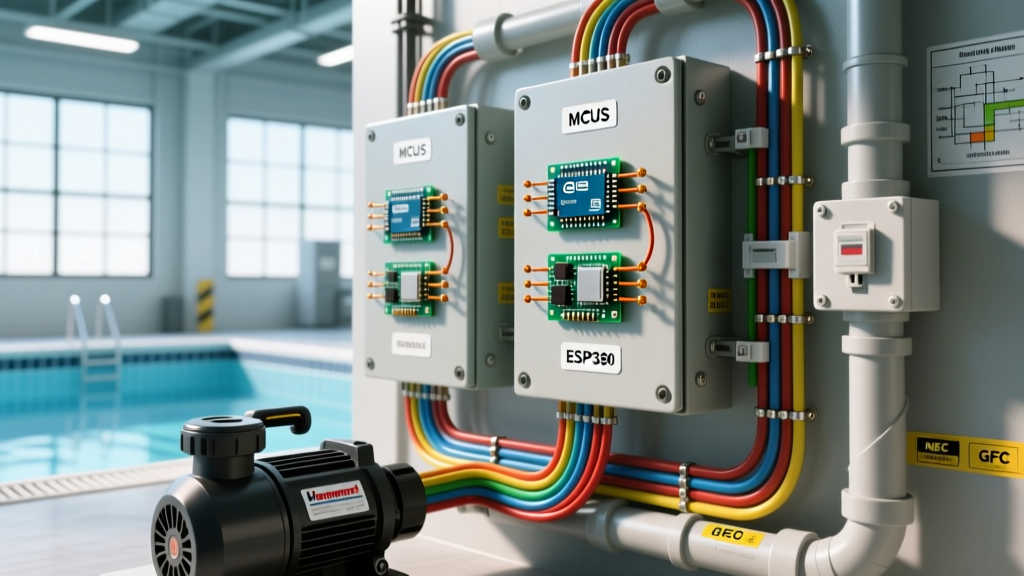
- Metal-Clad (MC) Cable Grounding (Article 250 & 330): Differentiating between standard MC cable and continuous corrugated aluminum sheath MC cable, specifically regarding when the sheath can serve as an Equipment Grounding Conductor (EGC) versus when a dedicated internal EGC wire is mandatory.
- Energy Storage Systems (ESS) and Solar (Article 480 & 706): Safety protocols for residential battery walls, rapid shutdown requirements, and DC disconnect sizing.
- Working Space and Clearances (Article 110.26): Updated enforcement on service panel clearances, especially in residential builds where architectural designs frequently encroach on electrical working spaces.
'The National Electrical Code is the minimum standard for safety, not a design manual. When we stop learning, we start compromising the safety of the families living in the homes we wire.'
— Senior Master Electrician & IAEI Instructor
ROI of Safety: Code Compliance vs. Callback Costs
Some contractors view the cost of continuing education as a burden. However, when analyzed through the lens of business sustainability and liability, an electrical code update class pays for itself on the very first job. Below is a comparative breakdown of the financial and safety implications of staying updated versus relying on outdated methods.
| Scenario | Direct Financial Cost | Hidden / Long-Term Costs | Safety & Liability Risk |
|---|---|---|---|
| Taking a 16-Hour CEU Code Class | $150 - $350 | Time away from the field (2 days) | Near Zero. Ensures compliance and optimal fire safety. |
| Failing Rough-In Inspection | $150+ Re-inspection Fee | Labor to rip out and replace non-compliant wiring (e.g., missing AFCIs) | Moderate. Delays project and damages contractor reputation. |
| Ignoring Torque Specs (110.14D) | $0 upfront (no tool purchase) | Post-installation panel fire, insurance subrogation, lawsuit | Catastrophic. High risk of property loss and fatal shock/fire. |
| Improper MC Cable Grounding | $0 upfront | Fault current cannot clear; breaker fails to trip during a short | Severe. Energized enclosures pose lethal shock hazards. |
Navigating the Transition to the 2026 NEC
The transition to a new code cycle is notoriously chaotic. Local jurisdictions adopt the NEC at different paces; some states adopt the 2026 NEC immediately upon publication, while others lag years behind. A premier electrical code update class will teach you how to navigate this jurisdictional patchwork. You will learn how to properly document code deviations, how to submit formal Requests for Information (RFIs) to local Authority Having Jurisdiction (AHJ) inspectors, and how to bid commercial projects accurately when the governing code cycle is in flux.
How to Choose the Right Certification Provider
Not all code classes are created equal. To ensure you are receiving accurate, E-E-A-T-compliant instruction, look for courses affiliated with recognized industry authorities:
- NFPA Seminars: Direct from the source. The NFPA 70 (NEC) training portal offers premier, albeit sometimes expensive, deep dives into code changes.
- IAEI Local Chapters: The International Association of Electrical Inspectors hosts local and national seminars. Learning directly from the inspectors who will grade your work provides unparalleled insight into local enforcement hotspots.
- JATC Programs: The Joint Apprenticeship and Training Committee offers rigorous, standardized continuing education for union and open-shop electricians alike.
- Independent Industry Experts: Organizations like Mike Holt Enterprises or EC&M webinars provide excellent, highly visual breakdowns of complex code articles.
Actionable Safety Checklist for Your Next Wiring Project
While taking a formal class is irreplaceable, you can immediately implement the following safety best practices derived from recent NEC updates on your next residential or commercial rough-in:
- Audit Your Torque Tools: Verify that your insulated torque screwdrivers are calibrated. If you do not own a set, purchase a certified kit immediately and keep the manufacturer's torque spec sheets in your work van.
- Map Out AFCI/GFCI Zones: Before pulling wire, review the latest NEC Article 210.8 and 210.12 requirements. Mark your blueprint with specific icons for dual-function (AFCI/GFCI) breakers to prevent ordering the wrong panel schedule.
- Verify MC Cable Listings: Check the stamp on your Metal-Clad cable. Ensure you know whether the armor is listed as a sufficient EGC or if you must pull a separate green grounding wire based on local AHJ amendments.
- Check Working Clearances: Use a tape measure to verify a full 30-inch width and 36-inch depth clearance in front of all service panels before securing the backing board to the framing.
Conclusion: Safety is a Continuous Journey
The electrical landscape is evolving faster than ever, driven by smart home technology, renewable energy integration, and advanced materials. Relying on the knowledge you acquired during your apprenticeship is no longer sufficient to guarantee the safety of your clients or the viability of your business. By committing to an electrical code update class, you are not just checking a box for license renewal; you are actively participating in the eradication of electrical fires and shock hazards. Stay current, stay compliant, and prioritize safety on every single termination.