
Why the DS3231 Real-Time Clock Module Dominates DIY Timekeeping
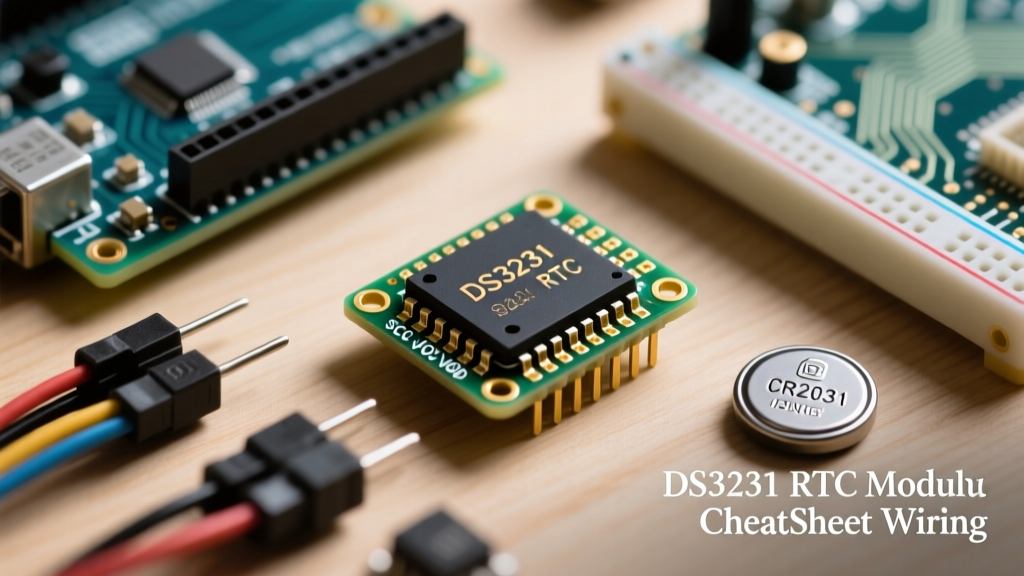
When building data loggers, automated lighting systems, or IoT weather stations with microcontrollers like the Arduino, ESP32, or Raspberry Pi, accurate timekeeping is non-negotiable. Relying on the internal millis() function or software-based network time protocols (NTP) fails the moment your device loses power or internet connectivity. Enter the DS3231 real-time clock module, the undisputed gold standard for hobbyist and prototyping timekeeping.
Unlike older, cheaper alternatives that rely on external 32kHz tuning fork crystals, the DS3231 integrates a Temperature-Compensated Crystal Oscillator (TCXO) and a temperature sensor directly into the silicon. According to the Analog Devices DS3231 datasheet, this internal architecture guarantees an accuracy of ±2 parts per million (ppm) from 0°C to +40°C. In real-world terms, this translates to a maximum time drift of roughly one minute per year, a staggering level of precision for a sub-$5 component.
Hardware Teardown: ZS-042 Clones vs. Premium Breakouts
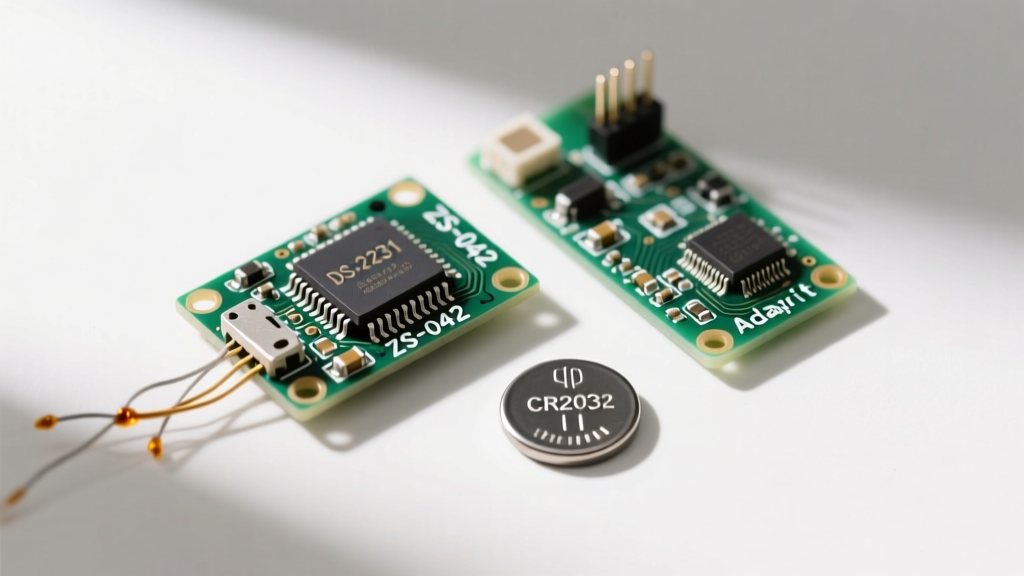
If you search for a DS3231 module online, you will inevitably encounter the ubiquitous blue ZS-042 breakout board. Priced around $1.50, it is a staple in DIY electronics kits. However, as a senior hardware reviewer, I must draw a sharp distinction between the bare DS3231MZ silicon chip and the peripheral circuitry implemented on these third-party carrier boards.
The ZS-042 Board: Features and Hidden Quirks
The ZS-042 is not just an RTC; it is a dual-purpose board. Alongside the DS3231 chip, it houses an AT24C32 I2C EEPROM chip (offering 32 kilobits of non-volatile memory) and a battery holder. The EEPROM is incredibly useful for storing calibration data or logging sensor states when the main microcontroller is powered down. However, the ZS-042's voltage regulation and battery charging circuit introduce a critical safety hazard that every maker must address before deployment.
Premium Alternatives: Adafruit and SparkFun
For production environments or mission-critical data logging, premium boards like the Adafruit Precision RTC Breakout ($9.95) offer superior engineering. These boards include proper level-shifting circuitry, correctly sized I2C pull-up resistors, and a safe, non-charging battery backup circuit. They also expose the SQW (Square Wave) interrupt pin cleanly, which is often poorly routed or omitted on ultra-cheap clones.
Critical Safety Warning: The LIR2032 Battery Charging Flaw
This is the most vital piece of information in this review. The ZS-042 module was designed with a charging circuit intended for an LIR2032 rechargeable lithium coin cell. This circuit consists of a surface-mount 400-ohm resistor and a diode connected directly to the VCC line.
WARNING: If you insert a standard, non-rechargeable CR2032 battery into an unmodified ZS-042 module and power the board via 5V, the charging circuit will attempt to charge the primary cell. This will cause the CR2032 to overheat, leak corrosive lithium hydroxide, or violently rupture, potentially destroying your microcontroller and causing injury.
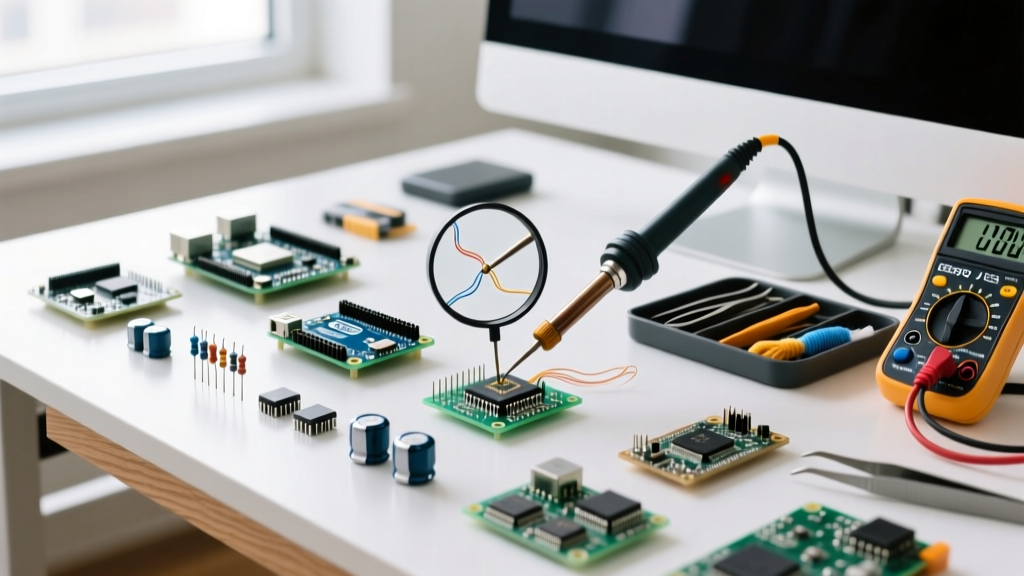
The Fix: Before using a standard CR2032 (which is highly recommended for its 10-year lifespan and stable 3.0V discharge curve), you must disable the charging circuit. Using a fine-tipped soldering iron and tweezers, simply desolder and remove the tiny SMD resistor located near the battery holder. Alternatively, you can cut the trace connecting the diode to the VCC pad. Once modified, the ZS-042 is perfectly safe and highly reliable.
DS3231 vs DS1307 vs DS3234: Specification Showdown
Choosing the right RTC depends on your project's bus architecture, environmental conditions, and budget. Below is a technical comparison of the most common Maxim/Analog Devices RTC chips found in maker spaces.
| Feature | DS1307 | DS3231 (I2C) | DS3234 (SPI) |
|---|---|---|---|
| Bus Interface | I2C | I2C | SPI |
| Oscillator Type | External 32kHz Crystal | Internal TCXO | Internal TCXO |
| Typical Accuracy | ±20 to ±60 ppm (Temp dependent) | ±2 ppm (0°C to +40°C) | ±2 ppm (0°C to +40°C) |
| Time Drift / Year | ~10 to 30 minutes | ~1 minute | ~1 minute |
| Operating Voltage | 4.5V - 5.5V (Strict) | 2.3V - 5.5V (Flexible) | 2.0V - 5.5V (Flexible) |
| Best Use Case | Legacy repairs, basic 5V Arduino clocks | IoT, ESP32, Raspberry Pi, precision logging | High-speed SPI buses, industrial noise environments |
As the table illustrates, the DS1307 is practically obsolete for new designs. Its reliance on an external crystal makes it highly susceptible to parasitic capacitance and temperature fluctuations. If your project will experience outdoor temperature swings, the DS1307 will drift drastically, whereas the DS3231's internal TCXO actively compensates for thermal variance.
I2C Wiring Framework and Pull-Up Resistor Logic
Wiring the DS3231 real-time clock module to a microcontroller is straightforward, but I2C bus physics require attention to detail. The DS3231 operates at the default I2C address 0x68. The AT24C32 EEPROM on the ZS-042 board sits at 0x57.
Standard 4-Wire Connection
- VCC: Connect to 5V (Arduino Uno/Mega) or 3.3V (ESP32/Raspberry Pi). The DS3231MZ chip is tolerant of both, but matching your logic level is best practice.
- GND: Connect to the common ground.
- SDA: Serial Data line. Connect to the hardware SDA pin (A4 on Uno, GPIO 21 on ESP32).
- SCL: Serial Clock line. Connect to the hardware SCL pin (A5 on Uno, GPIO 22 on ESP32).
The Pull-Up Resistor Dilemma
I2C is an open-drain protocol; it requires pull-up resistors to function. The Adafruit boards include 10kΩ pull-ups onboard. The ZS-042 boards, however, often omit them or use weak, incorrectly valued resistors. If your I2C scanner script fails to find the 0x68 address, you must manually add 4.7kΩ pull-up resistors between the SDA/SCL lines and the VCC rail. Without them, signal edges become sluggish, leading to corrupted time reads and bus lockups.
Real-World Troubleshooting: Time Drift and I2C Bus Lockups
Even with a perfect chip, implementation errors can ruin your timekeeping. Here are the most common failure modes I encounter in the field and how to resolve them.
1. Sudden Time Resets to Jan 1, 2000
If your RTC resets every time main power is removed, your battery backup circuit is failing. Check the voltage of the CR2032. The DS3231 requires a minimum of 2.5V on the VBAT pin to maintain the oscillator in low-power mode. If you are using a cheap, depleted, or incorrectly installed coin cell, the chip will lose state. Furthermore, ensure the 'OSF' (Oscillator Stop Flag) bit in the control register is being cleared via your software library upon initialization.
2. I2C Bus Lockups on Long Cable Runs
If you are mounting the RTC inside a weatherproof enclosure away from your microcontroller, long I2C wires act as antennas, picking up EMI and causing the SDA line to get stuck in a LOW state. To fix this, keep I2C traces under 30cm, use twisted-pair wiring for SDA/SCL, or switch to a DS3234 SPI-based module, which is vastly superior for noisy, long-distance industrial environments.
3. Leveraging the SQW Pin for ESP32 Deep Sleep
For battery-powered IoT nodes, keeping the ESP32 awake to poll the time via I2C wastes milliamps of current. The DS3231 features an SQW/INT pin that can be programmed to output a 1Hz square wave or trigger a hardware interrupt at a specific alarm time. By wiring the SQW pin to an RTC-capable GPIO on the ESP32, you can put the microcontroller into Deep Sleep (consuming mere microamps) and let the DS3231 wake it up exactly when it is time to take a sensor reading. The Arduino RTClib documentation provides excellent examples on configuring Alarm 1 and Alarm 2 registers for this exact purpose.
Final Verdict: Which DS3231 Board Should You Buy?
The DS3231 real-time clock module remains an essential tool in any electronics workbench, offering atomic-level precision for pennies. If you are a hobbyist building a one-off weather station or learning I2C protocols, the ZS-042 board is an incredible value—provided you take three minutes to desolder the dangerous charging resistor and add proper I2C pull-ups. However, if you are designing a commercial product, deploying a remote environmental sensor, or simply want a plug-and-play experience without wielding a soldering iron, invest the extra few dollars in the Adafruit Precision RTC Breakout. It respects the silicon's engineering and guarantees safe, reliable timekeeping for the lifespan of your project.