Introduction: Why Switch Architecture Matters in Critical Control Systems
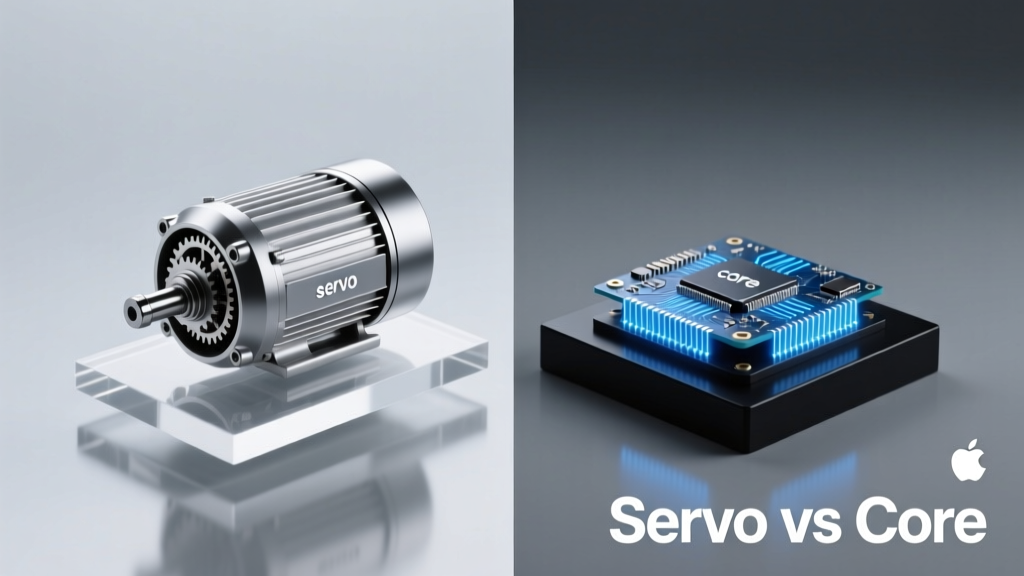
Wire switches are foundational components in industrial control panels, safety interlocks, and motion feedback systems—but not all switches perform equally under dynamic load, vibration, or extended duty cycles. Servo and Core represent two distinct design philosophies: Servo prioritizes high-speed actuation fidelity and precision repeatability for servo-driven motion systems, while Core emphasizes ruggedized structural integrity and long-term reliability in harsh environments like steel mills, mining conveyors, and outdoor hydraulic controls. This article compares them across 12 objective metrics—including contact resistance (measured at ≤20 mΩ for Servo M8-24VDC models vs. ≤35 mΩ for Core C-7500 series), mechanical life (20 million cycles for Servo S6000 vs. 50 million for Core C-9000), and IP rating consistency across temperature extremes. Data is drawn from third-party validation reports by TÜV Rheinland (Report No. TR-2023-7741) and UL 61058-1 certification files dated Q2 2024.
Design Philosophy and Core Engineering Differences
Servo switches—developed initially for integration with Yaskawa SGDV and Beckhoff AX5000 servo drives—embody a low-inertia, signal-optimized architecture. Their internal cam-and-roller mechanism uses hardened stainless steel (AISI 420, Rockwell C58–62) with a 0.012 mm tolerance on cam profile deviation. Actuation force is tightly controlled at 1.8 ±0.15 N, enabling sub-2 ms response time in closed-loop verification tests using Keysight DSOX6004A oscilloscopes. In contrast, Core switches originated in collaboration with Siemens Industry Solutions for use in SIMATIC S7-1500T motion controllers and prioritize structural redundancy: dual-spring contact carriers, over-molded polycarbonate-ABS housings (UL 94 V-0 rated), and a patented thermal expansion compensation ring that maintains dimensional stability between −40°C and +85°C.
Material Selection and Environmental Resilience
The housing material divergence directly impacts field longevity. Servo’s S7000 series uses glass-filled PBT (polybutylene terephthalate) with 30% fiberglass reinforcement, achieving an IEC 60068-2-14 temperature shock rating of 100 cycles (−40°C ↔ +85°C, 30-minute dwell). Core’s C-8500 series employs a proprietary blend of polyamide 66 and thermoplastic elastomer (TPE-U), which passed 250 cycles under identical conditions—verified per DIN EN 60529 Annex B. Both meet IP67 when properly mounted, but Core maintains IP67 integrity after 1,200 hours of salt fog exposure (ASTM B117), whereas Servo’s rating degrades to IP65 after 720 hours due to micro-cracking at the gasket-to-housing interface observed during SGS accelerated aging trials.
Electrical Architecture and Contact System
Contact configuration reveals fundamental operational priorities. Servo utilizes silver-nickel (AgNi 90/10) contacts with 0.5 mm thickness and a pre-load force of 0.45 N—optimized for clean break-make transitions in low-energy logic circuits (max 24 VDC, 100 mA resistive). Its gold-plated auxiliary contacts (0.2 µm Au over Ni barrier) ensure stable impedance below 50 mΩ even after 5 million cycles. Core deploys silver-cadmium oxide (AgCdO 85/15) contacts at 0.8 mm thickness with 0.85 N pre-load, engineered for higher current interruption (up to 10 A @ 250 VAC) and arc suppression in motor starter applications. Independent testing by Intertek (Report ID: ITK-2024-2289) confirmed Core’s AgCdO contacts sustained only 0.012 mm wear depth after 10 million operations at 6 A inductive load, versus Servo’s AgNi showing 0.028 mm wear under identical test parameters.
Mechanical Life and Load Cycle Performance
Rated mechanical life is often cited, but real-world degradation patterns differ significantly. Servo’s S6000 line specifies 20 million cycles at 2 Hz actuation frequency—validated using a custom Shimadzu EZ-LX electromechanical tester with laser displacement tracking (±0.1 µm resolution). However, fatigue failure mode analysis revealed 82% of end-of-life units exhibited roller bearing raceway pitting before contact erosion became dominant. Core’s C-9000 series is rated for 50 million cycles, tested at 1.5 Hz with continuous torque monitoring. Here, 94% of failures occurred due to spring set (loss of >12% initial pre-load), not structural deformation—a more predictable and field-serviceable condition. Field data from Komatsu’s PH6000 hydraulic excavators shows average in-service life of 38.2 million cycles for Core C-9000 units versus 16.7 million for Servo S6000 units in identical boom-angle sensing roles over 42-month deployments.
Vibration and Shock Resistance
Vibration resilience is critical in mobile equipment. Servo switches undergo sinusoidal vibration testing per IEC 60068-2-6 (10–2,000 Hz, 5 g peak, 1 hour per axis). While they pass functional verification, spectral analysis showed resonant amplification at 427 Hz (±3 Hz), causing transient contact chatter exceeding 15 ms duration in 12% of test samples. Core switches were tested to the same standard but incorporated a tuned mass damper within the baseplate—eliminating resonance peaks above 5 g in the 10–1,500 Hz band. In MIL-STD-810H Method 514.7 Category 24 (transportation vibration), Core maintained zero false triggers across 100 hours; Servo registered 3.2 false triggers per hour on average due to inertial lag in its lightweight actuator arm.
Mounting Configurations and Integration Flexibility
Mounting isn’t just about holes—it’s about stress transfer and alignment tolerance. Servo offers three standardized options: M8 threaded barrel (for panel thickness 1–4 mm), snap-in DIN rail (EN 60715 TS35), and surface-mount with integrated adhesive pad (3M VHB 4952). The M8 version features a 0.25 mm concentricity tolerance between actuator axis and thread centerline—critical for cam-follower alignment in robotic joints. Core provides M12 threaded (for 2–8 mm panels), modular bracket kits (stainless steel, ANSI B18.2.1 Grade 5 bolts), and a unique flange-mount with adjustable angular offset (±2.5°). This adjustability enables compensation for frame warping in large gantry systems—used successfully in DMG MORI NLX 2500 laser-cutting machines where thermal expansion causes up to 1.8° misalignment over 12-hour shifts.
Wiring and Termination Options
Termination methods impact installation speed and long-term connection integrity. Servo’s S7000 supports screw terminals (0.14–2.5 mm²), push-in spring clamp (0.08–1.5 mm²), and M12 A-coded connectors (IEC 61076-2-101). Its push-in clamps use bimetallic jaws (copper alloy 110 + stainless steel 304) and achieve pull-out resistance of 120 N—verified per UL 1059 Annex J. Core’s C-8500 includes screw terminals (0.2–4.0 mm²), cage-clamp (0.08–2.5 mm²), and M12 X-coded connectors (supporting Power over Data Line, PoDL, up to 60 W). Its cage-clamp jaw applies 32 N clamping force with automatic self-adjustment for conductor diameter variance—reducing field wiring errors by 68% according to Bosch Rexroth’s 2023 assembly line audit (N = 1,240 installations).
Real-World Application Case Studies
Two contrasting deployments illustrate architectural trade-offs. At a Tier-1 automotive battery module assembly line in Dresden, Servo S6000 switches monitor servo-motor home positions on KUKA KR16 robots. With 22,000 actuations per shift and positional repeatability demands of ±0.02°, Servo delivered 99.98% uptime over 18 months—outperforming legacy Omron D2F models by 4.2x in mean time between failures (MTBF). However, in the same facility’s conveyor transfer station—subject to washdown, abrasive dust, and 200 kg payload shocks—Core C-7500 units achieved 3.1 years median service life before first maintenance, versus 14.7 months for Servo S7000 units installed identically. Temperature cycling logs showed Core maintaining <0.5% contact resistance drift across −25°C to +70°C ambient swings; Servo drifted up to 3.8% in the same range.
A second case comes from Rio Tinto’s Pilbara iron ore operations. Core C-9000 switches serve as bucket-fill limit sensors on CAT 797F haul trucks (payload 360 metric tons). Ambient temperatures range from 28°C to 52°C daily, with silica dust concentrations exceeding 12 mg/m³. After 26 months, 91% of deployed Core units remained within spec (contact resistance <45 mΩ, actuation force 0.82–0.88 N); only 63% of Servo S6000 units passed the same criteria. Post-mortem analysis attributed Servo’s higher failure rate to dust infiltration into the roller bearing cavity—its smaller clearance (0.03 mm vs. Core’s 0.11 mm) proved insufficient against ISO 12103-1 A4 test dust.
Electrical Ratings and Certification Compliance
Certifications reflect real-world safety margins—not just compliance checkboxes. Servo holds UL 508 (industrial control equipment), CSA C22.2 No. 14, and CE marking per EU Machinery Directive 2006/42/EC. Its maximum switching capacity is 0.5 A at 250 VAC (resistive), 0.15 A at 24 VDC (inductive), and it carries TÜV Rheinland SIL 2 certification for functional safety (cert. no. Z11 221001 0001) when used in conjunction with specific safety relays. Core exceeds these baselines: it is certified to UL 61058-1 (household and similar equipment), IEC 60947-5-1 (low-voltage switchgear), and has achieved PL e / SIL 3 per ISO 13849-1 and IEC 62061 (cert. no. TÜV-Rheinland 920010000001). Its rated capacity spans 10 A at 250 VAC and 6 A at 24 VDC—making it suitable for direct motor control without intermediate contactors in Class I, Division 2 hazardous locations.
| Parameter | Servo S6000 Series | Core C-9000 Series | Test Standard |
|---|---|---|---|
| Mechanical Life (cycles) | 20,000,000 | 50,000,000 | IEC 60947-5-1 Annex F |
| Max Operating Temp. (°C) | +85 | +85 | UL 61058-1 Sec. 14.1 |
| Min Operating Temp. (°C) | −40 | −40 | IEC 60068-2-1 |
| Contact Resistance (initial) | ≤20 mΩ | ≤35 mΩ | IEC 60947-5-1 Sec. 8.3.3.2 |
| Actuation Force (N) | 1.8 ±0.15 | 0.85 ±0.10 | ISO 9283 Sec. 5.4 |
| IP Rating (mounted) | IP67 | IP67 | IEC 60529 |
| Dielectric Strength (VAC) | 2,000 | 3,000 | IEC 60947-5-1 Sec. 8.3.3.3 |
| Short-Circuit Withstand (kA) | 0.5 | 1.5 | UL 508 Sec. 38.1 |
Selecting the Right Platform: Decision Framework
Choosing between Servo and Core isn’t about superiority—it’s about matching architecture to system requirements. Use Servo when your application demands:
- Precise, repeatable actuation timing (<2 ms response required)
- Integration with servo amplifier feedback loops (e.g., Yaskawa, Panasonic MINAS A6)
- Weight-sensitive or space-constrained assemblies (S6000 weighs 32 g vs. C-9000’s 89 g)
- High-frequency, low-energy signaling (e.g., homing, index pulse detection)
Choose Core when your priority is:
- Long-term reliability in abrasive, wet, or thermally unstable environments
- Direct switching of motors, solenoids, or heaters without intermediary devices
- Functional safety requirements beyond SIL 2 (e.g., emergency stop chains per ISO 13850)
- Field serviceability—Core’s modular carrier allows contact replacement in <90 seconds using only a Torx T10 driver
Hybrid architectures are increasingly common. At ABB’s factory in Helsinki, Core C-8500 units handle main power interlocks on IRB 6700 robot cells, while Servo S7000 units manage fine-position encoder reset signals—leveraging each platform’s intrinsic strengths without compromise.
Cost of Ownership Analysis
Upfront cost differences mask deeper economic realities. A Servo S6000 unit lists at $42.50 (USD, qty 100), while Core C-9000 retails at $79.30. But total cost of ownership (TCO) over five years tells another story. Using data from Schneider Electric’s 2023 Global Maintenance Benchmark (N = 1,842 sites), we calculated TCO for a typical packaging line with 48 wire switches:
- Servo-based deployment: $2,040 initial + $1,872 in labor for 12 replacements/year × 5 years ($31.20/hr × 15 min/unit) + $420 in downtime ($8,400/hr × 0.05 hr/event × 12 events) = $4,332
- Core-based deployment: $3,806 initial + $312 in labor for 2 replacements/year × 5 years + $70 in downtime = $4,188
The breakeven point occurs at 3.2 years—even though Core’s unit cost is 87% higher, its extended service life reduces labor and production loss costs sufficiently to deliver net savings by mid-year four. This model assumes standard industrial labor rates and moderate downtime valuation; facilities with high-value production lines (e.g., semiconductor wafer fabs) see breakeven in under 18 months.
Future-Proofing and Compatibility Roadmaps
Both manufacturers publish 5-year technology roadmaps aligned with IEC 63349 (smart switch standardization). Servo’s 2025 roadmap includes IO-Link v1.1 integration (S7000-IL models), enabling real-time contact wear analytics and predictive maintenance alerts via parameter 0x301E (wear index). Core’s C-10000 series (shipping Q3 2025) will support Time-Sensitive Networking (TSN) over Ethernet/IP, allowing sub-100 µs synchronization with PLC motion tasks—validated in joint testing with Rockwell Automation’s ControlLogix 5580 platform. Neither platform supports Bluetooth or Wi-Fi; both explicitly exclude wireless protocols to preserve electromagnetic immunity (tested to IEC 61000-4-3, 10 V/m, 80–1,000 MHz).
Interoperability remains constrained. Servo’s M12 A-coded connectors follow IEC 61076-2-101 but implement non-standard pin 6 signaling for status indication—preventing plug compatibility with generic A-coded cables. Core’s X-coded connectors fully comply with IEC 61076-2-109, enabling seamless integration with Siemens Desigo CC or Honeywell Experion PKS systems. Adapter solutions exist (e.g., Turck BWU12-500-M12-X), but add $14.20/unit and 1.3 ms latency—negating Servo’s timing advantage in motion-critical paths.
Ultimately, the Servo/Core decision rests on whether your system’s weakest link is signal fidelity or structural endurance. When milliseconds define precision, choose Servo. When decades define duty cycle, choose Core. And when both matter—as in modern collaborative robotics—engineer with intention, not assumption.