
The Midnight Spark: Assessing Outlet Emergencies
It is 2:00 AM, and you just heard a loud pop from the living room wall, followed by the smell of ozone and melting plastic. Your first instinct might be to immediately search for a 24 hour electrical outlet service and pay a premium emergency dispatch fee. But is every dead or sparking receptacle a true emergency? According to the National Fire Protection Association (NFPA), electrical distribution and lighting equipment are consistently among the leading causes of home structure fires. However, not every tripped breaker or dead socket requires a midnight call-out.
This inspection and testing guide will walk you through the exact diagnostic steps to evaluate a failing receptacle. By utilizing professional-grade testing methods, you can accurately determine whether your situation demands immediate emergency intervention or if it can safely wait for a standard, scheduled repair during business hours.
Essential Tools for Midnight Outlet Diagnostics
Before approaching a suspect outlet, you need the right diagnostic equipment. Relying solely on a basic plug-in tester is insufficient for emergency triage. Assemble the following tools:
- Non-Contact Voltage (NCV) Tester: The Klein Tools NCVT-3Ti (approx. $35) detects voltage from 12V to 1000V AC and includes a built-in flashlight, crucial for midnight diagnostics in dark rooms.
- Digital Multimeter (DMM): A True-RMS meter like the Fluke 117 ($220) or the budget-friendly Klein Tools MM400 ($55) is mandatory for measuring exact voltage drops and verifying ground integrity.
- Infrared (IR) Thermometer: The Klein Tools IR5 ($45) allows you to scan the faceplate for thermal anomalies without making physical contact.
- Receptacle Tester: The Klein Tools RT105 ($15) provides a quick visual map of basic wiring faults (open ground, reversed polarity).
Step-by-Step Triage: Testing the Receptacle
When an outlet fails or behaves erratically, follow this strict four-step diagnostic protocol to assess the severity of the fault.
Step 1: Visual, Olfactory, and Thermal Inspection
Before inserting any probes, perform a sensory check. Look for UV discoloration (browning or yellowing) on the plastic faceplate, which indicates prolonged heat exposure. Smell for acrid, chemical odors signaling melted PVC insulation. Next, use your IR thermometer to scan the faceplate. A healthy receptacle should read within 2°F to 3°F of the ambient room temperature. If the IR thermometer registers a surface temperature exceeding 110°F (43°C), you have a severe high-resistance connection. Verdict: Turn off the breaker immediately. This requires a 24 hour electrical outlet service to prevent an imminent fire.
Step 2: The NCV Perimeter Sweep
With the breaker still ON, slowly sweep your NCV tester around the perimeter of the faceplate and the surrounding drywall. If the NCV alarms wildly across the entire wall cavity, you may have a severed hot wire arcing inside the junction box or wall, energizing nearby materials. Verdict: Shut off the main panel breaker for that circuit. Call for emergency service.
Step 3: Multimeter Voltage Verification
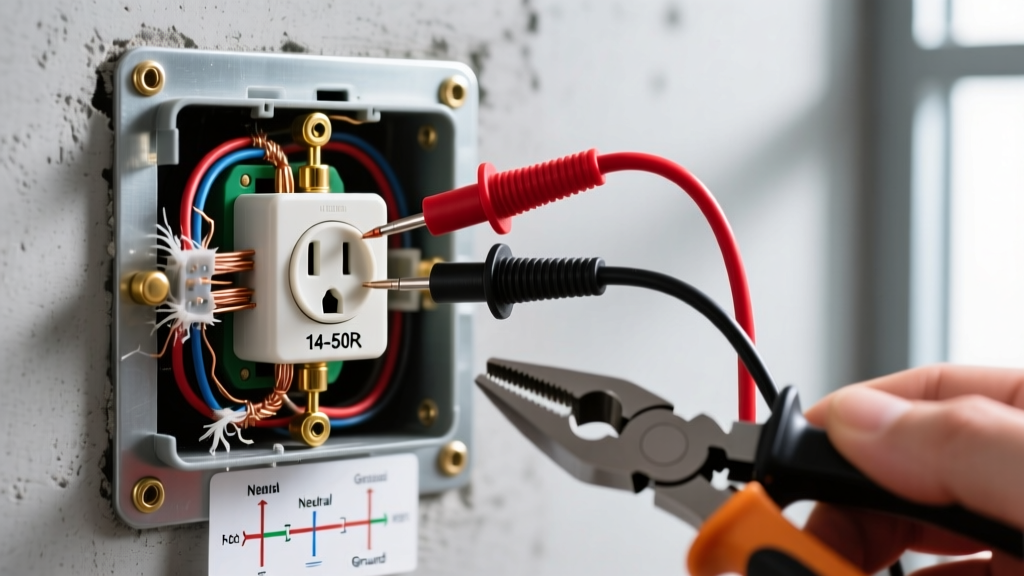
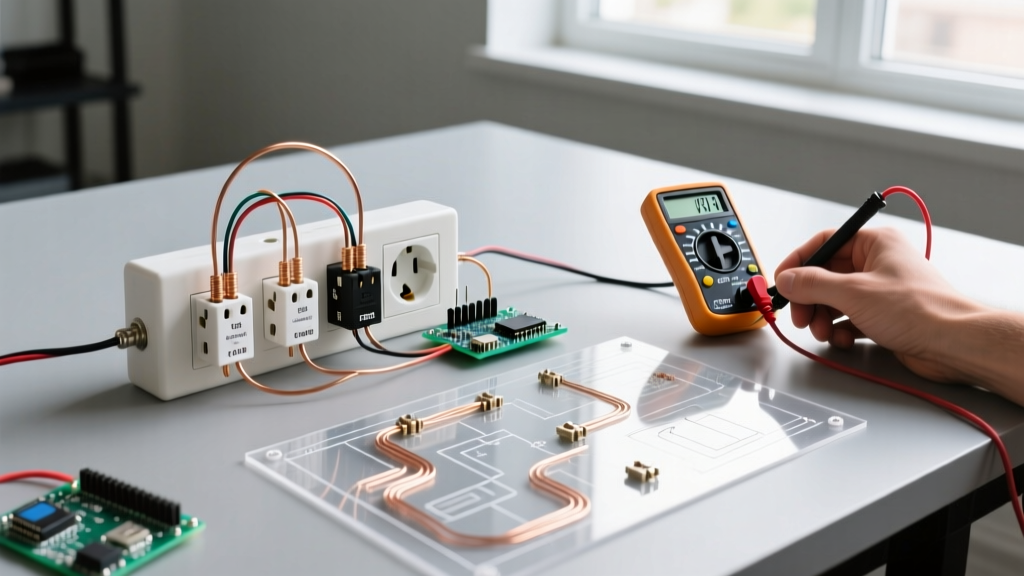
Set your DMM to AC Voltage (V~). Insert the black probe into the Neutral (left, wider slot) and the red probe into the Hot (right, narrower slot). You should read between 118V and 122V. Next, test Hot to Ground (the bottom U-shaped slot). You should read the exact same voltage. Finally, test Neutral to Ground. This should read less than 0.5V. If your Hot-to-Neutral reads 120V, but your Hot-to-Ground reads 0V, you have an open or disconnected ground. While a code violation under the 2026 NEC guidelines, an open ground alone is rarely an immediate fire hazard unless the outlet is in a wet location. Verdict: Schedule a standard repair.
Step 4: Load Testing for Voltage Drop
Plug a high-draw appliance (like a 1500W space heater or a hair dryer) into the suspect outlet and turn it on. While the appliance is running, measure the voltage again. If the voltage drops below 114V (a >5% drop), the circuit has a high-resistance fault, likely a failing 'backstabbed' push-in connection inside the wall. Verdict: Cease use immediately. If the outlet feels warm to the touch, call for 24-hour service; if cool, schedule a standard rewiring appointment.
Decision Matrix: Emergency vs. Scheduled Repair
Use the following matrix to decide if your diagnostic results justify the premium cost of an after-hours electrician.
| Symptom & Test Result | Risk Level | Action Required | Estimated Cost (2026) |
|---|---|---|---|
| Dead outlet; Breaker trips instantly upon reset. Hot-Ground reads 0V. | Critical (Dead Short) | Leave breaker OFF. Call 24 hour electrical outlet service. | $175 - $295 dispatch + hourly |
| Buzzing/Arcing sound; IR scan > 110°F. Smell of ozone. | Critical (Thermal/Arc Fault) | Shut off breaker. Call emergency service immediately. | $175 - $295 dispatch + hourly |
| Outlet dead; RT105 shows 'Open Neutral'. No heat or smell. | Moderate (Shock Hazard) | Stop using circuit. Schedule standard daytime repair. | $75 - $125 standard service fee |
| Half-hot outlet dead; Switch loop fails to activate top receptacle. | Low (Inconvenience) | Use other outlets. Schedule standard repair. | $75 - $125 standard service fee |
| GFCI won't reset; Test button is physically stuck or unresponsive. | Low (Internal Relay Failure) | Replace GFCI receptacle (e.g., Leviton GFNT2). Standard repair. | $25 DIY / $150 Pro standard |
Advanced Diagnostics: The Hidden MWBC Danger
One of the most dangerous scenarios that absolutely warrants a 24 hour electrical outlet service involves Multi-Wire Branch Circuits (MWBC). In an MWBC, two hot wires (Leg A and Leg B) share a single neutral wire. If the shared neutral connection becomes loose or breaks at a receptacle where wires are daisy-chained, the 120V circuits effectively become a 240V series circuit.
The 240V Surge Effect: If you measure an outlet on an MWBC and read 145V on one socket and 95V on another in the same room, your neutral is floating. This overvoltage will rapidly destroy sensitive electronics, HVAC control boards, and LED drivers. If you observe fluctuating voltages across different outlets on the same circuit, shut off the double-pole breaker immediately and call an emergency electrician. The U.S. Consumer Product Safety Commission (CPSC) frequently cites loose neutrals as a primary cause of catastrophic appliance fires.
2026 Smart Home Diagnostics and Prevention
The landscape of electrical troubleshooting has evolved significantly. Under the latest 2026 NEC updates, many new homes are equipped with smart electrical panels (such as the Leviton Smart Load Center or Schneider Electric Wiser). These panels feature branch-circuit-level monitoring that can detect micro-arcing and thermal anomalies at the breaker before they manifest at the receptacle.
If your smart panel app sends a push notification warning of 'Arc Fault Detected' or 'Thermal Overload' on a specific 15A or 20A branch circuit, do not attempt to reset it via the app. The breaker has identified a failing physical connection—often a degraded backstabbed wire on a standard 15A duplex receptacle like the Leviton 5252. This data provides definitive proof that you need professional intervention, allowing the 24-hour electrician to arrive with the exact diagnostic data in hand.
What to Expect from a 24-Hour Emergency Electrician
When you do call a 24 hour electrical outlet service, you are paying for rapid response and risk mitigation, not just a simple part swap. A legitimate emergency call-out in 2026 typically includes:
- Panel Inspection: The electrician will first verify the bus bar and breaker connections using a FLIR thermal camera to ensure the fault hasn't migrated to the main panel.
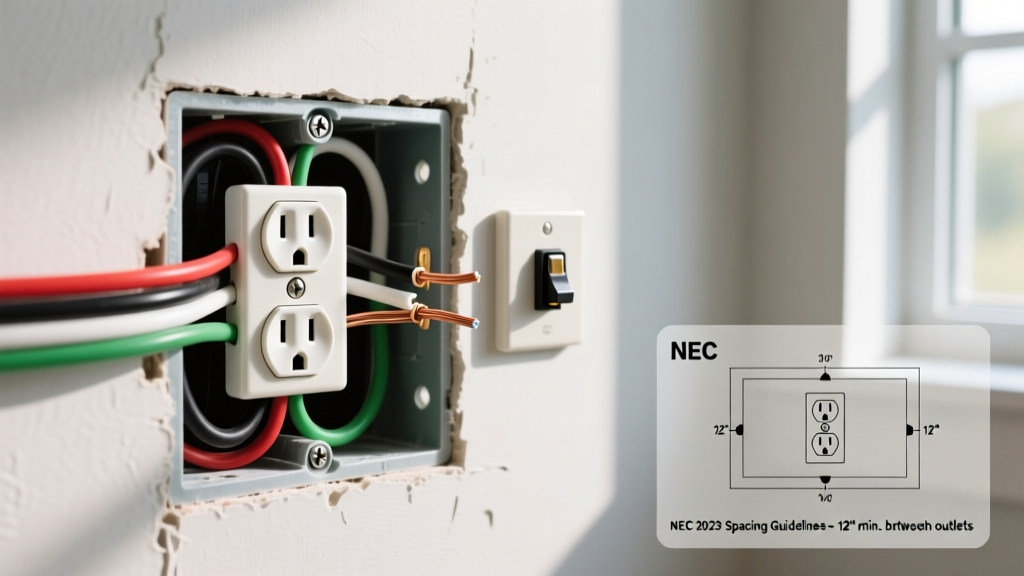
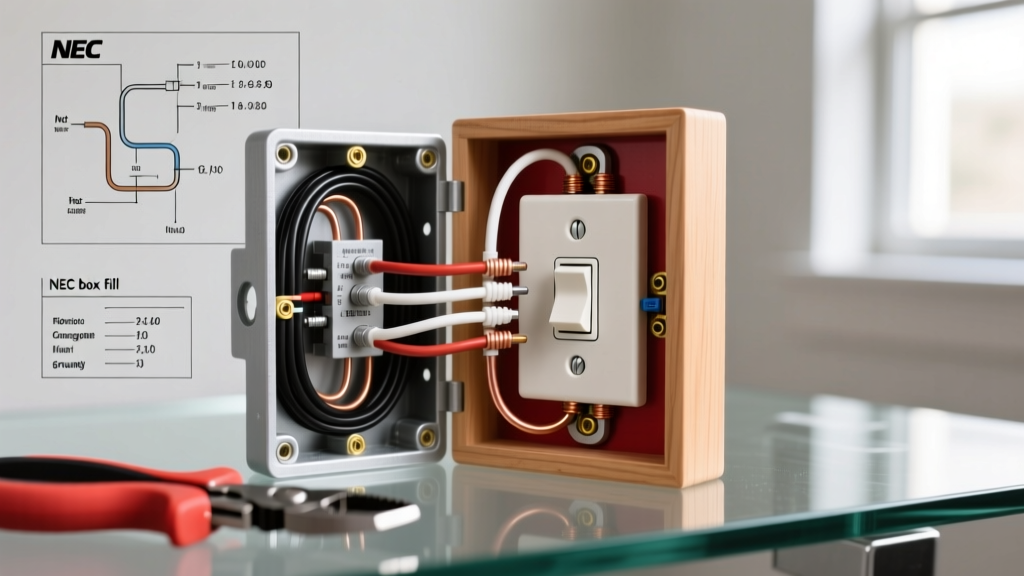
- Junction Box Extraction: They will pull the receptacle out of the gang box to inspect for melted wire nuts, scorched Romex sheathing, and compromised drywall.
- Pigtail Remediation: Emergency repairs focus on safety. The electrician will cut back damaged copper, strip fresh wire, and use side-wiring or screw-terminal connections with pigtails, completely eliminating the push-in backstab connections that caused the thermal failure.
- AFCI/GFCI Upgrades: If the failed outlet was in a bedroom, kitchen, or living area, the 2026 NEC requires the replacement to be protected by an Arc-Fault Circuit Interrupter (AFCI). The electrician may need to install a dual-function (CAFCI/GFCI) breaker if the panel supports it.
Frequently Asked Questions
Q: Can I just turn off the breaker and wait until morning to call a standard electrician?
A: Yes, if you have successfully isolated the circuit by turning off the correct breaker at the main panel, and there is no active smoke, fire, or burning smell. However, if turning off the single-pole breaker does not stop the buzzing or arcing, you have a fault upstream of the breaker or on the main lugs. In that case, shut off the main disconnect and call a 24 hour electrical outlet service immediately.
Q: Why did my outlet spark when I unplugged my vacuum?
A: A small blue spark when disconnecting a high-inductive load (like a vacuum motor) is normal inductive kickback. However, if the spark is bright orange, accompanied by a loud snap, or leaves a black soot mark on the plug blades, the internal brass contacts inside the receptacle have lost their spring tension. The receptacle is worn out and needs scheduled replacement.
Q: Are 24-hour emergency electricians more expensive?
A: Yes. While a standard service call ranges from $75 to $125, a 24-hour emergency dispatch fee typically ranges from $175 to $295, with after-hours labor rates jumping to $150–$250 per hour. Use the diagnostic matrix above to ensure your situation truly warrants the premium.
Disclaimer: Electrical work carries inherent risks of shock and fire. Always adhere to OSHA safety guidelines and local codes. If you are uncomfortable performing voltage tests, skip the DIY diagnostics and contact a licensed professional immediately.