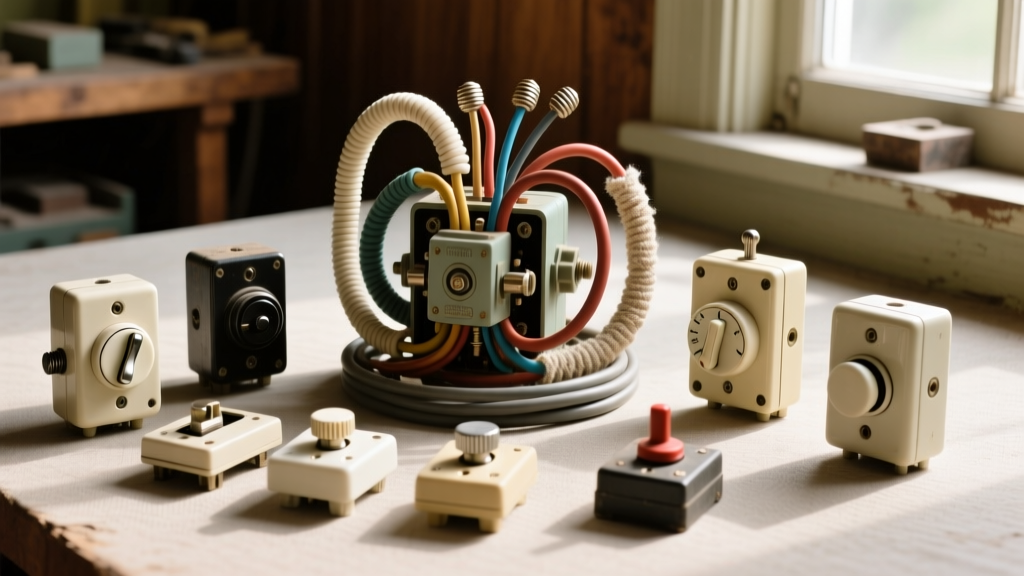

Types of old electrical wiring refer to legacy conductor and insulation systems—such as knob-and-tube, cloth-sheathed NM, and solid aluminum branch circuits—installed before modern NEC thermal and grounding standards took effect. In a real circuit or installation, these legacy systems change the maximum allowable ampacity, dictate whether a branch circuit can be legally extended, and often eliminate a dedicated equipment grounding conductor. People commonly confuse older cloth-sheathed NM cable (which lacks a ground wire) with early rubber-insulated BX cable (which attempts to use the metal armor as a ground path), or they mistake modern, dirt-stained NM-B for hazardous cloth Romex simply because of its discolored jacket.
The Core Legacy Wiring Systems
To safely troubleshoot or upgrade a legacy electrical system, you must first correctly identify the specific wiring method in the walls. Each type has distinct physical characteristics, thermal limits, and failure modes.
| Wiring Type | Era of Use | Insulation / Jacket | Grounding Conductor | Primary Hazard |
|---|---|---|---|---|
| Knob and Tube (K&T) | 1880s–1930s | Rubber/Cloth on individual conductors | None | Insulation crumbling, hidden splices, thermal insulation burying wires |
| Cloth-Sheathed NM | 1930s–1960s | Cloth outer braid, rubber/paper inner | None (usually) | Jacket degrades into conductive carbon dust when overheated |
| Solid Aluminum Branch | 1960s–1972 | Thermoplastic (early NM-B style) | Yes (Bare aluminum) | Thermal expansion/creep causing loose terminations and arcing |
| BX (Armored Cable) | 1900s–1950s | Paper-wrapped rubber inside steel armor | Armor (Unreliable) | High impedance fault path; armor cuts into insulation over time |
The Physics of Insulation Degradation and Ampacity
The most critical theoretical difference between old and new wiring is the thermal rating of the insulation, which directly dictates ampacity derating in high-ambient environments. Modern NM-B cable uses 90°C-rated THHN conductors (though ampacity is capped at the 60°C column for termination limits). Legacy cloth-sheathed NM and early rubber wires are strictly limited to the 60°C thermal column.
This distinction becomes a severe fire hazard when old wiring passes through unconditioned spaces like attics. Let's look at a worked numeric example to see how this changes a real installation.
Worked Example: 14 AWG in a Hot Attic
Assume you are evaluating an existing 14 AWG cloth-sheathed NM circuit running through an attic in the southern US during summer. The measured ambient attic temperature is 115°F (46°C). The circuit is protected by a standard 15A breaker.
- Base Ampacity: According to the NEC, 14 AWG copper at the 60°C column has a base ampacity of 15A.
- Correction Factor: Using NEC Table 310.15(B)(1) (formerly 310.16) for ambient temperatures above 30°C, the correction factor for 60°C insulation at 46°C (115°F) is 0.71.
- Derated Ampacity: 15A × 0.71 = 10.65A.
In this scenario, the wire can only safely carry 10.65A. However, the 15A breaker will allow up to 15A to flow continuously before tripping (and even more for short overloads). The breaker is failing to protect the wire, leading to accelerated insulation breakdown and a high risk of thermal runaway. To bring this specific run into compliance without replacing the wire, the breaker must be swapped to a 10A or 15A breaker with a strict load limit, though complete replacement with 90°C-rated THHN in conduit or modern NM-B is the only permanent fix.
Where You Meet This in Practice
You will typically encounter these legacy systems during three specific scenarios: home inspections for real estate transactions, insurance underwriting, and basic receptacle upgrades.
Insurance and Real Estate: According to the Electrical Safety Foundation International (ESFI), homes with active knob-and-tube or pre-1972 AA-1350 solid aluminum wiring frequently face insurance cancellations or require costly rider premiums. Inspectors will flag K&T if it is buried in blown-in cellulose insulation, as the wiring relies on free air convection to dissipate heat; burying it violates its fundamental thermal design.
Aluminum Terminations: If you are adding a receptacle to a 1960s aluminum branch circuit, you must understand the metallurgy. Pre-1972 AA-1350 aluminum has a high coefficient of thermal expansion. When it heats up under load, it expands, deforming under the screw head of a standard brass terminal. When it cools, it contracts, leaving a loose connection. This loose connection increases resistance, generating more heat in a destructive feedback loop. The Consumer Product Safety Commission (CPSC) explicitly warns against using standard copper-rated terminals for this wire. You must use CO/ALR-rated devices or, preferably, AlumiConn lug connectors to pigtail to copper pigtails.
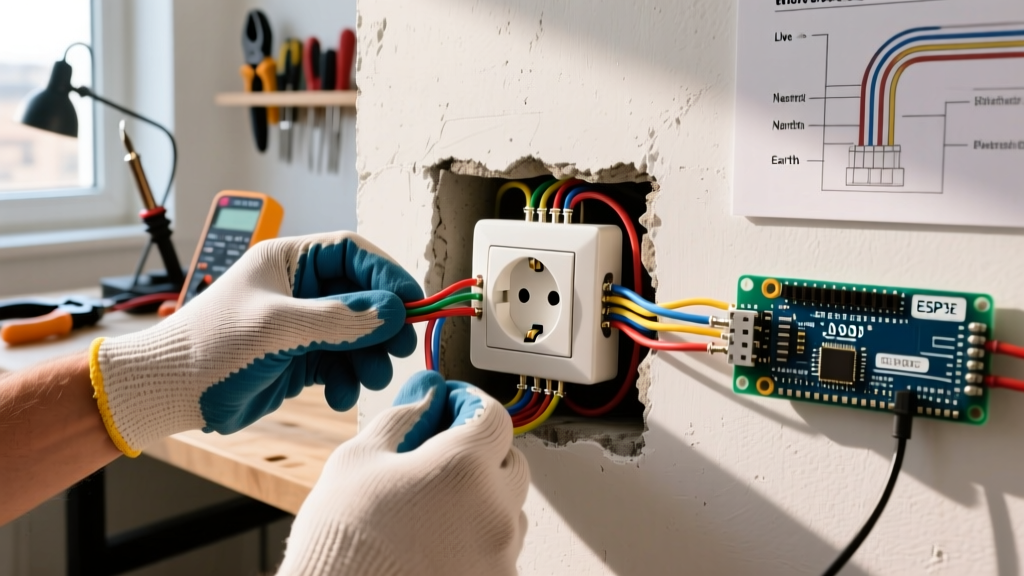
The Ungrounded Receptacle Problem: When replacing a damaged 2-prong outlet on an old cloth NM circuit, you cannot legally install a standard 3-prong receptacle without an equipment ground. NEC 406.4(D) provides a specific workaround: you may install a GFCI receptacle (or protect it with a GFCI breaker) and label it 'No Equipment Ground'. The GFCI will protect a human from shock by detecting a 5mA current imbalance, but it will not provide a ground path for surge protectors or EMI filtering on sensitive electronics.
Frequently Asked Questions
Is it legal to extend existing knob and tube wiring?
Under the National Electrical Code (NEC), extending existing knob-and-tube wiring is generally prohibited in most jurisdictions. While the NEC allows for the maintenance and repair of existing K&T systems using identical materials, adding new loads or extending the circuit into new construction violates modern grounding, overcurrent protection, and physical protection requirements. If you need additional capacity, the standard practice is to run a completely new circuit from the panel using modern NM-B or THHN in conduit, abandoning the K&T run in place.
How can I tell the difference between cloth Romex and modern NM-B?
Modern NM-B (non-metallic sheathed cable) features a smooth, extruded PVC jacket, usually in white, yellow, or orange, depending on the AWG. If you scratch the jacket with a fingernail, it feels like solid plastic. Cloth-sheathed NM, conversely, has a woven fabric outer braid that feels textured and fibrous. If the cloth is heavily painted or dirty, look at the cable where it enters the electrical box; you will often see the individual rubber-insulated conductors lacking the unified plastic webbing found inside modern NM-B. Additionally, slicing open modern NM-B reveals a paper filler and a bare copper ground wire, whereas cloth NM usually contains only the black and white rubber-insulated wires with no ground.
Does aluminum wiring always need to be completely replaced?
Complete rewiring is the gold standard, but it is not always strictly mandatory if the system is properly mitigated. If the home was wired with post-1972 AA-8000 series aluminum alloy (which is stable and still permitted by the National Fire Protection Association), it is generally safe. For hazardous pre-1972 AA-1350 aluminum, you can avoid a whole-house rewire by performing a 'pigtail' mitigation. This involves opening every junction box, outlet, and switch in the house, and connecting the aluminum wire to a short copper pigtail using a COPALUM crimp (requires a licensed certified contractor) or an AlumiConn aluminum-to-copper lug connector, ensuring no aluminum ever touches a standard brass terminal screw.
Can I use a GFCI outlet to fix ungrounded old wiring?
Yes, but with a critical caveat regarding what 'fix' means. Installing a GFCI receptacle on an ungrounded 2-wire legacy circuit satisfies the NEC requirement for personnel shock protection in areas like kitchens and bathrooms. It will trip and save your life if you become the path to ground. However, it does not magically create an equipment grounding conductor. Devices that rely on a true ground for operational safety—such as surge protectors, audio equipment prone to ground loop hum, and appliances with metal chassis requiring EMI shielding—will not function correctly. You must apply the included 'No Equipment Ground' sticker to the faceplate to remain code-compliant and warn future users.