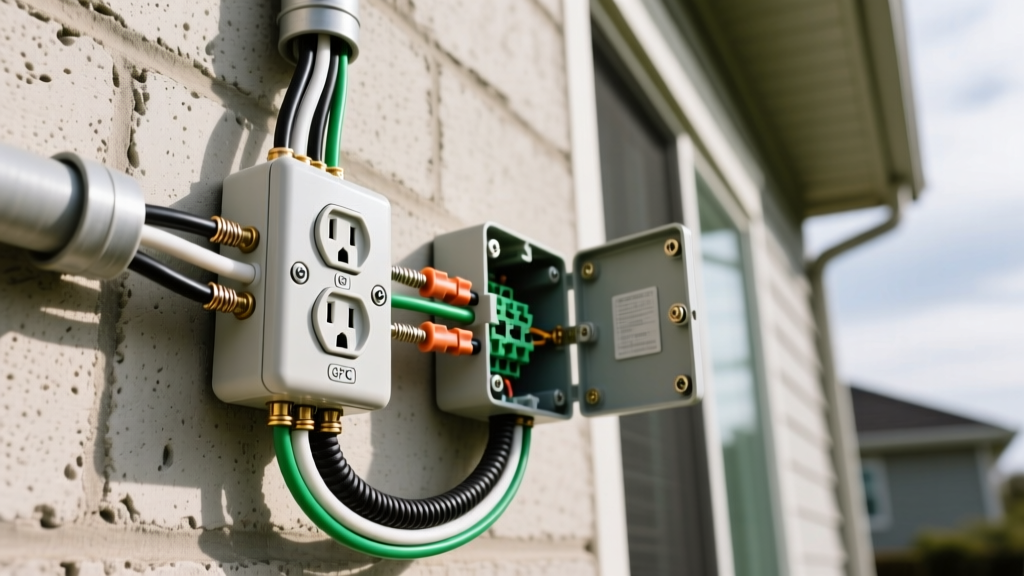
Color-coded electrical outlets use specific face and strap colors to visually identify a receptacle's circuit function, voltage, or grounding status at a glance. While a homeowner might pick almond or matte black purely to match the baseboards, in commercial, industrial, and advanced residential wiring, the color of the outlet tells you exactly what is happening inside the wall before you even pull out a multimeter.
Understanding outlet colors doesn't change the physics of the circuit—120V is 120V regardless of the plastic color. What it changes is the human interface and maintenance workflow. It prevents a facility manager from plugging a 1500W space heater into a UPS-backed server circuit, and it stops an IT tech from introducing a ground loop into sensitive audio equipment. The most common confusion arises when people mix up aesthetic residential colors (like ivory or light almond) with functional NEMA/NEC color codes (like orange or red). People also frequently confuse the color of the plastic face with the color of the metal mounting strap; a standard white outlet can have a red-painted strap to indicate a switched half-hot circuit, which is entirely different from a factory-molded red receptacle.
The Standard Color Code Chart (NEC & NEMA Guidelines)
While the National Electrical Code (NEC) doesn't mandate a universal color for every single circuit type, it does strictly define specific colors for specific functions (like isolated grounds), and industry standards like NEMA WD-6 have established strong conventions for the rest. Here is the standard color matrix you will encounter on the jobsite:
| Outlet Color | Primary Function / Meaning | NEC / Industry Reference |
|---|---|---|
| White / Ivory | Standard 15A or 20A, 120V general-purpose receptacle. | Standard residential/commercial baseline. |
| Orange | Isolated Ground (IG). Used for sensitive electronics to prevent ground-loop noise. | NEC 406.3(D) mandates the orange face for IG. |
| Red | Switched outlet (half-hot), emergency generator power, or UPS-backed circuit. | Industry convention; often required by local AHJs for emergency circuits. |
| Yellow | Dedicated 20A circuit. Often used to visually separate heavy-draw tools or specific 120V/208V IT equipment. | Facility-specific convention (common in hospitals and data centers). |
| Blue | Often denotes 240V circuits, specific IT/data power, or specialized medical equipment. | Facility-specific convention. |
Where You Meet This in Practice: Real-World Installations
To see why functional color matters, let's look at a worked numeric example involving a home recording studio or a small server closet. You are wiring a dedicated 20A, 120V circuit using 12 AWG THHN wire in EMT metal conduit to power a $3,000 rackmount UPS and a highly sensitive analog-to-digital audio converter.
If you install a standard white Leviton 5262 (15A) or 5362 (20A) receptacle, the equipment grounding path is bonded directly to the metal mounting strap and the metal wall box. If the metal conduit run picks up electromagnetic interference (EMI) or has circulating neutral currents, your audio interface will likely hum at 60Hz.
In this scenario, the orange outlet changes the installation from a standard power drop to a precision-engineered clean-power node, while simultaneously providing a visual boundary that stops someone from plugging a vacuum cleaner into your dedicated 20A line.
Decision Path: Which Outlet Color Do You Actually Need?
Don't guess based on what looks good in the hardware store aisle. Use this decision-tree-table to select the exact receptacle for your specific circuit requirements.
| Your Scenario | Circuit Requirement | Concrete Pick (Part Number) |
|---|---|---|
| Standard bedroom, living room, or hallway general power. | 15A / 120V / Standard Ground | Leviton 5262 (White) or Hubbell 5262 |
| Home studio, IT rack, or medical equipment needing clean power. | 20A / 120V / Isolated Ground | Leviton 5362-IG (Orange) |
| Living room lamp controlled by a wall switch (half-hot). | 15A / 120V / Switched Hot | Leviton 5262 (White, apply red electrical tape to the strap) OR Hubbell 5262-1R (Red) |
| Garage workbench or dedicated kitchen appliance circuit. | 20A / 120V / Dedicated Line | Leviton 5362-Y (Yellow) - Note: Requires 20A T-slot plug. |
| Hospital bed or life-safety equipment requiring hospital-grade rating. | 15A or 20A / 120V / Hospital Grade | Hubbell HBL5262 (Green dot indicates Hospital Grade, face color varies) |
Common Mistakes and Code Violations to Avoid
When working with functional color codes, the physical installation must match the visual promise of the outlet. Here are the most frequent errors I see on inspections:
- The 'Fake' Isolated Ground: Buying an orange Leviton 5362-IG but failing to run the separate insulated green ground wire back to the panel. If you just pigtail the isolated ground screw to the metal box, you have defeated the entire purpose of the isolated ground and created a false sense of security for the IT equipment plugged into it.
- Ignoring the 20A T-Slot: If you install a yellow 20A dedicated outlet, ensure you are actually using 12 AWG wire and a 20A breaker. Furthermore, remember that standard 15A plugs will fit into a 20A T-slot receptacle, but a 20A plug (with the horizontal neutral blade) will not fit into a standard 15A white outlet. Match the amperage to the load.
- Relying on Color Alone: Never assume a red outlet is actually switched or a white outlet is properly wired just by looking at it. Previous DIYers might have swapped faceplates or painted straps. Always verify with a receptacle tester or a multimeter.
Frequently Asked Questions About Outlet Colors
Can I just paint a standard white outlet orange to make it an isolated ground?
No. NEC 406.3(D) specifically requires that isolated ground receptacles be identified by an orange triangle on the face, and factory-molded orange faces are the industry standard for the entire device. Painting a standard outlet does not change its internal grounding strap architecture, which remains bonded to the mounting yoke.
Why do some commercial buildings use blue outlets?
Blue is not strictly defined by the NEC for a single universal purpose, but in many commercial facilities and data centers, blue receptacles are used to denote 240V circuits, specialized IT cooling power, or circuits fed from a specific backup generator bus. Always check the facility's specific legend or test the voltage before plugging in 120V equipment.
Does a red outlet mean it's on a generator?
Often, yes. In hospitals and commercial buildings, red receptacles typically indicate emergency power backed by a generator or a centralized UPS system. In residential wiring, however, a red outlet (or a white outlet with a red strap) almost always indicates a 'half-hot' receptacle where the top plug is controlled by a wall switch and the bottom plug is always hot.