
The Commercial Voltage Reality: 208V vs. 240V
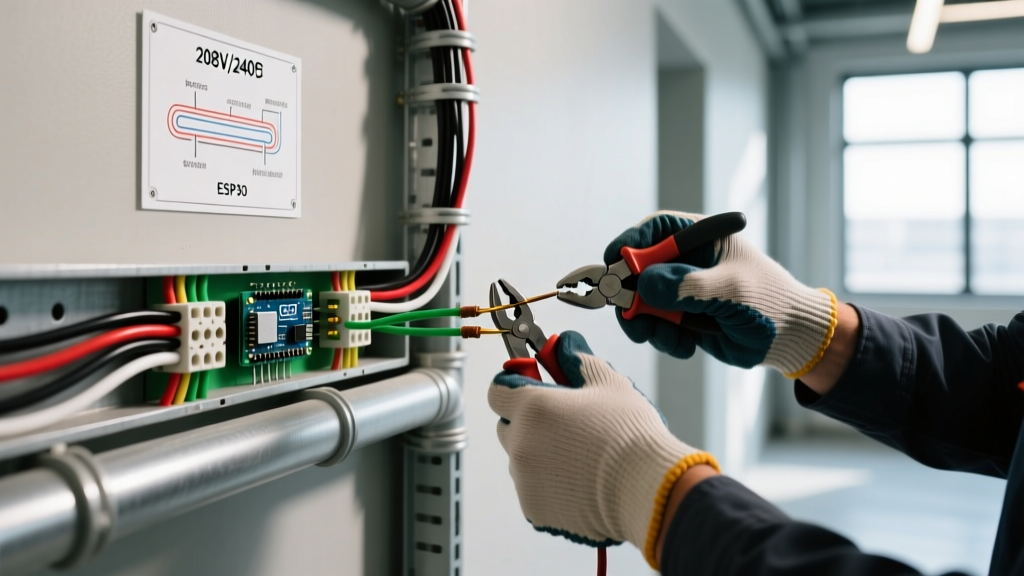
When wiring electric baseboard heaters in commercial facilities, the most common and costly mistake electrical contractors make is ignoring the difference between residential single-phase 240V and commercial three-phase 208V systems. In most US commercial buildings, the standard power supply is a 208Y/120V 3-phase Wye system.
If you install a standard 240V, 2000W baseboard heater on a 208V commercial circuit, the heater will not produce its rated heat output. Because resistance remains constant, power output drops with the square of the voltage reduction.
The Physics of Voltage Mismatch:
Power (W) = Voltage² / Resistance
A 240V, 2000W heater has a resistance of 28.8 ohms.
At 208V: (208 × 208) / 28.8 = 1,502 Watts.
This 25% loss in heating capacity can lead to failed inspections, comfort complaints from tenants, and oversized energy draws. For commercial applications, always specify dual-voltage (208V/240V) auto-sensing heaters or purchase units specifically tapped for 208V operation from manufacturers like King Electric or Cadet Commercial.
NEC Article 424 & Continuous Load Calculations
According to the NFPA 70 National Electrical Code, specifically Article 424 (Fixed Electric Space-Heating Equipment), electric baseboard heaters are classified as continuous loads because they are expected to operate for three hours or more.
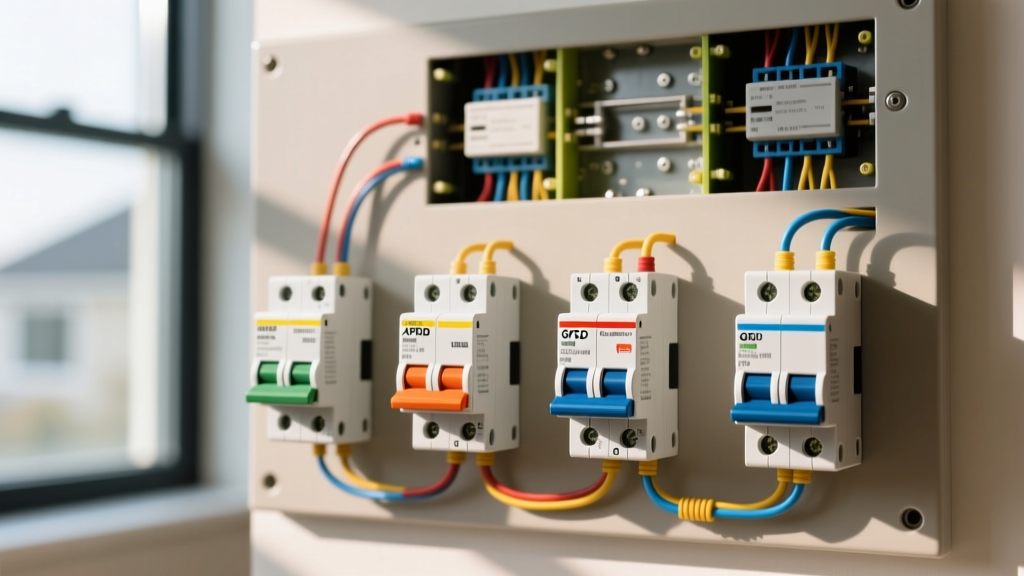
This classification mandates that the branch circuit conductors and overcurrent protection devices (breakers) must be sized at 125% of the continuous load. Furthermore, NEC 424.13 requires that all splices and connections be made within approved junction boxes, and the heater must have a dedicated disconnecting means.
Commercial Circuit Sizing Matrix
Use the following matrix to determine breaker and wire sizing for commercial baseboard heater circuits based on 208V single-phase (derived from a 3-phase panel) or 240V single-phase setups. Wire sizes assume 75°C THHN/THWN-2 copper conductors in EMT conduit.
| Heater Wattage | Voltage | Actual Amps | 125% Continuous Amps | Breaker Size | Min. Wire Gauge (Cu) |
|---|---|---|---|---|---|
| 1,000W | 208V | 4.8A | 6.0A | 15A (2-Pole) | 14 AWG |
| 1,500W | 208V | 7.2A | 9.0A | 15A (2-Pole) | 14 AWG |
| 2,000W | 208V | 9.6A | 12.0A | 15A (2-Pole) | 14 AWG |
| 3,000W | 208V | 14.4A | 18.0A | 20A (2-Pole) | 12 AWG |
| 4,000W | 208V | 19.2A | 24.0A | 30A (2-Pole) | 10 AWG |
| 2,000W | 240V | 8.3A | 10.4A | 15A (2-Pole) | 14 AWG |
| 3,000W | 240V | 12.5A | 15.6A | 20A (2-Pole) | 12 AWG |
Wiring Methods: EMT, MC Cable, and Plenum Restrictions
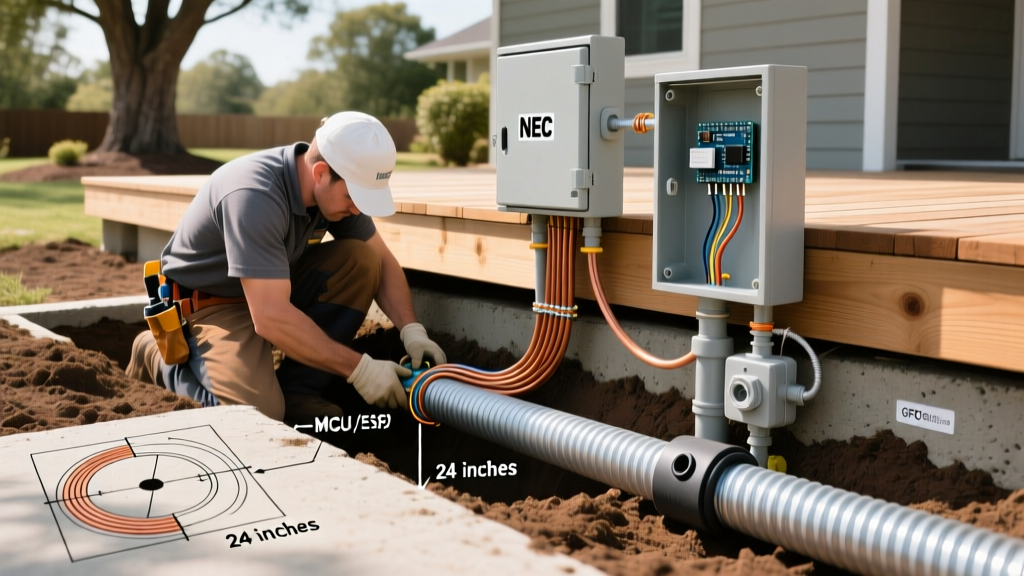
In commercial construction, you cannot simply run NM-B (Romex) cable behind drywall as you would in a residential home. Commercial building codes and fire marshals strictly regulate wiring methods, particularly regarding drop ceilings and HVAC return air plenums.
- EMT (Electrical Metallic Tubing): The gold standard for commercial exposed or concealed runs. Pull individual THHN/THWN-2 conductors. It provides superior physical protection and grounding via the metal raceway (though a dedicated equipment grounding conductor is highly recommended and often required by local amendments).
- MC (Metal-Clad) Cable: Excellent for concealed runs inside metal stud walls. Ensure you use MC cable with a full-size equipment grounding conductor, not just the armor wrap, to ensure a low-impedance fault path.
- Plenum Ratings (NEC 300.22): If your wiring must pass through the space above a drop ceiling that is used for environmental air (return air plenum), you cannot use standard THHN or MC cable. You must use plenum-rated wiring (e.g., CMP or specific plenum-rated MC) or run the circuit inside continuous metallic raceway (EMT) with no splices.
Integrating with Building Management Systems (BMS)
Modern commercial facilities rarely rely on standalone, wall-mounted line-voltage thermostats for baseboard heaters. Instead, heating is integrated into the building's central HVAC and BMS network to optimize energy usage and comply with commercial energy codes like ASHRAE 90.1.
To achieve this, electricians wire heavy-duty 24V AC contactors (such as the White-Rodgers 586 series or Honeywell R8222) near the heater junction box.
Contactor Wiring Flow
- Line Side: Run the 208V/240V branch circuit into the contactor's main lugs (L1 and L2).
- Load Side: Wire the contactor's output terminals directly to the baseboard heater's internal junction box.
- Coil Control: Run a 18/2 low-voltage thermostat wire from the commercial programmable thermostat (or BMS relay output) to the 24V coil terminals (A1/A2) on the contactor.
- Transformer: Power the 24V coil using a dedicated 40VA Class 2 transformer tapped into a standard 120V commercial lighting circuit, ensuring the control circuit is fused separately from the high-voltage heater circuit.
This setup keeps high-voltage line switching out of the thermostat, allowing the BMS to trigger the heater safely via low-voltage relays.
Step-by-Step Commercial Installation Procedure
Follow this sequence to ensure a code-compliant and efficient installation:
- Verify Panel Capacity: Before pulling wire, perform an NEC Article 220 load calculation on the commercial panel. Heating loads are calculated at 100% of the connected VA.
- Rough-In Junction Boxes: Mount heavy-duty steel junction boxes to the metal studs. Baseboard heaters generate significant heat; ensure the wall cavity is insulated with non-combustible mineral wool (e.g., Rockwool) behind the unit to prevent thermal loss into the exterior wall.
- Pull Conductors: Pull your THHN conductors through the EMT. Always pull a green insulated equipment ground, even if the EMT is bonded.
- Terminate at the Heater: Commercial baseboard heaters (like the King Electric K-BASE series) feature internal terminal blocks. Torque the terminal screws to the manufacturer's specification (usually 12-15 in-lbs) to prevent high-resistance arcing over time.
- Labeling: Per NEC 408.4, clearly label the breaker in the commercial panelboard. Use a commercial label maker to print 'BASEBOARD HTG - RM 402' rather than writing it in pen.
Common Failure Modes and Troubleshooting
When maintaining or troubleshooting commercial baseboard systems, look for these specific edge cases:
- Thermal Cutoff Tripping: If a heater repeatedly shuts off, check for blocked airflow. Commercial furniture layouts often place heavy filing cabinets or upholstered seating too close to the unit. NEC 424.38 requires specific clearances (usually 6 inches on the sides and 12 inches above).
- Contactor Humming/Chattering: If the BMS calls for heat but the contactor buzzes loudly and the heater doesn't engage, the 24V coil is likely receiving undervoltage due to a long, undersized low-voltage wire run. Upgrade the control wire from 18 AWG to 16 AWG to reduce voltage drop over long commercial corridors.
- Phase Imbalance Tripping: If heaters are wired line-to-line across a 3-phase panel, ensure the heating loads are balanced across phases A, B, and C. Severe imbalance can cause neutral currents to spike on the main feeder and trip ground-fault protection equipment (GFPE) on the main commercial service.
Final Code & Safety Considerations
Commercial electrical work demands rigorous adherence to safety and documentation. Always consult the local Authority Having Jurisdiction (AHJ) regarding specific amendments to the National Electrical Code. Furthermore, reference the U.S. Department of Energy Building Technologies Office for the latest guidelines on commercial electric resistance heating efficiency and smart-control mandates. Properly wiring electric baseboard heaters in a commercial setting is not just about making the room warm; it is about integrating a high-draw, continuous load into a complex, balanced, and heavily regulated electrical ecosystem.