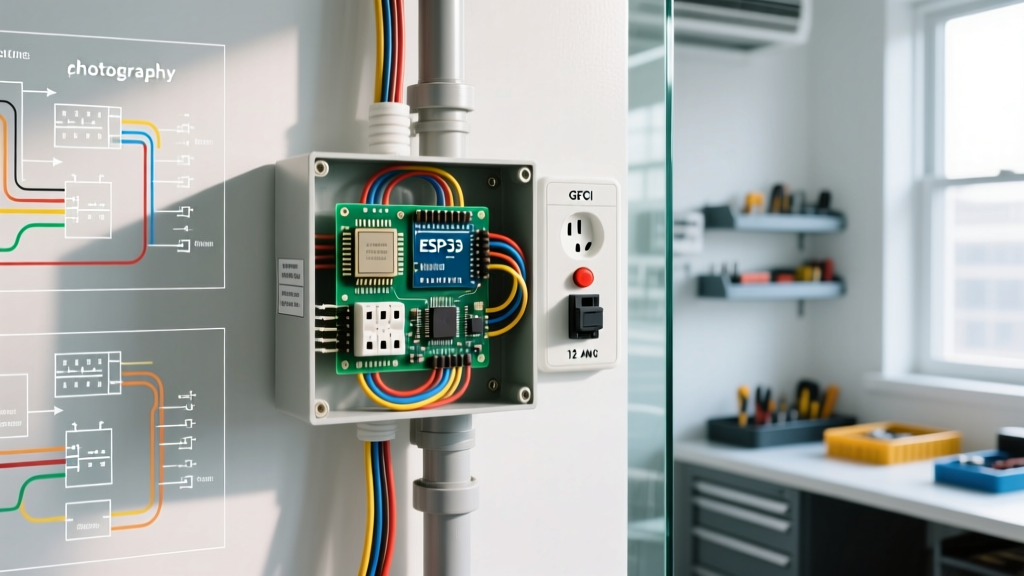

Understanding the Electrical Wiring Color Code USA Standards
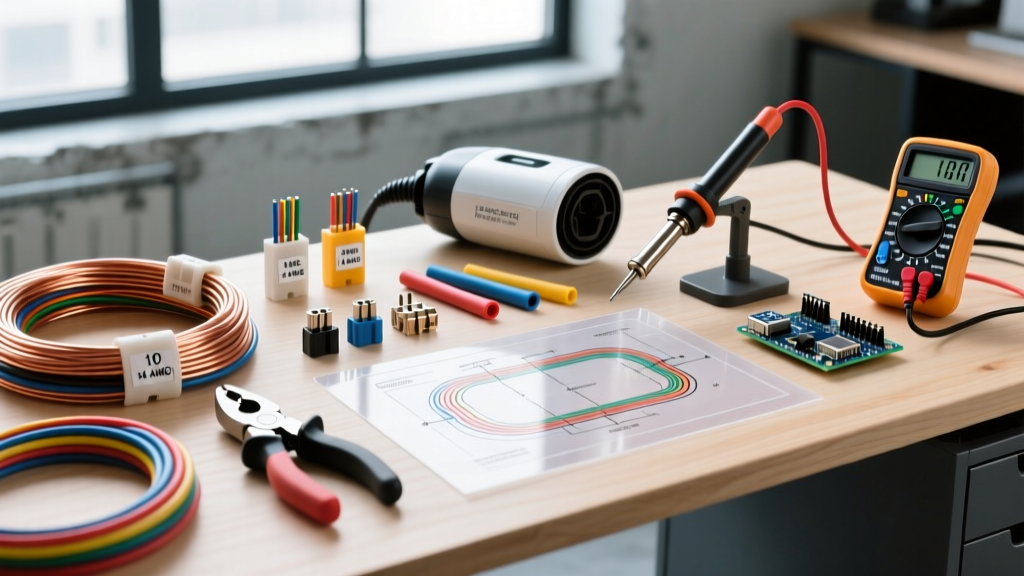
When tackling residential or commercial electrical projects, misidentifying a single conductor can lead to catastrophic arc flashes, equipment destruction, or fatal shocks. The electrical wiring color code USA standards are not merely suggestions; they are strictly enforced mandates outlined in the National Electrical Code (NEC). As of 2026, with the adoption of the latest NEC cycles and copper prices hovering near $4.15 per pound, understanding exactly what you are pulling from a spool is critical for both safety and budget management.
This material and tool guide breaks down the exact color matrices for AC and DC power, decodes the outer jacket colors of non-metallic sheathed cables, and reviews the diagnostic tools professionals use when legacy wiring colors cannot be trusted.
The Core AC Power Color Code Matrix
The NEC mandates specific colors for grounded (neutral), grounding (earth), and ungrounded (hot) conductors. While the grounding and neutral colors remain largely static across voltage systems, the ungrounded phase colors shift depending on the voltage and phase configuration of the building's electrical service.
| System Voltage | Phase Configuration | Phase 1 (Hot) | Phase 2 (Hot) | Phase 3 (Hot) | Neutral | Ground |
|---|---|---|---|---|---|---|
| 120/240V | Single-Phase (Split) | Black | Red | N/A | White / Gray | Green / Bare |
| 120/208V | 3-Phase (Wye) | Black | Red | Blue | White / Gray | Green / Bare |
| 277/480V | 3-Phase (Wye) | Brown | Orange | Yellow | Gray | Green / Bare |
Reference: NEC Article 210.5(C) for branch circuit identification and NFPA NEC Guidelines.
CRITICAL SAFETY WARNING: Never assume a white wire is a neutral. In older homes, or in modern switch-loop configurations, white wires are frequently re-identified as 'hot' conductors. Always verify with a multimeter before touching any exposed conductor.
DC Power and Low-Voltage Color Codes
While AC power dominates home wiring, DC power is increasingly common in 2026 due to the boom in residential solar arrays, LiFePO4 battery backup systems, and PoE (Power over Ethernet) networks.
- Positive (+): Red (Standard DC), or sometimes Yellow/Red striped in automotive/marine applications.
- Negative (-): Black (Standard DC), or White in specific telecom/48V DC setups.
- Ground: Green or Green/Yellow stripe.
For solar PV systems, the NEC requires DC conductors to be distinctly identified from AC conductors. Most professionals use Red and Black for ungrounded DC circuits, but if the system operates over 600V, specific labeling and color-coding tags are required every 20 feet.
Material Guide: NM-B Jacket Colors vs. Conductor Colors
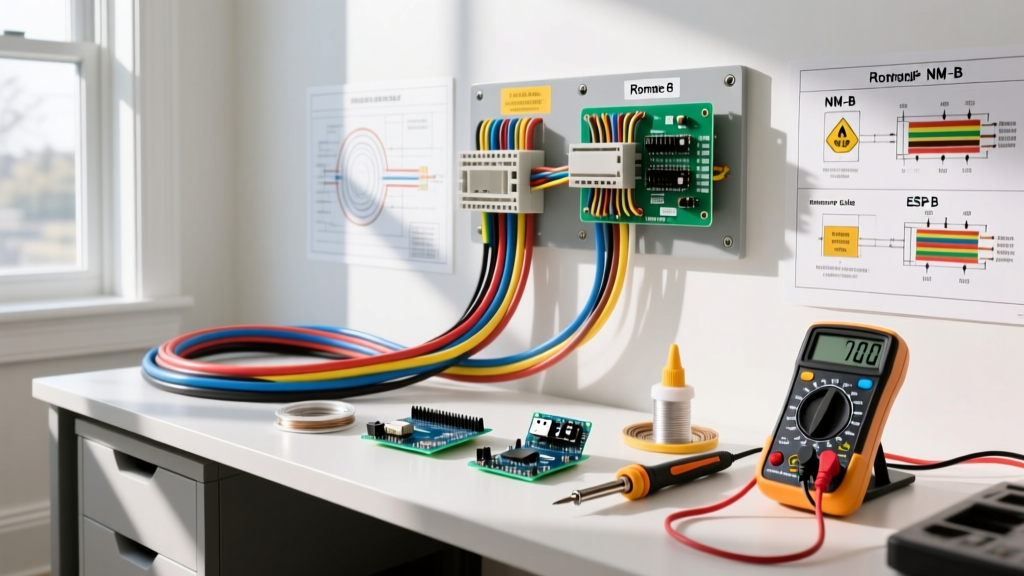
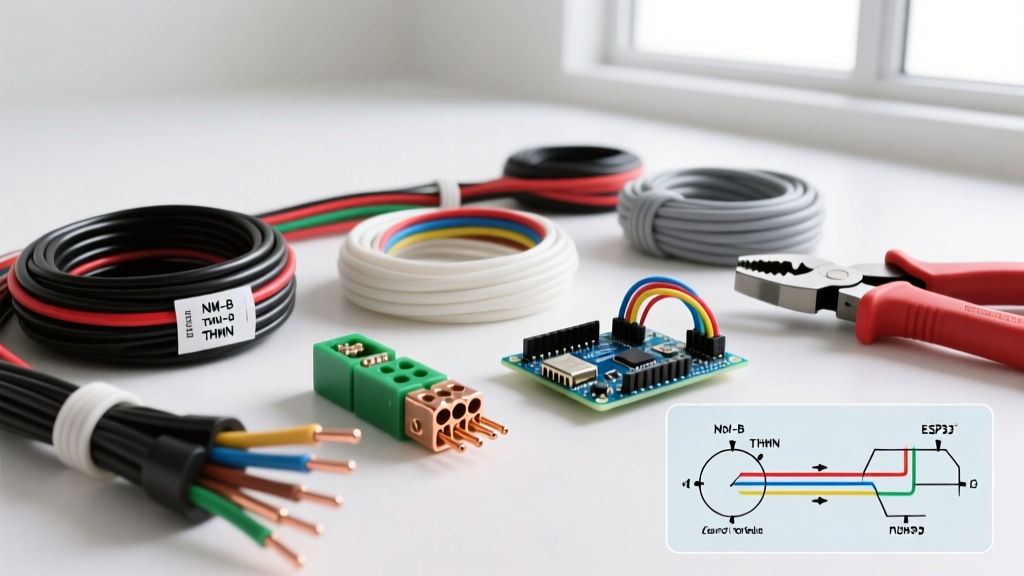
A common pitfall for DIYers is confusing the outer jacket color of Non-Metallic Sheathed Cable (commonly known by the brand name Romex) with the internal conductor colors. The outer jacket color is a manufacturing shorthand for the wire gauge (AWG) and amperage rating.
Southwire & Cerro NM-B Jacket Matrix
| Jacket Color | Wire Gauge (AWG) | Max Ampacity | Common Application | Approx. 2026 Price (250ft) |
|---|---|---|---|---|
| White | 14 AWG | 15 Amps | Lighting circuits, bedroom outlets | $75 - $85 |
| Yellow | 12 AWG | 20 Amps | Kitchen/bath receptacles, garage | $95 - $115 |
| Orange | 10 AWG | 30 Amps | Electric water heaters, window ACs | $140 - $165 |
| Black | 8 or 6 AWG | 40-55 Amps | EV chargers, sub-panels, ranges | $220 - $350 |
Pricing reflects average Q1 2026 retail costs for copper NM-B from major suppliers like Southwire and Home Depot. Prices fluctuate with the commodities market.
THHN/THWN-2 in Conduit: Buying by the Spool
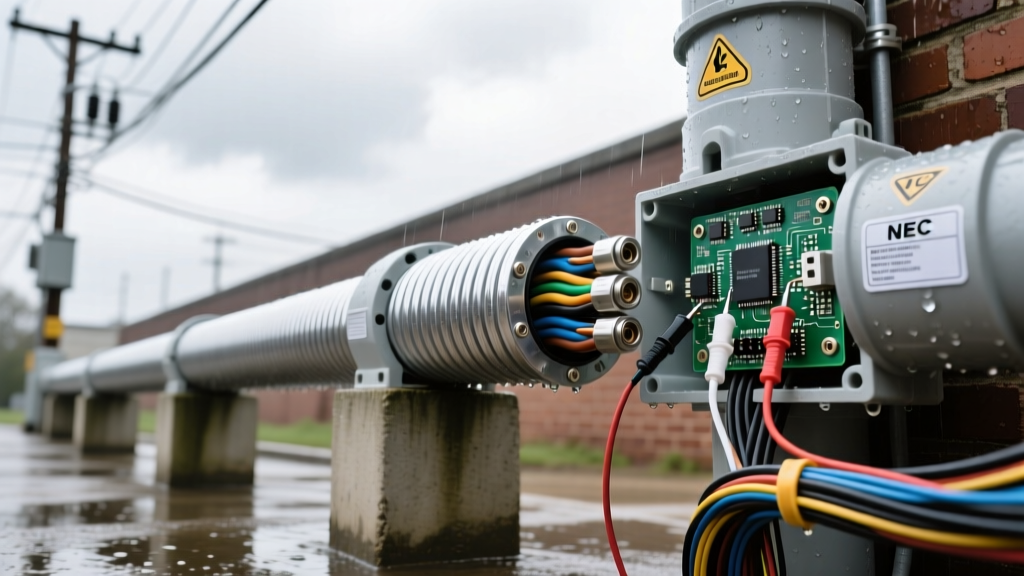
When pulling individual wires through EMT or PVC conduit, you must purchase THHN/THWN-2 conductors in the correct colors. You cannot pull three white wires through a conduit and 'tape' the ends to make them hot. The NEC strictly prohibits re-identifying a white wire as a hot conductor in conduit systems unless it is part of a specific cable assembly exception.
Material Tip: Buy 500-foot spools of Black, Red, and Blue for your hots, and a 500-foot spool of White for neutrals. For grounding, bare copper is cheaper, but Green THHN is vastly easier to pull through conduit with multiple bends because the slick nylon coating reduces friction compared to bare wire.
Essential Tools for Verifying and Tracing Wire Colors
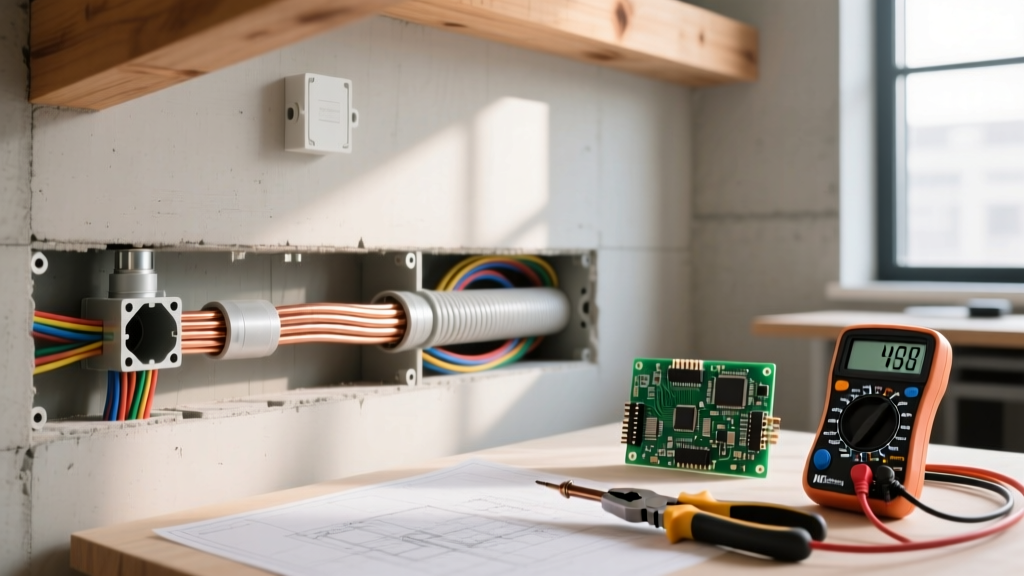
Colors fade, previous homeowners make illegal splices, and cloth-wrapped legacy wiring often lacks modern color coding. Relying on your eyes is a violation of basic OSHA electrical safety protocols. You must verify every wire with the right tools.
1. Non-Contact Voltage Tester (NCVT)
Top Pick: Klein Tools NCVT-2 (~$28)
The NCVT-2 detects both standard AC voltage (12-1000V) and low voltage (70-1000V). This dual-range capability is vital in 2026 homes where smart switches and LED drivers can induce 'phantom voltages' on neutral wires, which cheaper single-range testers often misread as live hots.
2. True-RMS Digital Multimeter
Top Pick: Fluke 117 True-RMS Multimeter (~$220)
When you need to measure the exact voltage drop or confirm a neutral-to-ground bond, an NCVT is insufficient. The Fluke 117 features VoltAlert and AutoVolt, automatically distinguishing between phantom induced voltage and actual live 120V/240V sources. This prevents the dangerous mistake of assuming a white wire is dead when it is actually carrying a return fault current.
3. Wire Re-Identification Tape
Top Pick: 3M Super 33+ Vinyl Electrical Tape (~$6 per roll)
Per NEC 200.7(C)(2), if you must use a white wire as an ungrounded conductor (such as in a 3-way switch loop or a conduit run where white was the only available spool), you must permanently re-identify it at every termination point using black or red tape. Standard hardware store tape degrades and unspools over time due to heat; 3M Super 33+ is UL-listed and rated up to 221°F (105°C), ensuring your color-coding survives inside a crowded junction box.
Legacy Wiring: Edge Cases and Hazards
If you are remodeling a home built before 1970, the standard electrical wiring color code USA rules often go out the window. Be prepared for the following anomalies:
- Cloth-Covered Romex (1930s-1950s): Often features black and white wires, but the insulation is brittle and flakes off. The white wire may have turned completely brown or gray due to heat and age.
- Knob and Tube (Pre-1940s): Wire colors are entirely arbitrary. Black, white, red, and green were used, but not consistently mapped to hot, neutral, or ground. Furthermore, K&T systems do not have a ground wire.
- Aluminum Wiring (1965-1973): Often identified by a dull gray/silver conductor color instead of copper. This requires special CO/ALR rated receptacles or complete pigtailing with Alumiconn connectors to prevent thermal expansion fires.
Frequently Asked Questions (FAQ)
Can I use green tape to mark a bare ground wire?
Yes. While bare copper is universally recognized as a ground, NEC 250.119 allows bare wires to be marked with green tape or paint at termination points if local inspectors require explicit visual identification in large commercial panels.
What color is the 'C' wire for a smart thermostat?
In standard 24V HVAC control wiring, the 'C' (Common) wire is typically Blue. However, HVAC installers frequently use whatever color is left over in the 18/5 or 18/8 thermostat cable. Always verify the 24V common with a multimeter between the C and R (Red/24V Hot) terminals before wiring a smart thermostat.
Is gray ever used as a hot wire?
In standard 120/240V residential wiring, no. Gray is strictly reserved for the neutral conductor in 277/480V commercial 3-phase systems. Using gray as a hot wire in a residential setting is a severe NEC violation that will fail inspection and endanger future electricians.