
Demystifying L and N in Home Electrical Systems
When you open a junction box, swap a light fixture, or wire a new smart switch, you are immediately confronted with a standardized but often misunderstood alphabet: L, N, and sometimes E or PE. For DIYers and homeowners tackling weekend projects, understanding these designations is not just a matter of code compliance—it is the fundamental baseline for preventing electrical fires and fatal shocks.
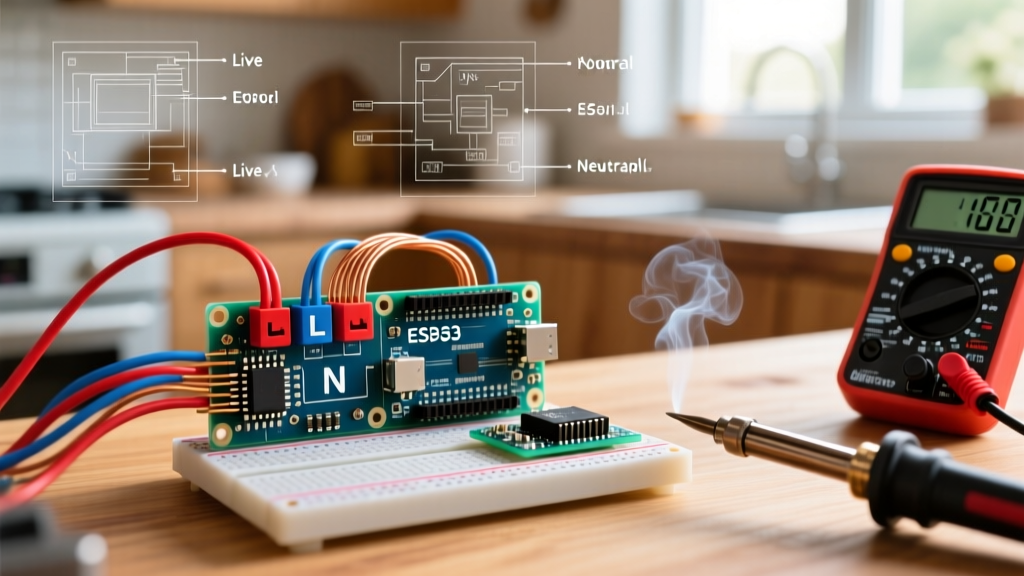
So, what does L and N mean in electrical wiring? In alternating current (AC) circuits, L stands for Line (also known as Live or Hot), and N stands for Neutral. Together, they form the complete loop required to deliver power from your electrical panel to a load (like a receptacle or lightbulb) and return it safely. While the concepts seem simple, the physical realities of how these conductors behave under load, during a fault, or when improperly terminated are where most home wiring disasters occur.
The Core Definitions: Line vs. Neutral
L (Line / Live / Hot)
The Line conductor is the ungrounded wire. It carries the full voltage potential from the electrical panel to the device. In North American residential systems, this is typically 120V (or 240V for split-phase appliances). In the UK, EU, and Australia, the Line carries 230V. The Line wire is the "source" of the electrical pressure. If you touch an exposed Line conductor while grounded, current will flow through your body, resulting in a severe or fatal shock.
N (Neutral)
The Neutral conductor is the grounded return path. Its job is to carry the current back to the electrical panel to complete the circuit. Because it is bonded to the earth ground at the main service panel, the Neutral wire sits at or very near 0V potential relative to the earth.
⚠️ CRITICAL SAFETY WARNING: The "Safe Neutral" MythA dangerous misconception among novice DIYers is that the Neutral wire is completely safe to touch because it is "grounded." This is false. If a circuit is under load (e.g., a space heater is running) and the Neutral wire becomes disconnected or broken upstream from your work area, the Neutral wire on your side of the break will instantly rise to the full Line voltage (120V or 230V). Always treat Neutral with the same respect as Line, and always verify circuits are dead with a multimeter before touching bare copper.
Global Color Code Matrix for L and N
Identifying L and N visually depends entirely on your geographic location and the electrical code governing your region. As of the 2026 NEC cycle and current international standards, here is the definitive color code matrix for residential wiring:
| Region | Governing Standard | Line (L) Color | Neutral (N) Color | Ground (PE) Color |
|---|---|---|---|---|
| US & Canada | NEC (NFPA 70) | Black (Red/Blue for 240V) | White (or Gray) | Bare Copper or Green |
| United Kingdom | BS 7671 (IET) | Brown | Blue | Green/Yellow Stripe |
| European Union | IEC 60364 | Brown | Blue | Green/Yellow Stripe |
| Australia / NZ | AS/NZS 3000 | Red (or Brown) | Black (or Blue) | Green/Yellow Stripe |
Note: According to the National Fire Protection Association (NFPA 70), white or gray must be strictly reserved for the grounded Neutral conductor in the US. Using white for a Line conductor (unless re-identified with black tape at both ends) is a severe code violation.
How to Identify L and N with a Multimeter
Visual inspection of wire colors is never 100% reliable in older homes. Previous homeowners may have miswired circuits, swapped colors, or used whatever wire was left in the truck. To definitively answer what L and N mean in your specific wall box, you must test them.
Required Tools
- Non-Contact Voltage Tester (NCVT): e.g., Klein Tools NCVT-2 (Approx. $25).
- True-RMS Digital Multimeter: e.g., Fluke 117 (Approx. $220 in 2026) or a budget-friendly Klein Tools MM400 ($45).
- PPE: Insulated gloves and safety glasses.
Step-by-Step Testing Procedure
- Initial NCVT Sweep: With the breaker ON, bring your NCVT close to the wires. The Line (L) wire will trigger a loud beep and red LED. The Neutral (N) should not trigger the tester (though induced phantom voltage can sometimes cause a faint chirp).
- Power Down & Verify: Turn OFF the circuit breaker. Use the NCVT to confirm the power is dead. Never skip this step.
- Expose the Receptacle: Remove the faceplate and unscrew the receptacle to access the terminal screws and bare wire ends.
- Power Up for Voltage Testing: Turn the breaker back ON. Exercise extreme caution not to touch bare metal.
- Multimeter Setup: Set your multimeter to AC Voltage (V~ or VAC). For a Fluke 117, press the yellow button to select AC.
- Test Line to Ground: Place the black probe on a known ground (bare copper wire or the metal box if grounded). Place the red probe on the suspected Line wire. The meter should read 118V to 122V (in North America).
- Test Neutral to Ground: Keep the black probe on the ground. Move the red probe to the suspected Neutral wire. The meter should read 0V to 2V. If it reads 120V, your circuit has reversed polarity or an open neutral.
Practical Application: Wiring a Standard Duplex Receptacle
When installing a standard 15-amp tamper-resistant receptacle (such as the highly rated Leviton T5262-W, which costs about $3.50 per unit), the physical terminals are explicitly designed to enforce the L and N separation.
- Brass-Colored Screws: Connect the Line (L / Hot / Black) wire here. The brass corresponds to the shorter slot on the receptacle face.
- Silver-Colored Screws: Connect the Neutral (N / White) wire here. The silver corresponds to the longer slot on the receptacle face.
- Green-Colored Screw: Connect the Ground (PE / Bare Copper) wire here.
Pro-Tip: Always use the "shepherd's hook" method when terminating solid copper wire under terminal screws. Loop the wire clockwise around the screw so that tightening the screw pulls the loop tighter, rather than pushing it out.
Failure Modes: The Danger of Reversed Polarity
What happens if you swap L and N? The device will still function. A lamp will turn on; a TV will play. However, swapping Line and Neutral creates a condition known as reversed polarity, which the Occupational Safety and Health Administration (OSHA) and home inspectors flag as a critical shock hazard.
The "Hot Shell" Hazard
Consider a standard table lamp with a screw-in Edison bulb. The receptacle is wired so that the Neutral connects to the wide outer threaded shell of the bulb socket, and the Line connects to the small center tab at the very bottom.
If L and N are reversed at the wall receptacle, the outer threaded shell of the bulb becomes energized at 120V. If you are changing a lightbulb and your finger accidentally brushes the metal threads while the lamp is plugged in (even if the lamp's physical switch is turned off, assuming the switch only breaks the hot leg which is now on the wrong side), you will complete the circuit to ground and receive a severe shock.
International Variations and the IET Standards
For readers outside North America, or those working on imported appliances, the terminology shifts slightly but the physics remain identical. In the UK, the Institution of Engineering and Technology (IET) enforces BS 7671. Under these regulations, the Line (Brown) must always be switched by the physical wall switch, ensuring that when a light is turned off, the Neutral (Blue) is the only wire reaching the fixture, keeping the fixture at 0V during maintenance.
Frequently Asked Questions (FAQ)
Can I use the Ground wire as a Neutral?
Absolutely not. The ground wire (PE) is a safety shield designed to carry current only during a fault condition to trip the breaker. Using it as a neutral return path under normal operation will energize all grounded metal surfaces in your home (appliance chassis, plumbing, HVAC ducts) with stray voltage, creating a massive shock and fire hazard.
What does "L1, L2, L3" mean on a smart switch?
In multi-way smart switches or 3-phase commercial panels, L1, L2, and L3 designate different Line phases. In a standard US residential smart switch, "L" or "Line" is your incoming 120V hot, while "Load" (sometimes confusingly abbreviated as L on cheap imported switches) is the outgoing hot wire that travels to the light fixture. Always verify with a multimeter; do not rely solely on printed labels on smart home hardware.
Why does my Neutral wire measure 5 Volts?
A reading of 1V to 5V between Neutral and Ground is normal in a loaded circuit. This is called voltage drop. Because copper wire has inherent resistance, the current flowing back to the panel on the Neutral wire creates a tiny voltage drop across the length of the wire. If you measure 10V or higher, your neutral connection is loose, corroded, or undersized for the load, requiring immediate professional repair.