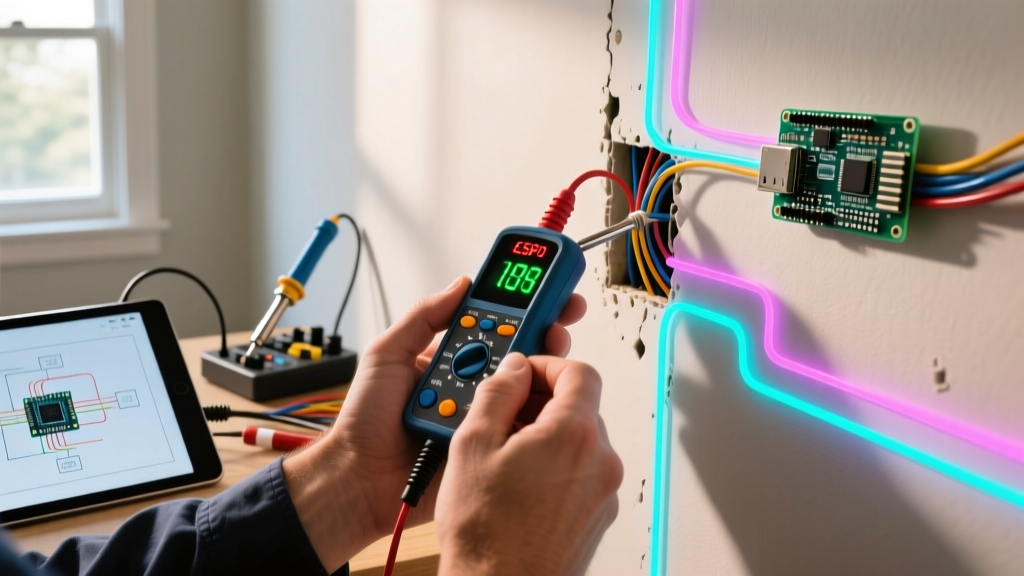

The Critical Need for Precision Wire Tracing
Whether you are remodeling a mid-century kitchen, upgrading a commercial office space, or simply installing a smart home relay, the ability to accurately trace electrical wiring is a non-negotiable skill. Guessing the path of hidden NM-B (Romex) cables or THHN conductors inside conduit is a fast track to severed neutrals, arc faults, or catastrophic electrical shock. According to the U.S. Consumer Product Safety Commission (CPSC), accidental contact with live wiring during DIY and professional remodeling remains a leading cause of residential electrocutions and structural fires.
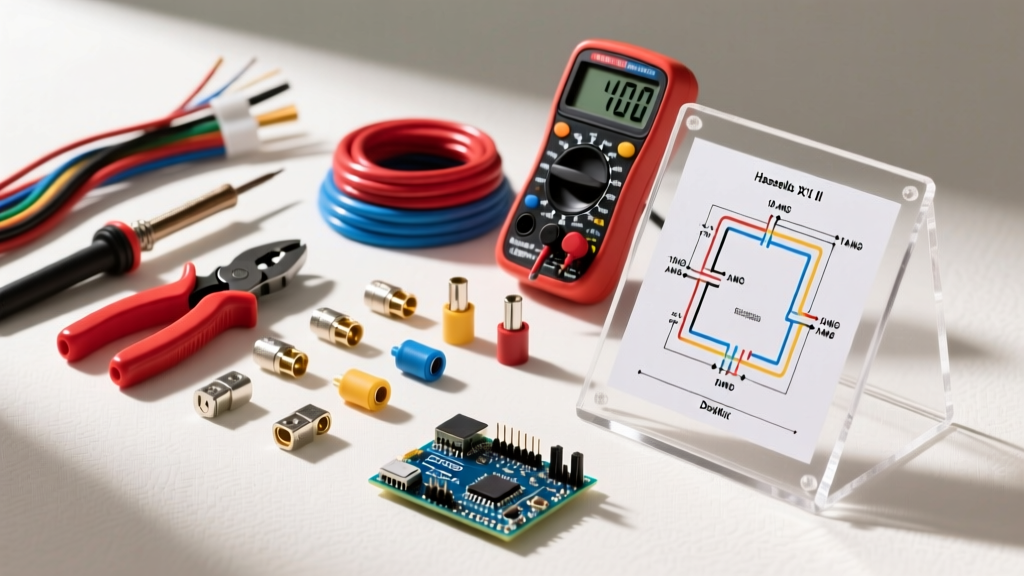
To mitigate these risks, electricians and advanced DIYers rely on specialized diagnostic tools. This comprehensive material and tool guide breaks down the exact equipment you need to trace electrical wiring behind drywall, plaster, and concrete, complete with specific model recommendations, pricing, and field-tested techniques for 2026.
Essential Tools to Trace Electrical Wiring
Tracing a circuit is not a one-size-fits-all process. The tool you select depends entirely on whether the circuit is energized (live) or de-energized (dead), and the type of cable jacket or conduit shielding the conductors.
1. Advanced Circuit Tracers (For Live Circuits)
Advanced circuit tracers are the heavyweights of wire mapping. They consist of a transmitter that plugs into a receptacle and a handheld receiver. The transmitter injects a modulated radio frequency (RF) signal onto the wire, and the receiver detects the resulting electromagnetic field through drywall.
- Top Pick: Klein Tools ET45 Advanced Circuit Tracer.
- Key Specs: Detects 12-400V AC, traces up to 130 feet, features automatic sensitivity adjustment, and includes a built-in GFCI trip button to test receptacle safety.
- Price Range: $130 - $150.
- Pro Insight: The ET45 excels in noisy environments because its digital signal processing filters out the 60Hz hum from adjacent parallel cables, drastically reducing false positives.
2. Tone and Probe Kits (For Dead Circuits)
When working on a de-energized circuit—often required by safety protocols or when a wire is completely severed—you cannot use a live circuit tracer. Instead, you use a tone generator (the 'Fox') and an inductive amplifier probe (the 'Hound'). You clip the tone generator to the bare copper wires at the panel or junction box, and sweep the wall with the amplifier probe to hear the audio tone.
- Top Pick: Fluke Networks IntelliTone Pro 200.
- Key Specs: Uses digital toning to reject noise, features a smart battery test, and includes an RJ45 continuity tester for low-voltage data lines.
- Price Range: $220 - $260.
- Pro Insight: Unlike cheap analog toners that bleed over to every wire in a multi-gang box, the IntelliTone Pro 200 uses a digital coded signal, isolating the exact conductor you are tracing.
3. Non-Contact Voltage Testers (NCVT) with IR
While an NCVT cannot trace a wire's full path across a room, it is vital for verifying the presence of voltage before drilling and for confirming the final destination of a traced wire at the breaker panel.
- Top Pick: Klein Tools NCVT-4IR Dual-Range Voltage Tester with Infrared Thermometer.
- Key Specs: Detects 12-1000V AC, includes an IR thermometer for checking hot breaker connections, and features a bright LED flashlight.
- Price Range: $35 - $45.
Tool Comparison Matrix: Which Tracer Fits Your Project?
| Tool Category | Top Model | Circuit State | Max Tracing Depth | Best Application |
|---|---|---|---|---|
| Advanced Circuit Tracer | Klein Tools ET45 | Live (12-400V) | 2.5 inches (Drywall) | Mapping branch circuits from outlet to panel |
| Digital Tone & Probe | Fluke IntelliTone Pro 200 | Dead (0V) | 1.5 inches (Drywall) | Tracing severed cables, low-voltage, or safe dead-wire mapping |
| NCVT with IR | Klein NCVT-4IR | Live (12-1000V) | 1.0 inch (Shallow) | Quick voltage verification and shallow wire detection |
| Magnetic Stud/Wire Finder | Franklin Sensors M210 | N/A (Magnetic) | 1.5 inches | Locating metal junction boxes and conduit behind drywall |
Step-by-Step: How to Trace a Hidden Wall Circuit
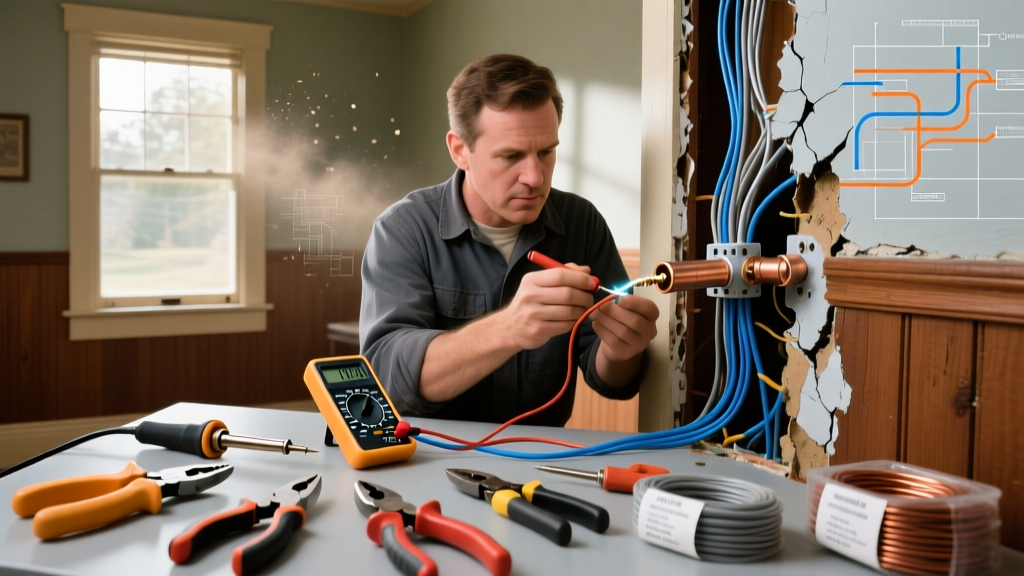
Tracing a wire requires a methodical approach to avoid signal bleed and misidentification. Follow this field-tested procedure using a live circuit tracer like the Klein ET45.
- Verify the Circuit is Live: Plug a standard lamp or receptacle tester into the target outlet to confirm it has power.
- Connect the Transmitter: Plug the transmitter unit into the target receptacle. The LED indicators will confirm it is receiving line voltage and broadcasting the RF signal.
- Calibrate the Receiver: Turn on the handheld receiver. Hold it about 12 inches away from the transmitter to let it auto-calibrate and lock onto the specific signal frequency, filtering out ambient room noise.
- Sweep the Wall: Starting at the receptacle, hold the receiver flat against the drywall. Move it in a slow, perpendicular sweeping motion. The receiver will emit a solid tone and visual bar graph when directly over the NM-B cable.
- Map the Path: Use a pencil to lightly mark the drywall every 2 feet along the signal path. Note that wires typically run vertically from the outlet to a junction point, then horizontally through the wall studs.
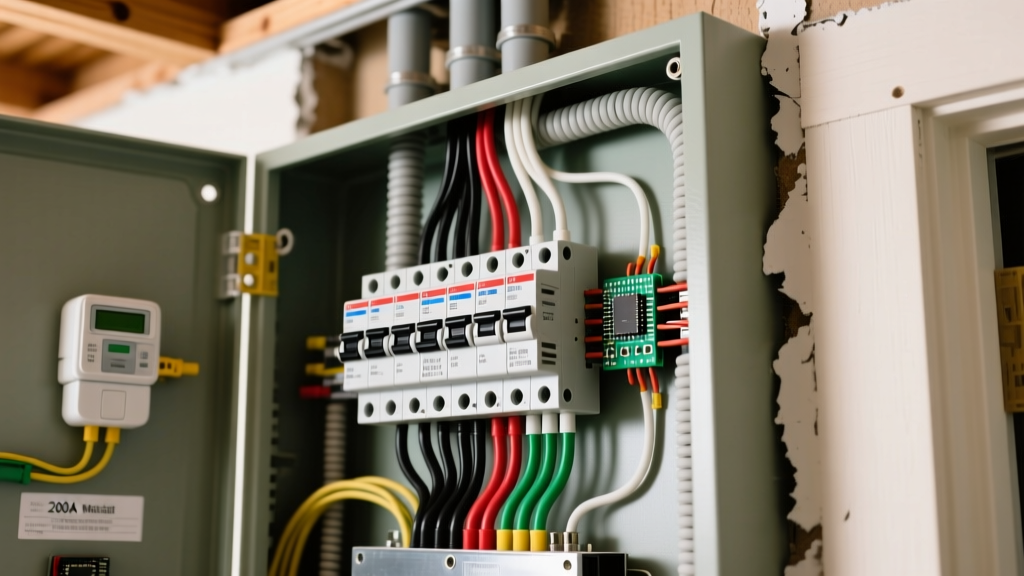
- Verify at the Panel: Follow the trace to the electrical panel. Use the receiver near the breaker switches. The breaker emitting the strongest signal is your target. Verify by toggling the breaker off and confirming the transmitter loses power.
Edge Cases: Tracing Through Metal Clad (MC) Cable and Conduit
The most frustrating scenario for an electrician is attempting to trace electrical wiring that is encased in metal. Standard NM-B (Romex) has a plastic sheath that allows RF signals to pass through easily. However, Metal Clad (MC) cable, Aluminum Conduit, and EMT (Electrical Metallic Tubing) act as a Faraday cage. The metal shielding absorbs and grounds the RF signal, rendering standard circuit tracers completely useless.
Solutions for Shielded Wiring
- The Ground Wire Trick: If you can access a junction box on the MC cable circuit, disconnect the bare copper ground wire from the ground bus. Clip your tone generator's alligator clip directly to the isolated ground wire. Because the ground wire runs inside the metal armor, it will carry the tone, and you can trace the signal by holding the probe directly against the metal cable jacket.
- Signal Injection via Fish Tape: If you are pulling new wire through existing conduit, attach a tone generator to the metal fish tape itself. Trace the fish tape as it moves through the walls to ensure it hasn't snagged or routed into the wrong cavity.
- Amperage Clamp Tracing: For heavy commercial feeders in large conduit, use a clamp-on current tracer. These devices clamp around the live conductor at the source, injecting a high-amperage pulse that can be detected with a specialized magnetic receiver on the outside of the conduit.
Expert Warning: Never rely solely on a single tracing method when cutting into walls. Always corroborate your tracer's reading with a secondary tool, such as an NCVT or an endoscopic borescope camera, before driving a saw or drill bit into the drywall.
Safety Protocols and NEC Compliance
Tracing electrical wiring inherently involves working in close proximity to energized components. The National Fire Protection Association (NFPA) emphasizes that proper personal protective equipment (PPE) and verification protocols are mandatory to prevent arc flash incidents.
Furthermore, if your tracing involves opening panels or de-energizing circuits for tone-and-probe testing, you must adhere to strict Lockout/Tagout (LOTO) procedures. The Occupational Safety and Health Administration (OSHA) requires that any circuit turned off for maintenance or testing be physically locked at the breaker and tagged with the technician's name and contact info to prevent accidental re-energization by a third party.
Pre-Trace Safety Checklist
- Wear ANSI Z87.1 rated safety glasses and voltage-rated gloves when working inside open junction boxes.
- Always test your NCVT on a known live source (like a verified outlet) before and after testing your target wire to ensure the tool's battery hasn't failed mid-job.
- Ensure your circuit tracer is CAT III or CAT IV rated to protect against transient voltage spikes during live-panel tracing.
Final Thoughts on Circuit Mapping
Mastering how to trace electrical wiring separates amateur DIYers from seasoned professionals. By investing in a high-quality advanced circuit tracer like the Klein ET45 for live circuits, and a digital tone kit like the Fluke IntelliTone Pro 200 for dead wires, you eliminate the guesswork from remodels and troubleshooting. Remember that while technology provides the map, your adherence to NEC safety codes and rigorous verification habits ensure you arrive at the destination safely.