
The Critical Reality of Pool Electrical Safety
Designing and executing the electrical wiring for swimming pool environments is arguably the most unforgiving residential electrical project you can undertake. Unlike standard indoor branch circuits, pool wiring operates in a highly corrosive, wet environment where the human body is fully grounded. According to the U.S. Consumer Product Safety Commission (PoolSafely.gov), faulty pool wiring and inadequate bonding remain leading causes of aquatic electrocution and severe shock incidents.
This home project guide bridges the gap between theoretical code and practical installation. We will dissect the requirements of NEC Article 680 (the National Electrical Code section governing pools, fountains, and spas) and provide actionable, 2026-compliant specifications for your equipment, conductors, and equipotential bonding grid.
⚠️ Safety Override: While this guide provides deep technical specifications, local jurisdictions often have amendments to the NEC that are stricter than the baseline code. Always pull a permit and have your rough-in and final bonding grid inspected by a licensed municipal electrical inspector before energizing or filling the pool.Circuit Architecture: Sizing for Modern Pool Equipment
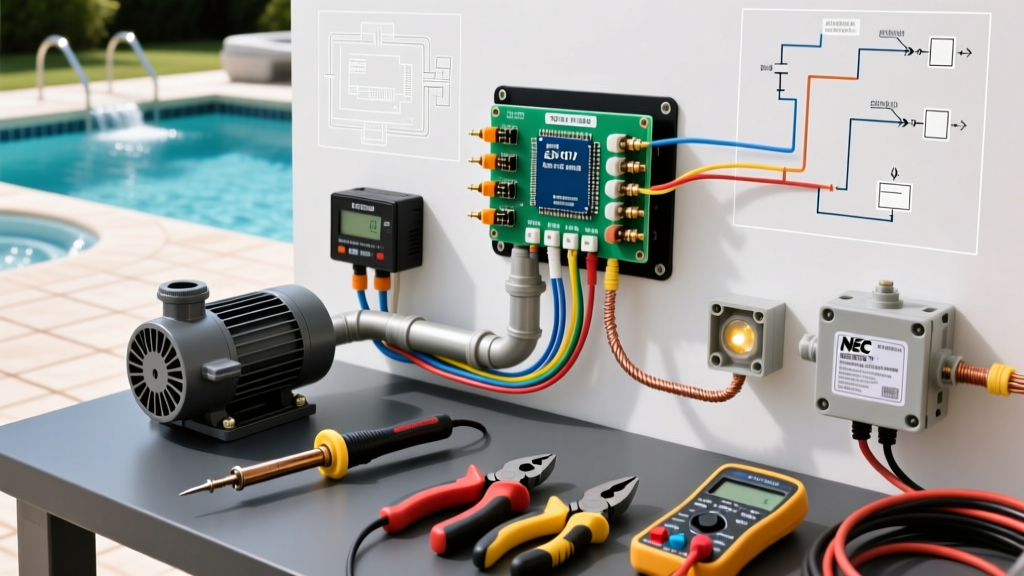
Modern pool pads are no longer just a single 1.5 HP single-speed pump. A standard 2026 residential pool setup includes variable-speed pumps, saltwater chlorine generators (SWCG), gas heaters, and low-voltage LED lighting. Each requires dedicated circuiting with strict Ground Fault Circuit Interrupter (GFCI) protection.
Standard Circuit Requirements Matrix
| Equipment | Voltage | Max Amps | Wire Gauge (THWN-2) | Breaker Specification |
|---|---|---|---|---|
| Variable Speed Pump | 240V | 16A | 12 AWG | 20A 2-Pole GFCI (e.g., Square D QO220GFI) |
| Saltwater Generator | 240V | 10A | 14 AWG | 15A 2-Pole GFCI |
| Gas Pool Heater | 240V | 30A | 10 AWG | 30A 2-Pole GFCI |
| LED Pool Lights (12V) | 12V (Secondary) | N/A | 12 AWG | 15A 1-Pole GFCI (Primary side of transformer) |
| Maintenance Receptacle | 120V | 20A | 12 AWG | 20A 1-Pole GFCI Receptacle or Breaker |
Note: As of the 2023 NEC (and carried into 2026 adoptions), GFCI protection is mandatory for virtually all pool equipment, including 240V pumps and heaters. Standard non-GFCI breakers are no longer permissible for pool pad equipment.
Equipotential Bonding: The Most Misunderstood Requirement
If you take only one concept away from this guide, let it be this: Grounding and bonding are not the same thing. Grounding provides a path for fault current to trip a breaker. Bonding connects all conductive metal parts together so that no potential voltage difference can exist between them. If a swimmer touches a faulty pool light and a metal handrail simultaneously, and they are not bonded, their body becomes the path of least resistance.
The #8 AWG Solid Copper Ring
NEC 680.26 requires an equipotential bonding grid. You must use a #8 AWG solid bare copper wire to create a continuous ring around the pool. This wire must be buried 4 to 6 inches deep in the soil, extending 3 feet horizontally from the outside edge of the pool coping.
Mandatory Bonding Points (The 4-Point Minimum)
- The Pool Shell: If the pool is concrete/gunite, the structural reinforcing steel (rebar) must be bonded. Tie the #8 copper to the rebar using minimum four points around the perimeter using steel tie wire or approved bronze clamps.
- All Metal Parts Within 5 Feet: This includes diving board stands, metal handrails, pool ladders, metal fences, and metal awnings.
- Electrical Equipment: The metal housings of the pump motor, heater, and pool light niches must have a dedicated #8 copper bonding lug connected to the grid.
- The Pool Water: This is the most frequently failed inspection point in DIY builds. You must bond the water itself using an approved water bonding device, such as the Polaris Water Bonding Fitting (Model U399000) or a similar inline PVC bonding union installed on the pump's return or suction line.
"A common failure mode is using standard zinc-plated steel ground clamps on copper pipes or rebar. These will corrode and fail within two seasons in a pool environment. You must use UL-listed brass, bronze, or copper grounding clamps (e.g., King Innovation 811-20 Bronze Ground Clamp) for all below-grade and wet-location bonding connections."
Conduit and Conductor Specifications
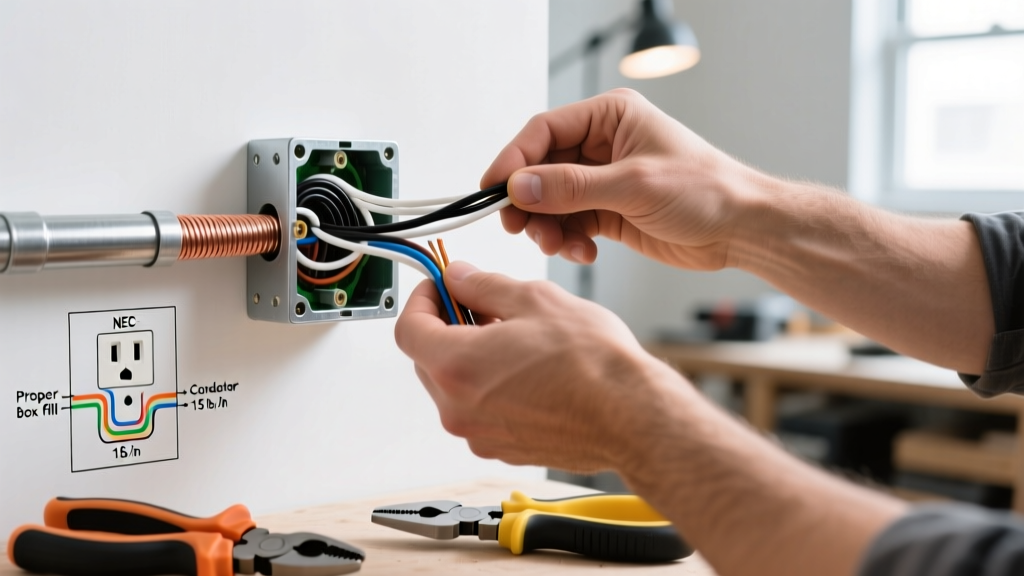
You cannot use standard NM-B (Romex) cable for any portion of outdoor pool wiring, even if it is run inside a conduit. NM-B is rated only for dry, indoor locations. Moisture will inevitably condense inside outdoor conduit, destroying the paper wrapping and degrading the insulation.
The THWN-2 Mandate
All conductors must be individual THWN-2 (Thermoplastic Heat and Water-resistant Nylon-coated) stranded wires pulled through conduit. Stranded wire is vastly superior to solid wire for pulling through the multiple sweeping bends required in pool pad layouts.
Conduit Routing Rules
- Underground: Minimum 18 inches deep for PVC conduit. Schedule 40 PVC is acceptable for standard underground burial.
- Above Grade / Physical Damage Zones: Where conduit emerges from the ground and travels up to the equipment or sub-panel, you must use Schedule 80 PVC or rigid metal conduit (RMC) to protect against physical damage from weed whackers, lawn equipment, and foot traffic.
- Wet Niche Light Conduits: The conduit running from the pool light niche to the junction box must be sealed with a duct seal compound or an approved expanding foam sealant to prevent water from traveling through the conduit and flooding the junction box or transformer.
2026 Material Cost Breakdown for a Standard Pool Pad
Budgeting for pool electrical requires accounting for the premium cost of GFCI breakers and outdoor-rated enclosures. Below is a realistic material cost estimate for a standard 20x40 residential pool setup in 2026.
| Material Category | Specific Items | Estimated Cost (2026) |
|---|---|---|
| Breakers & Panel | Outdoor 100A Subpanel, 4x 2-Pole GFCI Breakers, 1x 1-Pole GFCI | $650 - $850 |
| Wire & Conduit | 250ft #8 Solid Bare Copper, 300ft THWN-2 (10/12 AWG), Schedule 40/80 PVC | $400 - $600 |
| Bonding Hardware | Bronze clamps, split bolts, water bonding union, bonding lugs | $120 - $180 |
| Lighting & Transformers | 2x 12V LED Wet Niche Lights, 100W Pool-Rated Transformer, Junction Boxes | $450 - $700 |
| Miscellaneous | Duct seal, PVC cement, outdoor-rated receptacles, bubble covers | $80 - $120 |
| Total Material Estimate: | $1,700 - $2,450 | |
Note: This excludes the cost of trenching labor, the main feeder wire from your house to the subpanel, and municipal permit fees.
Common DIY Failure Modes and Edge Cases
Even experienced indoor electricians make critical errors when crossing over to pool wiring. Avoid these specific pitfalls:
- The Neutral Pigtail Error: 240V GFCI breakers require a neutral pigtail connection to the panel's neutral bar, even if the load (like a pool heater) only uses two hot legs and a ground. Failing to connect the pigtail will cause the breaker to trip immediately or fail to provide ground-fault protection.
- Undersized Light Transformers: When sizing the transformer for 12V pool lights, you must calculate the total wattage of all lights on the circuit and add a 20% overhead buffer. If you have two 30W LED lights (60W total), a 100W transformer is required to handle inrush current and prevent voltage drop over long wire runs.
- Receptacle Placement Violations: NEC 680.22 dictates that standard 120V receptacles must be located at least 10 feet from the inside wall of the pool. If space is constrained, you can reduce this to 6 feet, but only if the receptacle is GFCI protected and is a single, non-locking type. General-purpose outdoor receptacles not associated with the pool must still adhere to the 10-foot rule.
Frequently Asked Questions
Can I use a standard indoor GFCI receptacle outside if it has a weatherproof cover?
No. While the GFCI mechanism might be the same, outdoor receptacles must be rated for wet locations. Furthermore, the weatherproof cover must be an 'in-use' bubble cover that allows a cord to be plugged in while keeping the enclosure sealed from rain and hose spray.
Do I need to bond a vinyl-lined pool that has no metal walls?
Yes. Even if the pool shell is non-conductive (vinyl or fiberglass), you must still bond all metal equipment (pumps, heaters, ladders) within 5 feet of the pool, and you must still bond the pool water using an inline water bonding fitting.
Is it safe to run pool wiring in the same trench as the gas line?
NEC and plumbing codes generally require a minimum separation of 12 inches between electrical conduit and gas lines in the same trench. Always check your local utility and municipal codes, as some jurisdictions require 18 to 24 inches of separation or a physical barrier between the two.