
Understanding Range Hood Electrical Wiring for Modern Kitchens
When planning a kitchen remodel, range hood electrical wiring is frequently overshadowed by high-profile appliance selections like induction cooktops and smart refrigerators. However, improper wiring for your ventilation system can lead to tripped breakers, excessive motor noise, or even fire hazards. As of 2026, the shift toward high-CFM (Cubic Feet per Minute) blowers and integrated brushless DC (BLDC) motors has changed the electrical landscape for kitchen ventilation. This guide provides a comprehensive, code-compliant approach to planning, routing, and terminating your range hood electrical wiring.
The 2026 Landscape: BLDC Motors and AFCI Mandates
Modern premium range hoods, such as the latest ZLine and Broan-NuTone Elite series, increasingly utilize Brushless DC (BLDC) motors. While these motors are highly energy-efficient—often drawing less than 3 amps even at maximum speed—they contain sensitive internal logic boards and inverters. This makes them highly susceptible to voltage drops and harmonic distortion caused by shared circuits. Furthermore, recent adoptions of the National Electrical Code (NEC) mandate Arc-Fault Circuit Interrupter (AFCI) protection for kitchen branch circuits. According to the National Fire Protection Association (NFPA 70), ensuring your range hood is on a properly sized, dedicated AFCI-protected circuit prevents nuisance tripping caused by the inductive startup loads of older, shared appliances.
Expert Insight: Never wire a high-CFM range hood to a Kitchen Small Appliance Branch Circuit (SABC). The NEC strictly prohibits lighting or ventilation loads on the dedicated 20A countertop receptacle circuits. Doing so is a guaranteed code violation and a primary cause of breaker trips during heavy cooking sessions.
Hardwired vs. Cord-and-Plug Configurations
Before pulling any wire, you must decide on the termination method. While many DIYers prefer the simplicity of a plug, hardwiring is the professional standard for permanent kitchen installations. Below is a comparison matrix to help you decide based on your specific cabinetry and hood model.
| Feature | Hardwired (NM-B Cable) | Cord-and-Plug (Receptacle) |
|---|---|---|
| NEC Compliance | Preferred for permanent installs (Article 422) | Allowed if cord is appliance-rated and accessible |
| Aesthetics | Completely hidden inside cabinetry or soffit | Requires upper cabinet cutout to hide the plug |
| Vibration Resistance | High (solid junction box termination) | Moderate (prongs can loosen over years of use) |
| Serviceability | Requires disconnecting at the breaker panel | Simple unplug for immediate hood removal |
| Best Application | Custom wood hoods, built-in inserts, new construction | Retrofit remodels, under-cabinet hoods, rentals |
If you opt for a cord-and-plug setup, NEC Article 422.16(B) dictates that the flexible cord must be identified as suitable for the appliance, must not be used as a substitute for fixed wiring, and must be visible. Hiding a standard extension cord behind drywall is a severe fire hazard.
Circuit Sizing and Wire Gauge Specifications
Selecting the correct wire gauge and breaker size is critical. The Electrical Safety Foundation International (ESFI) emphasizes that undersized circuits are a leading cause of kitchen electrical fires. Here is how to size your circuit based on the hood's features:
Scenario A: Standard Ventilation and LED Lighting
If your range hood only features a blower motor and LED lighting (e.g., a standard 400 CFM under-cabinet model), the total draw is typically between 3 and 5 amps. A standard 15-Amp circuit using 14/2 NM-B (Romex) cable is perfectly adequate and code-compliant.
Scenario B: High-CFM, Infrared Heat Lamps, or Makeup Air
If your hood includes infrared heat lamps, a built-in makeup air damper, or a high-draw external blower exceeding 900 CFM, the amperage can spike to 12-15 amps. In this scenario, you must upgrade to a 20-Amp circuit using 12/2 NM-B cable. Running a 15A heat lamp on a 14-gauge wire will cause the wire insulation to degrade and melt over time, long before the breaker trips.
Step-by-Step Routing and Termination Guide
Follow this precise workflow to ensure a safe, inspection-ready installation. For detailed manufacturer-specific clearance requirements, always consult the Broan-NuTone Installation Guidelines or your specific brand's documentation.
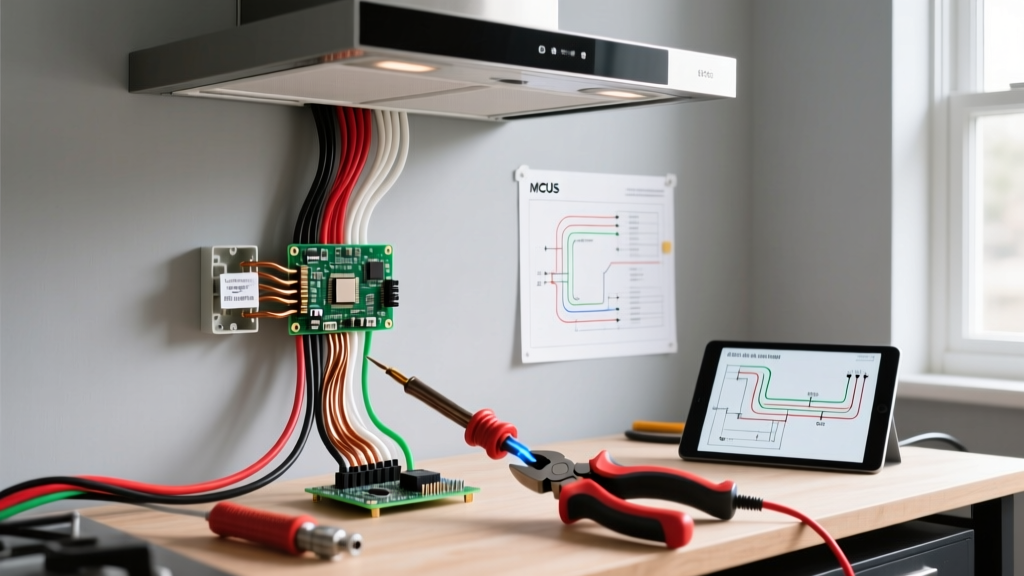
- Rough-In and Routing: Run your 12/2 or 14/2 NM-B cable from the electrical panel to the hood location. Maintain a minimum clearance of 2 inches between the electrical cable and the metal exhaust ductwork. Heat transfer from the duct can degrade the PVC cable jacket over a decade of use.
- Framing Clearances: When drilling through wall studs or ceiling joists, keep the cable at least 1.25 inches back from the edge of the framing to prevent drywall screws from piercing the wire later. Use nail plates if you must drill closer to the edge.
- Junction Box Installation: Mount a metal or heavy-duty plastic junction box inside the upper cabinetry or soffit. The box MUST remain accessible. Do not bury it behind drywall or the hood's decorative chimney cover without a removable access panel.
- Stripping and Termination: Strip 3/4 inch of insulation from the black (hot), white (neutral), and bare copper (ground) wires. Connect the ground wires first using a green grounding screw or wire nut.
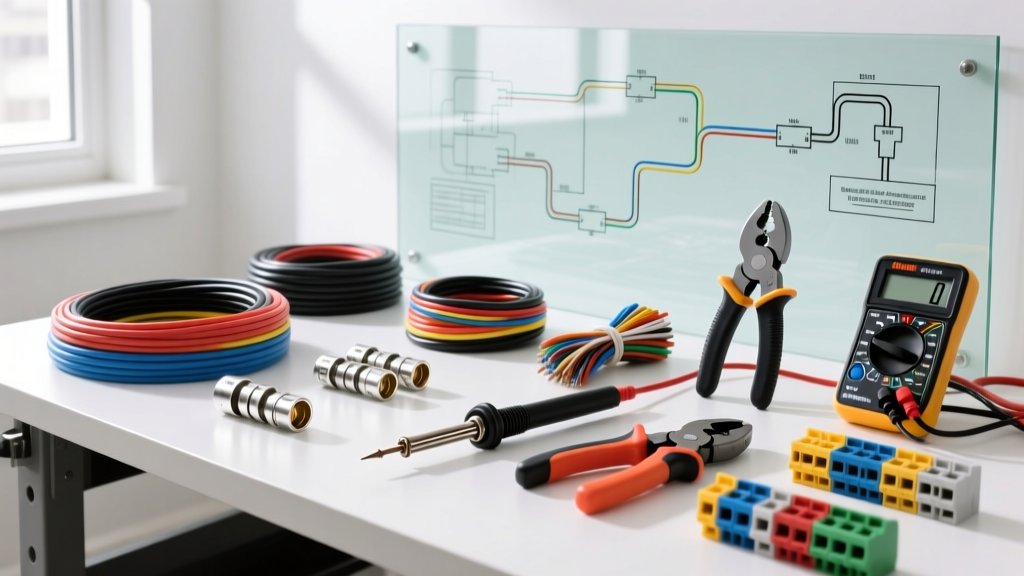
- Using Vibration-Resistant Connectors: Range hoods generate constant micro-vibrations. Standard twist-on wire nuts can back off over 5 to 10 years. We strongly recommend using WAGO 221 series lever nuts. They provide a gas-tight, vibration-proof connection that will not loosen, even under the continuous vibration of a 600 CFM blower.
- Final Testing: Before securing the hood to the wall or cabinet, turn the breaker on and test the fan speeds, lighting, and any auxiliary features (like delay-off timers) to ensure the logic board received clean power.
Real-World Failure Modes and Edge Cases
Even experienced DIYers encounter issues when wiring range hoods. Be aware of these common failure modes:
- LED Flickering on Dimmer Switches: Many homeowners attempt to wire their hood's LED lights to a standard wall dimmer. Most range hood LEDs require proprietary, low-voltage DC drivers built into the hood's control board. Wiring them to a standard TRIAC wall dimmer will cause severe flickering and eventually destroy the LED driver. Always use the hood's built-in touch controls for dimming.
- Induced Voltage from Parallel Runs: If your NM-B cable runs parallel to high-draw appliance cables (like a 50A electric range cable) for more than 6 feet inside a wall cavity, electromagnetic interference can induce a phantom voltage in the hood's neutral wire. This can cause BLDC motor logic boards to throw error codes. Cross high-voltage cables at 90-degree angles whenever possible.
- Grease Infiltration in Junction Boxes: If your junction box is located directly above the hood's grease filters and is not properly sealed, vaporized cooking grease can enter the box through the cable knockouts. Over years, this grease becomes highly flammable and conductive. Always use tight-fitting Romex connectors (cable clamps) to seal the knockout holes.
Frequently Asked Questions
Does a range hood require GFCI protection?
Under standard NEC guidelines, a hardwired range hood installed 6 feet or more above the floor does not require Ground Fault Circuit Interrupter (GFCI) protection. However, if you use a cord-and-plug setup and the receptacle is located within the countertop GFCI zone, or if your local Authority Having Jurisdiction (AHJ) has adopted stricter amendments, GFCI may be required. Note that GFCI breakers can sometimes nuisance-trip due to the inductive startup surge of large blower motors.
Can I wire my range hood and microwave to the same circuit?
No. Over-the-range (OTR) microwaves typically draw 12 to 15 amps on their own and require a dedicated 20A circuit. Wiring a range hood to the same circuit as an OTR microwave will almost certainly overload the breaker when both appliances are used simultaneously, and it violates NEC branch circuit sizing rules for fixed appliances.
What is the maximum length I can run 14/2 wire on a 15A hood circuit?
While the NEC does not specify a strict maximum length for branch circuits, voltage drop becomes a factor on long runs. For a 15A circuit using 14/2 copper wire, you should keep the total run under 50 feet to maintain a voltage drop of less than 3%. If your panel is in the basement and the hood is on a second-floor kitchen addition 80 feet away, you must upsize to 12/2 wire to compensate for the resistance.