
Defining the Legacy: What Is Knob and Tube Electrical Wiring?
When inspecting homes built between the 1880s and the late 1930s, electricians and homebuyers frequently ask: what is knob and tube electrical wiring? Often abbreviated as K&T, this was the first standardized method of concealing electrical wiring inside walls and ceilings. It revolutionized residential electrification, replacing dangerous exposed surface wiring. However, in 2026, K&T is considered an obsolete legacy system. While the original installation was remarkably robust for its time, the system was engineered for the electrical loads of the early 20th century—primarily incandescent lighting and the occasional phonograph—not the high-draw appliances, HVAC systems, and sensitive electronics of the modern era.
Understanding K&T requires looking past the nostalgia of historic homes and examining the strict parameters of the National Electrical Code (NEC), specifically Article 394, which governs its use, limitations, and mandated safety clearances.
The Anatomy of a K&T Circuit
Unlike modern non-metallic (NM-B or Romex) cables that bundle hot, neutral, and ground wires inside a single plastic sheath, K&T utilizes single-conductor wiring. The system relies on physical separation and air circulation to dissipate heat.
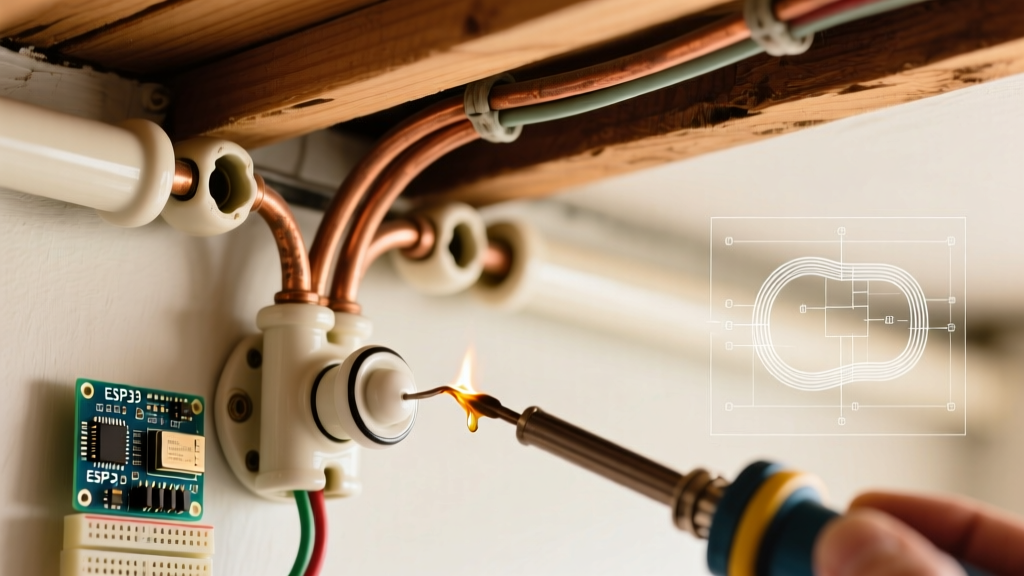
- Ceramic Knobs: These nail-mounted standoffs secure the wire to framing members, maintaining a mandatory 1-inch air gap between the wire and the wood to prevent heat transfer and charring.
- Ceramic Tubes: Used when a wire must pass through a wooden joist or stud. The tube prevents the wire's insulation from rubbing against the wood and protects it from compression.
- Single-Conductor Wire: Typically #12 or #14 AWG solid copper, often tinned (giving it a silver appearance). The hot and neutral wires are run separately, usually at least 3 inches apart, to prevent electromagnetic induction and short circuits.
- Cloth-Rubber Insulation: The copper was coated in vulcanized rubber and wrapped in a woven cotton or cambric cloth jacket. Over decades, this insulation dries out, becomes brittle, and flakes off when disturbed.
NEC Article 394: Code Restrictions and Standards
The National Fire Protection Association (NFPA) strictly regulates legacy wiring through NEC Article 394 (Concealed Knob-and-Tube Wiring). The code explicitly prohibits the installation of new K&T systems. For existing installations, the NEC permits K&T to remain in use only if it is maintained in its original, unaltered condition and meets specific environmental criteria.
NEC 394.12 Prohibition on Thermal Insulation: "Concealed knob-and-tube wiring shall not be used in... spaces where the space is filled with loose or rolled insulation."
This is the most frequently violated code regarding K&T. Homeowners and insulation contractors often blow cellulose or lay fiberglass batts over attic floor joists, completely burying the K&T wiring. Because K&T relies on ambient air circulation to shed the heat generated by electrical resistance, burying it in thermal insulation traps the heat. This accelerates the degradation of the rubber insulation and creates a severe fire hazard.
Splicing Rules and the "Solder" Requirement
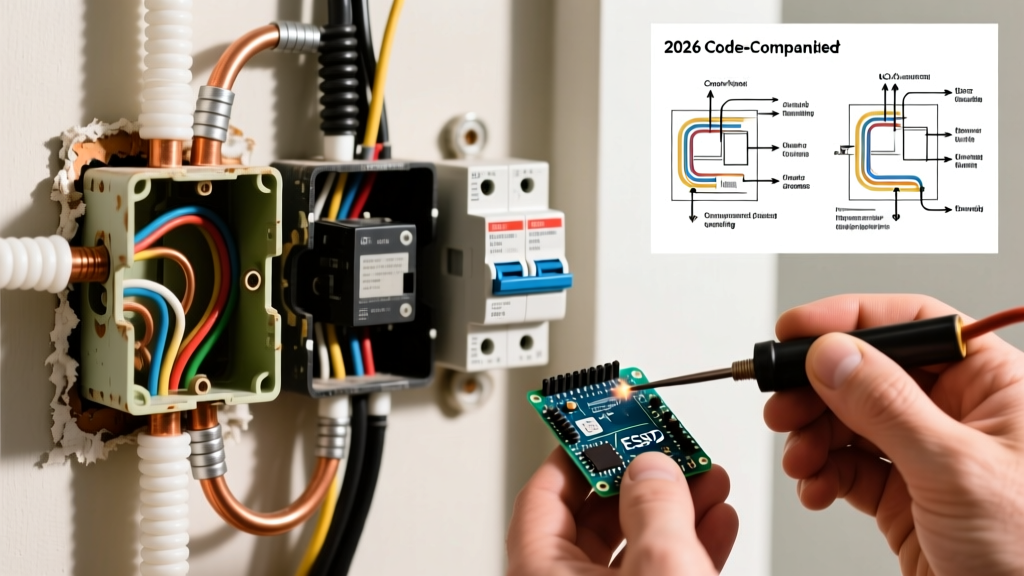
Under NEC 394.14, splices in K&T wiring must be mechanically secure and soldered. Early electricians used the "Western Union" splice, twisting the wires tightly, dipping them in molten solder, and wrapping the joint in rubber friction tape. Modern wire nuts and push-in connectors are strictly prohibited on K&T splices unless part of a documented, code-compliant transition to modern wiring inside an accessible junction box.
Comparison Matrix: K&T vs. Modern NM-B Cable
| Feature | Knob & Tube (Legacy) | Modern NM-B (Romex) |
|---|---|---|
| Grounding | None (Ungrounded 2-prong system) | Includes bare copper equipment ground |
| Insulation Material | Vulcanized rubber & woven cloth | Color-coded PVC / Nylon (THHN/THWN) |
| Heat Dissipation | Requires open air space (cannot be insulated) | Rated for contact with thermal insulation |
| Circuit Protection | Originally fuses; often incompatible with modern AFCI | Compatible with AFCI/GFCI breakers |
| Estimated Lifespan | 60-80 years (most are now past end-of-life) | 70+ years (under normal conditions) |
Primary Failure Modes and Safety Hazards
While the copper conductors in K&T wiring can last centuries, the system's vulnerabilities lie in its insulation, its lack of grounding, and human tampering. According to the U.S. Consumer Product Safety Commission (CPSC), aging electrical systems are a leading contributor to residential electrical fires.
1. The "Amateur Extension" Hazard
The greatest danger to a K&T system is not its original installation, but decades of DIY modifications. Homeowners frequently splice modern Romex directly into old K&T wires inside walls using wire nuts, without soldering and without installing accessible junction boxes. These hidden, unsoldered splices loosen over time due to thermal expansion and contraction, leading to high-resistance connections, arcing, and concealed fires.
2. Ungrounded Circuits and Modern Electronics
K&T is an ungrounded system. It provides only a hot and a neutral wire. Modern appliances with metal casings (refrigerators, washing machines, microwaves) require an equipment grounding conductor to safely trip the breaker in the event of an internal short. Using "cheater plugs" (3-prong to 2-prong adapters) on K&T circuits leaves users vulnerable to lethal shock hazards. Furthermore, sensitive modern electronics (computers, smart home hubs) suffer from increased electromagnetic interference and surge vulnerability without a true ground.
3. Overloading the Circuit
Original K&T circuits were designed to carry 5 to 10 amps, primarily for lighting. Today, a single 15-amp K&T circuit might be tasked with powering window air conditioners, space heaters, and entertainment centers. Because the original fuse boxes were often upgraded to modern breaker panels without upgrading the wire gauge or adding new circuits, the wires operate continuously near their thermal limits, baking the remaining cloth insulation.
Insurance and Real Estate Implications in 2026
In the current real estate market, active K&T wiring is a major transaction hurdle. Most major property insurance carriers in 2026 will either decline to underwrite a policy on a home with active K&T wiring or will mandate a complete rewire within 30 to 60 days of closing. Some specialized insurers may offer coverage, but they typically apply a 20% to 35% premium surcharge and require a strict inspection by a licensed master electrician to verify that the K&T is limited to low-draw lighting circuits and is completely free of thermal insulation.
The Cost of Remediation
Homeowners facing a rewire should budget accordingly. As of 2026, a full whole-house rewire for a 2,000-square-foot home, including drywall cutting, patching, and panel upgrades to meet modern AFCI/GFCI codes, typically ranges from $14,000 to $26,000. Attempting to "pigtail" or abandon K&T in place while running new lines is cheaper ($8,000 to $12,000) but requires meticulous documentation to satisfy insurance inspectors that no legacy wiring remains energized.
Actionable Advice for Homeowners and Buyers
- Do Not Disturb Attic Insulation: If you suspect K&T in your attic, do not add blown-in cellulose or lay new fiberglass batts until an electrician has verified the wiring type. If K&T is present, it must be abandoned or rewired before insulating.
- Look for the Tell-Tale Signs: Check unfinished basements and attics for white ceramic knobs nailed to the sides of joists. Look for old, black, rubbery tape (friction tape) at wire joints.
- Install GFCI Protection: While a GFCI receptacle does not provide an equipment ground, NEC 406.4(D) allows the installation of GFCI outlets on ungrounded K&T circuits to provide shock protection, provided the outlet is labeled "No Equipment Ground."
- Plan for AFCI Upgrades: Modern codes require Arc Fault Circuit Interrupters (AFCIs) in bedrooms and living areas. K&T wiring's degraded insulation often causes "leakage" that will nuisance-trip standard AFCI breakers. A full rewire is usually the only code-compliant path to achieving modern AFCI protection.
Conclusion
Knob and tube wiring was a marvel of early electrical engineering, but its operational lifespan has long since expired. Understanding what knob and tube electrical wiring is—and recognizing its strict limitations under NEC Article 394—is critical for maintaining fire safety in historic properties. Whether you are a homeowner planning an attic insulation upgrade or a buyer evaluating a 1920s craftsman, treating K&T as an active hazard rather than a charming antique is the only safe approach to modern electrical standards.