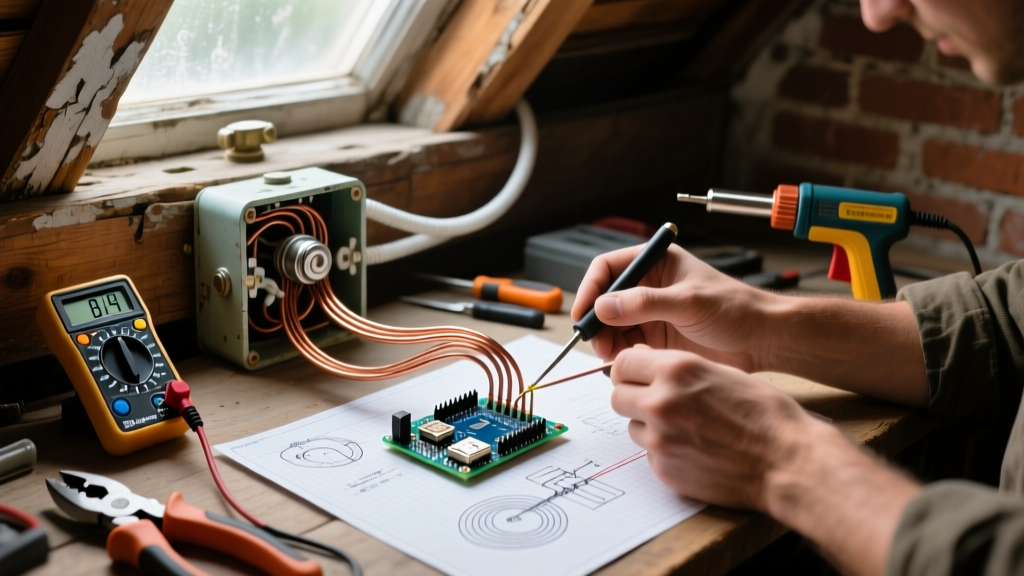

The Hidden Hazards of Aging Electrical Infrastructure
Upgrading or repairing old electric wiring is one of the most high-risk tasks in residential and commercial electrical work. According to the National Fire Protection Association (NFPA), electrical malfunctions consistently rank among the leading causes of home structure fires, with aging infrastructure playing a disproportionate role. Homes built before 1980 often contain legacy wiring systems that were never designed to handle the continuous, high-amperage loads of modern appliances, HVAC systems, and smart home electronics.
For DIY enthusiasts and seasoned electricians alike, interacting with legacy circuits requires a paradigm shift from standard new-construction wiring. This guide details the exact failure modes of historical wiring types, diagnostic safety protocols, and 2026-compliant upgrade strategies to ensure your projects meet the highest safety standards.
The Big Three: Identifying Hazardous Old Electric Wiring
Before opening a single junction box or removing a receptacle cover, you must identify the era and type of wiring hidden behind your walls. Each legacy system presents unique failure modes and code violations.
1. Knob-and-Tube (K&T) Wiring (1880s–1940s)
Knob-and-tube wiring consists of single insulated copper conductors run through porcelain tubes (where they pass through framing) and supported by porcelain knobs.
- Insulation Failure: K&T relies on a rubberized cloth insulation that becomes highly brittle over decades. Simply pulling a wire to trace a circuit can cause the insulation to shatter, leaving bare, energized copper exposed inside wall cavities.
- The Insulation Trap: K&T was engineered to dissipate heat into free air space. When modern retrofit contractors blow cellulose or fiberglass insulation into walls containing K&T, the heat cannot escape. This thermal buildup accelerates insulation degradation and creates a severe fire hazard.
- No Equipment Ground: K&T is a two-wire system (hot and neutral). There is no equipment grounding conductor (EGC), making it incompatible with modern surge protectors and three-prong appliances.
2. Aluminum Branch Wiring (1960s–1970s)
During the copper shortage of the mid-1960s, builders utilized AA-1350 aluminum alloy for 15A and 20A branch circuits. This material is fundamentally different from modern AA-8000 series aluminum used for heavy feeder cables.
- Thermal Creep: AA-1350 aluminum expands and contracts significantly more than copper when heated by electrical load. Over time, this 'creep' causes the wire to loosen under standard brass or steel screw terminals, increasing resistance and generating extreme heat.
- Galvanic Corrosion: When aluminum contacts copper in the presence of ambient moisture, galvanic corrosion occurs. This creates a high-resistance oxide layer that leads to arcing and melted receptacles.
- Visual ID: Look for 'AL' or 'ALUMINUM' stamped on the plastic or metal jacket of the Romex-style sheathing, or observe a dull silver color at the stripped wire ends inside the panel.
3. Early Cloth-Sheathed NM (1930s–1950s)
Often mistaken for modern Romex, early Non-Metallic (NM) cable featured a braided cotton or rayon outer sheath treated with asphalt or wax.
- Physical Degradation: The outer cloth sheath rots and flakes away, especially in damp environments like basements or crawlspaces, exposing the inner paper wrap and ungrounded rubber-insulated conductors.
- Ungrounded Circuits: Like K&T, these early NM cables lack a ground wire, yet they are often improperly retrofitted with three-prong receptacles to deceive home inspectors and buyers.
Diagnostic Safety Best Practices Before Touching a Wire
Working on old electric wiring demands rigorous verification. Never assume a circuit is dead just because the breaker is off; legacy panels are notorious for mislabeled circuits and double-tapped feeders.
- Non-Contact Voltage Testing (NCVT): Use a dual-range tester like the Klein Tools NCVT-3 (approx. $35). Test a known live source first, test the target wire, then test the known source again (the Live-Dead-Live method). NCVT pens can sometimes fail to detect voltage on K&T wires due to the thick, degraded rubber insulation acting as a shield.
- Thermal Imaging Scans: Before cutting into walls, scan the electrical panel and accessible junction boxes with a thermal camera like the FLIR C5 ($699). Look for a temperature differential (Delta T) greater than 15°C (27°F) between adjacent breakers or at neutral bus bar connections. A hot spot indicates high resistance, loose connections, or harmonic overloading common in degraded aluminum systems.
- Receptacle Analyzer Limitations: Standard 3-light receptacle testers (like the Sperry GFI-350A) are virtually useless on old ungrounded systems. They require an EGC to verify correct wiring. Instead, use a digital multimeter to measure Hot-to-Neutral (should be ~120V) and Hot-to-Ground (will read 0V or ghost voltage on ungrounded K&T/Cloth NM).
Upgrade Strategies and Cost Breakdown (2026 Estimates)
Remediating hazardous old electric wiring requires balancing budget, code compliance, and physical disruption. Below is a comparison of the most common upgrade paths for the two most problematic legacy systems.
| Wiring Type | Remediation Method | Material Cost | Labor/Time Impact | NEC Compliance & Inspector Acceptance |
|---|---|---|---|---|
| Aluminum (AA-1350) | AlumiConn Lug Pigtailing | ~$4.50 per connection | 2-4 hours per room; minimal drywall repair | Fully accepted; UL listed for Al-to-Cu transitions. |
| Aluminum (AA-1350) | COPALUM Crimp System | ~$2.00 per crimp + specialized tool rental | Requires certified contractor; fast execution | Considered the 'gold standard' by CPSC; requires special tooling. |
| Aluminum (AA-1350) | Full Copper Rewire | $0.80/ft for 12/2 NM-B | $15,000 - $35,000 total; weeks of drywall work | Ultimate solution; brings home to 2026 new-construction standards. |
| Knob-and-Tube | Full Copper Rewire | $0.80/ft for 12/2 NM-B | $18,000 - $40,000 total; extensive wall fishing | Required by most insurance companies; no code-compliant 'repair' exists. |
| Knob-and-Tube | Abandonment in Place | N/A | 1-2 hours to disconnect at panel | Mandatory if left in walls; must be completely disconnected from power. |
NEC Code Compliance for Legacy Systems
When interacting with old electric wiring, the National Electrical Code (NEC) mandates specific safety upgrades to protect end-users. Understanding these rules prevents failed inspections and dangerous workarounds.
The Ungrounded Receptacle Dilemma (NEC 406.4(D)(2))
If you are replacing a damaged two-prong receptacle on an ungrounded K&T or early NM circuit, you cannot simply install a standard three-prong receptacle. Doing so creates a 'false ground' scenario, tricking users into plugging in surge protectors that will not function.
Code-Compliant Solution: You must install a GFCI receptacle or protect the circuit with a GFCI breaker. Furthermore, the faceplate must be labeled with the included stickers reading 'GFCI Protected' and 'No Equipment Ground'. This provides shock protection (5mA trip threshold) without providing a fault path for surge suppression.
AFCI Requirements on Circuit Extensions
Under recent NEC updates, if you extend an existing legacy branch circuit (for example, adding a new outlet to an old 1950s living room circuit), the entire circuit may now require Arc-Fault Circuit Interrupter (AFCI) protection. Because old electric wiring often features degraded insulation and hidden splices, installing an AFCI breaker at the panel is a critical safety upgrade that detects dangerous parallel and series arcing that standard breakers will ignore.
When to Call a Licensed Electrician vs. DIY Limits
While DIYers can safely replace receptacles on modern, grounded copper circuits, old electric wiring introduces variables that exceed standard homeowner maintenance.
- Call a Pro for Aluminum: Never use standard purple or yellow wire nuts to splice copper pigtails to aluminum. Even with anti-oxidant paste (like Noalox), wire nuts are widely rejected by modern inspectors due to high failure rates. Use AlumiConn lug connectors or hire a COPALUM-certified electrician.
- Call a Pro for Panel Upgrades: If your old wiring is connected to a Federal Pacific Stab-Lok or Zinsco panel, the breakers themselves are prone to mechanical failure and will not trip during a short circuit. The Electrical Safety Foundation International (ESFI) strongly recommends full panel replacement alongside wiring upgrades.
- Call a Pro for Insurance Compliance: Many homeowners insurance carriers will outright deny coverage or refuse to renew policies on homes with active Knob-and-Tube or AA-1350 aluminum wiring. A licensed electrician can provide the required 'Letter of Certification' after a full rewire or approved pigtailing remediation.
Summary of Actionable Safety Rules
Handling old electric wiring is an exercise in risk mitigation. Always verify circuits with the Live-Dead-Live testing method, assume no equipment ground exists until proven otherwise with a multimeter, and never compromise on approved transition connectors for aluminum wiring. By respecting the physical limitations of aging materials and adhering strictly to NEC remediation codes, you can safely bridge the gap between historical construction and modern electrical demands.
For further reading on legacy wiring hazards, consult the Consumer Product Safety Commission (CPSC) guide on aluminum wiring and review your local municipality's specific amendments to the NEC regarding older home renovations.