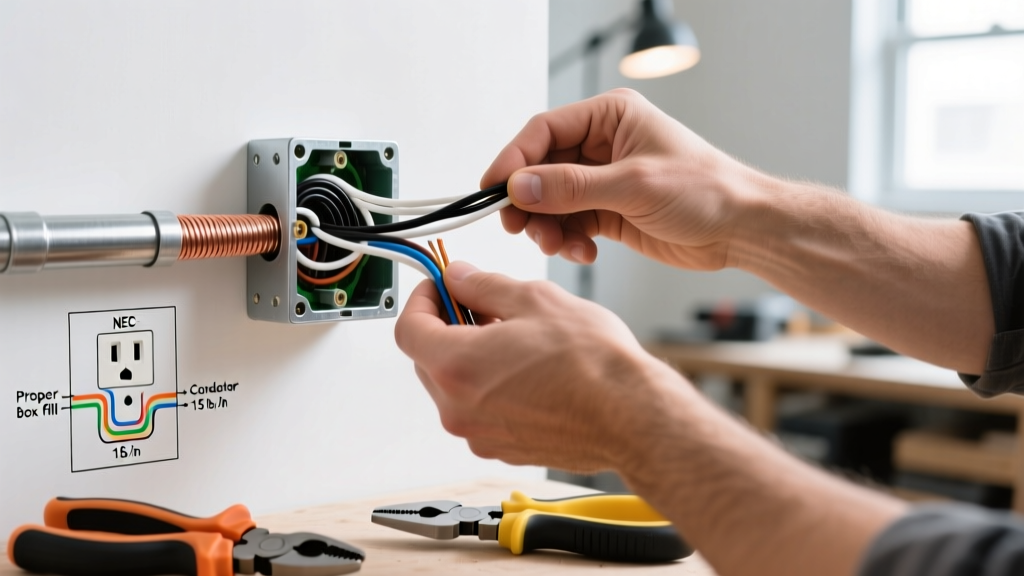

The True Cost of Failing an Outlet Wiring Inspection
In 2026, municipal building departments are stricter than ever regarding residential and commercial electrical rough-in and final inspections. A failed inspection doesn't just mean a bruised ego; it triggers re-inspection fees that typically range from $85 to $175 per trip, not to mention the cascading delays in drywall, painting, and final closing schedules. When it comes to electrical wiring for outlets, inspectors are not merely looking for functional power; they are verifying strict adherence to the National Electrical Code (NEC), specifically focusing on thermal management, fault protection, and mechanical integrity.
This guide bypasses basic DIY tutorials and dives straight into the technical compliance metrics that licensed electricians and advanced DIYers must master to guarantee a first-pass inspection.
Core Conductor Sizing and Overcurrent Protection
The foundation of outlet compliance lies in matching the conductor ampacity to the overcurrent protection device (breaker) and the receptacle rating. Inspectors will immediately flag mismatched configurations, particularly the dangerous practice of placing 15A receptacles on 30A circuits or using 14 AWG wire on 20A breakers.
| Breaker Size | Min. Wire Gauge | Receptacle Rating Allowed | Common Application |
|---|---|---|---|
| 15 Amp | 14 AWG | 15A only | General lighting, bedroom/living room outlets |
| 20 Amp | 12 AWG | 15A or 20A | Kitchens, bathrooms, garages, outdoor receptacles |
| 20 Amp (Dedicated) | 12 AWG | 20A only | Window AC units, heavy-duty garage tools |
Mastering Box Fill Calculations (NEC Article 314.16)
Overcrowded junction and receptacle boxes trap heat, degrading wire insulation over time. Inspectors routinely carry digital calipers and use box fill calculators. To pass, you must calculate the volume allowances based on the largest conductor entering the box.
Volume Allowance per Conductor
- 14 AWG: 2.0 cubic inches per wire
- 12 AWG: 2.25 cubic inches per wire
- 10 AWG: 3.0 cubic inches per wire
Step-by-Step Box Fill Calculation
- Count the Conductors: Each unspliced conductor running through the box counts as one. Each conductor originating and terminating in the box counts as one. (Hot and neutral count individually).
- Count the Grounds: All equipment grounding conductors combined count as a single volume allowance based on the largest ground wire.
- Count the Clamps: Internal cable clamps count as a single volume allowance.
- Count the Devices: Each receptacle or switch counts as two volume allowances based on the largest wire connected to it.
- Multiply and Compare: Multiply the total count by the cubic inch value of your wire gauge, then compare it to the stamped cubic inch rating on the inside of the electrical box.
Example: A standard single-gang plastic nail-on box is typically 22.5 cubic inches. If you are wiring a 12 AWG outlet with one feed-in and one feed-out cable (4 current-carrying conductors, 1 ground, 1 device = 6 allowances), the math is 6 x 2.25 = 13.5 cubic inches. This passes easily. However, adding a second feed-out cable pushes the calculation to 18.0 cubic inches, dangerously close to the box limit.
GFCI and AFCI Compliance: The 2023/2026 NEC Mandates
Ground Fault Circuit Interrupter (GFCI) and Arc Fault Circuit Interrupter (AFCI) requirements have expanded significantly in recent NEC cycles. According to the National Fire Protection Association (NFPA 70), protection is no longer limited to just wet areas.
Where GFCI Protection is Mandatory (NEC 210.8)
GFCI protection is required for all 125V through 250V receptacles supplying single-phase, 150V or less to ground, 15A and 20A circuits in the following locations:
- Bathrooms, kitchens, and laundry areas
- Garages, accessory buildings, and crawl spaces
- Unfinished basements and all outdoor receptacles
- Within 6 feet of the outside edge of any sink (including wet bars and utility sinks)
For reliable compliance, professionals favor dual-function AFCI/GFCI circuit breakers (like the Eaton BRPD120GFT) rather than daisy-chaining multiple GFCI receptacles, which complicates troubleshooting and increases nuisance tripping.
Where AFCI Protection is Mandatory (NEC 210.12)
The U.S. Consumer Product Safety Commission (CPSC) notes that AFCIs are critical for preventing electrical fires caused by parallel and series arcing. Combination-type AFCI protection is required for all 120V, single-phase, 15A and 20A branch circuits supplying outlets in:
- Family rooms, dining rooms, living rooms, and parlors
- Bedrooms, sunrooms, and recreation rooms
- Closets and hallways
Torque Specifications: The End of "Hand-Tight"
One of the most frequently misunderstood and heavily scrutinized code sections is NEC 110.14(D). This section mandates that electrical connections must be tightened using a calibrated torque tool to the manufacturer's specified values.
"Connections to terminals marked with a torque value shall be tightened using a torque tool or screwdriver to the torque value marked on the equipment or in the manufacturer's instructions." — NEC 110.14(D)
Most standard 15A and 20A commercial-grade receptacles (such as the Leviton 5362 or Hubbell 5362 series) require a terminal torque between 14 and 16 inch-pounds. Hand-tightening often results in under-torqued connections, which loosen under thermal cycling and cause high-resistance heating. Conversely, over-torquing strips the brass terminal screws or damages the wire strands.
Tool Recommendation: Invest in a calibrated torque screwdriver like the Wiha 645P4 Insulated TorqueVario-S (approx. $145) or the Klein Tools 32500 series. Keep the calibration certificate in your gang box; many commercial inspectors will physically ask to see your tool's calibration sticker before signing off on the rough-in.
Pigtailing and Multi-Wire Branch Circuits (MWBC)
If your outlet wiring involves a Multi-Wire Branch Circuit (two hots sharing a single neutral), NEC 300.13(B) strictly prohibits using the receptacle's internal brass tabs to pass the neutral through. The neutral must be pigtailed. If an inspector sees a shared neutral relying on a receptacle's continuity, they will fail the inspection immediately, as removing that single receptacle would sever the neutral return path for the entire circuit, potentially sending 240V across downstream 120V appliances.
The Pre-Inspection Checklist: Avoiding Instant Failures
Before calling the municipal inspector, verify your outlet wiring against this compliance checklist:
- No Nicked Insulation: Stripping Romex (NM-B) often results in micro-cuts on the THHN insulation. Inspectors will fail any wire where the copper is visible or the insulation is compromised. Use a dedicated cable ripper (like the Klein 1412) rather than a utility knife.
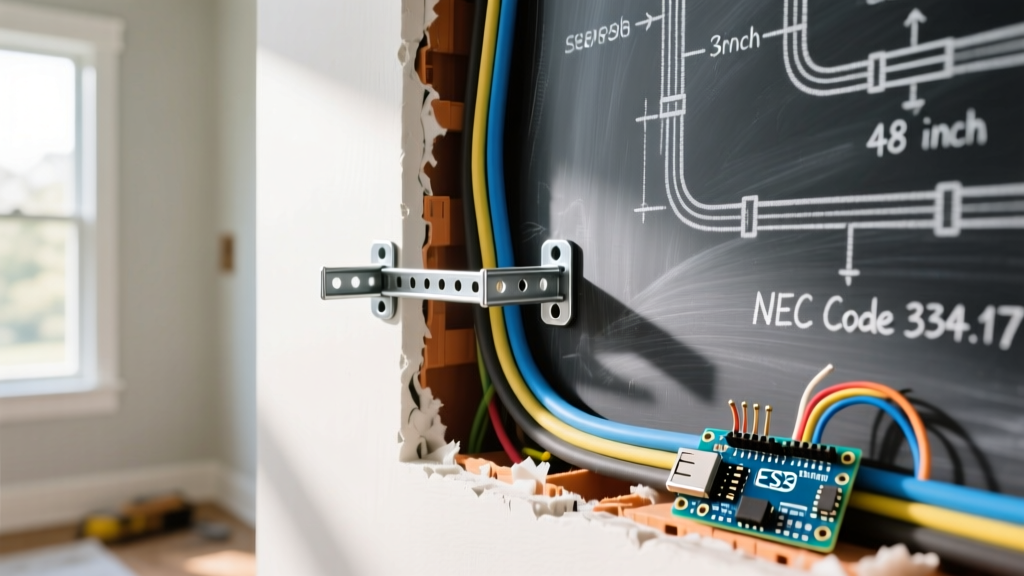
- Proper Cable Securing: NM-B cable must be stapled within 8 inches of the outlet box and every 4.5 feet thereafter (NEC 334.30). Use insulated staples; bare metal staples driven too tightly crush the dielectric and cause ground faults.
- Box Protector Plates: If using metal boxes, non-metallic sheathed cables must enter through approved Romex connectors with locknuts. Bare cables rubbing against the sharp metal knockout edges is an instant red-tag.
- Grounding Continuity: Metal boxes require a grounding pigtail attached to the box itself (via a green 10-32 hex screw) in addition to the receptacle ground. Relying solely on the device yoke for grounding metal boxes is a violation unless specific listed self-grounding clips are used.
Final Thoughts on Compliance
Passing an electrical inspection is not about doing the bare minimum to make the outlet function; it is about engineering a system that will remain safe under fault conditions for decades. By strictly adhering to box fill calculations, utilizing calibrated torque tools, and respecting the expanded GFCI/AFCI mandates outlined by the CPSC and NFPA, you ensure that your electrical wiring for outlets is both legally compliant and fundamentally safe.