
The True Cost of Electrical Wiring Devices in 2026
When budgeting for a home remodel, new construction, or commercial build-out, the cost of rough-in wire often overshadows the termination points. However, electrical wiring devices—the switches, receptacles, circuit breakers, and smart controllers that interface directly with users and appliances—represent a significant and highly variable line item. In 2026, supply chain stabilization has normalized base material costs, but the premium for code-mandated safety features and smart-home integration continues to shift project budgets.
This comprehensive cost estimation guide breaks down the exact pricing, labor variables, and code-compliance upgrades you need to accurately forecast your electrical device expenses. Whether you are a DIYer planning a basement finish or a contractor estimating a whole-home rewire, these 2026 figures will anchor your budget in reality.
Material Costs: Standard vs. Specialty Devices
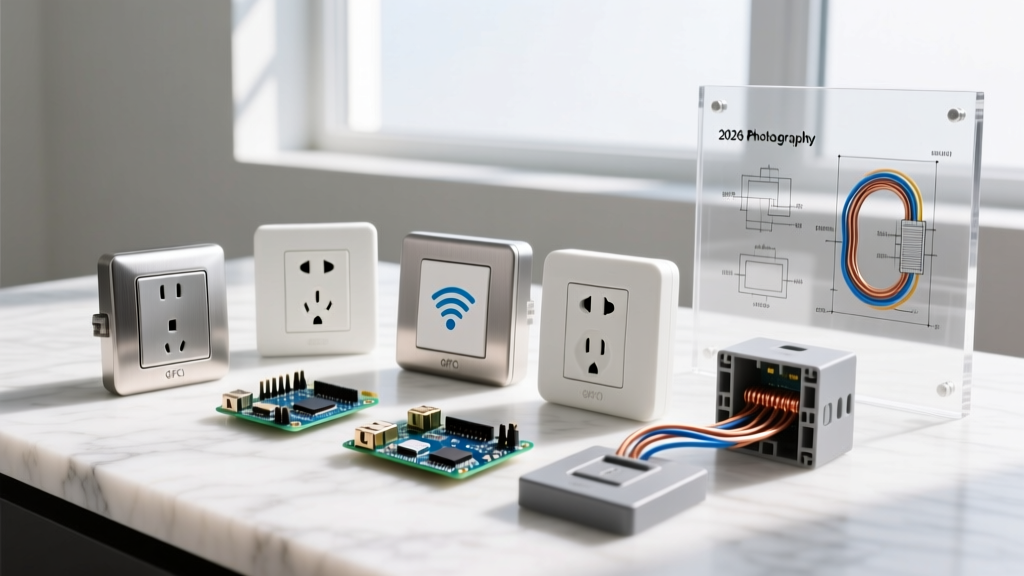
The term "electrical wiring devices" encompasses a wide spectrum of hardware. To estimate accurately, you must categorize your device schedule into standard, safety-critical, and smart/connected tiers. Below is a 2026 pricing matrix based on current retail and contractor-pack rates from major manufacturers like Leviton, Eaton, and Schneider Electric.
| Device Category | Specific Model / Type | Amperage | Avg. Unit Cost (2026) | Primary Use Case |
|---|---|---|---|---|
| Standard Duplex Receptacle | Leviton T5625-W (Decora) | 15A / 125V | $3.50 - $4.50 | General living areas, bedrooms |
| Standard Single-Pole Switch | Leviton 5601-W (Decora) | 15A | $4.00 - $5.50 | Basic overhead lighting control |
| GFCI Receptacle | Leviton GFNT2-W (Self-Test) | 20A / 125V | $22.00 - $26.00 | Kitchens, bathrooms, garages, exteriors |
| AFCI/GFCI Dual-Function | Eaton TRFR20W (Dual Function) | 20A | $38.00 - $45.00 | Laundry rooms, kitchens (where both codes apply) |
| Smart Dimmer Switch | Lutron Caseta PD-6WCL | 150W LED | $65.00 - $75.00 | Connected lighting, scene control |
| AFCI Circuit Breaker | Square D QO120AFIC | 20A | $50.00 - $60.00 | Panel-level bedroom/living room arc protection |
Contractor Pro-Tip: Never buy standard receptacles and switches individually for large projects. Purchasing Leviton or Eaton "contractor 10-packs" from big-box retailers or wholesale electrical supply houses reduces the per-unit cost of standard devices by 18% to 24%.
Labor Variables: Installation Time and Hourly Rates
Material costs are only half the equation. The labor required to install electrical wiring devices depends heavily on the complexity of the termination and the condition of the existing junction boxes. According to the U.S. Bureau of Labor Statistics (BLS), the mean hourly wage for electricians has climbed steadily, and in 2026, fully burdened contractor rates (including overhead, insurance, and profit) typically range from $95 to $165 per hour depending on the regional market.
Time-on-Task Estimates per Device
- Standard Device Swap (Existing Box): 10–15 minutes. Involves removing the old device, verifying wire integrity, stripping/pigtailing, and terminating.
- New Cut-In Box & Device: 45–60 minutes. Requires cutting drywall, securing an old-work box, fishing NM-B (Romex) wire, and terminating.
- GFCI/AFCI Installation: 20–30 minutes. Requires careful identification of the "LINE" vs. "LOAD" conductors, torqueing terminals to manufacturer specs (often 14 in-lbs), and performing a manual trip-test.
- Smart Switch Integration: 30–45 minutes. Beyond physical wiring, the electrician must verify the presence of a neutral wire (required by 90% of modern smart switches), pair the device to the hub (e.g., Lutron Smart Bridge or Matter-over-Thread border router), and update firmware.
Code Compliance: The Hidden Cost Driver
The National Electrical Code (NEC) continuously evolves to mitigate fire and shock hazards. The National Fire Protection Association (NFPA) outlines these requirements in NFPA 70. As jurisdictions adopt the 2023 and 2026 NEC cycles, the mandatory use of advanced electrical wiring devices expands, directly impacting your bottom line.
Key Code Upgrades Impacting 2026 Budgets
- Expanded AFCI Requirements: Arc-Fault Circuit Interrupters are now required in virtually all 120V, 15A and 20A branch circuits supplying living spaces. If your panel lacks space or you are upgrading an older home, swapping standard $8 breakers for $55 AFCI breakers can add $500–$1,200 to a panel upgrade.
- GFCI in New Locations: Recent code cycles have expanded Ground-Fault Circuit Interrupter requirements to areas like crawlspaces, attics (where HVAC equipment is located), and specific kitchen appliance circuits. Budget an extra $25 per location where a standard receptacle must be upgraded to a GFCI.
- USB Receptacle Mandates: While not strictly mandated everywhere, some local commercial codes and green-building standards (like LEED or CALGreen) now require USB-integrated receptacles in specific public or hospitality spaces, pushing unit costs from $4 to $28+ per device.
Whole-House Estimation Framework
To provide a macro-level view, here is a material-cost estimation framework for a standard 2,000-square-foot, 3-bedroom/2-bathroom home remodel. This assumes a mix of standard, safety, and entry-level smart devices.
| Device Type | Estimated Quantity | Unit Cost Avg. | Total Material Cost |
|---|---|---|---|
| Standard 15A Receptacles | 35 | $4.00 | $140.00 |
| Standard 15A Switches | 18 | $4.50 | $81.00 |
| 20A GFCI Receptacles | 6 | $24.00 | $144.00 |
| 20A AFCI Breakers (Panel) | 8 | $55.00 | $440.00 |
| Smart Switches (Common Areas) | 5 | $70.00 | $350.00 |
| Weather-Resistant (WR) Exterior | 3 | $28.00 | $84.00 |
| Total Estimated Device Materials | $1,239.00 | ||
Note: This table excludes rough-in wire (NM-B/THHN), junction boxes, wire nuts, and labor. It strictly isolates the electrical wiring devices.
Strategies for Optimizing Device Costs
Budget overruns often happen when homeowners or junior estimators over-specify devices. Use these strategies to maintain safety and code compliance while trimming unnecessary fat from your estimate:
1. Leverage "Load-Side" GFCI Protection
You do not need a $25 GFCI receptacle in every bathroom or garage outlet. The NEC allows a single GFCI device to protect downstream standard receptacles on the same circuit. By installing one GFCI at the first point of entry in the circuit and using $4 standard receptacles downstream (properly wired to the LOAD terminals), you can save $60+ per bathroom.
2. Reserve Smart Devices for High-Impact Zones
While the U.S. Department of Energy (DOE) highlights the energy-saving potential of smart lighting controls, outfitting an entire 40-switch home with $70 Lutron Caseta or Leviton Decora Smart devices will add $2,800 to your material budget. Limit smart switches to high-traffic communal areas (kitchen, living room, exterior landscaping) and use standard Decora switches in closets, pantries, and guest rooms.
3. Standardize on a Single Manufacturer Ecosystem
Mixing Leviton, Eaton, and Legrand devices across a single project ruins aesthetic consistency and prevents you from leveraging bulk-purchasing discounts. Pick one manufacturer's "builder grade" or "pro grade" line (e.g., Leviton Decora or Eaton Wiring Devices) and stick to it for all standard terminations.
Frequently Asked Questions (FAQ)
Are "builder grade" electrical wiring devices safe for residential use?
Yes, provided they carry a UL (Underwriters Laboratories) or ETL listing mark. Builder-grade devices (often priced under $2.00 in bulk) meet all NEC safety requirements. However, they use lighter internal brass contacts and thinner thermoplastic straps. For high-use areas like kitchens and primary living spaces, upgrading to "spec-grade" or "commercial-grade" devices (which feature heavier glass-filled nylon straps and back-wire clamps) is recommended for long-term durability.
Why do smart switches require a neutral wire, and what if I don't have one?
Most modern smart switches (like those using Wi-Fi, Zigbee, or Matter protocols) require a constant trickle of power to keep their internal radios awake and listening for commands. This requires a neutral wire to complete the low-power circuit. If your pre-1980s home lacks neutral wires in the switch boxes, you must either pay an electrician to fish a new neutral wire (labor-intensive) or purchase specialized "no-neutral" smart switches (like the Lutron Caseta PD-5S-DV), which cost roughly 20% more and require a bypass resistor at the light fixture.
Do I need to replace my GFCI receptacles every 10 years?
While GFCIs do not have a strict code-mandated expiration date, their internal solid-state components degrade over time, especially in damp environments. Modern self-testing GFCIs (mandated by UL since 2015) will automatically test themselves and deny power if the protection circuit fails. If you have older, non-self-testing GFCIs from the early 2000s, budget to replace them during your next remodel to ensure reliable shock protection.