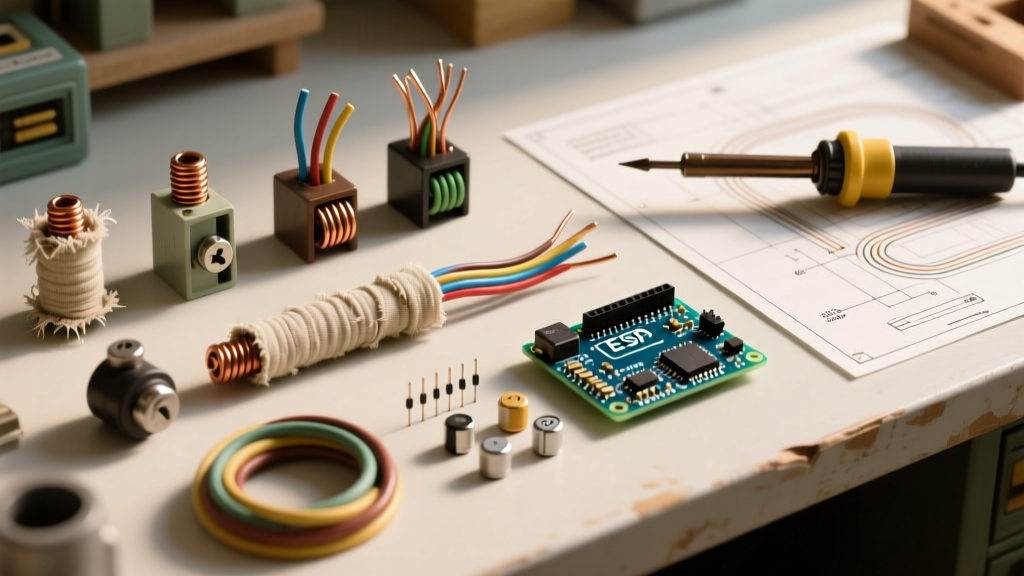

The Hidden Dangers Lurking in Pre-1980 Homes
If you are renovating, buying, or maintaining a home built before 1980, understanding the types of old electrical wiring hidden behind your drywall is not just a matter of historical curiosity—it is a critical safety imperative. According to the National Fire Protection Association (NFPA), electrical failures or malfunctions are a leading cause of residential fires, resulting in billions of dollars in direct property damage annually. Many of these fires trace back to outdated wiring systems that were never designed to handle the electrical loads of modern 2026 households.
From ungrounded circuits to chemically unstable metals, legacy wiring systems present unique failure modes. This guide breaks down the specific characteristics, hazards, and modern mitigation strategies for the most common legacy wiring types found in North American homes.
The Big Four: Types of Old Electrical Wiring
1. Knob and Tube (K&T) Wiring (1880s–1940s)
Knob and Tube is the oldest residential wiring method still found in active service. It consists of single-insulated copper conductors run through porcelain 'knobs' for support and porcelain 'tubes' to protect wires passing through wooden framing.
- Identification: Look for white ceramic spools nailed to joists, with black or white rubberized cloth-insulated wires. There is no continuous outer jacket.
- Primary Hazard: K&T relies on 'free air' to dissipate heat. When modern homeowners or contractors blow cellulose or fiberglass insulation over K&T wires in attics or wall cavities, the trapped heat degrades the brittle rubber insulation, leading to short circuits and arc faults.
- Grounding: None. K&T is strictly a two-wire system (hot and neutral). Using three-prong adapters on ungrounded K&T receptacles is a severe shock hazard.
- Expert Insight: The Electrical Safety Foundation International (ESFI) strongly recommends complete replacement. Splicing modern Romex (NM-B) directly into old K&T inside wall cavities without an accessible junction box is a direct violation of the National Electrical Code (NEC).
2. Solid Aluminum Branch Wiring (1960s–1970s)
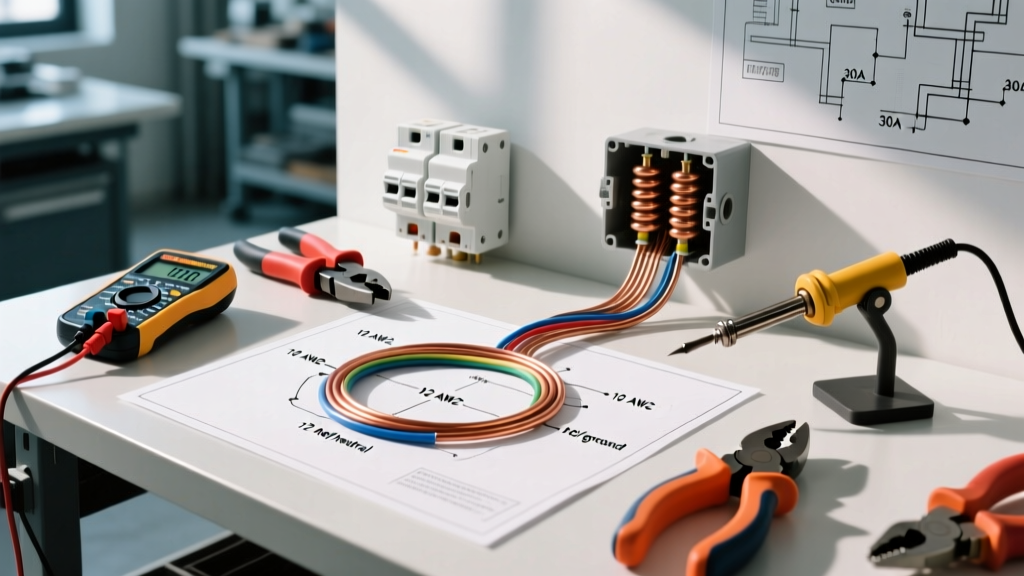
During the copper shortage of the mid-1960s to late 1970s, builders substituted copper with aluminum for 15A and 20A branch circuits. It is vital to distinguish between solid strand 12 AWG/10 AWG aluminum branch wiring (which is dangerous) and stranded AA-8000 series aluminum service entrance cables (which are perfectly safe and still used today for 240V heavy appliances).
- Identification: The wire sheathing will be stamped with 'AL', 'ALUM', or 'ALUMINUM'. If you strip the jacket, the bare conductor is silver, not copper.
- Primary Hazard: Aluminum expands and contracts at a significantly higher rate than copper when heated by electrical current. Over time, this thermal cycling causes 'creep'—the wire physically backs out from under terminal screws on standard brass/copper receptacles and switches. This creates a high-resistance connection, leading to arcing, melting, and fires.
- Mitigation: The U.S. Consumer Product Safety Commission (CPSC) recognizes only two permanent repairs: the AMP COPALUM crimp system (requires a specialized certified contractor) or the AlumiConn 3-port lug connector. Standard wire nuts and purple 'Ideal 65' wire nuts are considered temporary or insufficient by modern 2026 safety standards.
3. Cloth-Sheathed Wiring (1930s–1950s)
Often referred to as 'Rag' wiring, this cable features copper conductors wrapped in a woven cotton or rayon outer jacket. Early versions lacked a ground wire entirely, while later iterations sometimes included a very thin, un-insulated ground that is prone to snapping.
- Identification: A fabric exterior that feels like canvas or heavy denim. It often enters the breaker panel or junction boxes looking frayed or dirty.
- Primary Hazard: The cloth jacket becomes incredibly brittle with age. Simply pulling the wire to fish it through a wall can cause the underlying rubber insulation to flake off entirely, leaving bare, live copper exposed inside the wall cavity. Furthermore, the fabric is highly susceptible to rodent damage and moisture absorption.
4. Early Armored Cable ('BX' or 'Greenfield') (1920s–1960s)
Armored cable consists of flexible, spiral-wound steel or aluminum tape wrapped around rubber-insulated conductors. While the metal armor provides excellent physical protection against nails and rodents, the internal wiring is often the weak point.
- Identification: A ribbed, flexible metal tube connecting to metal junction boxes via specialized locknuts.
- Primary Hazard: Early BX lacked an internal bonding strip, meaning the metal armor itself cannot be relied upon as a reliable equipment grounding conductor. Additionally, the rubber insulation inside the armor degrades from the heat trapped by the metal sheath, crumbling when the cable is bent during renovations.
Legacy Wiring Comparison Matrix
| Wire Type | Era | Grounded? | Primary Failure Mode | 2026 Insurance Impact |
|---|---|---|---|---|
| Knob & Tube | 1880s-1940s | No | Heat trapping via insulation; brittle rubber | Often denied or requires full abatement |
| Solid Aluminum | 1960s-1970s | Yes | Thermal creep; galvanic corrosion at terminals | Requires COPALUM or AlumiConn mitigation |
| Cloth-Sheathed | 1930s-1950s | Rarely | Jacket fraying; internal insulation flaking | Usually requires full replacement |
| Early BX/Armored | 1920s-1960s | No (Unreliable) | Lack of bonding strip; internal heat degradation | Evaluated case-by-case by inspectors |
Safety Best Practices: Inspection and Mitigation Protocol
When dealing with the various types of old electrical wiring, aggressive physical handling is your enemy. Follow this strict protocol to assess your system safely:
WARNING: Never pull, bend, or aggressively fish legacy wiring through wall cavities. The mechanical stress can instantly shatter 80-year-old rubber insulation, creating an immediate arc-fault hazard behind your drywall.
- Visual Assessment at the Panel: Turn off the main breaker. Remove the panel dead-front cover using an insulated screwdriver. Look at the cables entering the knockouts. If you see fabric, silver wire stamped 'AL', or un-jacketed wires wrapped in black tape, you have legacy wiring.
- Non-Contact Voltage Testing: Use a high-sensitivity tester like the Fluke 2AC VoltAlert or Klein Tools NCVT-2 to map live circuits without stripping insulation.
- Receptacle Audit: Pull a sample of 3-5 outlet covers off their wall plates (do not unscrew the receptacle from the box yet). Look for aluminum wires wrapped around brass screws, or signs of melting/browning on the plastic yoke, which indicates high-resistance arcing.
- Thermal Imaging: In 2026, a professional electrical audit should include a FLIR thermal scan of the panel and receptacles under load. Hot spots (temperatures exceeding 10°F above ambient) on aluminum branch circuit connections indicate active thermal creep and imminent failure.
Modern Code Requirements and 2026 Rewiring Costs
If you discover any of the hazardous types of old electrical wiring detailed above, partial repairs are rarely sufficient to meet modern safety standards or satisfy home insurance underwriters. The NEC (National Electrical Code) now mandates Arc-Fault Circuit Interrupters (AFCI) for nearly all living spaces, and Ground-Fault Circuit Interrupters (GFCI) for kitchens, bathrooms, and exteriors. Legacy wiring systems cannot safely support modern AFCI breakers due to the high background leakage current and shared neutrals common in older installations.
2026 Whole-Home Rewire Cost Breakdown
When budgeting for a complete rewire using modern copper NM-B (Romex) or THHN in conduit, expect the following national averages for 2026. These costs include labor, materials, drywall patching, and permit fees:
- 1,500 sq. ft. Home: $10,500 – $15,000
- 2,000 sq. ft. Home: $14,000 – $21,000
- 2,500+ sq. ft. Home: $18,500 – $28,000
- Service Panel Upgrade (200-Amp): $2,800 – $4,500 (Upgrading to a modern Square D Homeline or Siemens load center with integrated surge protection).
Aluminum Pigtailing vs. Full Rewire
If a full rewire is financially unfeasible, aluminum wiring can be legally and safely mitigated via pigtailing. This involves attaching a short length of copper wire to the aluminum wire using an AlumiConn connector (approx. $3.50 - $4.50 per connection), and then connecting the copper pigtail to the modern receptacle. While this costs roughly $3,500 to $6,000 for an average home, it is only a viable solution if the aluminum wire itself is in good condition and the insulation is not crumbling. Knob and Tube and Cloth-sheathed wiring cannot be pigtailed; they must be abandoned or removed.
Final Thoughts on Legacy Systems
Ignoring the specific types of old electrical wiring in your property is a gamble with severe consequences. Whether you are dealing with the thermal expansion of 1970s aluminum or the heat-trapping hazards of 1920s Knob and Tube, proactive identification and code-compliant upgrades are non-negotiable. Always hire a licensed, insured electrical contractor who specializes in historic and mid-century home retrofits to ensure your system is brought safely into the modern era.