
The True Electrical Wiring Basement Cost Breakdown
Finishing a basement is one of the highest-ROI home improvement projects you can undertake, but the electrical infrastructure is where budgets frequently derail. When homeowners research the electrical wiring basement cost, they are often met with vague estimates that ignore the strict National Electrical Code (NEC) requirements specific to below-grade environments. In 2026, material fluctuations, advanced breaker technologies, and stringent local inspections have widened the gap between DIY expenses and professional contractor quotes.
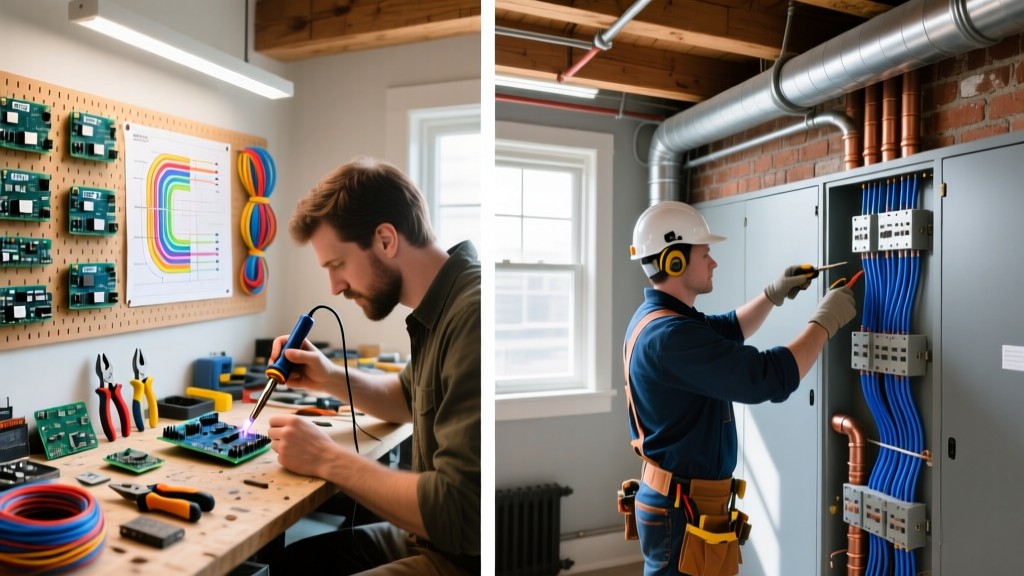
Before deciding whether to pull your own permit or hire a licensed master electrician, you need a granular understanding of where the money actually goes. Below is a comprehensive analysis comparing the DIY approach against professional installation for a standard 1,000-square-foot basement finish.
Itemized Material Costs (2026 Market Rates)
Whether you DIY or hire a pro, you will pay for materials. Professionals get a slight discount (10-15%) from wholesale suppliers like CED or City Electric, but the baseline retail costs at major home centers remain the primary benchmark.
| Material Category | Specific Product / Spec | Estimated Cost (1,000 sq ft) |
|---|---|---|
| Branch Circuit Wire | Southwire 12/2 NM-B (Solid Copper, 250ft rolls x 4) | $520 - $640 |
| Subpanel & Main | Eaton BR 100A 42-Circuit Subpanel (BR1020V125) | $145 - $185 |
| Circuit Protection | Dual-Function AFCI/GFCI 20A Breakers (Eaton BR20AFCIGF) | $540 - $720 (approx. $75 each x 8) |
| Lighting | Halo 4-Inch LED Recessed Downlights (H284RICAN) | $350 - $480 (approx. $35 each x 12) |
| Boxes & Trim | Carlon B618R Nail-On Boxes & Leviton Decora 20A TR Receptacles | $180 - $240 |
| Consumables | Ideal Wire Nuts, 3M Super 33+ Tape, Romex Staples, Cable Rippers | $85 - $120 |
Total DIY Material Cost Estimate: $1,820 - $2,385
DIY Basement Wiring: What You Actually Save (And Spend)
The primary allure of the DIY route is eliminating labor costs, which typically account for 60% to 70% of a professional electrical quote. However, the 'hidden' costs of DIY electrical work often catch first-time renovators off guard.
The Tool Investment Reality
You cannot safely or efficiently wire a basement with a $15 wire stripper and a pocket screwdriver. To meet professional standards and pass inspection, you need specialized tools. If you do not already own them, factor these into your electrical wiring basement cost:
- Klein Tools 11063W Wire Strippers: $35 (Essential for clean 12 AWG and 14 AWG stripping without nicking copper).
- Milwaukee M18 Cable Stripper or Jonard JIC-1100: $120 - $160 (Saves hours of hand-scoring NM-B sheathing).
- Fluke 117 True-RMS Multimeter: $210 (Mandatory for verifying dead circuits and testing voltage drop).
- Greenlee 7238SB Knockout Punch Set: $180 (Required if you are installing a new subpanel into an existing steel enclosure).
Furthermore, your most expensive asset is your time. A professional crew of two can rough-in a 1,000-square-foot basement in 3 to 4 days (24-32 man-hours). An experienced DIYer working weekends will likely spend 80 to 120 hours fishing wires through engineered floor joists, drilling top plates, and making up boxes.
Professional Electrician Costs: Where the Money Goes
In 2026, licensed electricians charge between $95 and $165 per hour, depending on your regional market and whether you are hiring a journeyman or a master electrician. For a full 1,000-square-foot basement finish requiring a new subpanel, 12 to 15 circuits, and smart-home integration, expect professional bids to range from $5,500 to $9,500.
Expert Insight: When evaluating contractor bids, do not automatically choose the lowest number. A bid that is 30% lower than the market average often indicates the electrician plans to use 14/2 wire for 15A circuits to save on copper costs, or they are factoring in standard breakers instead of the NEC-mandated Dual-Function AFCI/GFCI breakers required for basement habitable spaces. This will result in a failed inspection and costly rework.
The Value of Liability and Warranty
According to the Occupational Safety and Health Administration (OSHA), electrical work consistently ranks among the most hazardous construction trades. When you hire a bonded and insured professional, you are transferring the liability of arc faults, improper grounding, and fire risks away from your homeowner's insurance policy. A reputable firm will also provide a 1-to-5-year labor warranty, meaning if a neutral wire backs out of a wire nut behind the drywall two years from now, they fix it for free.
NEC Code Hurdles: Why Basements Are Not Standard Rooms
The single biggest point of failure for DIY basement wiring is underestimating the National Electrical Code (NEC) requirements specific to below-grade environments. The National Fire Protection Association (NFPA) updates the NEC every three years, and local municipalities are currently enforcing the stringent 2023/2026 codes.
1. AFCI and GFCI Mandates
Basements present a unique overlap of 'habitable space' and 'damp location' classifications.
- AFCI Protection (NEC 210.12): All 120-volt, single-phase, 15- and 20-amp branch circuits supplying outlets in basement family rooms, recreation rooms, and bedrooms must have Arc-Fault Circuit-Interrupter protection.
- GFCI Protection (NEC 210.8): All receptacles in unfinished basement areas, utility sinks, and damp zones require Ground-Fault Circuit-Interrupter protection.
In 2026, the most efficient way to meet both requirements without cluttering your walls with bulky GFCI receptacles is to install Dual-Function (CAFCI/GFCI) breakers at the subpanel. As noted in the cost table, these cost roughly $75 each, which drastically inflates the panel makeup cost compared to standard living rooms.
2. Stairway and Egress Lighting
NEC 210.70(A)(2)(c) requires that stairways with six or more risers have a wall switch controlling a lighting outlet at both the top and bottom of the stairs. This means you must wire a 3-way switch circuit. Furthermore, if your basement has an egress window, the code dictates specific exterior and interior lighting provisions that DIYers frequently miss during the rough-in phase.
Decision Matrix: Should You DIY or Hire a Pro?
Use this framework to determine which route makes financial and practical sense for your specific electrical wiring basement cost scenario.
| Project Scope | Recommended Route | Rationale |
|---|---|---|
| Scenario A: Adding 2-4 receptacles to an existing unfinished utility area. | DIY | Low complexity. Can be tapped from an existing 20A circuit using a GFCI receptacle. Material cost under $150. |
| Scenario B: Finishing a single 12x15 room (drywalling over existing open studs). | DIY (with caution) | Manageable for an intermediate DIYer. Requires pulling 2 new home runs to the main panel and passing a localized permit. |
| Scenario C: Full 1,000 sq ft finish, new 100A subpanel, HVAC integration, and recessed lighting. | Hire a Professional | High complexity. Requires load calculations, heavy-gauge feeder wire (e.g., 2-2-2-4 SER), and intricate 3-way/4-way switch loops. The cost of failed inspections outweighs DIY savings. |
The Permit and Inspection Reality
Regardless of who swings the hammer, permits are non-negotiable. The Consumer Product Safety Commission (CPSC) strongly advises against unpermitted electrical work due to the severe risk of hidden arc faults leading to structural fires.
- The Permit Application: Costs range from $150 to $400 depending on your municipality. Some jurisdictions restrict homeowners from pulling electrical permits unless they are living in the home and doing the work themselves (no hiring unlicensed handymen).
- The Rough-In Inspection: The inspector will verify box placement, wire stapling (within 8 inches of the box and every 4.5 feet), and proper derating of conductors in bundled runs through bored joist holes. Pro Tip: Do not cover any wire with insulation or drywall before this sign-off.
- The Final Inspection: Occurs after drywall, paint, and trim are complete. The inspector will test every AFCI/GFCI device, verify correct polarity on all receptacles, and ensure smoke/CO detectors are hardwired and interconnected as per modern fire codes.
Final Verdict on Basement Wiring Costs
If your goal is a full basement transformation involving a subpanel, dedicated HVAC circuits, and complex lighting layouts, the electrical wiring basement cost is best managed by a licensed professional. The premium you pay ($4,000+ in labor) buys you code compliance, speed, and peace of mind. However, if you are tackling a phased remodel, possess a strong foundational knowledge of NEC Article 210, and are willing to invest in quality tools like a Fluke multimeter and proper cable strippers, the DIY route remains a highly rewarding way to build sweat equity in your home.