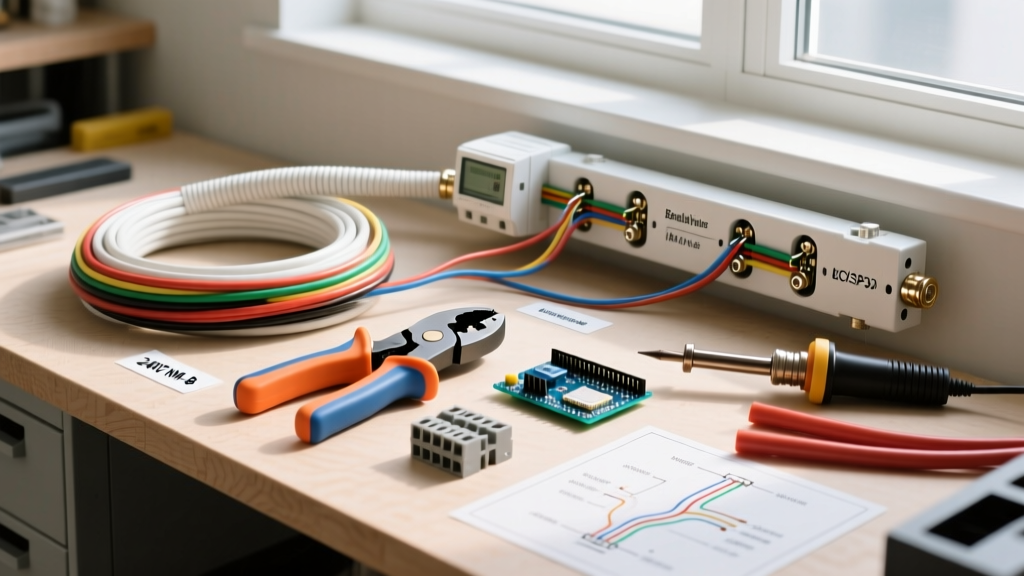
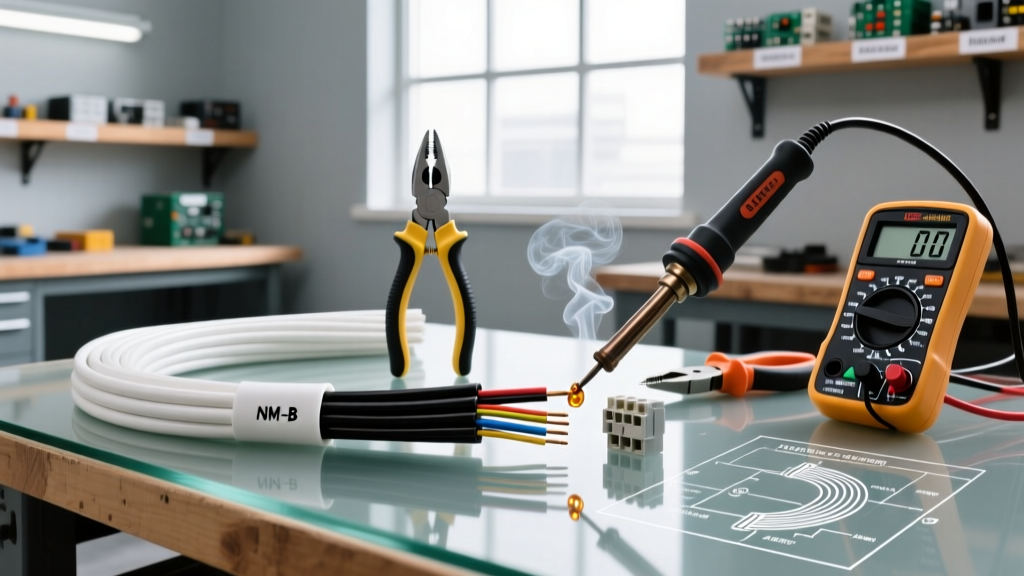
In electrical wiring, a "shoe" (more commonly called a cable shoe, terminal shoe, or lug) is a forged or stamped metal connector crimped onto the end of a stranded wire to safely terminate it to a screw, stud, or busbar. While pop culture might use the phrase to describe sneakers thrown over power lines, on the jobsite, a wire shoe is a critical termination component that changes a fragile, splay-prone stranded wire end into a solid, high-surface-area block capable of handling full circuit ampacity without arcing or overheating. Beginners commonly confuse cable shoes with wire nuts (which splice two wires together rather than terminating to a post) or ferrules (which are just thin sleeves for terminal blocks), but a true shoe features a flat, holed tongue or a spade shape designed to be clamped directly under a bolt.
The Mechanics of Terminal Shoes and Connection Physics
To understand why cable shoes exist, you have to look at the physical weakness of stranded wire. Stranded conductors (like standard THHN or XHHW) are highly flexible, making them ideal for pulling through conduit. However, they are terrible at being crushed directly under a setscrew. If you strip a 2 AWG stranded wire and jam it under a panel lug screw, the screw acts like a guillotine. It cuts the outer strands, reduces the effective wire gauge, and creates a high-resistance point that will heat up under load.
A cable shoe solves this mechanical mismatch. The stripped wire is inserted into the tubular barrel of the shoe and permanently deformed (crimped) using a matched die. This process cold-welds the wire strands and the copper shoe into a single, solid mass. The flat "tongue" of the shoe then provides a perfectly flat, wide surface area to mate with the busbar or terminal block, ensuring maximum electrical contact and excellent heat dissipation.
Compression Shoes vs. Mechanical Set-Screw Lugs
Not all terminations are crimped. Here is how standard compression shoes compare to the mechanical lugs built into many main breakers:
| Feature | Compression Cable Shoe | Mechanical Set-Screw Lug |
|---|---|---|
| Installation Tool | Hydraulic or ratcheting crimp tool with matched die | Hex key or torque screwdriver |
| Connection Method | Cold-weld deformation of wire and barrel | Setscrew bites into wire strands |
| Vibration Resistance | Exceptional (will not loosen over time) | Moderate (requires periodic retorquing) |
| Reusability | None (must be cut off and replaced) | High (can be loosened and reused) |
| Best Application | Battery banks, EV chargers, busbar landings | Main panel breakers, subpanel feeders |
Worked Numeric Example: Terminating a 4 AWG EV Charger Feeder
Let’s look at a real-world scenario where getting the shoe and the crimp right is the difference between a safe installation and a melted terminal block. We are terminating a 4 AWG stranded copper feeder for a hardwired 50A Level 2 EV charger.
- Wire: 4 AWG THHN stranded copper (ampacity 85A at 75°C).
- Shoe: Ilsco GBN-4-10 (a copper compression ring shoe, sized for 4 AWG wire with a 1/4" stud hole).
- Tool: 12-ton hydraulic crimping tool equipped with a #4 hex die.
The Procedure:
Strip exactly 1-1/16" of insulation from the wire—no more, no less. If you strip too much, bare wire will be exposed outside the barrel, creating a shock hazard. If you strip too little, the wire won't bottom out in the barrel, resulting in a weak crimp. Slide the shoe onto the wire until it hits the shoulder. Using the hydraulic tool, make two crimps: one near the shoulder of the barrel, and one near the wire entry point. This ensures the entire length of the barrel is compressed.
The Termination:
Place the ring tongue over the EV charger’s 1/4-20 terminal stud, add a flat washer and a flange nut, and tighten to exactly 75 in-lbs using a calibrated torque screwdriver. (Always check the manufacturer's spec sheet; overtightening can snap the stud, while undertightening causes thermal creep).
The Result:
This properly crimped and torqued connection achieves a millivolt drop of less than 1mV at a continuous 40A load (80% of the 50A breaker rating). Without the shoe, if you tried to wrap the stranded wire directly around the stud and crush it with the nut, the strands would splay out. Under continuous 40A load, that high-resistance crush point would generate enough heat to melt the THHN insulation and trigger a thermal failure or fire.
Where You Meet This in Practice
You won't typically use heavy cable shoes for standard 15A or 20A branch circuits (where you just bend solid wire into a J-hook or use a spade terminal). You will encounter them in high-current, high-reliability applications:
- Solar and Battery Banks: LiFePO4 battery terminals almost exclusively use 2/0 AWG or 4/0 AWG cables terminated with heavy-duty tinned copper shoes. The tin plating prevents galvanic corrosion, and the heavy crimp handles the massive DC current without voltage drop.
- Subpanel Feeders: When landing large aluminum SER cable into a main breaker, you are often using the breaker's built-in mechanical lug. But if you are landing that same feeder onto a custom busbar or a disconnect switch, you must crimp on a compression shoe first.
- Grounding and Bonding: The grounding electrode conductor (GEC) landing on a ground rod or water pipe uses a specific type of shoe called an "acorn" or a ground clamp shoe, designed to bite into the rod while securing the wire.
- Industrial Control Panels: Smaller DIN-rail terminal blocks often require ferrules, but heavy-duty power distribution blocks require spade or ring shoes to ensure the wire doesn't slip out of the clamping plate.
Frequently Asked Questions
What do shoes on a wire mean in street slang vs electrical work?
In street slang and urban legend, "shoes on a wire" refers to the prank of tying the laces of sneakers together and throwing them over overhead power lines or telephone wires. Theories range from gang territory markers to bullying (stealing a kid's shoes) to simple vandalism. In electrical work, however, "shoes" strictly refers to terminal lugs. If an electrician tells you to "put shoes on those 2 AWG wires," they are handing you a crimping tool and a box of copper ring terminals, not a pair of Nikes.
Can I use a standard cable shoe on solid core wire?
No. Standard compression cable shoes are engineered with barrels designed to collapse around the air gaps in stranded wire. If you insert a solid core wire into a standard compression barrel and crimp it, the solid wire cannot deform properly to fill the voids. This results in a loose connection inside the barrel that will arc and overheat. For solid wire, you either use specific solid-pin terminals, push-in connectors, or (for smaller gauges like 12 AWG and 14 AWG) simply bend the wire into a J-hook to wrap around the terminal screw.
Do I need a special crimping tool for terminal shoes?
Yes. You cannot reliably crimp a heavy-duty cable shoe with lineman's pliers or a hammer. Proper compression requires a matched-die ratcheting crimp tool (for wires up to 1/0 AWG) or a hydraulic crimping tool (for 2/0 AWG and larger). The ratcheting mechanism ensures that the tool will not release until the exact required compression force is achieved, guaranteeing a gas-tight, cold-welded connection. Using mismatched dies or improper tools leaves voids in the crimp, which OSHA and electrical inspectors flag as severe fire hazards.
What is the difference between a cable shoe and a wire lug?
Functionally and physically, there is no difference. "Lug" is the preferred terminology in North America (heavily used in the NEC and by US manufacturers like Panduit and Ilsco). "Cable shoe" or "terminal shoe" is the preferred terminology in British Standard (BS), IEC standards, and among manufacturers in Europe and Asia. If you are ordering parts from an international supplier like Digi-Key or Mouser, searching for both terms will yield the exact same ring, spade, and pin terminals.