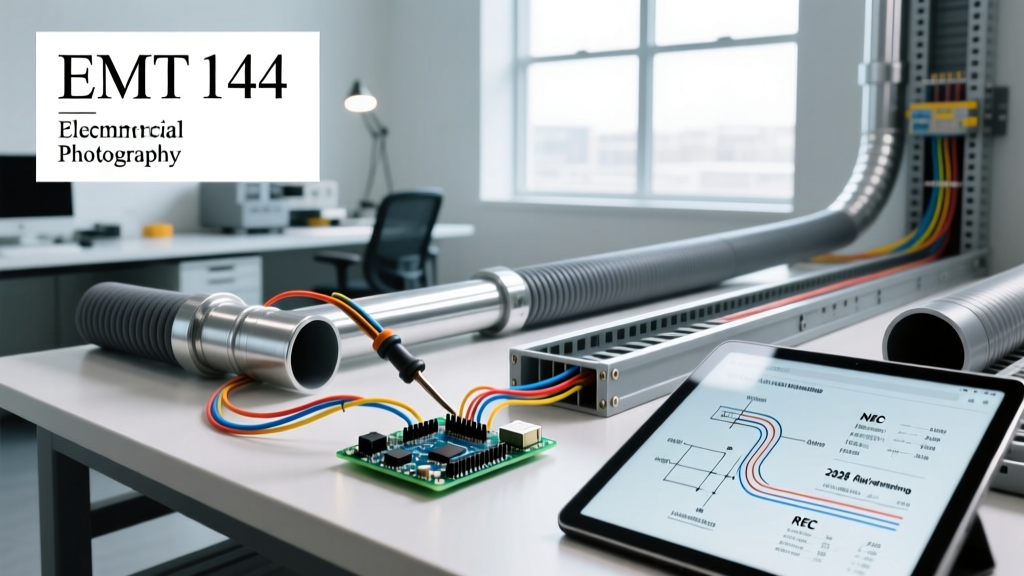

Commercial Electrical Infrastructure: Beyond the Basics
Commercial electrical infrastructure demands rigorous planning, scalability, and strict adherence to the National Electrical Code (NEC). When architects and electrical engineers design a new commercial build or retrofit an existing facility, the choice of the primary electrical wiring method dictates not only the initial capital expenditure but also the long-term maintenance, circuit expansion capabilities, and overall safety of the building. In 2026, with copper prices stabilizing but skilled electrical labor rates averaging between $95 and $135 per hour in major metropolitan areas, optimizing the wiring method is a critical financial and operational decision.
Code Anchor: The NEC defines a wiring method as the specific combination of conductors, raceways, and fittings used to route power. Chapter 3 of the NFPA 70 (National Electrical Code) provides the exhaustive legal framework for these installations, specifically Articles 300 through 399.
Core Wiring Methods: EMT, RMC, and IMC
Raceway systems remain the backbone of commercial power distribution. The three dominant metallic conduit types each serve distinct environmental and structural purposes.
Electrical Metallic Tubing (EMT - NEC Article 358)
EMT is the undisputed workhorse of interior commercial wiring. It is a thin-walled, unthreaded steel or aluminum raceway. Because it cannot be threaded, it relies on set-screw or compression fittings. EMT is lightweight, bends easily with standard hand or mechanical benders, and is highly cost-effective. However, it offers minimal physical protection against severe impact and cannot be used in wet locations unless specifically rated and sealed.
Rigid Metal Conduit (RMC - NEC Article 344)
RMC is the heaviest and most robust metallic raceway. It features thick walls and threaded ends, allowing for heavy-duty couplings and direct burial in concrete or earth. RMC is mandatory in high-risk physical damage zones, such as industrial loading docks, heavy manufacturing floors, and exterior runs below 8 feet where EMT would be easily crushed by forklifts or machinery.
Intermediate Metal Conduit (IMC - NEC Article 345)
IMC bridges the gap between EMT and RMC. It is lighter and has a thinner wall than RMC but is significantly stronger than EMT. It is threaded like RMC and is frequently specified in exterior commercial applications and parking garages where moderate physical protection is required without the extreme weight and cost of RMC.
Comparative Matrix: 2026 Commercial Wiring Methods
The following table breaks down the material costs, labor intensity, and primary applications for standard commercial wiring methods based on Q1 2026 industry averages.
| Wiring Method | Material Cost (per ft) | Labor (Hrs per 100ft) | Max Fill (3+ Wires) | Best Commercial Application |
|---|---|---|---|---|
| 3/4" EMT | $0.85 - $1.10 | 6.5 - 8.0 | 40% | Interior office ceilings, drywall partitions |
| 3/4" RMC | $3.20 - $3.80 | 14.0 - 18.0 | 40% | Heavy industrial, exterior physical damage zones |
| 12" Ladder Cable Tray | $16.00 - $22.00 | 4.0 - 6.0 | See NEC 392 | Main data/power trunks, large mechanical rooms |
| 12/2 MC Cable | $1.15 - $1.40 | 3.5 - 5.0 | N/A (Factory sealed) | Retail tenant build-outs, quick-turnaround remodels |
Mastering Conduit Fill Calculations
One of the most common failure points in commercial inspections is exceeding conduit fill capacities. Overfilled conduits lead to excessive heat buildup, insulation degradation, and impossible wire pulls that result in stretched or snapped conductors.
Per NEC 300.17, the number and size of conductors in any raceway must not exceed a fill percentage that allows for heat dissipation and safe pulling. For three or more conductors, the maximum fill is 40%.
Real-World Calculation: 3/4" EMT with #10 AWG THHN
- Identify Raceway Area: According to NEC Chapter 9, Table 4, the internal cross-sectional area of 3/4" EMT is 0.533 square inches.
- Calculate 40% Fill: 0.533 sq in × 0.40 = 0.2132 square inches of usable space.
- Identify Conductor Area: Per Chapter 9, Table 5, a #10 AWG THHN insulated conductor has an approximate area of 0.0211 square inches.
- Determine Max Conductors: 0.2132 ÷ 0.0211 = 10.10.
Result: You can safely pull a maximum of 10 #10 AWG THHN conductors in a single run of 3/4" EMT. Attempting to pull 11 will violate code and likely result in jamming at the first 90-degree sweep.
Advanced Cable Tray Systems (NEC Article 392)
For large commercial facilities like data centers, hospitals, and manufacturing plants, individual conduit runs become economically and spatially unfeasible. Cable trays provide a continuous, open raceway system. The Cable Tray Institute (CTI) classifies these systems primarily into two categories:
- Ladder Type: Features two longitudinal side rails connected by individual transverse rungs. This design provides maximum airflow, making it ideal for high-voltage power cables and data cables where heat dissipation is critical.
- Ventilated Trough Type: Features a solid bottom with ventilation openings. This is preferred for smaller control cables, communication wiring, and sensitive fiber optics that require continuous support to prevent sagging and micro-bending losses.
Derating and Heat Dissipation in Cable Trays
A critical edge case in cable tray design is thermal derating. If multiconductor cables are stacked in a tray without maintaining spacing, the ambient temperature inside the cable mass rises. NEC 392.80(A) mandates that if the number of current-carrying conductors exceeds 30 in a single tray, you must apply an adjustment factor (derating) of 60% to the ampacity tables in NEC 310.16. Engineers must specify wider trays or utilize multiple tiered trays to avoid this severe ampacity penalty.
Failure Modes and Edge Cases in Commercial Wiring
Even with perfect code compliance, specific environmental factors can cause premature failure in commercial wiring methods. Anticipating these edge cases separates novice installers from master electricians.
Galvanic Corrosion in Mixed Metals
When aluminum cable trays are used in conjunction with copper grounding conductors or copper-clad steel cables, moisture acts as an electrolyte, triggering rapid galvanic corrosion. This compromises the structural integrity of the tray and increases ground-fault impedance. Solution: Always specify PVC isolation pads or use dielectric separators when routing bare copper grounding wires through aluminum ladder trays.
Harmonic Heating in Shared Neutrals
In commercial office spaces filled with non-linear loads (LED drivers, VFDs, server power supplies), triplen harmonics (3rd, 9th, 15th) do not cancel out in the neutral conductor; they add up. A shared neutral in a multi-wire branch circuit (MWBC) routed through EMT can easily carry 150% to 200% of the phase current. Solution: Size the neutral conductor one or two AWG sizes larger than the phase conductors, or run dedicated neutrals for every phase conductor in high-harmonic environments.
The Shift to Metal-Clad (MC) Cable
In recent years, the commercial sector has seen a massive shift toward Metal-Clad (MC) cable for branch circuit wiring. MC cable consists of insulated conductors wrapped in a flexible, interlocking aluminum or steel armor.
Pros of MC Cable in Commercial Builds
- Labor Reduction: MC cable eliminates the need to measure, cut, thread, and bend EMT for every branch circuit drop. Installers simply unspool, cut to length, and secure with specific MC-rated staples or straps.
- Pre-Assembled Grounding: Modern MC cable includes an insulated green equipment grounding conductor (EGC) alongside the circuit wires, eliminating reliance on the metal armor for fault current paths, which is a common point of failure in older BX/AC cable systems.
- Flexibility in Seismic Zones: The flexible nature of MC cable allows it to absorb building sway and seismic vibrations without cracking rigid fittings.
Cons and Limitations
- Physical Vulnerability: The interlocking armor can be easily crushed by heavy objects or damaged by sharp impacts compared to rigid steel conduit.
- Aesthetics: In exposed-ceiling architectural designs (common in modern retail and restaurants), EMT provides a clean, industrial, linear aesthetic that MC cable cannot replicate due to its natural sagging and corrugated texture.
Ensuring Code Compliance and Safety
Regardless of the electrical wiring method selected, adherence to local amendments of the NEC and OSHA safety standards for wiring methods is non-negotiable. Commercial projects require rigorous documentation, including as-built drawings detailing conduit routing, conduit fill schedules, and voltage drop calculations for feeders exceeding 100 feet.
By carefully evaluating the physical environment, labor constraints, and long-term scalability requirements, electrical professionals can select the optimal wiring method that ensures safety, passes inspection on the first attempt, and maximizes the project's return on investment.