
Navigating the 2026 Electrical Code Update: A Material & Tool Guide
Every three years, the National Fire Protection Association (NFPA) releases a new iteration of the National Electrical Code (NEC). As the industry braces for the widespread adoption of the 2026 electrical code update, electricians, contractors, and serious DIYers must adapt their toolbelts and supply lists. Code cycles don't just change rules; they fundamentally alter the physical materials we pull through conduit and the instruments we use to verify our work. This guide breaks down the exact tools and materials required to stay compliant, safe, and efficient under the latest and upcoming NEC mandates.
The End of the "Hand-Tight" Era: Torque Verification Tools
Perhaps the most heavily enforced mandate carrying over from recent cycles and solidifying in the 2026 electrical code update is NEC Section 110.14(D). This section requires that terminations be torqued to the manufacturer's specified values using a calibrated tool. The "hand-tight plus a quarter turn" method is no longer acceptable and will fail inspection.
The Physics of Lug Failures
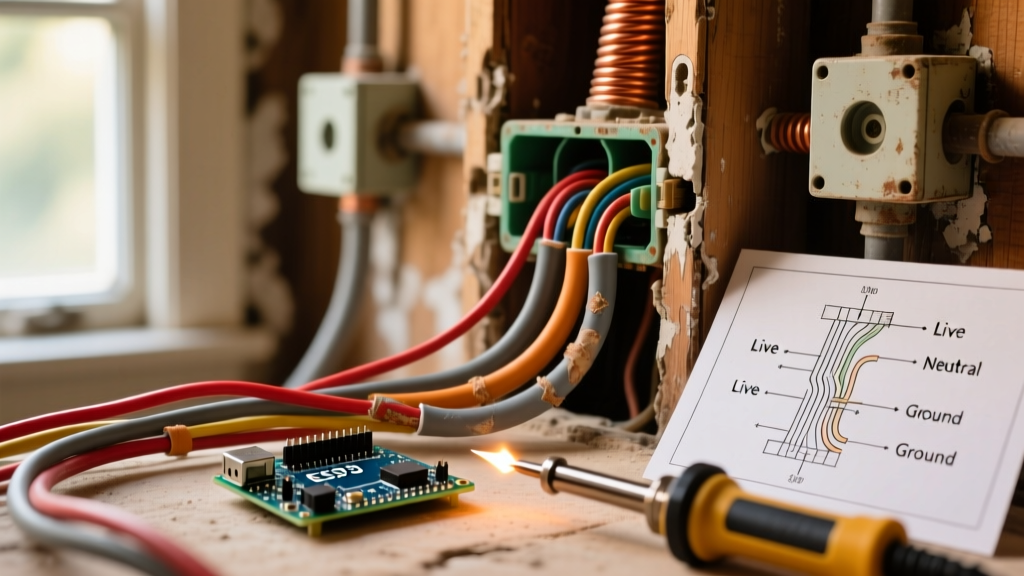
Why did the code change? Thermal expansion and cold flow. When electrical current flows through a breaker or lug, it generates heat. Copper and aluminum expand at different rates. If a connection is under-torqued, the heating and cooling cycles cause the metal to slowly deform (cold flow), loosening the connection. This increases electrical resistance, which generates more heat, eventually leading to thermal runaway, melted insulation, and arc faults. Over-torquing can strip threads or snap the heads off smaller terminal screws, creating an equally dangerous high-impedance failure point.
Essential Torque Screwdrivers for NEC Compliance
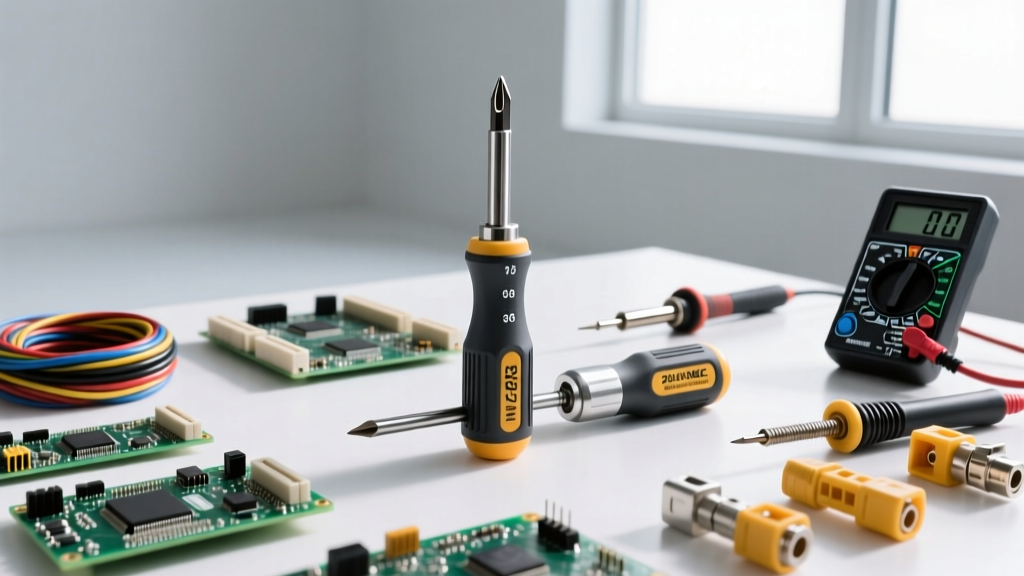
- CDI Torque 401SM (4-40 in-lbs): Priced around $160, this dial-type torque screwdriver is essential for small terminal blocks, receptacles, and lighting drivers. Its narrow range ensures precision on delicate 14 AWG and 12 AWG terminations.
- CDI Torque 1510SM (15-150 in-lbs): At approximately $185, this is the workhorse for main breaker lugs, subpanel busbars, and larger 2 AWG to 4/0 AWG terminations.
- Wiha 320P Insulated TorqueVario Set: For live-panel troubleshooting or environments requiring strict insulated tool compliance, this set provides certified VDE insulation up to 1000V while maintaining torque accuracy.
Circuit Protection Upgrades: Dual-Function Breakers
The expansion of Arc-Fault Circuit Interrupter (AFCI) and Ground-Fault Circuit Interrupter (GFCI) requirements continues to shape the 2026 electrical code update. In areas like kitchens, laundry rooms, and bathrooms, the code now heavily favors or mandates the use of Dual-Function (DF) breakers to protect against both series/parallel arc faults and ground faults.
Solving the Nuisance Tripping Problem
Historically, electricians had to install a GFCI breaker in the panel and an AFCI receptacle at the first outlet, or vice versa. This caused severe nuisance tripping due to the overlapping sensitivity of the electronics. Modern DF breakers utilize advanced digital signal processing (DSP) to differentiate between normal appliance signatures (like a vacuum motor starting) and dangerous arcing or ground leakage.
Top Material Pick: The Square D HOM120DF (Homeline 20A Dual Function) retails for roughly $45 to $55. It features a built-in self-test function and an easy-to-read LED trip indicator. For Eaton panels, the Eaton BR120DF offers identical dual-protection capabilities. Always verify your panel's acceptance listings before mixing breaker brands, as the NEC strictly prohibits using unlisted or mismatched breakers in panelboards.
Grounding Pathways: The Rise of MC-AP Cable
Metal-Clad (MC) cable is a staple in commercial wiring and increasingly in high-end residential builds for its physical protection. However, standard MC cable requires a separate internal green grounding wire to serve as the Equipment Grounding Conductor (EGC). The latest code cycles have fully embraced MC-AP (Armor-Clad) cable as a superior, code-compliant alternative.
In MC-AP cable, manufactured by companies like Southwire and AFC Cable, the internal bare grounding wire is in continuous, tight physical contact with the aluminum interlocking armor. Because of this engineered contact, the armor itself is listed as an EGC. This provides a redundant, parallel grounding path. If the internal wire is damaged during a pull, the armor still safely clears the fault. Furthermore, MC-AP fittings do not require the tedious trimming of the internal ground wire to make contact with the fitting; the armor handles the grounding bond, saving hours of labor on large commercial rough-ins.
Code Update Comparison Chart: Old Standard vs. New Mandates
| Component | Pre-2020 Standard Practice | 2023/2026 Electrical Code Update | Required Tool / Material |
|---|---|---|---|
| Terminations | Hand-tight plus a quarter turn | Torqued to manufacturer specs (110.14(D)) | Calibrated Torque Screwdriver (e.g., CDI 1510SM) |
| Kitchen/Laundry Protection | Standard GFCI Breaker + AFCI Receptacle | Combined AFCI/GFCI Protection required | Dual-Function (DF) Breaker (e.g., Square D HOM120DF) |
| Commercial Grounding | Standard MC Cable with isolated ground wire | Redundant grounding paths encouraged | MC-AP (Armor-Clad) Cable & listed fittings |
| Voltage Testing | Standard 2-pole voltage sniffer | Verified CAT III/IV rated testing equipment | Fluke T6-1000 FieldSense or CAT IV Multimeter |
Safety & Testing Tools: Meeting CAT Ratings
The modern electrical code update cycle places a massive emphasis on worker safety and arc flash mitigation. While the NEC dictates installation standards, OSHA and NFPA 70E dictate the tools you use to verify them. Using a cheap, unrated voltage tester on a 480V commercial panel is a severe liability. Inspectors and site safety managers are increasingly demanding proof of properly rated testing equipment.
Top Material Pick: The Fluke T6-1000 FieldSense (approx. $220) allows electricians to measure AC voltage and current without metal-to-metal contact. By simply sliding a single conductor into the tuning fork jaw, you get accurate readings without exposing yourself to arc flash boundaries. For standard multimeter work, the Fluke 117 remains the gold standard for CAT III 600V / CAT IV 600V environments, featuring non-contact voltage detection and AutoVolt.
Wire Ampacity and Bundling Derating Adjustments
When pulling multiple circuits through a single conduit or bundling NM-B cables through bored holes in framing, the 2026 electrical code update maintains strict adherence to NEC Table 310.15(C)(1) for ampacity derating. If you bundle more than three current-carrying conductors, the heat dissipation is restricted, and you must de-rate the wire's ampacity.
For example, if you pull nine current-carrying 12 AWG THHN conductors through a single EMT conduit, you must apply a 70% derating factor. 12 AWG THHN has a base ampacity of 30A (in the 90°C column). 30A x 0.70 = 21A. While this still allows you to use a 20A breaker, if you were to pull ten or more conductors, the derating drops to 50%, reducing the ampacity to 15A, forcing you to upsize to 10 AWG wire to maintain a 20A circuit. Failing to account for this during the material takeoff phase will result in failed inspections and costly re-pulls. Furthermore, remember that while the 90°C column is used for derating, the final termination ampacity must still be evaluated using the 60°C or 75°C columns as dictated by NEC 110.14(C).
Expert Insights on Code Adoption
"The transition to newer NEC cycles isn't just about passing an inspection; it's about mitigating the hidden thermal and mechanical failures that cause electrical fires years after the drywall goes up. Investing in calibrated torque tools and understanding dual-function protection is the baseline for modern electrical craftsmanship." — Adapted from IAEI and Mike Holt Enterprises code analysis seminars.