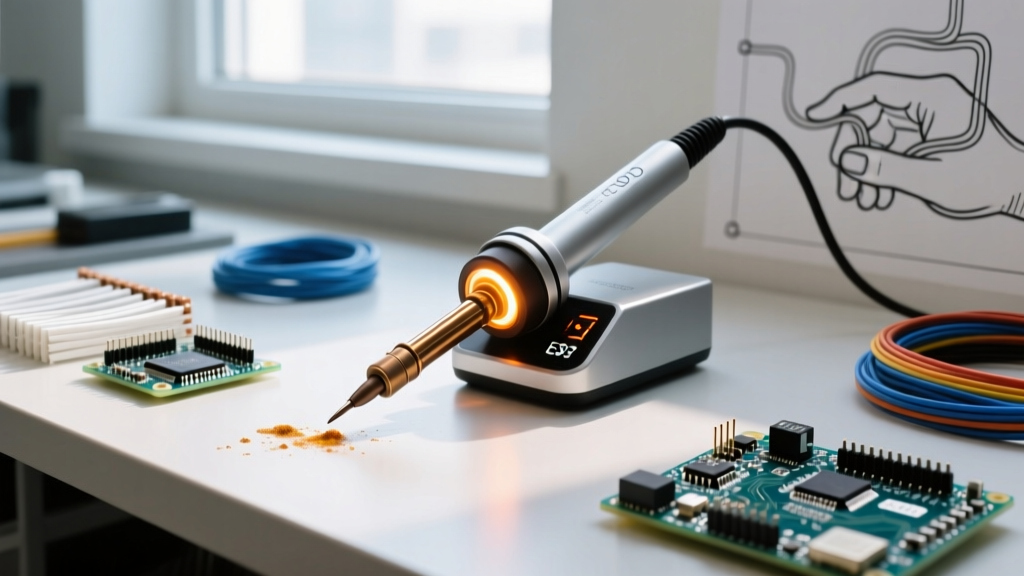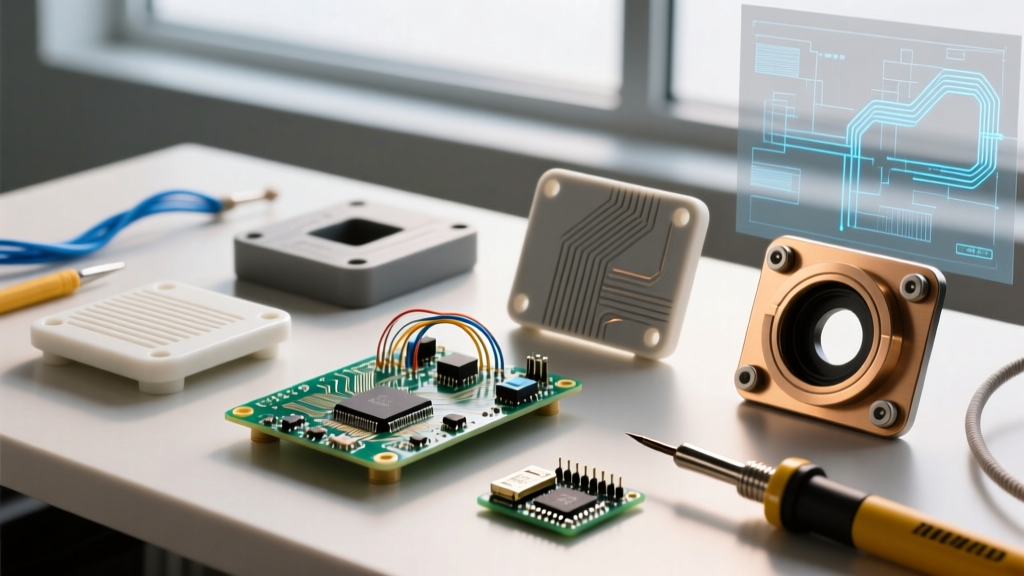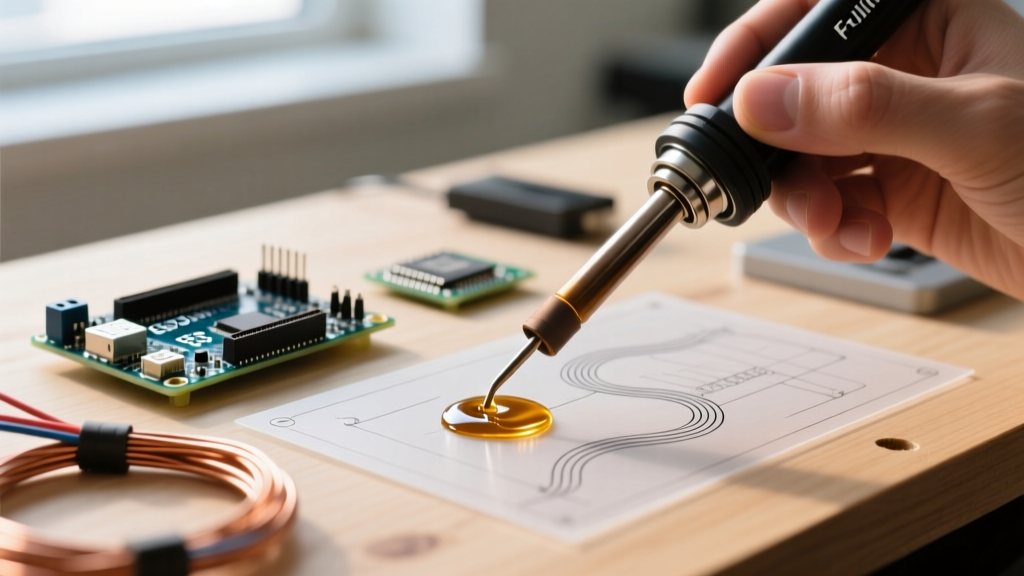

When bench jewelers, metalsmiths, and hobbyists search for a soldering iron for jewelry repair, they often encounter a frustrating paradox. The vast majority of buying guides point them toward 60-watt electronics stations designed for printed circuit boards. However, applying a standard electronics iron to a thick silver ring shank or a pewter casting results in instant thermal failure. The iron's tip temperature plummets the moment it touches the high-thermal-mass metal, leaving you with a cold, pasty joint and a ruined workpiece.
Fine jewelry fabrication—such as sizing a 14k gold band or soldering platinum prongs—traditionally relies on oxy-acetylene, water torches, or laser welders to achieve the 1,200°F to 2,200°F (650°C to 1,200°C) required for hard solders. However, the modern jeweler's bench in 2026 heavily relies on specialized electric soldering irons for a distinct, critical set of applications: costume jewelry repair, low-temperature silver/pewter soldering, re-tipping heat-sensitive prongs, and localized resistance soldering.
This deep dive strips away the generic advice and examines the exact metallurgical, thermal, and ergonomic features you must demand from a jewelry soldering iron today.
The Thermal Reality: Why Standard Electronics Irons Fail
To understand why a specialized tool is required, we must look at the specific heat capacity of jewelry metals. Silver and copper are exceptional heat sinks. When you touch a 40W or 60W iron tip to a sterling silver jump ring, the metal rapidly wicks heat away from the tip. Standard irons use thermocouples located deep inside the heating element, resulting in a delayed thermal recovery. By the time the sensor registers the temperature drop and pumps more power, the flux has burned, the solder has oxidized, and the joint is compromised.
A true jewelry soldering iron requires massive thermal reserve (wattage) and rapid, closed-loop temperature sensing at the very tip of the bit. According to metallurgical guidelines from Rio Grande, achieving proper capillary action in silver-bearing alloys requires maintaining a steady delta-T (temperature differential) that standard PCB irons simply cannot sustain.
Solder Alloys and Temperature Thresholds
Before selecting an iron, you must define the solder alloys you intend to use. Jewelry repair with an electric iron rarely uses traditional 'hard' jewelry solder. Instead, it relies on low-temperature, high-silver-content soft solders or specialized pewter solders.
| Solder Alloy | Melting Point | Primary Jewelry Application | Required Iron Wattage |
|---|---|---|---|
| Tix Silver-Bearing (Sn96/Ag4) | 430°F (221°C) | Costume jewelry, jump rings, low-temp sizing | 80W - 100W |
| Pewter Solder (Sn/Antimony) | 360°F (182°C) | Pewter casting repairs, figurine assembly | 100W+ |
| Low-Temp Gold Solder (10k/14k repair) | 750°F - 850°F | Chain repair, clasp replacement (requires specialized high-temp iron) | 150W+ / Resistance |
Core Features to Demand in 2026
If you are outfitting a jewelry bench or upgrading a repair station, these are the non-negotiable hardware features for 2026:
1. High-Wattage Elements with Active Tip Sensing
You need a minimum of 80 to 120 watts for thermal recovery, but wattage alone is not enough. The station must feature active tip sensing, where the thermocouple is embedded within millimeters of the tip's working face. Systems like the Pace ADS200 utilize a cartridge-style heater where the sensor, heater, and tip are a single integrated unit, eliminating the thermal lag that plagues older ceramic heater designs.
2. Tip Geometry and Plating
Jewelry repair demands specific tip profiles. The standard conical tip is largely useless for jewelry because it offers minimal surface area for heat transfer. Instead, look for:
- Heavy-Duty Chisel (3mm - 5mm): For sizing rings and soldering thick chain links.
- Micro-Spatula / Blade: Essential for re-tipping prongs and flowing solder into tight gallery wires without touching adjacent gemstones.
- Iron-Plated Copper Cores: Pure copper tips dissolve rapidly in silver-bearing solders. High-quality iron plating prevents pitting and extends tip life when using aggressive jewelry fluxes like zinc-chloride based solutions.
3. Ergonomics and Heat-Sink Management
When working near heat-sensitive stones like opals, emeralds, or cubic zirconia, precision is paramount. The GIA Gem Encyclopedia frequently documents thermal shock and fracture in gems exposed to localized, uncontrolled heat. A lightweight, pencil-grip handpiece with a silicone heat-shield is mandatory to prevent the jeweler's hand from fatiguing during the 10-to-20-second heat-up cycles required for heavy silver joints.
The Game Changer: Resistance Soldering Systems
Any serious discussion about a soldering iron for jewelry repair must address resistance soldering. Unlike a thermal iron that transfers heat from the outside in, a resistance system passes a low-voltage, high-amperage electrical current directly through the metal workpiece.
'Resistance soldering allows a jeweler to melt 14k gold solder on a specific prong while the gemstone sitting two millimeters away remains completely cool to the touch. It is the ultimate localized heat tool.' — Master Bench Jeweler Forum Consensus, 2025.
Using carbon electrodes or copper tweezers, the electrical resistance of the jewelry metal itself generates the heat. This completely bypasses the thermal mass problem of thick silver and gold, making it the superior 'iron' for fine jewelry repair where a torch is too dangerous.
Top Bench Contenders for Jewelry Repair
Based on bench testing, thermal recovery metrics, and long-term durability, here are the top systems for jewelry applications in 2026.
Weller W100PG (100W Heavy-Duty Thermal Iron)
Price Range: $120 - $150
Best For: Pewter repair, heavy costume jewelry, stained glass, and low-temp silver solders.
The Deep Dive: The W100PG is a legendary, brute-force thermal hammer. It uses a mechanical thermostat and a massive copper core. While it lacks the digital precision of modern micro-stations, its sheer thermal mass makes it one of the few affordable thermal irons capable of keeping a thick sterling silver ring shank hot enough to flow Tix solder. Its main drawback is the bulky handpiece, which makes micro-prong work difficult.
Pace ADS200 (with Blue Series High-Thermal Tips)
Price Range: $550 - $620
Best For: Precision costume jewelry, micro-prong re-tipping, and detailed silver filigree.
The Deep Dive: The ADS200 is a digital powerhouse. By equipping it with the Blue Series (high thermal mass) chisel tips, you bridge the gap between electronics micro-soldering and jewelry repair. The closed-loop PID controller pushes up to 120W instantly when it detects a temperature drop, ensuring the solder flows cleanly before the flux can carbonize.
American Beauty Model 1140 (100W Resistance Soldering)
Price Range: $750 - $850
Best For: Fine jewelry, localized gold/silver soldering, heat-sensitive stone settings.
The Deep Dive: This is not a traditional thermal iron, but it is the most important 'soldering tool' on a professional jewelry bench. The 1140 unit comes with a foot pedal and carbon-tipped tweezers. By pinching a broken gold chain link with the tweezers and pressing the pedal, the joint heats to soldering temperature in less than two seconds. It eliminates fire-scale, prevents stone damage, and uses significantly less flux.
Step-by-Step: Re-tipping a Prong with a Thermal Iron
When using a high-wattage thermal iron (like the Pace ADS200) to repair a worn prong on a heat-sensitive pendant, follow this exact protocol:
- Preparation: Clean the prong with a fiberglass scratch brush. Do not use sandpaper, which leaves embedded grit that contaminates the solder joint.
- Flux Application: Apply a micro-drop of non-corrosive, high-activity rosin flux or a specialized low-temp jewelry flux (like Stay-Silv paste) using a fine sable brush. Never use plumbing acid flux on jewelry.
- Heat Sinking: Apply a damp cotton ball or specialized thermal heat-sink putty to the gemstone and the base of the setting to wick away stray heat.
- Tinning the Tip: Ensure your micro-spatula tip is heavily tinned with a scrap of your chosen solder alloy. A dry tip will instantly oxidize and fail to transfer heat to the silver/platinum prong.
- The Transfer: Place a tiny paillon (chip) of solder on the tinned tip. Touch the tip to the worn prong. The high thermal recovery will melt the paillon onto the prong in 1.5 to 2 seconds. Remove immediately to prevent heat migration to the stone.
- Finishing: Quench in water, pickle in a warm citric acid solution to remove flux residue, and file the prong to shape.
Expert Troubleshooting & Edge Cases
- Pitting and Tip Erosion: If your iron tip is developing craters, you are likely using an acid-based plumbing flux or a solder with high cadmium/zinc content at excessive temperatures. Switch to a specialized jewelry flux and lower your idle temperature.
- The 'Ball-Up' Effect: If the solder balls up on the tip and refuses to flow onto the jewelry, the metal is not hot enough, or it is heavily oxidized. Increase the iron temperature by 20°F, re-clean the metal with pumice, and re-flux.
- Burning the Flux: If the flux turns black and crusty before the solder melts, your iron's thermal recovery is too slow. You must upgrade to a higher-wattage station or switch to a resistance soldering system for that specific joint.
Ultimately, selecting the right soldering iron for jewelry repair requires abandoning the 'one-size-fits-all' electronics mindset. By matching the thermal mass, wattage, and heating method (thermal vs. resistance) to your specific alloys and gemstones, you can achieve flawless, invisible repairs directly at the bench.