
The Intersection of Soldering Certifications and Workshop Safety
When electronics professionals and DIYers discuss soldering certifications, the conversation usually revolves around joint reliability, IPC standards, and aerospace compliance. However, from a safety best practices perspective, these certifications represent a critical framework for mitigating severe occupational hazards. Properly trained and certified technicians do not just build better circuits; they actively prevent thermal burns, respiratory diseases from colophony fumes, and heavy metal toxicity.
In 2026, as lead-free alloys like SAC305 (Tin-Silver-Copper) require higher processing temperatures—often exceeding 350°C at the iron tip—the margin for error has narrowed. This guide explores how industry-recognized soldering certifications enforce safety protocols and how you can implement these standards in your own workspace, whether you are a hobbyist or managing a commercial assembly floor.
Core Soldering Certifications: A Safety & Compliance Matrix
The Institute for Printed Circuits (IPC) governs the most globally recognized soldering certifications. Understanding these standards is the first step in auditing your workshop's safety and quality baseline.
| Certification Standard | Primary Focus | Safety & Ergonomic Implications | Average Course Cost (2026) |
|---|---|---|---|
| IPC J-STD-001 | Requirements for Soldered Electrical and Electronic Assemblies | Mandates proper flux handling, ESD-safe tool usage, and strict thermal profiling to prevent component delamination and operator burns. | $1,800 - $2,400 |
| IPC-A-610 | Acceptability of Electronic Assemblies (Visual Inspection) | Trains inspectors to identify hidden hazards like micro-cracks and insufficient wetting that could lead to high-resistance arcing and fire risks. | $1,500 - $2,100 |
| IPC 7711/7721 | Rework, Modification, and Repair of Electronic Assemblies | Heavily emphasizes safe desoldering techniques, localized preheating, and hazardous fume extraction during prolonged thermal exposure. | $2,000 - $2,800 |
How Certifications Enforce Critical Safety Best Practices
Uncertified soldering often relies on guesswork, leading to dangerous shortcuts. Certified training programs embed safety into the muscle memory of the technician. Here is how formal soldering certifications address the 'Big Three' hazards of electronics assembly.
1. Respiratory Protection and Fume Extraction
The vaporized flux used in solder wire and paste contains colophony (rosin) and various chemical activators. When heated, these compounds release aliphatic aldehydes and hydrochloric acid gas. According to occupational health guidelines, chronic exposure to rosin-based solder fumes is a leading cause of occupational asthma and contact dermatitis.
The Certified Approach: IPC training strictly mandates the use of localized source extraction. A certified technician will never rely on room-level HVAC. They utilize benchtop HEPA and activated carbon extractors, such as the Weller WFE 2X (approx. $1,150) or the Hakko FA-400 (approx. $230), positioning the capture nozzle exactly 2 to 4 inches from the solder joint to ensure a minimum capture velocity of 100 feet per minute.
2. Thermal Management and Burn Prevention
Transitioning from traditional Sn63/Pb37 (melting point 183°C) to RoHS-compliant SAC305 (melting point 217°C) forced the industry to increase soldering iron temperatures. Running a standard iron at 400°C to compensate for poor thermal recovery increases the risk of severe contact burns and accelerates tip oxidation, which can cause molten solder to spit.
The Certified Approach: Certified operators are trained to use advanced thermal management systems rather than simply turning up the dial. Tools like the Metcal CV-5200 Smart Heat station (approx. $650) use Curie-point technology. The tip self-regulates its temperature based on the thermal mass of the pad, eliminating the need for manual temperature guessing and drastically reducing the risk of thermal runaway and accidental burns.
3. Lead Handling and Hygiene Protocols
While lead-free is standard for commercial goods, aerospace, medical, and hobbyist sectors still heavily utilize leaded solder (Sn63/Pb37) due to its superior reliability and resistance to tin whiskers. Lead is a potent neurotoxin, and ingestion via hand-to-mouth transfer is the primary exposure vector in electronics labs.
Certification courses enforce a strict 'No Food, No Drink, No Cosmetics' policy at the bench. Furthermore, technicians are trained to use specialized ESD-safe lead-removal wipes and wash hands with cold water first (to prevent pores from opening and absorbing lead dust) before using warm soapy water.
For deeper regulatory context on heavy metal exposure, refer to the OSHA Lead Standards, which outline the permissible exposure limits (PEL) and mandatory hygiene facilities for workers handling lead alloys.
The Hidden Dangers of Uncertified Soldering: Failure Modes
When safety and quality protocols are bypassed, the resulting defects are not just cosmetic; they are active safety hazards. Consider these real-world failure modes that certified inspectors are trained to catch:
- High-Resistance Arcing: A 'cold' or disturbed solder joint creates microscopic voids. Under high current loads, these voids increase electrical resistance, generating localized heat that can melt the PCB substrate and ignite nearby components.
- Electrochemical Migration (Dendrites): Failure to properly clean aggressive water-soluble fluxes (a key step taught in J-STD-001) leaves ionic residues. In humid environments, these residues form conductive dendrites between traces, causing short circuits and catastrophic battery failures in portable devices.
- Component Delamination: Applying a 400°C iron to a moisture-sensitive SMD component without pre-baking or localized preheating causes the 'popcorn effect', where trapped moisture violently expands, cracking the IC package and exposing live silicon to the environment.
Buyer’s Guide: Building a Certification-Compliant Safe Workspace
You do not need to spend $2,000 on an IPC course to adopt their safety frameworks. Here is a targeted equipment list to bring your DIY or professional lab up to certified safety standards.
- ESD-Safe Workbench Mat ($45 - $80): Prevents static discharge that can damage components and cause involuntary muscle spasms (leading to burns). Ensure it is grounded via a 1-megohm resistor to the building earth.
- Smart Temperature Soldering Station ($300 - $700): Invest in a Pace ADS200 or Hakko FX-951. These stations offer rapid thermal recovery, meaning you can solder at a safer 320°C instead of a dangerous 380°C.
- Activated Carbon Fume Extractor ($150 - $1,200): For light DIY, a Hakko FA-400 is sufficient. For continuous production or rework, upgrade to a multi-stage BOFA or Weller system with HEPA pre-filters to trap particulate matter before it reaches the carbon block.
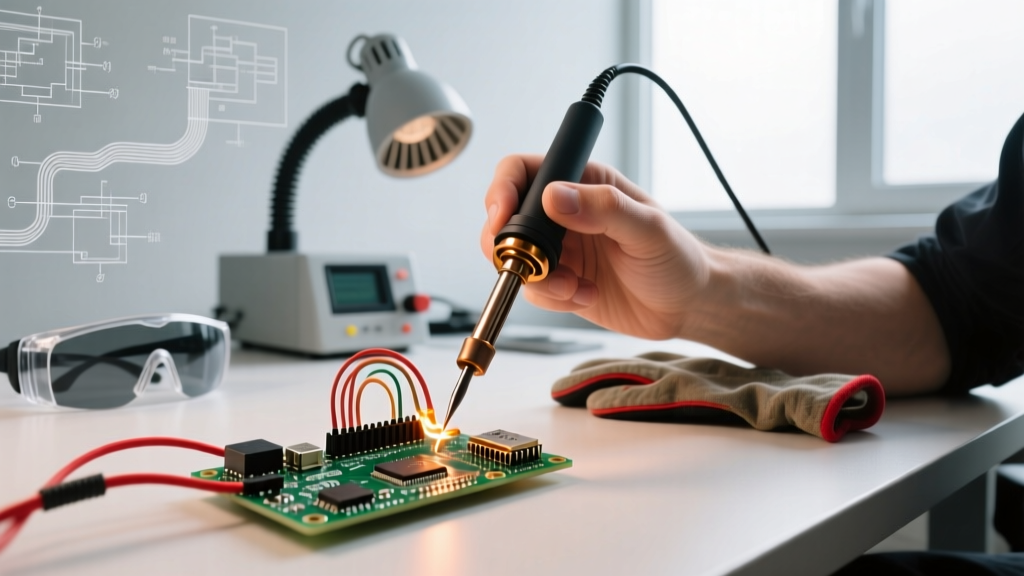
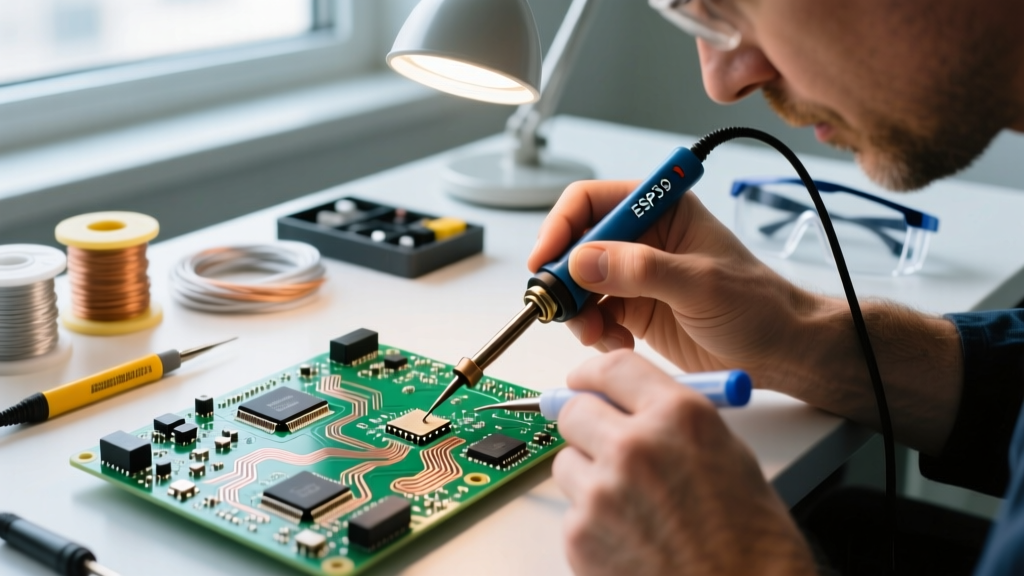
- Optical Inspection & PPE ($100 - $300): Use a magnifying lamp with an integrated LED ring light to prevent eye strain. Always wear ANSI-rated safety glasses (like the 3M Virtua CCS) to protect against molten solder splatter when clipping component leads.
Frequently Asked Questions (FAQ)
Do I need a soldering certification to repair my own electronics?
No, formal IPC certification is not legally required for personal DIY projects or hobbyist repairs. However, studying the publicly available IPC-A-610 visual acceptance criteria is highly recommended to ensure your repairs are safe and reliable.
How often do soldering certifications expire?
Most IPC soldering certifications are valid for two years. Recertification is required to ensure technicians are updated on the latest safety protocols, RoHS compliance changes, and new lead-free alloy behaviors.
Is lead-free solder safer to use than leaded solder?
Lead-free solder eliminates the risk of lead toxicity, but it requires higher temperatures, which increases the volume of hazardous flux fumes and the risk of thermal burns. Both require strict adherence to safety best practices.
Final Thoughts on Safety and Standards
Ultimately, soldering certifications are not just about passing a visual inspection test; they are a comprehensive methodology for risk management. By adopting the safety frameworks inherent in IPC standards—proper fume extraction, precise thermal control, and rigorous hygiene—you protect both your health and the integrity of your electronic assemblies. For further reading on environmental and health impacts of electronics manufacturing, the EPA's Lead Guidelines provide extensive resources on safe disposal and handling of heavy metals in the home and workplace.