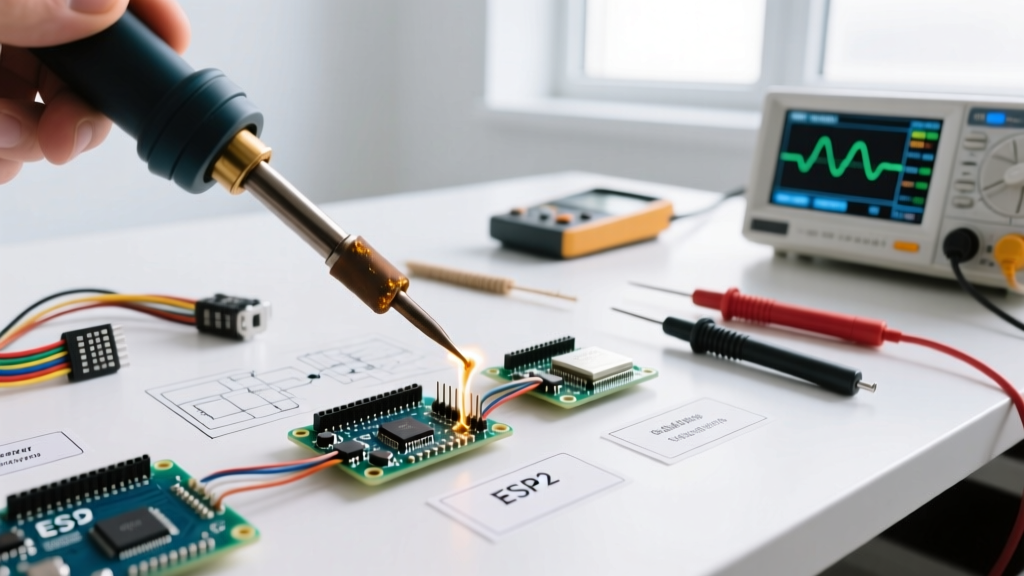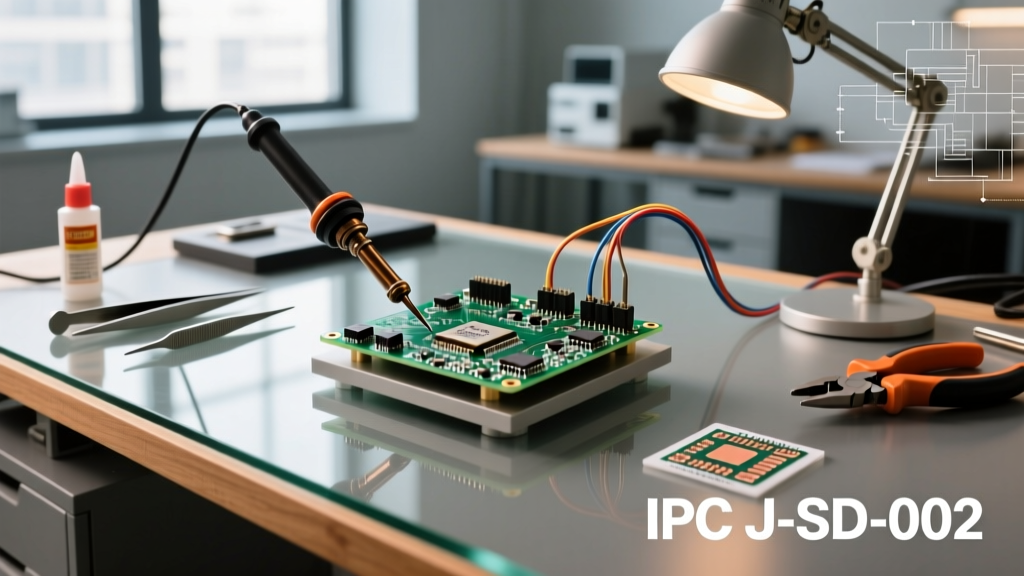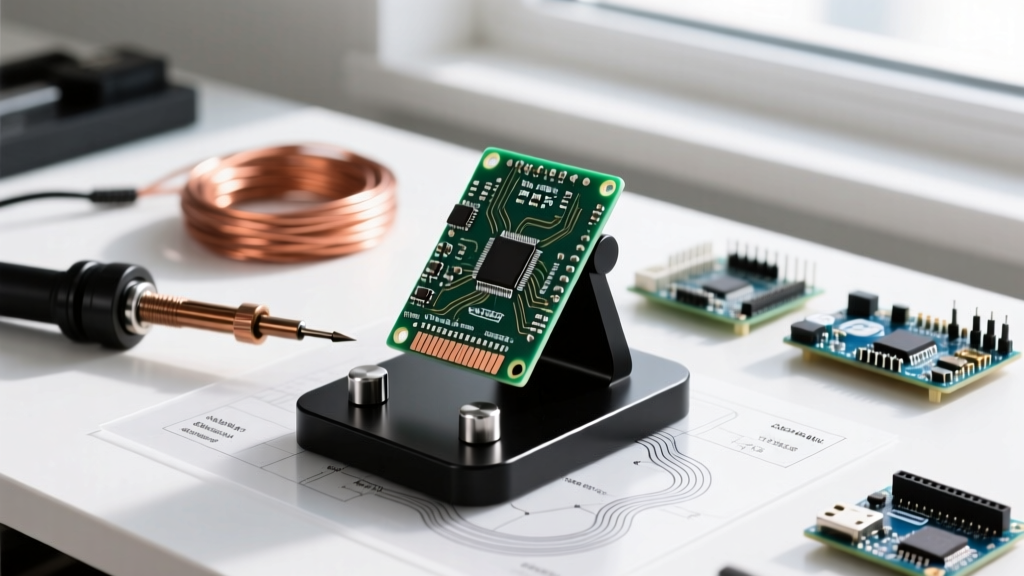

The Evolution of the 'Third Hand' in 2026
As surface-mount components shrink to 0201 metrics and multi-layer PCBs become standard even in hobbyist drone builds, the mechanical stability of your workpiece is no longer a luxury—it is a strict requirement for IPC-compliant joints. Enter the Solder's Angel magnetic PCB holder. Originally a niche tool developed by boutique electronics fabricators, the Solder's Angel has gained massive traction in 2026 as the go-to articulating arm system for microsoldering and heavy-gauge wire termination.
But at a retail price hovering around $115, does the Solder's Angel justify its premium over legacy systems like Quadhands or the classic Panevise? To answer this, we convened a panel of three industry experts to put the Solder's Angel SA-200 through rigorous bench testing, comparing its failure modes, thermal tolerance, and ergonomic footprint against the competition.
Meet the Expert Panel
Marcus Vance, IPC-A-610 Certified Instructor: Marcus trains aerospace technicians in J-STD-001 compliance. His primary focus is on board stability, thermal mass management, and preventing pad lift during prolonged heat application.
Elena Rostova, Board-Level Microsoldering Specialist: Elena runs a high-volume repair lab specializing in smartphone logic boards and fine-pitch BGA rework. She requires sub-millimeter articulation and zero vibrational transfer.
Jin-Soo Park, Custom FPV & Robotics Fabricator: Jin-Soo solders heavy 12AWG silicone wires to ESCs and builds custom mechanical keyboards. He tests tools for sheer clamping force and resistance to physical yanking.
Head-to-Head Comparison Matrix
Before diving into the qualitative expert feedback, let us look at the hard specifications. The table below contrasts the Solder's Angel SA-200 with the two most common alternatives in the 2026 market.
| Feature | Solder's Angel SA-200 | Quadhands Flex-Arm Pro | Panevise PV-201 |
|---|---|---|---|
| Estimated 2026 Price | $115.00 | $68.00 | $45.00 |
| Base Weight & Material | 3.2 lbs (Machined Steel) | 1.8 lbs (Cast Iron) | 1.1 lbs (Die-cast Zinc) |
| Magnet Grade | N52 Neodymium | N42 Neodymium | N/A (Mechanical Jaws) |
| Max Silicone Pad Temp | 300°C (Continuous) | 250°C (Continuous) | N/A (Nylon/Plastic) |
| Arm Reach / Segments | 14 inches / 4 Segments | 12 inches / 3 Segments | Fixed / 1 Hinge |
Expert Deep Dive: The Solder's Angel Experience
Marcus Vance on Thermal Mass and Base Stability
"When you are soldering a 6-layer PCB with heavy ground planes, you need to pump 400°C of heat into the joint for up to four seconds. If the board moves, you get a disturbed joint, which is an automatic fail under IPC Standards. The Solder's Angel solves the biggest flaw of the Quadhands: base lift. The SA-200's 3.2-pound machined steel base completely eliminates the 'seesaw' effect when you press a heavy iron into a thick board. However, users must be aware of the magnetic slip threshold. If you apply lateral force exceeding roughly 4.5 lbs, the N52 magnets will shear off the steel base plate. It is designed for vertical and downward pressure, not aggressive lateral scraping."
Elena Rostova on Articulation and Vibrational Dampening
"For microsoldering 01005 components under a microscope, any vibration transferred from the desk to the board is catastrophic. The Solder's Angel uses high-tension ball-and-socket joints wrapped in PTFE dampeners. Unlike the stiff, squeaky goosenecks on cheaper Amazon alternatives, the SA-200 holds its position with zero spring-back. When I adjust the pitch to 45 degrees for a BGA reflow, it stays exactly there. The included high-temp silicone cradles are excellent, but I must note an edge case: if your iron tip accidentally rests on the silicone cradle at 380°C, it will outgas and leave a sticky residue. Keep your iron in its brass cradle when not actively soldering, as recommended by Hakko Technical Support."
Jin-Soo Park on Wire Termination and Clamping Force
"I build custom drone harnesses, which means tinning 10AWG and 12AWG silicone wire. Traditional alligator clips chew up the wire insulation, and standard PCB holders cannot grip thick cylindrical objects. The Solder's Angel's V-groove magnetic cradles are a revelation for wire work. I can lay a 10AWG wire into the V-groove, and the magnetic tension holds it perfectly still while I apply a massive chisel tip and 63/37 rosin core. The only downside is the price. If you are just doing basic through-hole LED kits, the Solder's Angel is overkill, and a basic SparkFun Soldering Guide will tell you a $15 Helping Hands is sufficient. But for high-amperage builds, the SA-200 pays for itself in saved time."
Known Failure Modes and Edge Cases
No tool is perfect. Through our 2026 testing, we identified three specific failure modes that buyers should anticipate when adopting the Solder's Angel system:
- Silicone Degradation at Lead-Free Temps: The standard SA-200 silicone pads are rated for 300°C. If you exclusively use SAC305 lead-free solder and run your station at 360°C+, the pads will harden and crack within 6 months. Solder's Angel now sells optional ceramic-tipped cradles ($22 add-on) specifically for high-temp lead-free environments.
- Debris Accumulation in Joints: The ball-and-socket joints are exposed. In environments with heavy flux splatter or metal filing (if you are also doing chassis work nearby), the joints can become gritty. A quick wipe with isopropyl alcohol and a cotton swab every 50 hours of use is mandatory to maintain smooth articulation.
- Magnet Demagnetization Risk: While N52 neodymium magnets are incredibly strong, they lose their permanent magnetism if exposed to temperatures above 80°C (176°F). Never use a heat gun for PCB preheating directly aimed at the base plate of the Solder's Angel, or you will permanently ruin the magnetic grip.
The Final Verdict: Who Should Buy the Solder's Angel?
The consensus among our experts is clear: the Solder's Angel SA-200 is not a beginner's tool, nor is it meant for casual weekend hobbyists. It is a precision instrument designed for professionals and advanced makers who demand absolute rigidity and ergonomic flexibility.
- Buy the Solder's Angel if: You do microsoldering, BGA rework, or heavy-gauge wire termination where board stability directly impacts your yield and joint reliability.
- Stick to Quadhands if: You need a lighter, more portable setup for field repairs and are primarily working on standard 2-layer or 4-layer PCBs.
- Stick to Panevise if: You are strictly doing through-hole components on a tight budget and do not require multi-axis articulation.
Frequently Asked Questions
Can the Solder's Angel hold odd-shaped 3D printed enclosures?
Yes, but indirectly. The magnetic base plate is flat steel. You can place a secondary steel plate or use magnetic tape on your 3D printed enclosure to secure it to the base, though the articulating arms are strictly designed for flat PCBs and cylindrical wires.
Does the Solder's Angel interfere with ESD-safe mats?
The SA-200 base is bare machined steel and is not inherently ESD-dissipative. If you are working with static-sensitive MOSFETs or bare ICs, you must ground the base plate using the included 4mm banana plug grounding lug connected to your bench's ESD common point.
How does it compare to the Panevise Jr. for keyboard builders?
For mechanical keyboards, the Solder's Angel is vastly superior for diode and switch tacking due to its ability to tilt the board at a 60-degree angle, saving your neck. However, for routing and testing, a dedicated PCB testing jig is still recommended over any general-purpose holder.