
Redefining the Soldering Tools Meaning Through Metallurgy
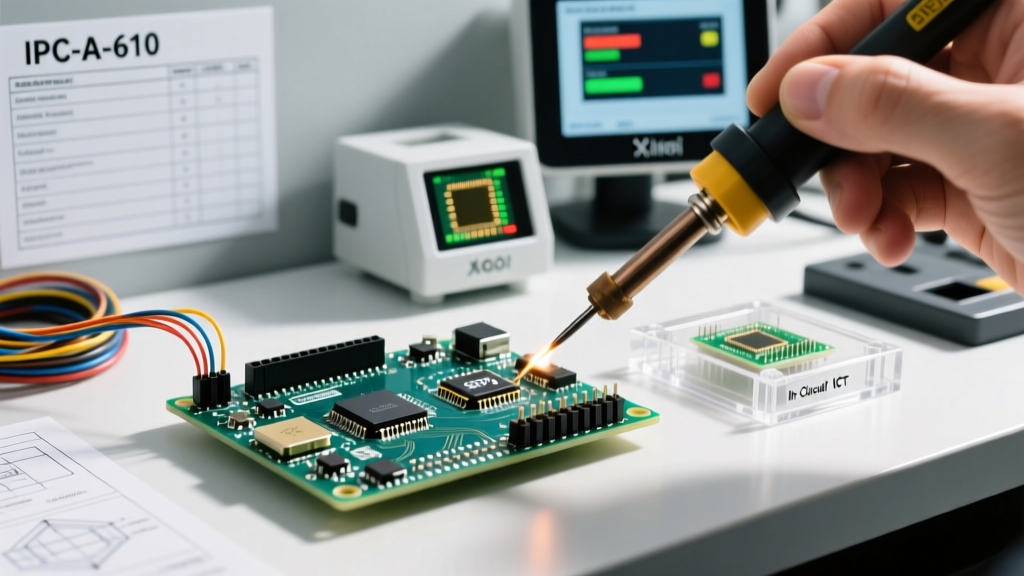
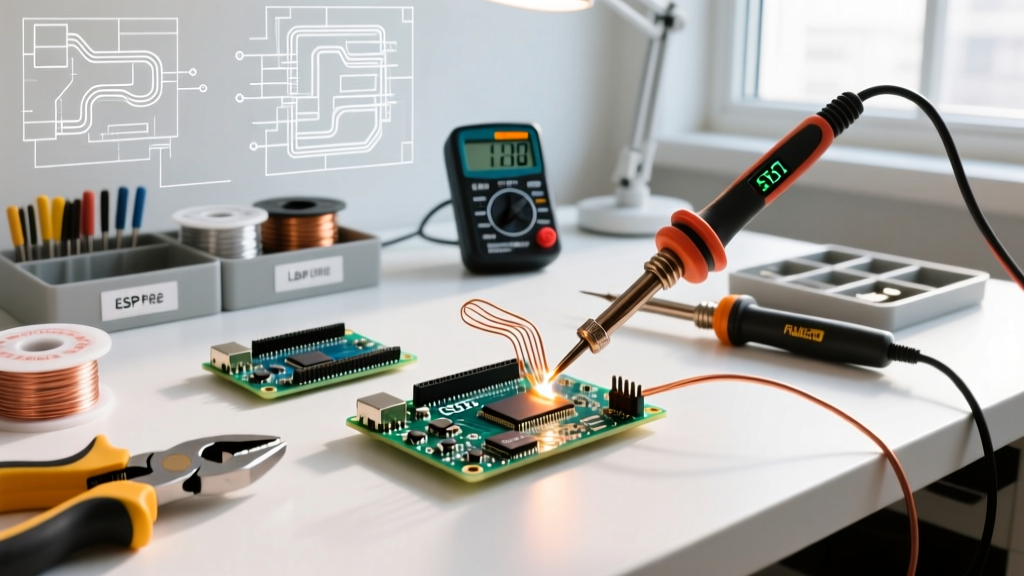
When hobbyists and professionals search for the soldering tools meaning, they are often met with basic glossary definitions describing a heated metal implement used to melt filler wire. However, in advanced electronics manufacturing, aerospace engineering, and heavy-duty DIY fabrication, the true meaning of these tools is defined by their material compatibility. A soldering station is not merely a heat source; it is a precise thermal delivery system designed to overcome the specific oxide layers, thermal mass, and metallurgical constraints of the base materials being joined.
Understanding the soldering tools meaning from a material compatibility perspective requires analyzing how the iron's wattage, the tip's plating, the solder alloy's eutectic properties, and the flux's chemical activators interact with substrates ranging from delicate PCB copper traces to heavy-gauge brass and stubborn stainless steel. This guide decodes these interactions, providing a definitive framework for selecting the right tools based on the materials you intend to join in 2026.
Thermal Delivery Systems: Matching Irons to Thermal Mass
The core of any soldering setup is the station. The 'meaning' of a 70-watt iron changes drastically depending on whether you are soldering a 0402 surface-mount component or a 10 AWG copper wire to a heavy brass lug.
Standard Ceramic Heater Stations
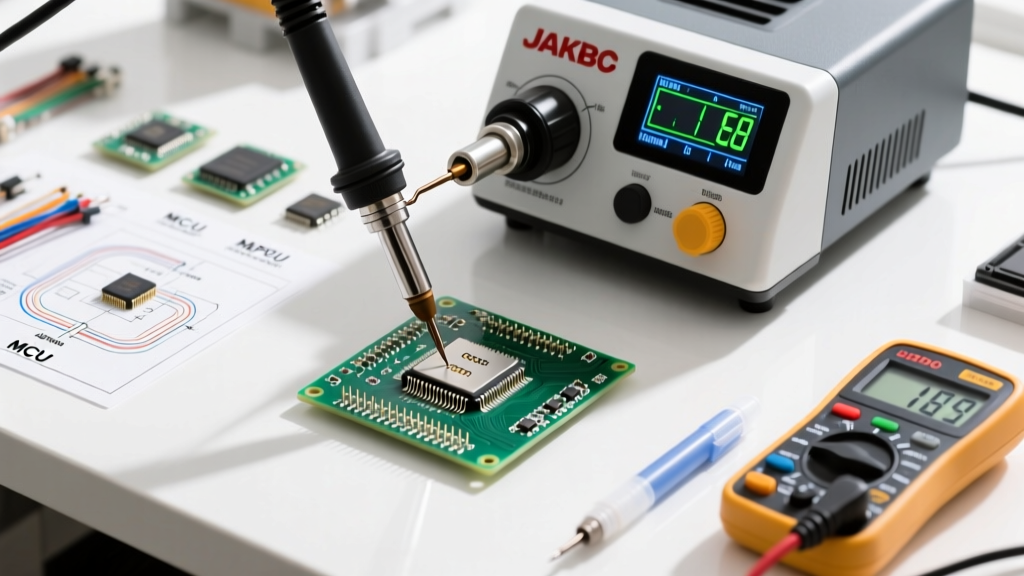
Stations like the Hakko FX-951 (retailing around $280 in 2026) or the Weller WE1010 ($145) utilize traditional ceramic heating elements separated from the tip by an air gap or mechanical sleeve. These are ideal for low-to-medium thermal mass materials like standard FR4 fiberglass PCBs and thin copper wiring. However, when applied to high-thermal-mass materials like thick aluminum chassis or large ground planes, the thermal transfer rate bottlenecks, leading to prolonged dwell times and catastrophic flux exhaustion.
Active-Tip Cartridge Systems
For demanding material compatibility, active-tip systems like the JBC CD-2BQE ($550-$650) or the Pace ADS200 ($400) redefine the tool's utility. By integrating the heating element directly into the tip cartridge, these systems achieve thermal recovery in under two seconds. This rapid recovery is mandatory when soldering materials with high thermal conductivity, such as thick brass or silver-plated terminals, ensuring the solder reaches its liquidus phase before the base material acts as an infinite heat sink.
Filler Metals: Decoding Solder Alloys for Specific Substrates
The solder wire is the metallurgical bridge between your tools and the base material. According to Indium Corporation's soldering metallurgy guides, selecting the wrong alloy for a specific base metal will result in non-wetting, regardless of how perfectly calibrated your iron is.
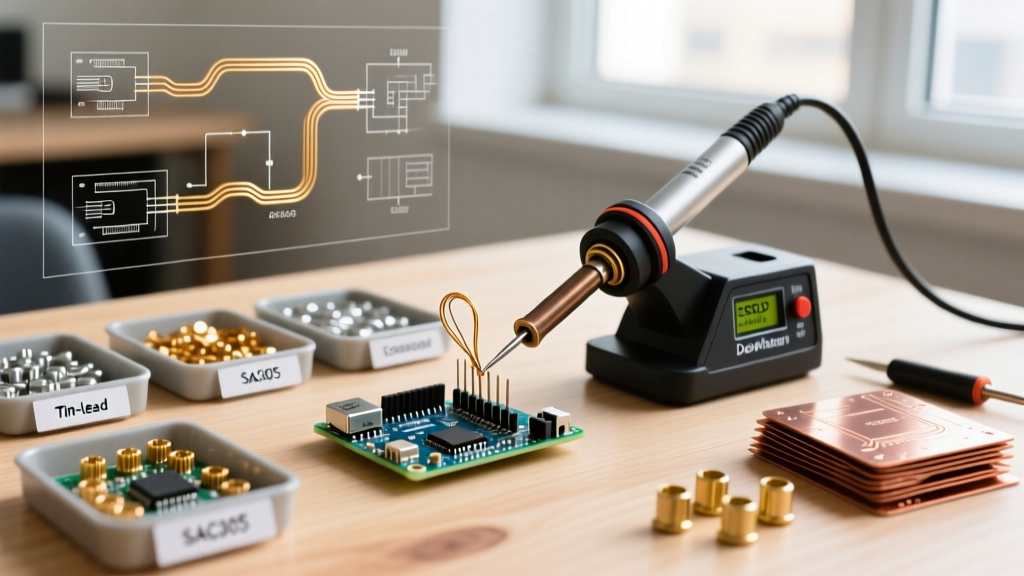
- SAC305 (Sn96.5/Ag3.0/Cu0.5): The industry-standard lead-free alloy. Melts at 217°C-220°C. Excellent for standard copper PCB pads and nickel-gold finishes. Requires higher tip temperatures (340°C-360°C) and highly active no-clean fluxes to combat rapid oxidation.
- Sn63/Pb37 (Eutectic): Melts sharply at 183°C. While restricted in commercial manufacturing by RoHS, it remains the gold standard for DIYers and aerospace repair due to its superior wetting on bare copper and tinned brass, and its visual 'shiny' joint indicators.
- Sn96.5/Ag3.5: A high-reliability, lead-free alloy often used in high-vibration environments. It exhibits superior fatigue resistance on copper-to-copper joints but can cause 'silver leaching' if used on silver-plated RF components.
Flux Chemistry: The True Catalyst of Compatibility
Flux is arguably the most misunderstood element when defining the soldering tools meaning. Flux does not clean dirt; it chemically reduces metal oxides at high temperatures, allowing the molten solder to form an intermetallic compound (IMC) with the base metal. The IPC J-STD-001 standard strictly categorizes fluxes based on their activity levels and material compatibility.
Rosin and Mildly Activated Rosin (RMA)
Standard RMA fluxes (like Kester 186) are perfectly matched for easily solderable materials: bare copper, tin-plated steel, and silver. They leave a benign, non-conductive residue. However, they are entirely ineffective on heavily oxidized materials like stainless steel or zinc-heavy brass.
Water-Soluble and Acid Fluxes
When joining stubborn materials like stainless steel, nichrome, or raw aluminum, organic acid (OA) or inorganic acid fluxes are required. These contain aggressive activators (like zinc chloride or phosphoric acid) that strip tenacious oxide layers. Warning: Acid fluxes are highly corrosive and must be thoroughly neutralized and washed post-soldering; they must never be used on PCB electronics.
Material Compatibility Matrix
The following matrix serves as a quick-reference framework for matching your tools, alloys, and chemistry to specific base materials.
| Base Material | Recommended Tool/Tip Type | Optimal Solder Alloy | Flux Requirement | Common Failure Mode |
|---|---|---|---|---|
| Copper (PCB Traces) | Standard Ceramic (Chisel/Bevel) | SAC305 or Sn63/Pb37 | No-Clean (RMA) | Lifted pads due to excessive dwell time |
| Brass / Zinc Alloys | Active-Tip Cartridge (High Wattage) | Sn60/Pb40 or Sn96.5/Ag3.5 | Mild Acid or RA Rosin | Dewetting due to rapid zinc oxide formation |
| Stainless Steel | Heavy-Duty Iron (100W+) | Sn63/Pb37 (High wetting) | Inorganic Acid (Phosphoric) | Non-wetting; solder beads up and rolls off |
| Aluminum (Chassis) | Specialized Ultrasonic or High-Mass | Zinc-based or Sn95/Ag5 | Specialized Al-Flux or Mechanical Abrasion | Oxide layer prevents IMC formation entirely |
| Nichrome (Heating Wire) | Spot Welder (Preferred) / High-Heat | High-Temp Silver Solder | Fluoride-based Acid Flux | Extreme oxidation; joint fractures under heat |
Tip Metallurgy and Plating Degradation
A critical, often overlooked aspect of the soldering tools meaning is the consumable nature of the tip itself. Modern soldering tips are not solid copper; they are copper cores plated with a 100-to-150-micron layer of iron to prevent the molten solder from dissolving the copper. Over this iron layer is a micro-thin coating of tin and chromium to prevent oxidation.
When using lead-free alloys like SAC305 at elevated temperatures (360°C+), the tin in the solder aggressively attacks the iron plating. If you frequently solder high-thermal-mass materials that require prolonged contact and maximum heat, you will experience tip pitting and hollowing. To mitigate this when working with demanding materials, professionals utilize tips with thicker iron plating (often designated as 'Heavy Duty' or 'Long Life' by manufacturers like Pace and Hakko) and strictly adhere to the practice of tinning the tip with a sacrificial blob of solder immediately after every joint to shield the iron layer from atmospheric oxygen.
Troubleshooting Material Mismatches
Even with a deep understanding of material compatibility, edge cases occur. Here is how to diagnose and correct the most common material-tool mismatches:
- The 'Cold' or Grainy Joint on Brass: Brass acts as a massive heat sink. If your joint looks dull and grainy, the solder cooled through its plastic phase while being disturbed, or the iron lacked the wattage to keep the brass above the solder's liquidus point. Fix: Switch to an active-tip cartridge station and pre-tin both the wire and the brass lug separately before joining.
- Solder Beading on Stainless Steel: This is classic non-wetting. The chromium oxide layer on stainless steel is impervious to standard rosin flux. Fix: Mechanically abrade the surface with 400-grit sandpaper, apply a specialized stainless-steel acid flux (like Rubyfluid), and use a high-wattage iron to overcome the localized cooling effect of the liquid flux.
- Rapid Tip Blackening on Lead-Free PCBs: If your tip turns black and refuses to accept solder within minutes, the flux in your lead-free wire is charring and carbonizing on the iron plating due to excessive temperature. Fix: Lower the station temperature to 320°C, use a brass wool sponge instead of a wet cellulose sponge (which causes thermal shock and micro-cracking in the tip plating), and apply fresh flux paste manually.
Expert Sourcing and Final Tool Selection
Ultimately, the soldering tools meaning is defined by the successful creation of a reliable intermetallic bond without damaging the base substrate. When building or upgrading your workbench in 2026, do not buy tools based solely on wattage or brand prestige. Audit the specific materials you work with most frequently. If your work is 90% PCB repair and 0402 components, a precision micro-pencil tip on a Hakko FX-951 with Kester 245 No-Clean wire is your optimal stack. If you are restoring vintage audio equipment, fabricating custom battery packs, or soldering heavy-gauge RC wiring, investing in a JBC cartridge system, Sn63/Pb37 eutectic solder, and a mildly activated rosin flux will yield vastly superior, mechanically sound joints. For comprehensive chemical data on specific flux activators and their material compatibilities, always consult the technical data sheets provided by manufacturers like Kester's flux chemistry documentation before applying aggressive chemistries to sensitive assemblies.