
The Hidden Hazards of Component-Level Repair Soldering
Transitioning from basic through-hole assembly to complex repair soldering introduces a new tier of occupational hazards. When you are reworking multilayer PCBs, replacing dense SMD components, or fixing broken traces, you are not just melting metal; you are aerosolizing complex chemical compounds. According to the IPC-7711/7721 standard for the rework, modification, and repair of electronic assemblies, proper thermal and chemical management is just as critical as the solder joint itself. In 2026, with the widespread adoption of high-reliability lead-free alloys and densely packed HDI (High-Density Interconnect) boards, understanding safety best practices for repair soldering is mandatory for both hobbyists and professional technicians.
Flux Fumes vs. Metal Toxicity: Understanding the Real Threat
A common misconception in electronics repair is that the primary danger comes from inhaling lead vapor. In reality, lead (Pb) has a vaporization point of 1,749°C (3,180°F). Since repair soldering rarely exceeds 400°C, lead does not vaporize during the process. The true respiratory threat comes from the flux.
Most repair soldering utilizes rosin-based (colophony) or synthetic resin fluxes. When heated, these fluxes release volatile organic compounds (VOCs) and sub-micron particulates. The UK Health and Safety Executive (HSE) explicitly classifies colophony as a severe respiratory sensitizer. Once a technician becomes sensitized to rosin fumes, even micro-exposures can trigger debilitating occupational asthma. Furthermore, modern no-clean fluxes (classified under IPC J-STD-004 as ROL0 or REL0) contain activators that, when burned at high lead-free temperatures (350°C+), produce highly irritating aliphatic aldehydes.
Ventilation and Fume Extraction: Beyond the Desk Fan
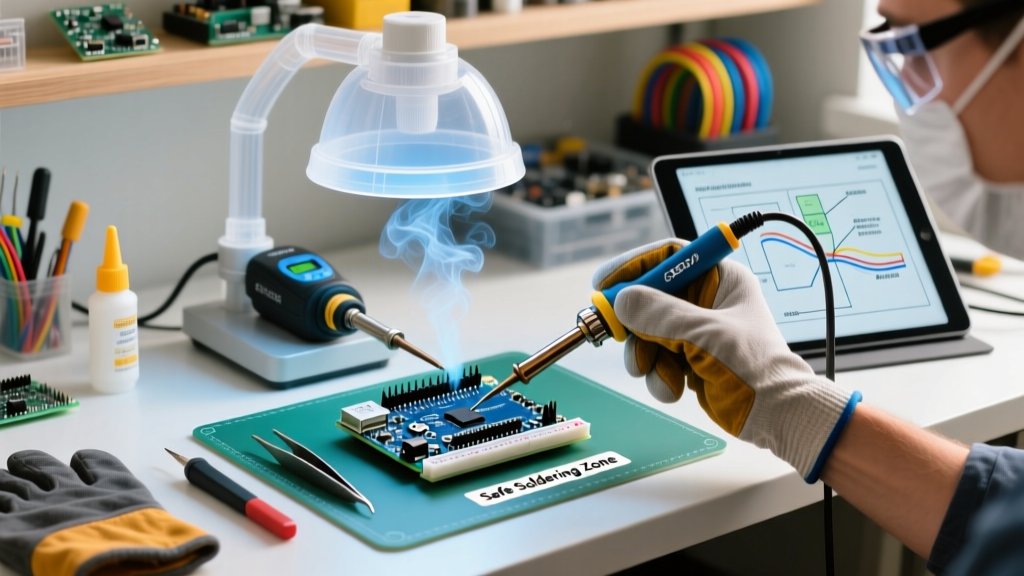
Pointing a standard desk fan at your workspace is a critical safety failure. A fan simply disperses colophony and flux particulates across the room, ensuring they settle on your skin, clothing, and into your lungs. Proper repair soldering requires localized exhaust ventilation (LEV) equipped with both HEPA and activated carbon filtration.
| Extractor Model | Approx. Price | Airflow (CFM) | Filtration Type | Best Application |
|---|---|---|---|---|
| Hakko FA-400 | $75 | 43 CFM | Activated Carbon Only | Light hobbyist through-hole repair |
| Weller WSA350 | $399 | 60 CFM | HEPA + Gas Filter | Professional SMD rework and BGA repair |
| Metcal MX-PS600 | $850 | 90 CFM | Multi-stage HEPA + Deep Carbon | High-volume repair labs and continuous use |
Note: Carbon filters only trap VOCs and odors. A true HEPA filter (capturing 99.97% of particles down to 0.3 microns) is required to trap the solid flux particulates that cause lung irritation.
Thermal Safety: Managing Iron Temperatures and Burn Risks
Repair soldering often involves desoldering large ground planes or multilayer vias, which act as massive heat sinks. The instinctive reaction for many technicians is to crank their soldering station up to 450°C (842°F) to force the joint to melt. This is a severe safety and reliability hazard.
- Flux Carbonization: At 450°C, flux burns instantly, releasing maximum toxic aerosols and leaving acidic residues that cause long-term dendritic growth and board failure.
- Pad Delamination: Standard FR-4 PCB material has a glass transition temperature (Tg) between 130°C and 170°C. Excessive localized heat causes the epoxy resin to expand rapidly, tearing the copper pad away from the fiberglass substrate.
- Component Damage: Internal silicon die-attach materials in ICs can degrade or melt at sustained temperatures above 260°C.
The Preheater Solution
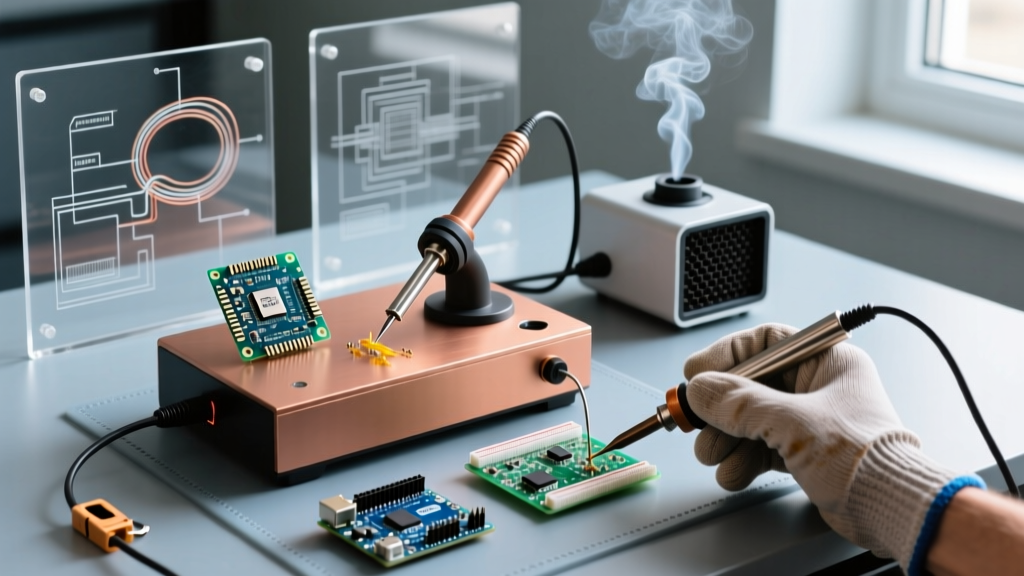
To maintain safe iron temperatures (320°C - 350°C) while repairing heavy ground planes, use a bottom-side PCB preheater. Units like the Quick 853A ($250) or the professional Hakko FR-820 ($650) elevate the ambient temperature of the entire board to 100°C - 120°C. This reduces the thermal delta required from your soldering iron, drastically cutting down on flux burn, toxic smoke generation, and the risk of thermal shock to surrounding components.
PPE and Workspace Ergonomics for Long Repair Sessions
Safety in repair soldering extends beyond respiratory protection to physical barriers and ergonomic setup.
Hand Protection and Lead Ingestion
According to OSHA guidelines on lead exposure, the primary route of contamination in electronics manufacturing and repair is hand-to-mouth ingestion. When handling Sn63/Pb37 (eutectic leaded solder) or repairing legacy hardware, always wear powder-free nitrile gloves. Latex gloves are insufficient as they can degrade when exposed to certain flux solvents and IPA (isopropyl alcohol) used for cleaning. Never eat, drink, or touch your face while at the repair bench, and always wash hands with cold water and soap immediately after handling leaded components (hot water opens pores, potentially trapping lead dust).
Eye Protection and Microscope Safety
Solder splash is a frequent occurrence when repairing boards with high-tension components or when using excessive amounts of braided desoldering wick. Always wear safety glasses rated ANSI Z87.1 or higher. If you are using a digital or optical stereo microscope (such as an AmScope or Leica) for fine-pitch SMD repair, ensure the lighting is diffused to prevent retinal fatigue, and take a 5-minute visual break every 45 minutes to prevent severe eye strain and headaches.
Safe Handling of Legacy Boards: Beryllium Copper and Capacitors
When performing repair soldering on vintage audio equipment, military hardware, or legacy telecommunications gear, you may encounter exotic and hazardous materials.
- Beryllium Copper Connectors: Often used in high-end RF and military connectors, beryllium copper is highly toxic if the dust is inhaled. While soldering it is generally safe, sanding, filing, or aggressively scraping oxidized beryllium contacts before soldering releases lethal beryllium dust. Always clean contacts chemically with contact cleaner rather than mechanically abrading them.
- Vintage Capacitors: Older equipment may contain PCBs (polychlorinated biphenyls) inside large paper-in-oil capacitors. If a capacitor leaks during a repair, avoid skin contact, use an EPA-approved absorbent, and dispose of it as hazardous waste.
Frequently Asked Questions (FAQ)
Is lead-free solder safer to breathe than leaded solder?
No. Lead-free alloys like SAC305 require higher melting temperatures (217°C - 220°C), which means your iron must be set hotter (usually 350°C+). These higher temperatures vaporize the flux more aggressively, producing a higher volume of respiratory-irritating fumes compared to lower-temperature leaded solder (Sn63/Pb37 melting at 183°C).
Can I use a standard shop-vac to extract soldering fumes?
No. Standard shop-vacs do not have HEPA filtration and will simply exhaust sub-micron flux particulates back into the room at high velocity. Furthermore, the static buildup inside a standard plastic vacuum hose can potentially discharge into sensitive CMOS components on the board you are repairing.
How often should I replace my fume extractor filters?
For a professional doing daily repair soldering, the activated carbon filter should be replaced every 3 to 6 months, or when you begin to smell the sweet, pine-like scent of rosin escaping the exhaust. HEPA filters typically last 6 to 12 months depending on the volume of flux used.
Final Expert Tip: Always keep a brass sponge and a damp cellulose sponge at your station. Wiping a hot iron tip on a dry cloth or using abrasive sanding sponges to clean oxidation not only destroys the iron's plating but creates airborne metallic dust. Proper tip maintenance is a core pillar of repair soldering safety and longevity.