
The Hidden Hazards of the Reflow Soldering Process
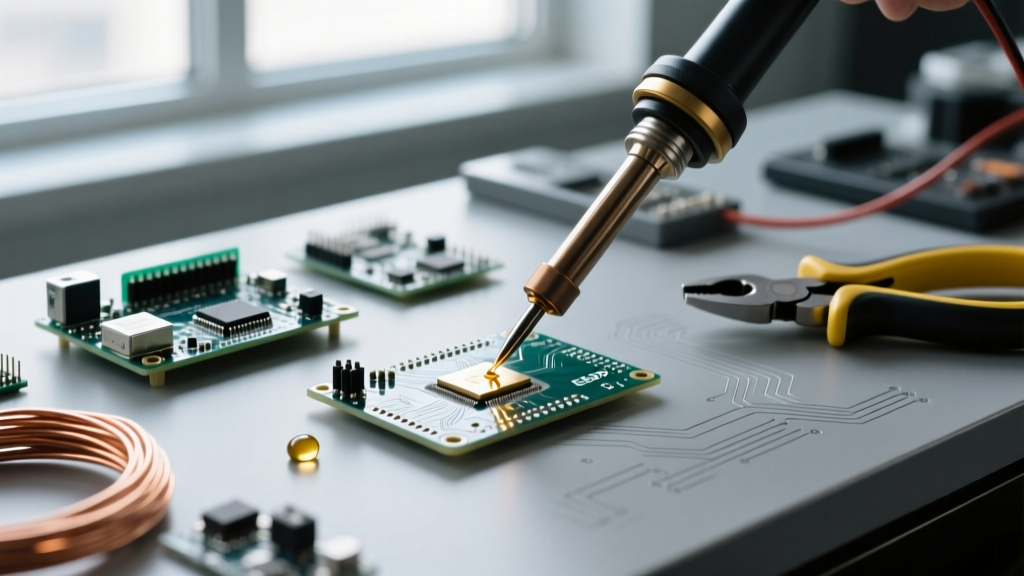
Transitioning from hand soldering to a mechanized reflow soldering process is a major milestone for electronics hobbyists and small-batch manufacturers. Whether you are using a modified toaster oven, a dedicated T-962 reflow oven, or a professional hotplate, the automation of the thermal profile yields vastly superior solder joints on surface-mount devices (SMDs). However, this process introduces unique safety hazards that are frequently overlooked in DIY environments.
Unlike point-to-point hand soldering, the reflow soldering process heats the entire printed circuit board (PCB) assembly to temperatures exceeding 240°C for lead-free SAC305 alloys, or 217°C for standard Sn63/Pb37 pastes. At these liquidus temperatures, flux outgassing occurs rapidly, releasing concentrated plumes of volatile organic compounds (VOCs) and colophony (rosin) particulates into the air. Furthermore, handling hot PCBs and managing the thermal runaway risks of budget reflow ovens require strict safety protocols.
Fume Extraction: The Non-Negotiable Safety Upgrade
The most severe long-term health risk in the reflow soldering process is inhalation of flux fumes. According to the UK Health and Safety Executive (HSE), colophony-based flux fumes are a known respiratory sensitizer and a leading cause of occupational asthma. When flux reaches its activation temperature during the reflow profile's preheat and soak zones, it vaporizes. If inhaled, these microscopic resin particles can cause irreversible lung sensitization.
For lead-based pastes, the risk shifts slightly. While the lead itself does not vaporize at reflow temperatures (lead boils at 1749°C), the aggressive fluxes used in no-clean and water-soluble pastes can aerosolize heavy metal particulates if the paste splatters or boils violently due to a poorly tuned thermal profile.
Fume Extractor Comparison Matrix
A standard desk fan blowing fumes away is entirely insufficient and actually dangerous, as it disperses sensitizers across the room. You need a localized exhaust ventilation (LEV) system with a deep-bed activated carbon filter. Here is how the top 2026 market options compare:
| Model | Type | Airflow (CFM) | Filter Media | Approx. Cost | Best For |
|---|---|---|---|---|---|
| Hakko FA-400 | Desktop / Arm | 87 CFM | Thin Carbon Sheet + HEPA | $85 | Light hobbyist reflow (small boards) |
| BOFA ADQ-200 | Industrial Enclosure | 200 CFM | Deep-Bed Carbon + HEPA | $1,650 | Small-batch production & daily reflow |
| Velleman SS-4000 | Desktop Blower | 65 CFM | Basic Carbon Foam | $45 | Strictly for prototyping (low volume) |
Expert Tip: If you are reflowing boards larger than 5x5 inches, the rapid outgassing will overwhelm thin carbon sheet filters (like those in the Hakko FA-400) in minutes. For serious reflow work, invest in an extractor with at least 5 lbs of deep-bed activated carbon, which physically traps the VOCs rather than just masking the odor.
Thermal Safety: Managing Reflow Oven Risks
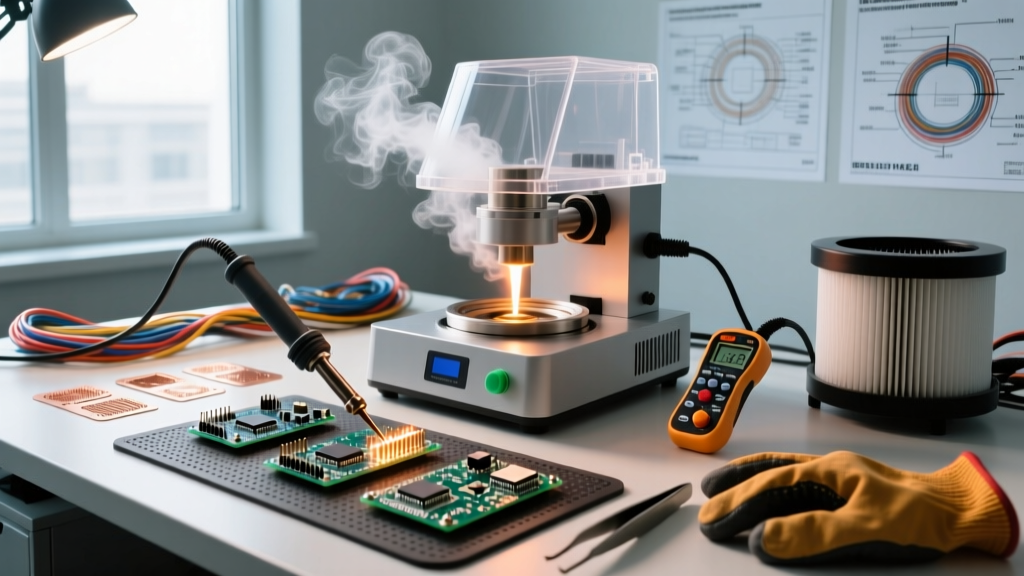
The hardware used to execute the reflow soldering process poses significant burn and electrical hazards. The most infamous piece of equipment in the maker community is the generic T-962 Reflow Oven (typically priced around $200–$250). While affordable, it requires immediate safety modifications out of the box.
Critical T-962 Modifications for Safe Operation
- Eliminate PTFE Off-Gassing: The factory T-962 uses PTFE (Teflon) tape to seal the heating elements. At reflow temperatures (240°C+), PTFE begins to degrade and off-gas highly toxic fluorinated compounds. Action: Immediately scrape off all factory PTFE tape and replace it with high-temperature Kapton (polyimide) tape, rated safely up to 400°C.
- Chassis Grounding: Many budget T-962 units ship with a 2-prong power cord and an ungrounded metal chassis, creating a severe shock hazard if a heating wire shorts. Action: Swap the power inlet to a 3-prong IEC connector and bond the metal chassis directly to earth ground.
- Cold Junction Compensation: The stock thermocouples are often poorly calibrated, leading to thermal runaway where the oven exceeds 300°C, melting FR4 fiberglass and releasing toxic brominated flame retardants. Action: Flash the oven with open-source custom firmware (like T-962a improvements) and verify the profile with an independent external thermocouple datalogger (e.g., a cheap K-type digital thermometer) before running actual PCBs.
Safe Handling of Hot Assemblies
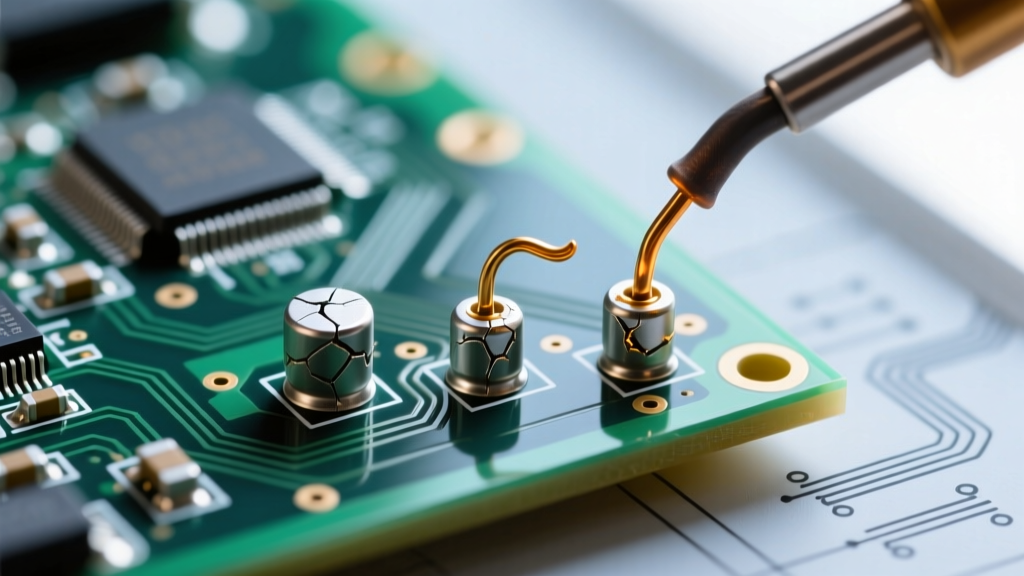
When the reflow cycle completes, the PCB and components will be at or above 200°C. The liquid solder joints are fragile and can easily fracture if bumped before solidifying. Never use standard plastic-handled tweezers, which will melt. Instead, use long-nose stainless steel thermal tweezers or wear Kevlar-lined heat-resistant gloves (rated for 500°F+) to slide the PCB tray out of the oven. Allow the board to cool naturally on a ceramic tile or silicone mat; never use compressed air or a wet sponge to force-cool the board, as thermal shock will crack multilayer ceramic capacitors (MLCCs) and warp the PCB substrate.
Chemical Handling: Solder Paste Storage and Disposal
Solder paste is a suspension of microscopic metal spheres in a tacky flux medium. Proper handling is vital to prevent skin exposure and environmental contamination.
- Storage: Most high-quality pastes, such as Chip Quik SMD4300AX10 (Sn63/Pb37) or Alpha Metals OM-338 (SAC305 lead-free), require refrigeration between 0°C and 10°C to prevent the flux from separating and the metal spheres from oxidizing. Always allow the syringe to reach room temperature for at least 2 hours before opening to prevent moisture condensation inside the paste, which causes violent 'solder ball' splattering during the reflow process.
- Skin Contact: The CDC and NIOSH strictly warn against lead absorption through cuts or mucous membranes. Even with lead-free SAC305 paste, the uncured rosin and activator chemicals are skin irritants. Always wear nitrile gloves when stencil-printing paste.
- Cleanup and Disposal: Do not wash uncured solder paste or stencil wipes down the sink. The heavy metals will contaminate the water supply. Wipe stencils with isopropyl alcohol (IPA) and dispose of the paper towels in a designated hazardous waste or e-waste bin, adhering to local environmental regulations.
Essential PPE Checklist for Reflow Soldering
To maintain a safe environment, the Cornell University Environmental Health and Safety (EHS) guidelines recommend a baseline personal protective equipment (PPE) setup for all soldering operations. For the reflow soldering process, your kit should include:
- Nitrile Gloves: Prevents skin contact with uncured paste and cleaning solvents. (Avoid latex, which degrades rapidly when exposed to IPA and flux).
- ANSI Z87.1 Safety Glasses: Protects eyes from microscopic solder splatter that can occur if moisture is trapped in the paste during the rapid liquidus heating phase.
- Half-Mask Respirator (Backup): If your fume extractor fails or you are doing a large batch run that overwhelms the carbon filter, a 3M half-mask equipped with P100 particulate filters and organic vapor (OV) cartridges provides critical secondary defense against colophony smoke.
The Golden Rule of Reflow: Never leave an active reflow oven or hotplate unattended. The thermal mass of a PCB can mask the true ambient temperature of the heating chamber. A runaway thermal profile can ignite nearby flammable materials or melt the oven's internal wiring insulation in a matter of seconds.
FAQ: Reflow Soldering Process Safety
Is lead-free reflow soldering safer than leaded reflow?
From a heavy metal toxicity standpoint, yes. SAC305 (lead-free) eliminates the risk of lead exposure. However, lead-free reflow requires higher peak temperatures (245°C–250°C compared to 215°C for leaded). These higher temperatures cause more aggressive flux outgassing and a higher volume of VOCs, meaning your fume extraction requirements are actually stricter for lead-free processes.
Can I use a standard kitchen toaster oven for reflow soldering?
While technically possible, it is highly discouraged from a safety perspective. Kitchen ovens are not designed for the precise thermal ramp rates (typically 1°C to 3°C per second) required by solder paste profiles. Furthermore, using an appliance intended for food preparation to vaporize industrial chemical fluxes and heavy metals poses severe cross-contamination risks. Always use a dedicated, isolated thermal chamber.
How often should I replace my fume extractor carbon filter?
It depends on usage volume and the type of flux. For a hobbyist running 5-10 boards a week, a deep-bed carbon filter may last 12 to 18 months. For daily production, expect to replace it every 3 to 6 months. If you can smell the sweet, pine-like scent of rosin flux escaping the exhaust, the carbon bed is saturated and must be replaced immediately.