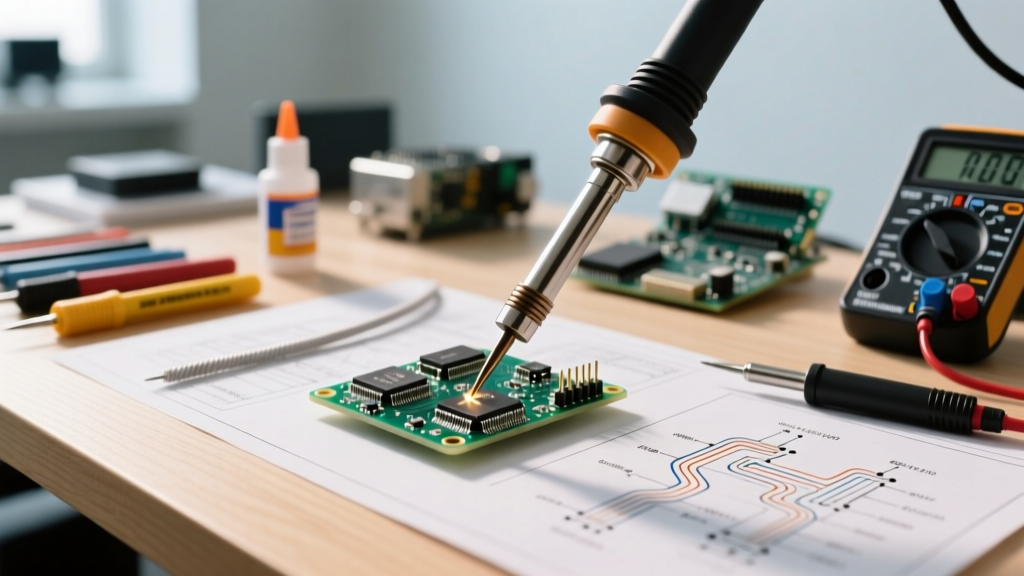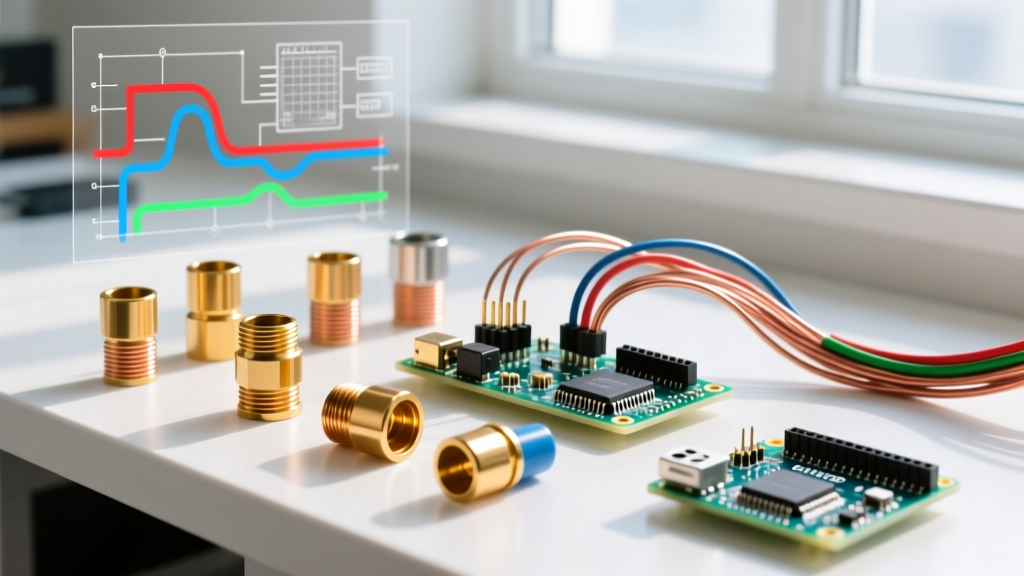

In electrical and electronics engineering, the term pre-soldered fittings primarily refers to solder sleeves (heat-shrink splice terminations), shield termination bands, and pre-tinned heavy-duty lugs. These components are foundational in aerospace, automotive, marine, and RF wiring harnesses because they embed a precise volume of flux-core solder and an insulating sleeve into a single unit. By eliminating manual solder application, they drastically reduce human error. However, their reliability hinges entirely on material compatibility between the embedded solder alloy, the base conductor metal, and the operating environment.
Using a standard tin-lead pre-soldered sleeve on a gold-plated RF connector or an aluminum ground strap will result in catastrophic joint failure, galvanic corrosion, or brittle intermetallic fracturing. This guide provides a deep-dive metallurgical compatibility matrix and thermal profiling framework for selecting and applying pre-soldered electrical fittings in 2026.
The Metallurgy of Pre-Soldered Electrical Fittings
Unlike plumbing applications where pre-soldered copper fittings rely on capillary action and external torch heat, electrical pre-soldered fittings rely on integrated flux activation and localized thermal transfer. The solder rings embedded inside polyolefin or PVDF (Kynar) heat-shrink tubing are formulated to melt at specific temperatures that align with the shrink recovery temperature of the outer insulation.
According to the stringent requirements outlined in NASA-STD-8739.3 for soldered electrical connections, the wetting action of the solder must occur simultaneously with the flux's chemical cleaning phase. If the base metal is incompatible with the alloy, the flux will fail to reduce the metal oxides, resulting in a 'cold' or 'balling' solder joint.
Expert Insight: The most common failure in DIY and amateur aviation wiring is using a high-temperature lead-free pre-soldered sleeve (melting at ~221°C) with a standard polyolefin shrink tube (which degrades and melts at ~135°C). The insulation burns and splits before the solder ever flows. Always match the sleeve polymer to the solder alloy's liquidus temperature.
Common Embedded Solder Alloys
- Sn63/Pb37 (Eutectic Tin-Lead): Melts at 183°C. The gold standard for legacy and aerospace applications. Excellent wetting on copper and silver.
- Sn96.3/Ag3.7 (Lead-Free / RoHS): Melts at 221°C. Required for commercial electronics and automotive systems post-2026. Requires higher heat profiles and is prone to tin whiskering if subjected to thermal cycling.
- Sn10/Pb90 (High-Temperature): Melts at 275°C. Used exclusively in down-hole drilling and high-temp engine bay sensors. Requires specialized fluoropolymer shrink sleeves.
Material Compatibility Matrix
When selecting pre-soldered fittings from manufacturers like TE Connectivity (Raychem) or 3M, you must cross-reference the base conductor material with the fitting's internal alloy. The following matrix outlines compatibility, flux requirements, and galvanic risks.
| Base Metal | Recommended Pre-Solder Alloy | Flux Requirement | Galvanic / Metallurgical Risk |
|---|---|---|---|
| Copper (Cu) | Sn63/Pb37 or Sn96/Ag4 | Rosin Mildly Activated (RMA) | Low. Excellent wetting. Standard compatibility. |
| Silver (Ag) | Sn63/Pb37 or Sn96/Ag4 | RMA or No-Clean | Low. Silver-bearing solder prevents base metal leaching. |
| Gold (Au) | Sn62/Pb36/Ag2 (Silver-bearing) | RMA (Requires pre-wash) | High. Gold embrittlement (AuSn4 formation) if not double-soldered. |
| Nickel (Ni) | Sn96/Ag4 | Highly Activated (RA) | Moderate. Nickel oxidizes rapidly; requires aggressive flux or plasma cleaning. |
| Aluminum (Al) | Specialized Zinc-Based (Sn-Zn) | Fluoride-based / Mechanical | Extreme. Standard Sn/Pb will not wet. Instant oxide reform prevents bonding. |
Critical Failure Modes & Edge Cases
Even when using premium components like the TE Connectivity Raychem SolderSleeve series, material incompatibility will manifest in specific, predictable failure modes. Understanding these edge cases is what separates certified harness builders from hobbyists.
1. Gold Embrittlement in RF Fittings
When terminating coaxial shields to gold-plated SMA or MCX connectors using standard Sn63/Pb37 pre-soldered sleeves, the gold plating rapidly dissolves into the molten tin. This creates an intermetallic compound known as AuSn4. While this compound forms a strong initial bond, it is inherently brittle and will fracture under mechanical vibration or thermal shock.
The Fix: If the gold plating is thicker than 50 microinches, you must 'wash' the fitting first—apply a manual blob of solder, wick it away to pull the gold out, and then apply the pre-soldered sleeve. Alternatively, use a silver-bearing pre-soldered fitting (Sn62/Pb36/Ag2), as the silver in the solder limits the dissolution of the gold base.
2. The Aluminum Oxide Barrier
A frequent mistake in marine and automotive DC grounding is attempting to use pre-soldered heat shrink rings on aluminum busbars or aluminum ground straps. Aluminum forms a microscopic, electrically insulating oxide layer within milliseconds of being exposed to air. Standard rosin fluxes cannot penetrate this layer. The solder will simply melt into a ball and fall off the fitting. For aluminum, you must abandon pre-soldered fittings in favor of mechanical crimping with antioxidant paste (like Noalox), or use specialized ultrasonic soldering techniques.
3. Nickel-Plated Brass Incompatibility
Many heavy-duty battery lugs and marine battery terminals are nickel-plated brass. Nickel is notoriously difficult to wet. If you use a standard pre-tinned fitting with a mild RMA flux, the solder will dewet (pull back) as it cools, leaving a high-resistance, porous joint that will generate heat and melt the insulation under high DC loads. You must source pre-soldered fittings specifically rated for nickel, which contain Highly Activated (RA) fluxes, and ensure you clean the terminal with isopropyl alcohol and a Scotch-Brite pad immediately before heating.
Step-by-Step Thermal Profiling for Solder Sleeves
Material compatibility is only half the battle; thermal profiling is the other. The IPC J-STD-001 standard dictates that heat must be applied uniformly to ensure the flux activates before the solder reaches its liquidus state. Here is the exact protocol for applying a standard 183°C eutectic pre-soldered sleeve (e.g., Raychem B-055-00 series):
- Preparation: Strip the wire using a thermal stripper or precision mechanical stripper to avoid nicking the copper strands. Tin the wire strands manually if they are heavily oxidized.
- Positioning: Slide the pre-soldered fitting over the wire. Ensure the pre-formed solder ring is centered exactly over the stripped conductor or shield braid.
- Heat Application: Use a calibrated hot air rework station (never a conductive soldering iron, which will melt the polymer unevenly). Set the airflow to 350°C (662°F) with a medium fan speed.
- The 'Flash' Indicator: Apply heat evenly around the circumference. Watch the embedded solder ring. It will transition from a dull grey to a bright, shiny silver 'flash'. This indicates the flux has boiled off the oxides and the solder is wetting the base metal.
- Cooling: Remove the heat immediately after the flash. Do not blow compressed air on it; allow it to cool naturally in ambient air to prevent thermal shock to the intermetallic layer.
2026 Buyer's Checklist: Sourcing Quality Fittings
The market is currently flooded with counterfeit or sub-spec pre-soldered fittings from unverified overseas vendors. These cheap alternatives (often sold in bulk for $0.10 each) use non-eutectic solder blends that melt at unpredictable temperatures and highly acidic fluxes that will corrode your copper strands within months. When procuring pre-soldered fittings for critical systems, enforce the following checklist:
- Verify the Alloy Datasheet: Ensure the packaging explicitly states the alloy (e.g., Sn63/Pb37). If it just says 'solder ring', reject it.
- Check the Shrink Ratio and Polymer: Standard polyolefin offers a 2:1 shrink ratio and is fine for chassis wiring. For engine bays or high-vibration environments, demand PVDF (Kynar) or Fluoropolymer sleeves with a 3:1 or 4:1 ratio, which resist diesel fuel, hydraulic fluid, and UV degradation.
- Flux Core Transparency: Hold the fitting to a light. You should be able to see the distinct flux core inside the solder ring. If the ring looks like a solid, homogenous piece of wire, it lacks the necessary internal flux volume for reliable wetting.
- Price Benchmarking: As of 2026, genuine TE Connectivity or 3M pre-soldered sleeves cost between $0.65 and $1.85 per unit in low-volume DIY quantities. If you are paying $0.15 per unit, you are buying substandard metallurgy.
By strictly adhering to material compatibility matrices and respecting the metallurgical limits of your base conductors, pre-soldered fittings will yield gas-tight, vibration-proof connections that outlast the lifespan of the equipment itself.