
The Metallurgical Art: Why Soldering Wedding Rings is Unique
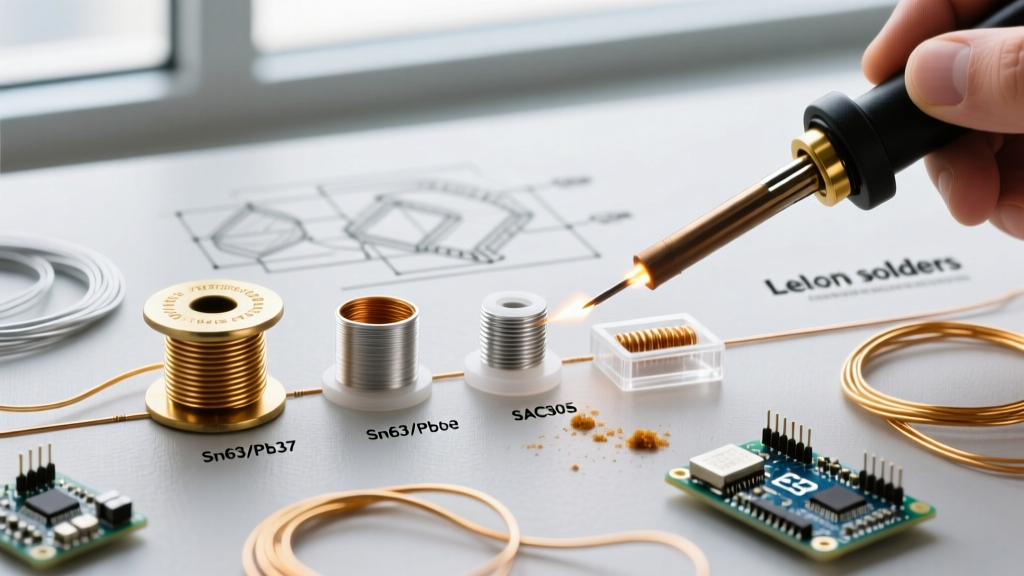
Soldering wedding rings—whether to permanently join an engagement ring and wedding band into a single bridal set, or to resize a shank—is a delicate intersection of thermal dynamics and precious metal metallurgy. Unlike electrical soldering, which relies on low-temperature tin-lead or SAC305 alloys to join copper traces, jewelry soldering demands alloys that perfectly match the karat, color, and structural integrity of the base metal.
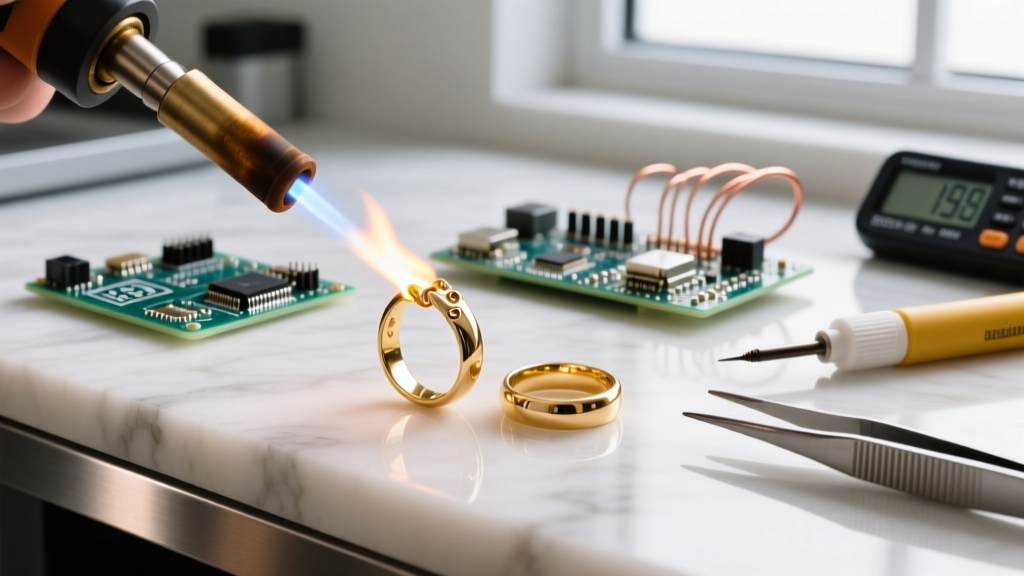
From a technical standpoint, what bench jewelers call "soldering" is actually brazing. According to the American Welding Society (AWS), any joining process that uses a filler metal with a liquidus temperature above 450°C (842°F) is classified as brazing. Because gold and platinum jewelry solders flow between 700°C and 1,400°C, the thermal management required to solder wedding rings without melting the base metal or shattering heat-sensitive gemstones has driven over a century of tool evolution.
A Century of Heat: The Historical Evolution
The tools used for soldering wedding rings have undergone a radical transformation, moving from imprecise, high-risk flame methods to localized, computer-controlled energy pulses.
1800s–1940s: The Blowpipe and Charcoal Era
In the 19th and early 20th centuries, jewelers soldered rings using mouth-blown blowpipes directed at oil lamps or early gas jets. The workpiece was placed on a charcoal block, which acted as a reducing agent to prevent oxidation while reflecting heat back onto the ring. Temperature control was entirely subjective, relying on the color of the glowing gold. The risk of "melting down" a client's wedding band was exceptionally high, as the solidus and liquidus temperatures of early, poorly refined solders were dangerously close to the base metal's melting point.
1950s–1990s: The Oxy-Fuel Revolution
The mid-century introduction of oxy-acetylene and oxy-propane micro-torches changed the industry forever. The iconic Smith Little Torch (Model 23-1001C), introduced in the 1950s, remains a bench staple in 2026. By allowing jewelers to swap between five different sized tips, the Little Torch enabled a pinpoint flame that could heat a 2mm solder joint on a 14k gold shank without raising the temperature of the surrounding ring to the point of annealing or warping.
2000s–Present: Laser and Pulse Arc Welding
The most significant leap in the evolution of soldering wedding rings occurred with the miniaturization of Nd:YAG lasers and Pulse Arc (micro-TIG) welders. These tools bypass the need for traditional solder alloys and fluxes entirely, instead using localized electrical arcs or light energy to fuse the base metals or melt a microscopic wire filler. This evolution solved the greatest historical bottleneck: resizing or repairing rings set with heat-sensitive stones like emeralds, opals, or tanzanite, which previously had to be un-set and re-set before soldering.
"The shift from ambient thermal heating (torches) to localized kinetic energy (lasers) represents the single largest reduction in collateral thermal damage in the history of jewelry repair." — Bench Jeweler's Trade Journal Archives.
Modern Tool Buyer’s Matrix: Traditional vs. Advanced Equipment
For jewelers, studio artists, or advanced DIYers outfitting a bench in 2026, choosing the right tool for soldering wedding rings depends on budget, production volume, and the types of metals processed. Below is a comparative buyer's guide to the three dominant technologies.
| Technology / Model Example | Energy Source | Max Temp / Precision | 2026 Est. Cost | Best Application |
|---|---|---|---|---|
| Smith Little Torch (Oxy-Propane) | Combustion Flame | Up to 2,800°C / Broad area | $350 - $450 | Traditional ring sizing, joining plain bands, annealing. |
| Orion 100s (Pulse Arc) | Electrical Arc (TIG) | Up to 3,500°C / 1mm spot | $3,800 - $4,500 | Sizing rings with heat-sensitive stones, porosity repair. |
| Sunlight / Orion (Nd:YAG Laser) | Concentrated Light | Up to 10,000°C / 0.2mm spot | $9,000 - $16,000+ | Platinum welding, intricate filigree, stone-in-place sizing. |
Metallurgy and Alloys: Matching the Solder to the Ring
When using traditional torch methods, selecting the correct solder alloy is critical. Jewelry solders are categorized by their flow temperatures: Easy, Medium, and Hard. A jeweler soldering a multi-step bridal set will use Hard solder first, followed by Medium, and finally Easy, ensuring that previously soldered joints do not melt during subsequent heating cycles.
According to metallurgical data published by the Gemological Institute of America (GIA), matching the karat of the solder to the ring is essential to prevent galvanic corrosion and ensure uniform color during polishing.
| Base Metal | Solder Grade | Flow Temperature | Melting Point (Base) | Flux Requirement |
|---|---|---|---|---|
| 14k Yellow Gold | Hard | 1,425°F (774°C) | 1,500°F - 1,600°F | Batterns Self-Pickling |
| 14k Yellow Gold | Medium | 1,325°F (718°C) | 1,500°F - 1,600°F | Batterns Self-Pickling |
| Sterling Silver | Hard | 1,450°F (788°C) | 1,640°F (893°C) | Stay-Silv White Flux |
| Platinum (950/50) | Platinum Hard | 3,182°F (1,750°C) | 3,215°F (1,768°C) | None (or Boric Acid) |
Critical Failure Modes in Ring Soldering
Whether you are using a $400 torch or a $15,000 laser, soldering wedding rings presents specific failure modes that novices and even experienced technicians must actively manage.
- Fire Scale (Sterling Silver & Low-Karat Gold): When copper-bearing alloys are heated in the presence of oxygen, copper oxides migrate to the surface, creating a stubborn purple-grey stain called fire scale. Prevention: Use a high-quality borax-based flux and heat the ring as quickly as possible to minimize oxygen exposure time.
- Porous Solder Joints: Overheating gold solder causes the zinc or de-zincification agents to boil out of the alloy before the solder flows. This leaves a brittle, pitted joint that will crack under the daily mechanical stress of wearing a wedding band. Prevention: Remove the flame the exact second the solder flashes and flows via capillary action.
- Thermal Runaway & Shank Melting: Gold is an exceptional thermal conductor. If a jeweler focuses the flame exclusively on the solder joint rather than heating the entire shank evenly, the joint will remain cold while the opposite side of the ring reaches its melting point and collapses.
- Platinum Contamination: Platinum requires dedicated tools. Using a file, sandpaper, or tweezers on platinum that were previously used on gold will embed microscopic gold particles into the platinum. When heated, the gold melts and eats through the platinum, causing catastrophic structural failure.
Sourcing and Preparation: The Modern Workflow
The evolution of soldering isn't just about the heat source; it's about surface preparation. In 2026, the standard workflow for soldering wedding rings together (flush-mounting) involves the following precise steps:
- Ultrasonic Degreasing: Rings are cleaned in a heated ultrasonic tank with a mild alkaline solution to remove skin oils and lotions, which would otherwise cause the solder to ball up and reject the joint.
- Pumice Barrel Tumbling: The mating surfaces are lightly abraded in a rotary tumbler with steel shot and pumice to ensure a microscopically tight fit. Capillary action requires a gap of no more than 0.003 inches.
- Flux Application: Batterns self-pickling flux is applied. Unlike traditional borax cones, Batterns contains mild acids that dissolve oxides as the temperature rises, eliminating the need for post-solder pickling in dangerous nitric acid baths.
- Binding: The rings are bound with 24-gauge annealed iron or titanium binding wire to maintain absolute alignment during thermal expansion.
Conclusion: Choosing Your Evolutionary Path
The history of soldering wedding rings is a trajectory from brute-force ambient heating to surgical precision. For the traditionalist or the high-volume sizing bench, the oxy-propane micro-torch remains an unbeatable, cost-effective workhorse. However, for modern repair shops dealing with eternity bands, tension settings, and heat-sensitive gems, investing in Pulse Arc or Laser technology is no longer a luxury—it is a baseline requirement for safe, profitable bench work. Understanding the metallurgy, respecting the thermal limits of the alloys, and choosing the right tool for the era will ensure your soldered joints last a lifetime.
For further reading on precious metal properties and thermal characteristics, consult the technical resources at Rio Grande, the industry standard for jewelry supply and metallurgical education.