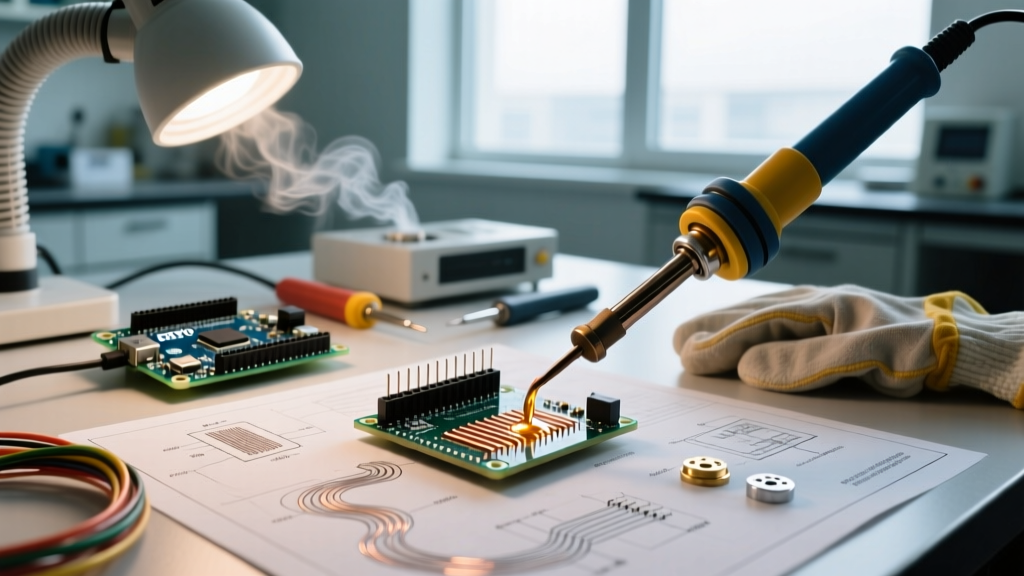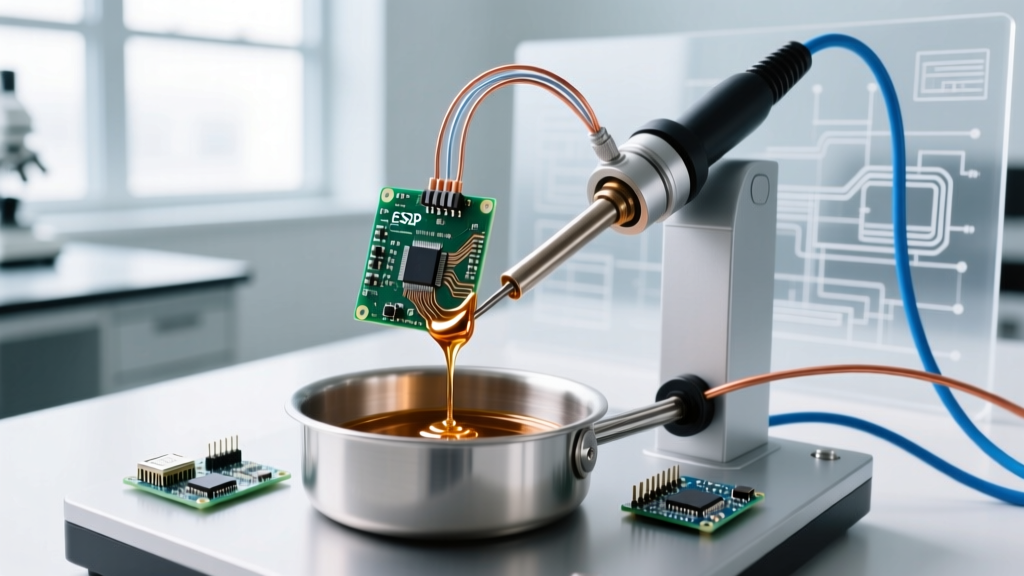

The Economics of Dip Soldering in Modern PCB Assembly
For electronics manufacturers and advanced DIY labs producing between 50 and 500 printed circuit boards (PCBs) per batch, selecting the right through-hole soldering method is a critical financial decision. While wave soldering dominates high-volume manufacturing and selective soldering handles complex mixed-technology boards, dip soldering remains the undisputed champion for low-to-medium volume, rapid-turnaround assembly. However, the financial viability of this process extends far beyond the initial purchase price of a solder pot.
This comprehensive cost analysis breaks down the capital expenditures (CapEx), operational expenditures (OpEx), labor dynamics, and hidden compliance costs associated with dip soldering in 2026. By understanding the true cost per joint, assembly managers and lead technicians can make data-driven decisions that protect margins without sacrificing IPC-compliant quality.
Capital Expenditure (CapEx): Equipment Tiers and ROI
The barrier to entry for dip soldering is remarkably low compared to automated alternatives. A basic wave soldering machine requires a minimum capital outlay of $15,000 to $25,000, whereas a professional dip soldering station can be acquired for a fraction of that cost. When budgeting for equipment, it is essential to match the pot capacity and thermal recovery rate to your specific board mass and production volume.
| Equipment Tier | Model Example | Capacity / Wattage | Approx. 2026 Price | Best Use Case |
|---|---|---|---|---|
| Entry-Level | Hakko FX-301B | 200g / 130W | $45 - $55 | Prototyping, micro-through-hole, wire tinning |
| Mid-Range | Pace SP200 | 2.5 lbs / 250W | $180 - $220 | Low-volume batch assembly, standard DIP ICs |
| High-End / Precision | Metcal MX-500P | 5 lbs / 400W+ | $450 - $550 | Heavy ground planes, high-thermal-mass PCBs |
According to Hakko's official specifications, entry-level pots like the FX-301B are ideal for small components but will suffer from severe thermal droop if used to dip large connectors or boards with heavy copper pours. For standard 2-layer and 4-layer PCBs, the mid-range tier offers the best return on investment, typically paying for itself after processing just 50 to 100 boards compared to outsourcing to a contract manufacturer.
Operational Expenditure (OpEx): Alloys, Flux, and the Dross Factor
The most significant ongoing cost in dip soldering is not the electricity required to heat the pot, but the consumable materials—specifically solder alloy and the inevitable generation of solder dross. As of early 2026, the global commodities market for tin and silver has stabilized, but lead-free alloys remain a premium expense.
Material Cost Breakdown
- SAC305 (Lead-Free): Melts at 217°C (optimal pot temp 255°C-265°C). Current pricing averages $40 to $55 per pound ($0.088 to $0.121 per gram).
- Sn63/Pb37 (Leaded): Melts at 183°C (optimal pot temp 235°C-245°C). Current pricing averages $25 to $35 per pound ($0.055 to $0.077 per gram). Note: Restricted to RoHS-exempt applications.
- Liquid Flux (e.g., Kester 992 or Alpha NR310): Approximately $40 to $60 per gallon. A standard low-volume run of 100 boards will consume roughly $2 to $4 worth of flux.
The Hidden Cost of Solder Dross
When molten solder is exposed to oxygen at high temperatures, oxidation occurs rapidly, forming a crust known as dross. In an unmanaged dip pot operating at 260°C, dross can account for 40% to 60% of total solder consumption. If you add 1 kg of SAC305 to your pot and do not implement dross-reduction protocols, you may only recover 400g of usable solder when cleaning the pot, effectively throwing $35 into the hazardous waste bin.
Pro Tip for Cost Reduction: Utilizing a chemical dross-reducing powder (such as Kester Dross Plus) can convert up to 70% of wet dross back into usable molten solder. While a 500g jar of reducer costs around $85, it routinely saves $300+ in recovered SAC305 alloy over its lifespan, yielding an ROI of over 350%.
Labor and Throughput Economics
Dip soldering is inherently a manual or semi-manual process. An operator must apply flux, pre-heat the board (if necessary), dip the PCB into the molten bath at a precise angle and speed, and inspect the joints. To calculate the true labor cost, we must analyze the time-motion economics of the assembly line.
Assume an average technician wage of $28 per hour (including overhead and benefits). A skilled operator can flux, dip, and clear a standard 100-joint through-hole board in approximately 90 seconds. This translates to 40 boards per hour. The labor cost per board is therefore $0.70. Compared to hand soldering those same 100 joints with an iron—which would take a minimum of 15 minutes per board ($7.00 labor cost)—dip soldering reduces direct labor costs by 90% for batch through-hole processing.
However, throughput is bottlenecked by the pot's thermal recovery time. If an operator attempts to dip a board with a massive ground plane into a 250W pot, the solder temperature may drop below the liquidus line, resulting in cold, disturbed, or incomplete joints. This leads to rework, which the IPC J-STD-001 standard heavily penalizes in terms of reliability and compliance. Always match the pot's wattage to the thermal mass of your heaviest board.
Dip Soldering vs. Wave and Selective Soldering
To contextualize the financial position of dip soldering, it is necessary to compare it against automated alternatives across three critical business metrics.
| Metric | Dip Soldering | Wave Soldering | Selective Soldering |
|---|---|---|---|
| Initial CapEx | $50 - $500 | $15,000 - $40,000 | $60,000 - $150,000+ |
| Ideal Batch Size | 10 - 500 units | 1,000 - 100,000+ units | 500 - 50,000 units |
| Setup / Changeover Time | 15 mins (melt time) | 2 - 4 hours | 1 - 2 hours (programming) |
| Mixed-Tech (SMT + THT) | Poor (requires masking) | Poor (requires pallets) | Excellent (precision targeting) |
As the matrix illustrates, dip soldering loses its cost advantage once production volumes exceed 500 units per batch. At higher volumes, the manual labor costs and the time spent applying and removing high-temperature Kapton tape to protect SMT components eclipse the capital depreciation of an automated wave or selective machine.
Hidden Costs: Ventilation, Safety, and Compliance
A frequently overlooked line item in dip soldering budgets is environmental compliance and operator safety. Heating flux to 260°C releases volatile organic compounds (VOCs) and rosin fumes, which are known respiratory sensitizers. Furthermore, handling leaded solder dross requires strict adherence to hazardous material protocols.
- Fume Extraction: A benchtop HEPA/activated carbon fume extractor (e.g., Hakko FA-400 or Weller WFE-2D) is mandatory. Budget $400 to $1,200 for the unit, plus $150 annually for replacement filters.
- Hazardous Waste Disposal: Solder dross is classified as hazardous waste due to heavy metal content. Disposal via certified e-waste recyclers typically costs $2 to $5 per pound, though some specialized metal refiners will purchase high-purity dross at a fraction of the LME (London Metal Exchange) spot price, offsetting disposal costs.
- Safety Training & PPE: Thermal gloves, safety goggles, and lead-handling hygiene stations are required. The Occupational Safety and Health Administration (OSHA) mandates strict blood-lead level monitoring and hygiene practices for facilities processing leaded alloys, adding administrative overhead to the operational budget.
Summary: Is Dip Soldering Right for Your Budget?
Dip soldering represents the most capital-efficient method for bridging the gap between slow, expensive manual hand soldering and high-volume automated wave processing. By carefully selecting a solder pot with adequate thermal recovery, implementing rigorous dross-reduction chemistry, and accurately factoring in fume extraction and waste disposal costs, electronics manufacturers can achieve a cost-per-joint that is highly competitive in the 2026 market. For labs and contract manufacturers running diverse, low-volume through-hole batches, the financial math overwhelmingly favors the dip pot.