
Redefining the Platform: What Are Arduinos in the Modern Era?
If you are entering the embedded systems space or returning after a hiatus, you might be asking: what are Arduinos? Historically, the term referred strictly to 8-bit AVR microcontroller boards like the iconic Uno R3, built around the ATmega328P. However, as of 2026, "Arduino" no longer means just a single 16MHz microcontroller. It represents a vast, unified hardware abstraction layer and IDE ecosystem that spans 32-bit ARM Cortex-M, Xtensa, and RISC-V architectures.
For engineers and makers, this evolution presents a critical migration challenge. Legacy 8-bit boards are increasingly bottlenecked by 2KB SRAM limits and lack of hardware floating-point units (FPUs). Upgrading your legacy sketches to modern boards like the Uno R4 Minima, Nano ESP32, or Giga R1 WiFi requires more than just swapping hardware; it demands an understanding of logic-level shifts, register mapping, and memory management.
The 2026 Hardware Matrix: Legacy vs. Modern Ecosystems
To understand what Arduinos are today, we must compare the legacy baseline against the current flagship development boards. The table below outlines the architectural leap you will encounter when migrating.
| Board Model | Architecture & MCU | Clock Speed | SRAM / Flash | Logic Level | Approx. Price (2026) |
|---|---|---|---|---|---|
| Uno R3 (Legacy) | 8-bit AVR (ATmega328P) | 16 MHz | 2 KB / 32 KB | 5V | $27.00 |
| Uno R4 Minima | 32-bit ARM (Renesas RA4M1) | 48 MHz | 32 KB / 256 KB | 5V / 3.3V | $20.00 |
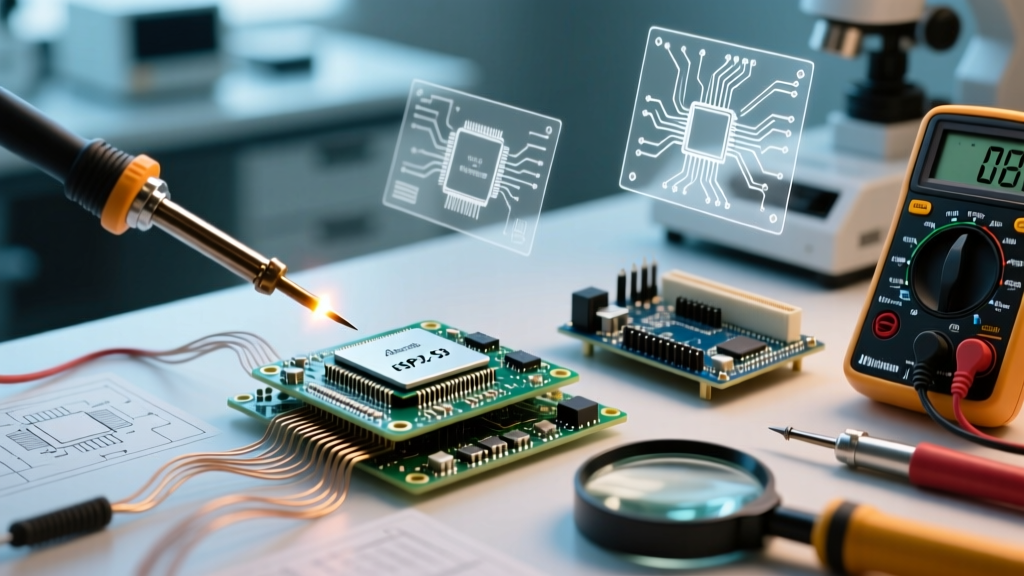
| Nano ESP32 | 32-bit Xtensa (ESP32-S3) | 240 MHz (Dual-Core) | 512 KB / 8 MB | 3.3V | $21.00 |
| Giga R1 WiFi | 32-bit ARM (STM32H747XI) | 480 MHz (Dual-Core) | 1 MB / 2 MB | 3.3V | $75.00 |
Sources: Arduino Uno R4 Minima Documentation, Arduino Nano ESP32 Documentation.
Step 1: Hardware Migration and Voltage Pitfalls
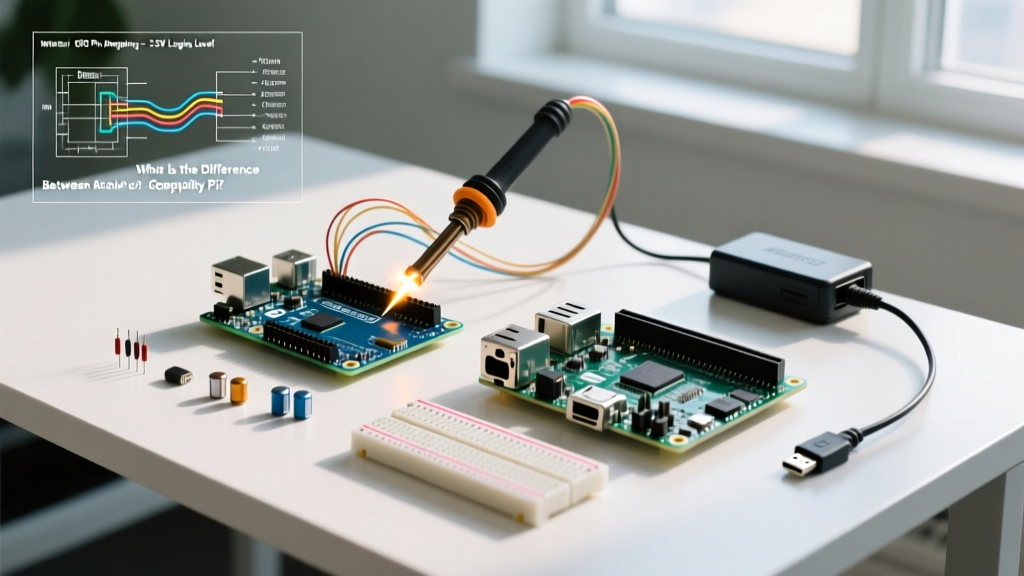
The most common failure mode when asking "what are Arduinos" and immediately buying a modern 32-bit board is logic-level mismatch. While the Uno R4 maintains a 5V-tolerant I/O architecture to ease the transition from the Uno R3, boards like the Nano ESP32 and Giga R1 operate strictly at 3.3V.
Solving the 5V to 3.3V Translation Problem
If your legacy project uses 5V sensors (e.g., the HC-SR04 ultrasonic sensor or standard 16x2 I2C LCDs), connecting them directly to a 3.3V ESP32-S3 will degrade the MCU's GPIO pins over time or cause immediate catastrophic failure due to overvoltage.
- For I2C/SPI Buses: Use a bidirectional logic level translator like the TXS0108E or a discrete BSS138 MOSFET-based shifter. Do not rely on simple resistor voltage dividers for high-speed I2C (400kHz+), as the RC time constant will round off the square wave edges, causing ACK/NACK failures.
- For Unidirectional Signals (e.g., Echo pins): A simple resistor divider (e.g., 2kΩ to GND, 3.3kΩ to Signal) is sufficient and costs less than $0.10 per channel.
- Pull-up Resistor Conflicts: Legacy 5V I2C modules often have onboard 4.7kΩ pull-ups tied to 5V. When migrating to a 3.3V MCU, you must physically sever the pull-up trace on the sensor module and wire external 2.2kΩ pull-ups to the 3.3V rail.
Step 2: Code Porting from 8-Bit AVR to 32-Bit Architectures
Understanding what Arduinos are from a software perspective means recognizing that the Arduino IDE abstracts the hardware, but only up to a point. If your legacy code relies on AVR-specific optimizations, it will fail to compile on ARM or Xtensa targets.
Eliminating Direct Port Manipulation
In the ATmega328P days, developers bypassed digitalWrite() by writing directly to registers (e.g., PORTD |= B00000100;) to achieve microsecond-level timing. On the Renesas RA4M1 or STM32H747, these registers do not exist.
Expert Migration Tip: Replace direct AVR port manipulation with the hardware-agnostic
digitalWriteFast()macro provided by modern Arduino cores, or utilize the CMSIS (Cortex Microcontroller Software Interface Standard) HAL if you require deterministic, zero-overhead GPIO toggling on ARM boards.
Migrating PROGMEM and Flash Storage
Legacy AVR chips utilized Harvard architecture, requiring the PROGMEM keyword and specialized functions like pgm_read_byte() to read data from flash memory. Modern 32-bit MCUs use a unified Von Neumann memory map (or a memory-mapped flash interface like the ESP32's XIP).
The Fix: Strip out avr/pgmspace.h. In 2026, simply declare your arrays as const. The modern GCC compiler will automatically place const variables in flash memory, and you can access them via standard pointer arithmetic without helper functions.
// Legacy AVR Code
const char myData[] PROGMEM = "Sensor Data";
char buffer = pgm_read_byte(&myData[i]);

// Modern 32-Bit Code (ARM/Xtensa)
const char myData[] = "Sensor Data";
char buffer = myData[i];
Step 3: Handling Interrupts and Timers
When migrating complex projects like custom motor controllers or software-defined radios, timer interrupts are usually the biggest roadblock. The ATmega328P relies on 8-bit and 16-bit hardware timers (Timer0, Timer1, Timer2) configured via registers like TCCR1A and OCR1A.
Modern boards utilize advanced 32-bit timers with DMA (Direct Memory Access) capabilities. Instead of manually configuring prescalers and compare match registers, migrate to the Arduino HardwareTimer API or vendor-specific libraries (like ESP32's ledc or mcpwm APIs for motor control). This not only ensures cross-compatibility but offloads CPU cycles to the DMA controller, freeing up the main loop for wireless stack management or DSP calculations.
Strategic Decision Framework: Which Modern Board Should You Choose?
To finalize your migration, align your project requirements with the correct modern architecture:
- The Drop-In Replacement (Uno R4 Minima): Choose this if you have an existing 5V shield stack (like legacy motor drivers or relay shields) and want to eliminate 5V-to-3.3V level shifters while gaining a 12-bit DAC, hardware FPU, and 32KB SRAM. The Renesas RA4M1 architecture is highly deterministic for real-time control.
- The IoT & Edge AI Route (Nano ESP32): Choose this if your project requires Wi-Fi/BLE, MQTT telemetry, or basic TensorFlow Lite Micro inference. The dual-core 240MHz Xtensa LX7 easily handles concurrent network tasks and sensor polling.
- The Heavy-Duty DSP Route (Giga R1 WiFi): Choose this for audio processing, high-speed ADC sampling, or driving high-resolution TFT displays via FSMC/RGB interfaces. The STM32H747's 480MHz clock and external SDRAM support make it a powerhouse that blurs the line between MCU and MPU.
Conclusion: Embracing the Modern Arduino Ecosystem
So, what are Arduinos today? They are no longer just beginner-friendly 8-bit toys. They are enterprise-capable, 32-bit development platforms wrapped in an accessible IDE. By systematically addressing logic-level translation, modernizing memory management, and leveraging hardware abstraction APIs, you can successfully migrate your legacy sketches into the modern era, unlocking vastly superior processing power, connectivity, and reliability for your 2026 embedded projects.