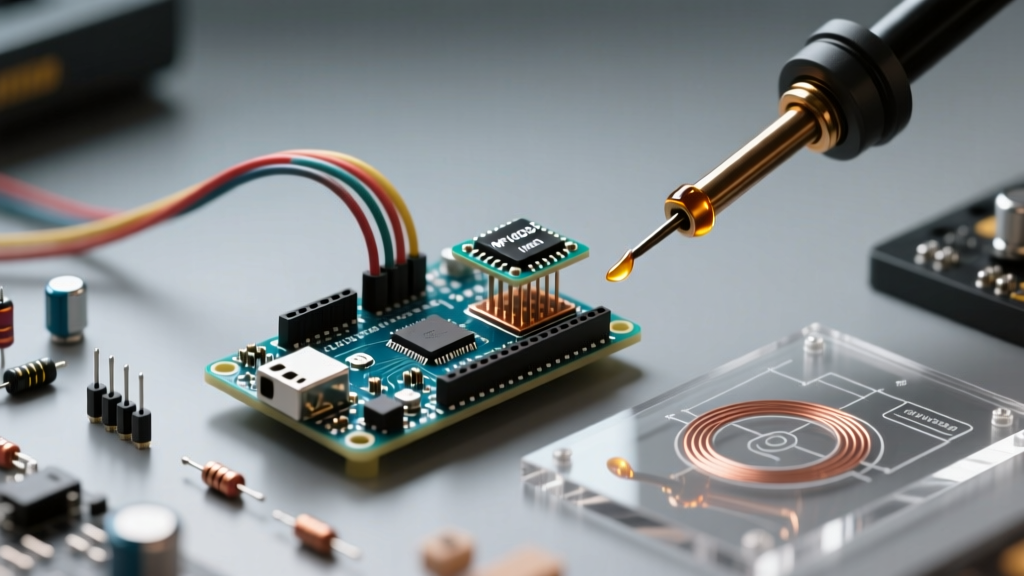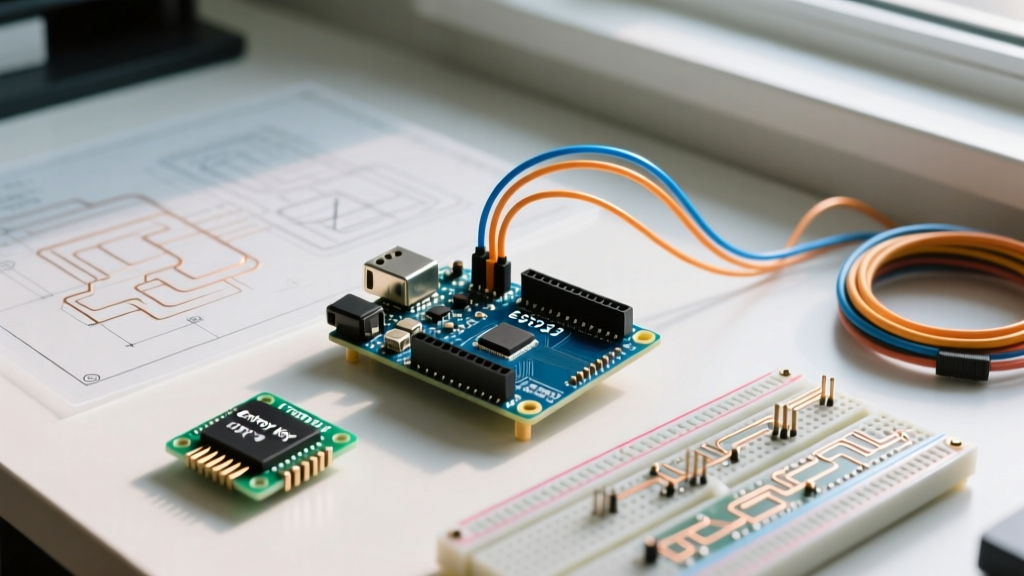

The Problem with Pseudo-Randomness in Microcontrollers
When building IoT security nodes, hardware-based gaming consoles, or cryptographic key generators, the integrity of your entropy source is non-negotiable. The default random() function in the Arduino ecosystem is a Pseudo-Random Number Generator (PRNG). It relies on a deterministic algorithm (typically a linear congruential generator) that will output the exact same sequence of numbers on every reboot unless seeded with a truly unpredictable value. Relying on a floating analog pin (analogRead(A0)) for a seed is a common maker myth; it provides minimal entropy and is highly susceptible to environmental predictability and electromagnetic interference.
To achieve true randomness, you must integrate a True Random Number Generator (TRNG). This compatibility guide breaks down how different microcontroller architectures handle entropy, which external hardware modules are compatible with 5V and 3.3V logic, and the specific wiring topologies required to prevent bus collisions and logic-level damage in 2026.
Critical Security Warning: Never use the default Arduino PRNG for generating cryptographic keys, nonces, or session tokens. According to NIST SP 800-90B guidelines on entropy sources, predictable seeds in constrained devices are a primary vector for IoT firmware exploitation. Always use hardware-backed entropy for security applications.
Baseline Compatibility: Software PRNG vs. Hardware TRNG
Before attaching external hardware, it is vital to understand the native entropy capabilities of the most common maker boards. The architecture of your MCU dictates whether you need an external I2C/SPI entropy module or if you can leverage internal silicon features.
AVR Architecture (ATmega328P / ATmega2560)
Boards like the Arduino Uno R3, Nano, and Mega 2560 lack a dedicated hardware TRNG peripheral. The standard workaround is the 'floating pin' method, which yields less than 2 bits of true entropy per read. A vastly superior software-compatible method is leveraging the internal Watchdog Timer (WDT) oscillator jitter. Libraries like Entropy use the WDT interrupt to sample the variance in the RC oscillator, generating roughly 8 to 16 bits of true entropy per second. While sufficient for generating random delays or basic gaming mechanics, WDT jitter fails NIST statistical test suites for high-throughput cryptographic key generation.
ESP32 and ESP32-S3 Architectures
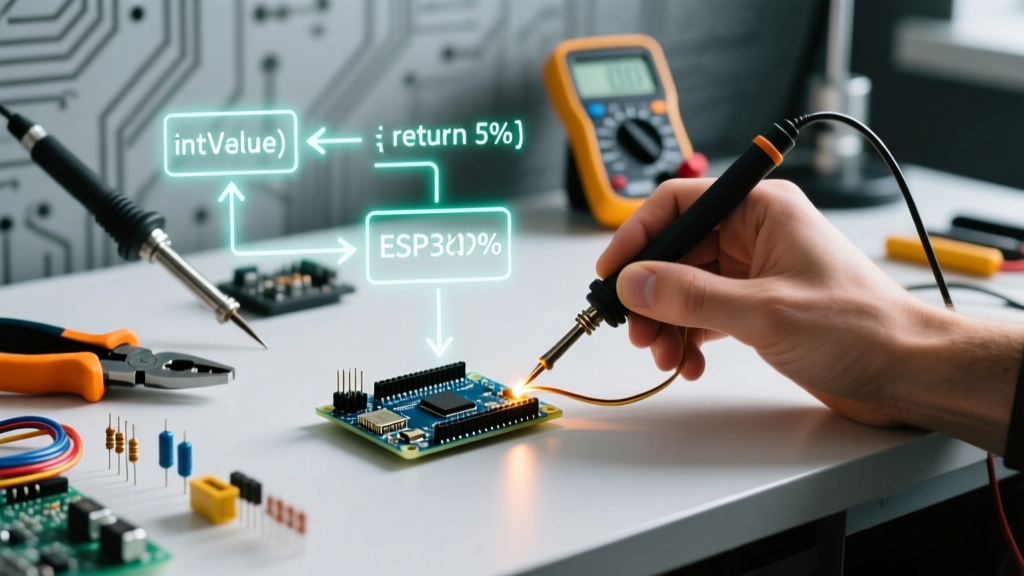
The ESP32 family features a dedicated, hardware-based RNG peripheral tied to the Successive Approximation Register (SAR) ADC and internal thermal noise. When Wi-Fi or Bluetooth is enabled, the RF subsystem injects high-quality environmental noise into the entropy pool. Calling esp_random() via the ESP-IDF or Arduino-ESP32 core yields 32-bit true random numbers at high throughput. As noted in the official Espressif ESP-IDF Random Number Generator documentation, the hardware RNG produces NIST-compliant entropy, completely eliminating the need for external TRNG modules for 95% of IoT use cases.
External TRNG Modules: Compatibility & Logic Levels
When native entropy is insufficient (e.g., ATmega328P projects requiring AES-256 key generation, or STM32 boards without active RF peripherals), external hardware modules are required. Below is a compatibility matrix for the most reliable TRNG modules available to makers.
| TRNG Module / IC | Interface | Logic Voltage | Compatible 5V Boards | Compatible 3.3V Boards | Approx. Cost (USD) |
|---|---|---|---|---|---|
| Microchip ATECC608B | I2C | 2.0V - 5.5V | Uno, Mega (Direct) | ESP32, Zero, Nano 33 | $7.00 - $11.00 |
| Infineon OPTIGA Trust M | I2C | 1.8V - 3.3V | Uno, Mega (Needs Level Shifter) | ESP32, Zero, Nano 33 | $9.00 - $14.00 |
| DS18B20 Thermal Noise | 1-Wire | 3.0V - 5.5V | Uno, Mega (Direct) | ESP32, Zero, Nano 33 | $2.50 - $4.00 |
| Zener Diode Avalanche | Analog / ADC | 5V / 12V Circuit | Uno, Mega (Op-Amp Required) | ESP32 (Op-Amp Required) | $1.50 (Components) |
Deep Dive: Microchip ATECC608B Crypto-Element
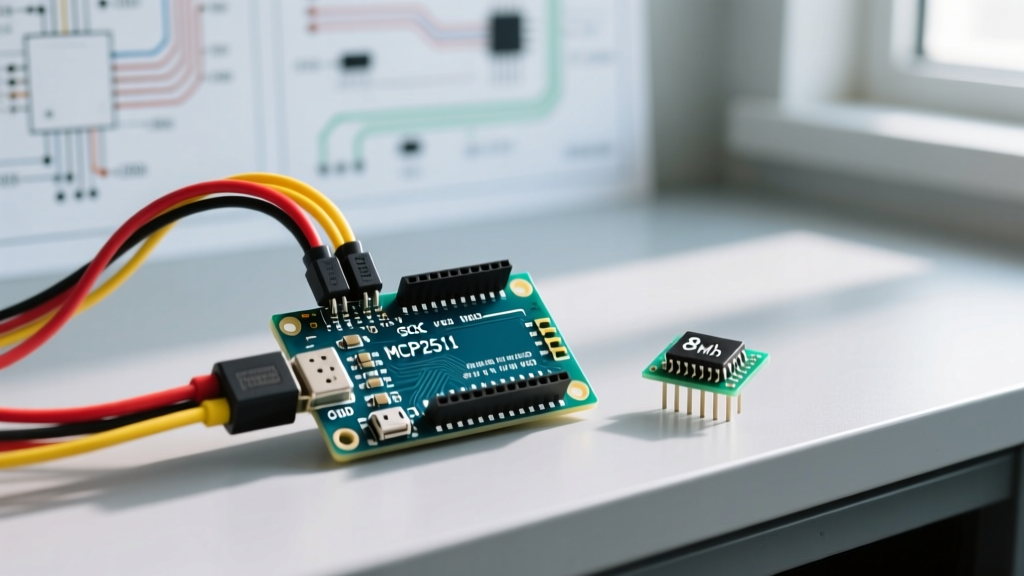
The ATECC608B is the gold standard for secure key storage and TRNG generation in the maker space. It contains an FIPS 140-2 compliant RNG. Crucially, its I2C pins are 5V tolerant, meaning it can plug directly into an Arduino Uno or Mega without a logic level shifter. However, if you are using a 3.3V board like the Arduino Nano 33 IoT or an ESP32-WROOM-32E, you must ensure your I2C pull-up resistors are tied to the 3.3V rail, not 5V, to prevent back-powering the ESP32's GPIO pins.
Deep Dive: DS18B20 Thermal Noise Hack
For ultra-low-budget projects requiring better entropy than a floating pin, reading the lowest bits of a DS18B20 temperature sensor's raw ADC conversion provides thermal noise. While not cryptographically secure against a highly motivated attacker with physical access to the board, it passes basic randomness tests and is fully compatible with any board supporting the 1-Wire protocol via the OneWire library.
Wiring Topologies and Logic Level Translation
The most common point of failure when integrating advanced random number generator Arduino setups is I2C bus incompatibility. Modern security ICs (like the Infineon OPTIGA Trust series or STM32 secure elements) operate strictly at 1.8V or 3.3V. Connecting them directly to the 5V I2C pins of an ATmega328P will instantly destroy the internal ESD protection diodes of the TRNG IC.
The BSS138 Level Shifter Solution
To safely bridge a 5V Arduino Uno and a 3.3V TRNG module, use a bidirectional logic level shifter based on the BSS138 MOSFET. Avoid resistor-divider networks for I2C, as they degrade the sharp rise-times required for 400kHz Fast Mode I2C, leading to NACK (Not Acknowledged) errors during entropy read requests.
- High Voltage (HV) Side: Connect to Arduino 5V and Uno A4/A5 (SDA/SCL).
- Low Voltage (LV) Side: Connect to TRNG 3.3V VCC and SDA/SCL.
- Pull-up Resistors: Ensure 4.7kΩ pull-up resistors are present on both the HV and LV sides of the BSS138 board to maintain proper I2C idle states.
Real-World Failure Modes and Edge Cases
Even with correct wiring, entropy generation can fail silently, resulting in locked-up sketches or predictable outputs. Be aware of these specific edge cases:
1. I2C Bus Capacitance with ATECC608B
The ATECC608B requires a precise I2C clock. If your wiring exceeds 15cm, or you have multiple devices on the same I2C bus (e.g., an OLED display and a BME280 sensor), the bus capacitance will exceed the 400pF I2C specification. This causes the TRNG to miss clock edges, returning 0x00 or 0xFF instead of random bytes. Fix: Lower the I2C clock speed using Wire.setClock(100000); and reduce pull-up resistor values to 2.2kΩ to accelerate signal rise times.
2. Clone Board Watchdog Timer Jitter
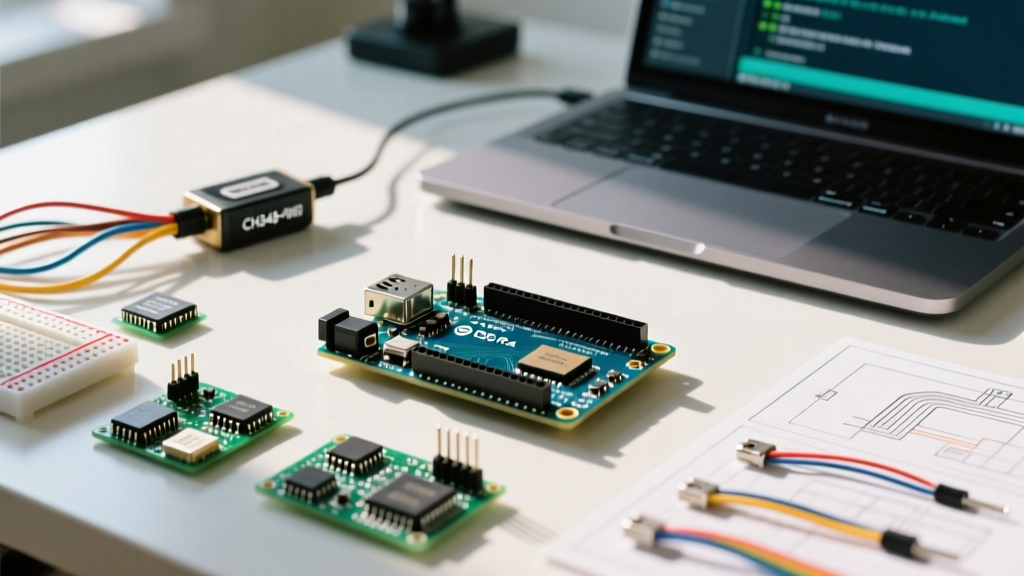
If you are using the WDT entropy method on an ATmega328P, be aware that cheap clone boards utilizing the CH340G USB-to-Serial chip often have different power delivery filtering compared to genuine Arduinos. Furthermore, if the board uses a ceramic resonator instead of a quartz crystal for the main 16MHz clock, the thermal drift characteristics change. This can actually increase WDT jitter entropy, but it makes the entropy generation rate highly temperature-dependent. Always seed your PRNG continuously in the background loop rather than relying on a single WDT read at boot.
3. ESP32 RF Subsystem Dependency
On the original ESP32 (not the ESP32-C3 or S3), the highest quality entropy is gathered when the RF subsystem (Wi-Fi/BT) is initialized. If you are running an ESP32 in deep-sleep or with Wi-Fi explicitly disabled to save power in a remote sensor node, the internal entropy pool degrades significantly. In low-power, RF-disabled ESP32 deployments, you must still integrate an external hardware TRNG like the ATECC608B to guarantee cryptographic security.
Summary: Choosing the Right Entropy Source
Selecting the correct random number generator Arduino solution depends entirely on your board architecture and security requirements. For ESP32-based IoT nodes with active Wi-Fi, the native esp_random() hardware peripheral is sufficient and cost-free. For 5V AVR boards requiring NIST-compliant cryptographic keys, the Microchip ATECC608B offers the best compatibility and security, provided I2C bus capacitance is managed. For basic gaming or non-security randomization, leveraging Watchdog Timer jitter or DS18B20 thermal noise provides a massive upgrade over the default floating-pin PRNG seed without requiring additional hardware costs. Always consult the official Arduino random() reference to understand the baseline limitations of software generation before scaling your project to production.