
The State of Arduino on macOS in 2026
Welcome to the 2026 ElectricalFlux community resource roundup. If you are a maker, engineer, or student operating within the Apple ecosystem, getting your development environment configured correctly is the critical first step before writing a single line of C++. When searching for the arduino for mac download, users are often confronted with a fragmented landscape of legacy 1.8.x branches, modern 2.x/3.x architectures, and third-party alternatives. Furthermore, the transition to Apple Silicon (M1, M2, M3, and M4 chips) has fundamentally changed how serial drivers and USB polling operate under macOS 15 Sequoia and macOS 16.
This guide bypasses the generic tutorials and dives straight into the technical realities of compiling, flashing, and debugging microcontrollers on a Mac in 2026. We will cover native ARM64 builds, the death of kernel extensions (kexts), and the community-vetted workarounds for the most stubborn USB-to-Serial chips on the market.
Choosing Your IDE: Official vs. Community Alternatives
Before you initiate your download, you need to decide which environment suits your project scope. The official Arduino IDE has improved dramatically, but power users in the community often pivot to VS Code-based ecosystems for larger firmware projects.
| IDE / Environment | Apple Silicon Native? | Build Speed (ESP32-S3) | Debugging Support | Best Use Case |
|---|---|---|---|---|
| Arduino IDE 2.3.x | Yes (ARM64) | Moderate (~45s) | Basic (Serial Monitor) | Beginners, quick prototyping, Education |
| PlatformIO (VS Code) | Yes (via VS Code) | Fast (~18s w/ ccache) | Advanced (JTAG/SWO) | Production firmware, multi-board projects |
| Arduino CLI (Homebrew) | Yes (ARM64) | Fastest (~15s) | CLI-based (GDB) | CI/CD pipelines, headless Mac servers |
| Sloeber (Eclipse) | No (Rosetta 2) | Slow (~60s) | Moderate | Legacy enterprise codebases |
Step-by-Step: The Arduino for Mac Download & Installation
Apple Silicon (M-Series) vs. Intel Macs
The most common mistake Mac users make in 2026 is downloading the Intel (x64) version of the IDE and running it through Rosetta 2. While Rosetta 2 is a marvel of emulation, running x64 compilation toolchains (like xtensa-esp32-elf-gcc) under emulation introduces a 30-40% performance penalty and can cause memory allocation failures during heavy linking phases.
- Identify your architecture: Click the Apple Logo > About This Mac. If it says 'Chip: Apple M1/M2/M3/M4', you are on ARM64.
- Navigate to the source: Always use the official Arduino Software Page. Avoid third-party mirror sites that may bundle outdated or compromised board manager URLs.
- Select the correct binary: Download the macOS ARM 64 bits
.dmgfile. Intel Mac users must select the macOS Intel 64 bits version. - Bypass Gatekeeper (If Necessary): If macOS flags the application as unverified (common with beta builds or community forks), go to System Settings > Privacy & Security and click 'Open Anyway'.
By default, the Arduino IDE only includes AVR boards. To unlock the ESP32, RP2040, and STM32 ecosystems, you must add their package indices. Go to Arduino IDE > Settings > Additional Boards Manager URLs and paste the Espressif and Raspberry Pi JSON links. Pro Tip: Hold the Option key while clicking the URLs to open them in your browser, allowing you to verify the JSON is valid before pasting.
Solving the macOS Driver Nightmare (CH340 & FTDI)
The most heavily documented pain point in the maker community is serial port recognition. Modern macOS versions have completely deprecated Kernel Extensions (kexts) in favor of DriverKit extensions (dexts). If you are following a tutorial from 2019 that tells you to disable System Integrity Protection (SIP) to install a CH340 driver, stop immediately. That advice is obsolete and compromises your Mac's security.
The FTDI (FT232RL) Situation
Apple includes a native FTDI driver (AppleUSBFTDI) in macOS. However, it often fails to claim the device if a third-party driver is lingering in the system cache. If your FTDI-based Arduino Nano or Pro Mini isn't showing up:
- Unplug the device.
- Open Terminal and run:
sudo kextunload -b com.FTDI.driver.FTDIUSBSerialDriver(Note: on macOS 15+, this command may return 'not found' if the system is purely using dexts). - Check System Settings > Privacy & Security. macOS requires explicit user approval for USB serial accessories. You may see a prompt saying 'Accessory connected. Allow accessory to connect?' You must click 'Allow' within 10 seconds, or the port will be logically disabled.
- For official driver packages and troubleshooting, refer to the FTDI VCP Drivers page.
The CH340/CH341G (Clone Boards) Situation
Cheap Arduino Uno and Nano clones utilize the WCH CH340 chip. In 2026, WCH provides an official macOS DriverKit (dext) package that works natively on Apple Silicon without disabling SIP. Download the official VCP driver from WCH, install the .pkg, and restart. You will then need to approve the 'WCH' developer extension in System Settings > General > Login Items & Extensions > Network Extensions.
Serial Port Naming: tty vs. cu (The BSD Quirk)
When using the Arduino CLI, PlatformIO, or Python scripts (like esptool.py) on a Mac, you must understand how macOS (which is UNIX/BSD certified) names serial ports.
Rule of Thumb: Always use
/dev/cu.*for outgoing communication (flashing/uploading). Use/dev/tty.*only for incoming dial-in connections.
If you attempt to upload a sketch using avrdude and target /dev/tty.usbserial-1420, the upload will frequently hang or timeout because the tty device waits for a carrier detect signal that USB-to-Serial adapters do not provide. Always target /dev/cu.usbserial-1420 to bypass the handshake requirement.
Hardware Quirks: USB-C Hubs and Polling Rates
With the retirement of USB-A ports on all modern MacBooks, makers rely heavily on USB-C hubs. The community has identified a recurring failure mode with hubs utilizing older ASMedia or Realtek chipsets: USB Polling Latency.
When uploading to high-speed microcontrollers like the ESP32-S3 or Teensy 4.1 at baud rates of 921600 or higher, cheap USB-C hubs drop packets due to insufficient isochronous bandwidth allocation. This results in 'Hash of data verified' errors or 'Timed out waiting for packet header' failures.
The 2026 Hardware Fix:
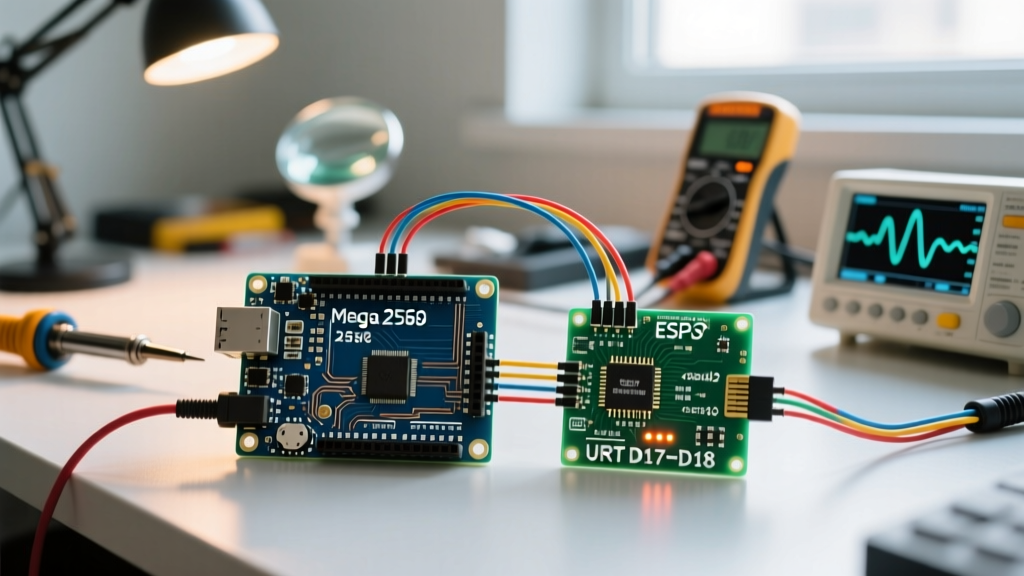
- For legacy boards (Uno R3, Mega 2560), use a high-quality, powered USB 3.1 hub or a direct USB-C to USB-A adapter (like those from Anker or Belkin) that supports dedicated data lanes.
- For modern boards (Arduino Uno R4 Minima/WiFi, Nano ESP32), use a native USB-C to USB-C data cable. Ensure the cable is rated for 10Gbps data transfer, not just a 480Mbps charging cable. This bypasses the hub entirely and connects directly to the Mac's Thunderbolt/USB4 controller.
Essential Community CLI Tools for Mac
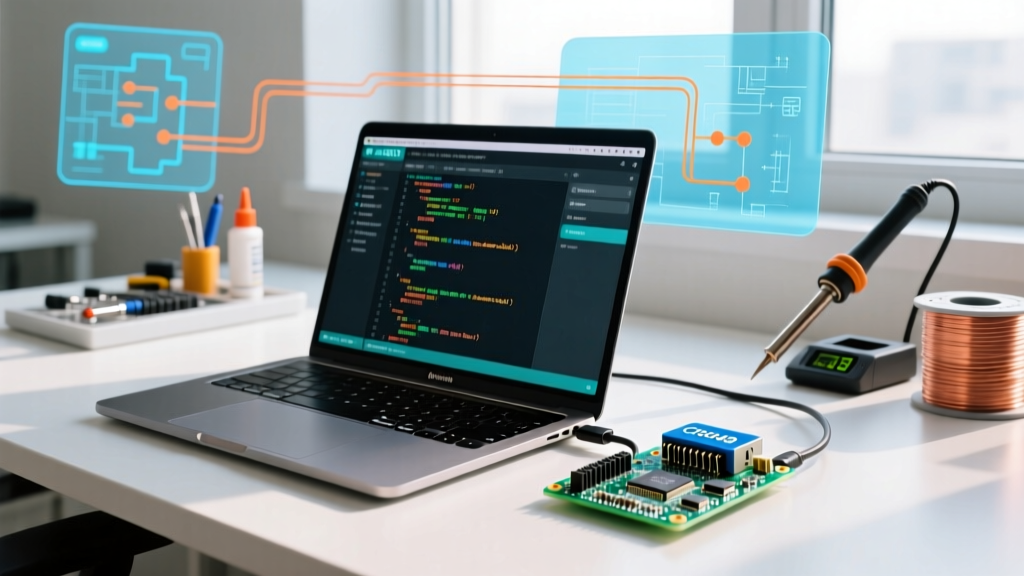
For advanced users who prefer the terminal, Homebrew is the undisputed king of package management on macOS. Instead of relying on the IDE's bundled (and sometimes outdated) toolchains, the community recommends installing the following via Terminal:
brew install avrdude: Ensures you have the latest 7.2+ version for programming ATmega chips via ISP/UPDI.brew install esptool: The official Espressif command-line utility for wiping, flashing, and reading ESP8266/ESP32 flash memory.brew install platformio: Installs the PlatformIO Core, allowing you to compile and upload complex projects directly from VS Code's integrated terminal or a headless Mac Mini acting as a CI/CD build server.
For those looking to dive deeper into cross-platform embedded development, the PlatformIO ecosystem remains the gold standard for managing complex library dependencies and custom build flags without the bloat of the Java-based Arduino IDE.
Frequently Asked Questions (FAQ)
Why does my Arduino IDE crash on launch on my M3 MacBook?
This is almost always caused by a corrupted boards.txt file or a rogue third-party hardware package installed in ~/Library/Arduino15/packages/. Navigate to that hidden directory (use Cmd + Shift + G in Finder), delete the packages folder, and restart the IDE. It will force a clean download of the core indices.
Can I use the Arduino Cloud Agent on macOS?
Yes, but the Arduino Cloud Agent requires specific network permissions to communicate with local USB ports. If the web editor cannot detect your board, open the 'Activity Monitor', force quit the Arduino Cloud Agent, and relaunch it from the Applications folder, granting it 'Local Network' and 'USB Accessory' permissions when prompted by macOS.
How do I fix the 'Permission Denied' error when using avrdude?
macOS restricts raw USB access for non-root users. If you are calling avrdude from a bash script, ensure your user account is part of the dialout group, or run the specific upload command with sudo. Alternatively, configure a udev-equivalent rule using macOS's launchd to auto-mount the serial port with read/write permissions.