
The Anatomy of an Arduino Elegoo Kit
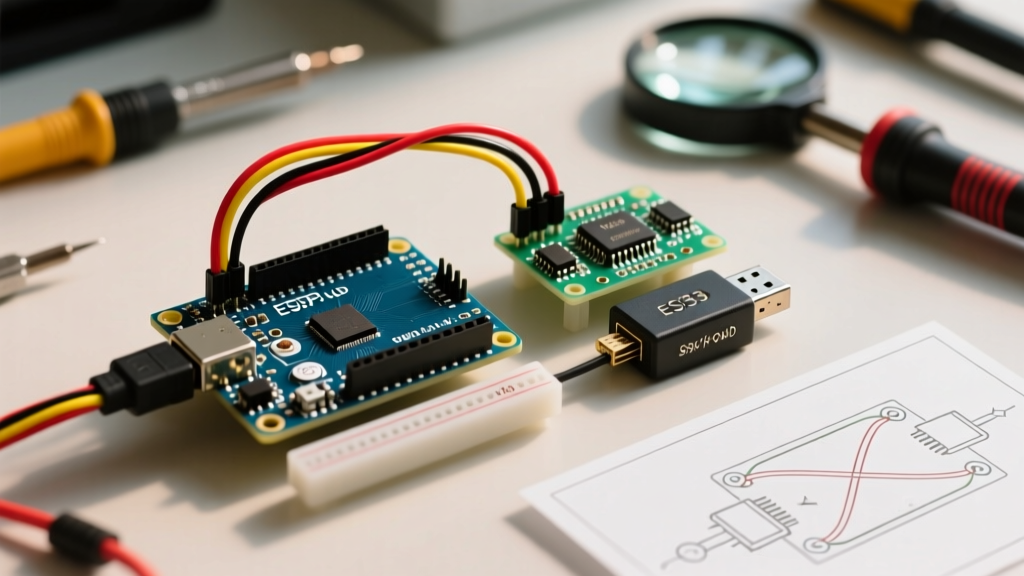
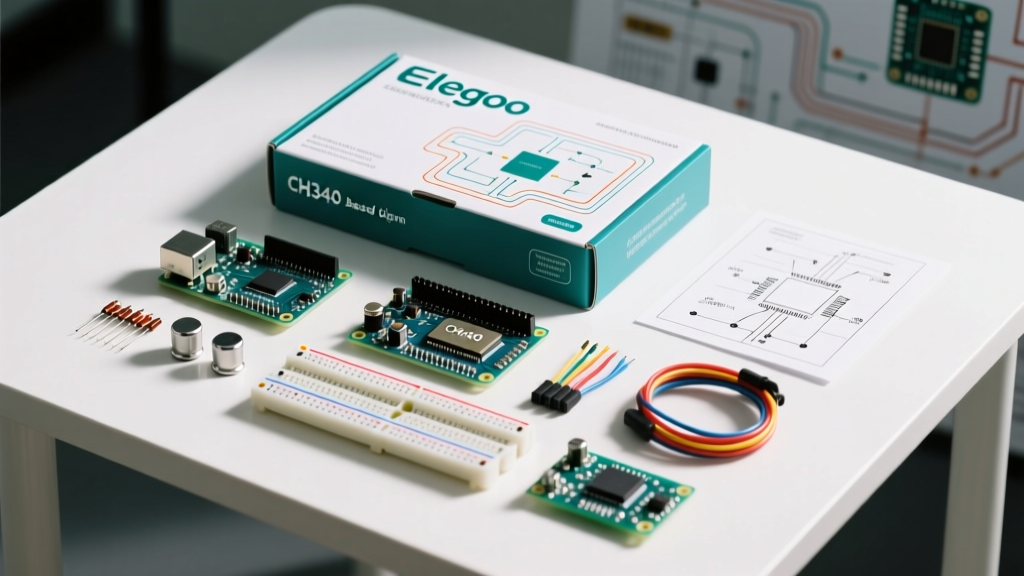
When entering the world of embedded systems and physical computing, the phrase 'Arduino Elegoo kit' frequently dominates search results and maker forums. But what exactly is this hardware bundle, and how does it differ from the official boards produced in Italy? To understand the Elegoo ecosystem, we must first separate the software platform (the Arduino IDE and core libraries) from the physical hardware. Elegoo does not manufacture 'Arduinos' in the trademarked sense; rather, they manufacture Arduino-compatible development boards and bundle them with extensive passive and active electronic components.
This concept explainer dives deep into the silicon architecture, component quality, and practical engineering realities of using an Elegoo starter kit in 2026, providing you with the technical context needed to decide if it is the right foundation for your prototyping bench.
The Open-Source Hardware (OSHW) Foundation
The existence of the Elegoo Super Starter Kit is entirely dependent on the Open Source Hardware Association's (OSHW) principles. The original Arduino UNO R3 schematics, bill of materials (BOM), and PCB layout files are published under a Creative Commons Attribution Share-Alike license. According to the Open Source Hardware Association, this license permits any third-party manufacturer to copy, modify, and commercially distribute the hardware designs, provided they attribute the original creators and share their modifications under the same terms.
Elegoo leverages this by manufacturing exact physical clones of the UNO R3 and Mega 2560 form factors. However, to hit aggressive price points (often retailing between $35 and $45 for a comprehensive UNO kit, compared to $115+ for the official Arduino Starter Kit), Elegoo makes strategic component substitutions that do not affect the core logic but alter the peripheral behavior of the board.
Silicon Architecture: The ATmega328P vs. The CH340G
The most critical concept to grasp when evaluating an Arduino Elegoo kit is the distinction between the main microcontroller and the USB-to-Serial bridge.
The Main Brain: ATmega328P-PU
Elegoo uses the exact same Microchip (formerly Atmel) ATmega328P-PU 8-bit AVR microcontroller found on official boards. This means you are getting the genuine 32KB of ISP flash memory, 2KB of SRAM, and 1KB of EEPROM. The Optiboot bootloader is pre-flashed at the factory, meaning the board will immediately accept sketches compiled in the Arduino IDE without requiring an external ISP programmer.
The USB Bridge: The CH340G Substitution
The primary deviation from the official schematic lies in the USB-to-Serial conversion chip. Official boards utilize the ATmega16U2, a secondary microcontroller programmed to act as a USB bridge. This allows for advanced features like custom HID (Human Interface Device) configurations. Elegoo boards, however, almost universally use the WCH CH340G or CH341A chip. As detailed in the official Arduino UNO R3 documentation, the 16U2 is a flexible but expensive component. The CH340G is a dedicated, hard-wired USB-serial ASIC that costs a fraction of the price.
Engineering Note: The CH340G is perfectly capable of handling standard serial debugging and sketch uploading at baud rates up to 115200. However, it lacks the firmware-level flexibility of the 16U2, meaning you cannot natively reprogram the USB bridge to act as a custom keyboard or MIDI controller without external hardware.
Component Ecosystem: Kit Comparison Matrix
An 'Arduino Elegoo kit' is rarely just a board; it is a curated box of sensors, actuators, and wiring. Below is a technical comparison between the official offering and Elegoo's flagship UNO R3 Super Starter Kit.
| Feature / Metric | Official Arduino Starter Kit | Elegoo Super Starter Kit (UNO R3) |
|---|---|---|
| Approximate Retail Price (2026) | $115.00 - $125.00 | $38.00 - $45.00 |
| Core Microcontroller | ATmega328P-PU | ATmega328P-PU |
| USB-to-Serial IC | ATmega16U2 | WCH CH340G |
| Voltage Regulator | NCP1117-5.0 (Low Dropout) | AMS1117-5.0 (Generic LDO) |
| Breadboard Quality | High-grade, low contact resistance | Standard clone, higher contact resistance |
| Tutorial Material | Printed 170-page project book | Digital PDF and CD/USB drive with code |
Power Regulation and Passive Component Realities
While the digital logic is identical, the analog and power domains reveal the cost-cutting measures inherent in clone kits. The official Arduino UNO uses an NCP1117-5.0 voltage regulator, which offers excellent thermal stability and a low dropout voltage. Elegoo boards typically use a generic AMS1117-5.0. While the AMS1117 is perfectly adequate for powering the MCU and a few LEDs, it has a higher quiescent current and runs noticeably hotter when the board is powered via the barrel jack at voltages above 9V.
The Breadboard Caveat
The most common point of failure for beginners using any clone kit is the included solderless breadboard. High-quality breadboards feature phosphor bronze contacts with a contact resistance of under 20 milliohms. The breadboards included in budget Elegoo kits often exhibit contact resistance in the 50 to 150 milliohm range, and the spring tension degrades faster after repeated wire insertions.
- Actionable Advice: If you are building high-frequency digital circuits (like SPI communication to an SD card module) or sensitive analog sensor arrays, bypass the kit's breadboard and invest $10 in a premium brand like BusBoard Prototype Systems or a high-tier Adafruit breadboard to prevent phantom voltage drops and signal integrity issues.
- Jumper Wires: The included male-to-male and male-to-female Dupont wires are generally 28 AWG stranded copper. They are sufficient for low-current logic signals but should not be used for power rails carrying more than 500mA, as the thin crimps can introduce voltage sag.
The CH340 Driver Hurdle: A Modern Perspective
Historically, the most notorious friction point of the Arduino Elegoo kit was the requirement to manually install CH340 drivers. In the Windows 7 and early Windows 10 eras, plugging in the board resulted in an 'Unknown Device' error in the Device Manager.
Fortunately, the software landscape in 2026 has largely resolved this. Windows 11 natively includes signed WCH drivers via Windows Update, meaning the board is usually recognized instantly as 'USB-SERIAL CH340 (COMX)'. macOS users running Sonoma or Sequoia also benefit from native kernel extensions or easily accessible signed packages. For edge cases involving custom Linux kernels or older operating systems, SparkFun's comprehensive CH340 driver guide remains the gold standard for manual installation and troubleshooting.
Common Failure Modes and Edge Cases
Because Elegoo kits are mass-produced at high volume with aggressive cost targets, quality control on the PCB assembly can occasionally slip. Makers should be aware of three specific physical failure modes:
- USB-B Port Shearing: The surface-mount USB-B connector is often soldered with minimal fillet on the grounding tabs. If the USB cable is subjected to lateral stress on a cluttered desk, the connector can rip the pads off the PCB. Always use a cable with a molded strain relief and avoid yanking the cord.
- Cold Solder Joints on Headers: Inspect the male header pins on the bottom of the board. Occasionally, machine-placed headers suffer from cold solder joints, leading to intermittent I2C or SPI communication failures when the board is flexed inside an enclosure.
- Reverse Polarity Protection: While the official schematic includes a diode to protect against reverse polarity on the barrel jack, some clone batches omit this component to save $0.02 per unit. Never connect an unregulated AC adapter or a battery pack with ambiguous wiring to the DC jack without verifying the center-positive polarity with a multimeter first.
Final Verdict: Who is the Elegoo Kit For?
The Arduino Elegoo kit represents a triumph of accessible engineering. By leveraging open-source schematics and substituting non-critical peripheral ICs like the CH340G, Elegoo has democratized access to embedded systems education. For students, hobbyists, and makers prototyping digital logic, IoT sensor nodes, or robotics, the kit offers 95% of the official experience at 30% of the cost. However, for mission-critical industrial deployments, environments requiring extreme thermal stability, or projects demanding native USB HID capabilities without secondary MCUs, the official Arduino hardware remains the necessary standard.