
The ATmega328P Bottleneck: Why Migrate in 2026?
For over a decade, the Arduino Uno and Nano—powered by the 8-bit ATmega328P—have been the undisputed entry points for embedded systems. However, as maker projects evolve into complex IoT nodes, computer vision rigs, and high-speed data loggers, the ATmega328P's limitations become glaring. With only 2KB of SRAM, a 16MHz clock speed, and a 10-bit ADC, attempting to run modern TLS-encrypted MQTT clients or dual-core sensor fusion algorithms on legacy AVR hardware results in memory overflows and timing jitter.
Migrating to a modern arduino alternative is no longer just about getting more flash memory; it is about accessing hardware-accelerated cryptography, native wireless stacks, and 32-bit ARM or Xtensa architectures. This guide provides a deep-dive technical roadmap for migrating your legacy 5V AVR sketches to the leading 32-bit ecosystems dominating the workbench in 2026: the Raspberry Pi RP2040, Espressif ESP32-S3, and PJRC Teensy 4.1.
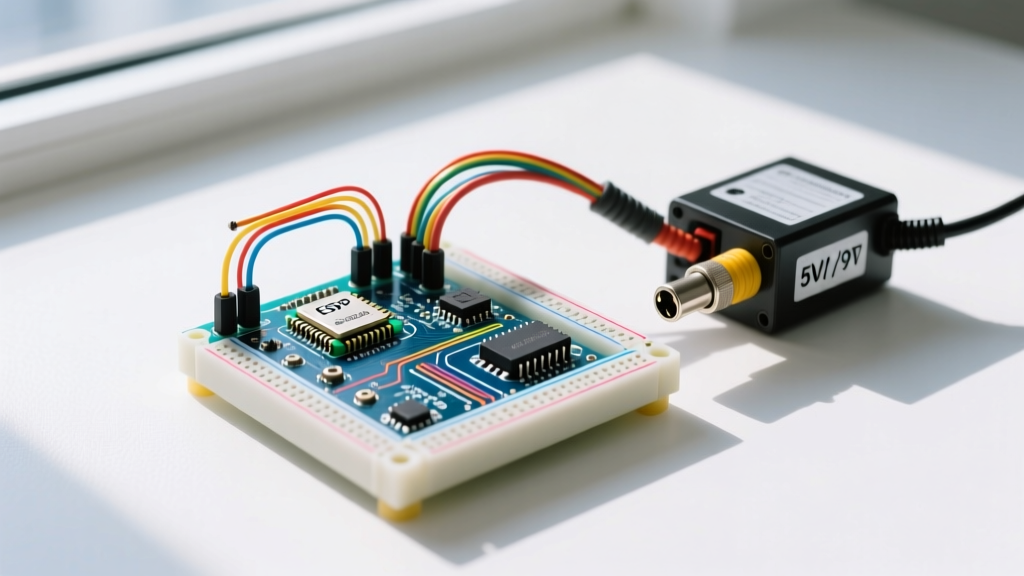
The 5V to 3.3V Logic Trap: Hardware Migration
The most catastrophic failure mode when moving from an Arduino Uno to an RP2040 or ESP32-S3 is ignoring logic level thresholds. The ATmega328P operates at 5V, meaning its GPIO pins output 5V and tolerate 5V inputs. Modern 32-bit microcontrollers operate at 3.3V. Feeding a 5V signal from a legacy sensor (like an HC-SR04 ultrasonic module or a 5V I2C LCD) directly into a 3.3V GPIO pin will permanently destroy the silicon's input protection diodes, often shorting the internal LDO regulator and killing the board.
Level Shifting Solutions
- BSS138 MOSFET Breakouts ($1.50 - $3.00): Ideal for I2C lines (SDA/SCL). They are bidirectional and rely on external pull-ups. Do not use these for high-speed SPI or UART above 400kHz due to gate capacitance rise-time delays.
- TI TXS0108E / TXB0108 ($2.50 - $4.00): 8-channel bidirectional translators with auto-direction sensing. Excellent for SPI buses and parallel data lines up to 50Mbps. Ensure you tie the OE (Output Enable) pin to the 3.3V VCC, or the chip will remain in high-impedance mode.
- Resistor Dividers ($0.10): Acceptable for one-way, low-speed signals (e.g., 5V module TX to 3.3V MCU RX). Use a 1kΩ and 2kΩ resistor pair. Never use dividers for I2C or high-speed SPI.
2026 Arduino Alternative Comparison Matrix
Choosing the right board depends on your specific bottlenecks. Below is a technical comparison of the top three architectures for advanced makers.
| Feature | Raspberry Pi Pico W (RP2040) | ESP32-S3-DevKitC-1 | PJRC Teensy 4.1 |
|---|---|---|---|
| Core Architecture | Dual-Core ARM Cortex-M0+ | Dual-Core Xtensa LX7 | ARM Cortex-M7 |
| Clock Speed | 133 MHz (Overclockable to 250+ MHz) | 240 MHz | 600 MHz |
| SRAM | 264 KB | 512 KB + 8MB PSRAM (typical) | 1 MB (Tightly Coupled) |
| Native Wireless | Wi-Fi 4 / BLE 5.2 (Infineon CYW43439) | Wi-Fi 4 / BLE 5.0 with Mesh | None (Requires external ESP-01) |
| Deep Sleep Current | ~1.3 mA (Dormant requires ext. RTC) | ~10 µA (with ULP co-processor) | ~15 mA (Low power mode) |
| Approx. 2026 Price | $6.00 | $8.50 | $31.95 |
For battery-powered IoT, the ESP32-S3 is the undisputed king due to its 10µA deep sleep and native wireless. For raw DSP and audio processing, the Teensy 4.1 remains unmatched. For general-purpose, cost-effective multi-threading, the RP2040 is the standard.
Silicon Errata and Boot Failures: What the Datasheets Hide
When migrating, you will encounter hardware quirks that the standard Arduino IDE abstracts away—until they cause your project to fail in the field.
ESP32-S3 Strapping Pin Conflicts
The ESP32-S3 uses specific GPIO pins to determine boot modes. If you wire a legacy sensor to these pins and they pull the line LOW or HIGH during power-on, the MCU will boot into SPI download mode or halt entirely.
- GPIO 0: Must be HIGH for normal SPI flash boot. If pulled LOW (e.g., by a button wired to ground without a pull-up), it enters firmware download mode.
- GPIO 3 & 46: Determine the boot log printout and flash voltage. Avoid using these for external interrupts or PWM outputs that might float during startup.
- GPIO 45: Selects the default SPI flash source. Keep this unconnected or pulled HIGH for standard operation.
RP2040 Floating ADC Noise
The RP2040 features a 12-bit ADC, but it is notoriously sensitive to floating pins. If you configure an ADC pin but leave it unconnected, the internal sample-and-hold capacitor will accumulate stray charge, causing ghost readings across other ADC channels. Always tie unused ADC pins to GND via a 10kΩ resistor or configure them as digital outputs driven LOW in your setup routine.
Refactoring Direct Port Manipulation
Advanced Arduino sketches often bypass digitalWrite() to achieve microsecond-level timing using direct AVR port registers. This code will fail to compile on ARM or Xtensa architectures. You must refactor these to hardware-agnostic APIs or architecture-specific HALs.
AVR (Legacy)
// Set Pin 8 (PORTB bit 0) HIGH
DDRB |= (1 << 0);
PORTB |= (1 << 0);
RP2040 (ARM Cortex-M0+)
// Using the Pico SDK hardware_structs
gpio_set_dir(8, GPIO_OUT);
sio_hw->gpio_set = (1 << 8); // Atomic set, zero-cycle read-modify-write
ESP32-S3 (Xtensa)
// Using ESP-IDF GPIO matrix
gpio_set_direction(GPIO_NUM_8, GPIO_MODE_OUTPUT);
GPIO.out_w1ts = (1 << 8); // Write 1 to set register
Pro-Tip: If you want to maintain cross-platform compatibility without learning new HALs, use the digitalWriteFast library, which uses preprocessor macros to map standard Arduino pins to the fastest available register operations for the active target board.
The EEPROM Illusion: Flash Wear Leveling
Legacy Arduino code relies heavily on the EEPROM.h library to store configuration data. The ATmega328P has 1KB of dedicated EEPROM silicon rated for 100,000 write cycles. Neither the RP2040 nor the ESP32-S3 possess dedicated EEPROM. Instead, their Arduino core implementations emulate EEPROM by reserving a sector of the external SPI Flash chip.
The Danger: SPI Flash memory is typically rated for only 10,000 to 100,000 erase cycles, and erases happen in 4KB blocks. If your legacy code writes to the 'EEPROM' every second (e.g., logging a sensor value), you will burn out the flash sector in under 28 hours, permanently bricking the board's ability to save data.
The Solution: Migrate to a file-system approach using LittleFS. LittleFS is a power-loss resilient filesystem designed specifically for microcontrollers that includes dynamic wear-leveling. Instead of writing raw bytes to memory addresses, you write to a file (/config.json). The filesystem automatically distributes the write cycles across the entire flash chip, extending the lifespan to years of continuous logging.
Toolchain Migration: Moving to PlatformIO
The Arduino IDE 2.x has improved, but managing custom board definitions, specific ESP-IDF versions, and RTOS dependencies via the GUI is fragile. For a professional migration, transition to PlatformIO within VS Code.
PlatformIO allows you to define multiple environments in a single platformio.ini file, letting you compile the exact same codebase for an Uno, a Pico W, and an ESP32-S3 simultaneously to verify hardware abstraction layers.
[env:pico_w]
platform = raspberrypi
board = rpipicow
framework = arduino
lib_deps = knolleary/PubSubClient@^2.8

[env:esp32s3]
platform = espressif32
board = esp32-s3-devkitc-1
framework = arduino
board_build.partitions = huge_app.csv
lib_deps = knolleary/PubSubClient@^2.8
Summary: Planning Your Upgrade Path
Migrating to an arduino alternative in 2026 is a mandatory step for projects requiring modern connectivity, edge-computing, or precise power management. Start by auditing your legacy code for direct register manipulation and 5V dependencies. Invest $5 in a BSS138 logic level shifter to protect your new 3.3V investment, refactor your EEPROM calls to use LittleFS, and adopt PlatformIO to manage the new silicon ecosystems. The learning curve for 32-bit architectures is steep, but the leap in performance, memory, and capability will future-proof your embedded designs for the next decade.