
The Core Answer: Arduino What Programming Language Actually Uses?
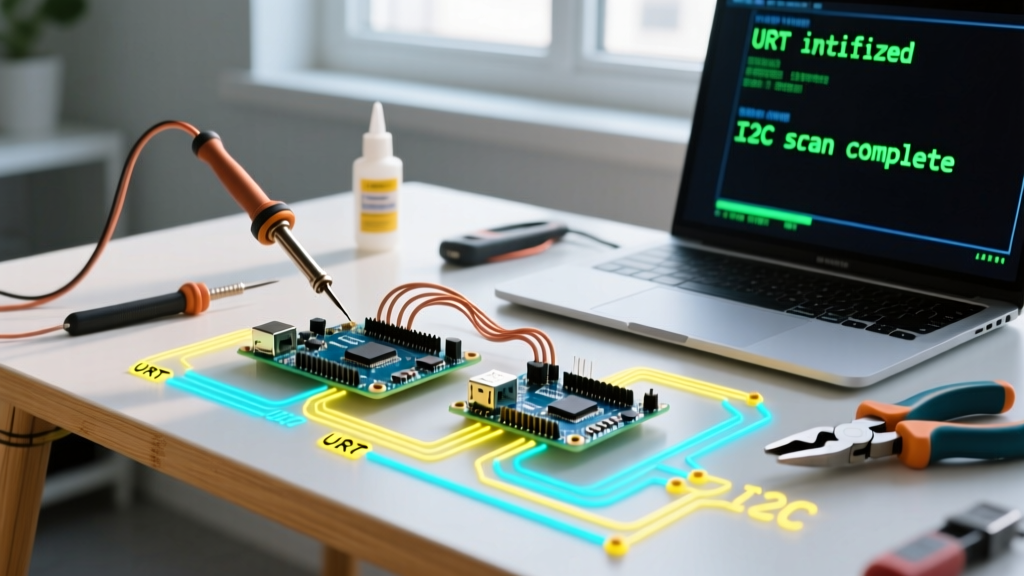
When engineers and hobbyists first dive into embedded networking, they frequently ask: Arduino what programming language does the ecosystem actually rely on? The short answer is that the native Arduino environment uses a specialized dialect of C and C++. However, the hardware itself is language-agnostic. In 2026, setting up robust communication protocols—like UART, I2C, SPI, and WiFi—can be achieved using native C++, MicroPython, or even embedded Rust, depending on your memory constraints and latency requirements.
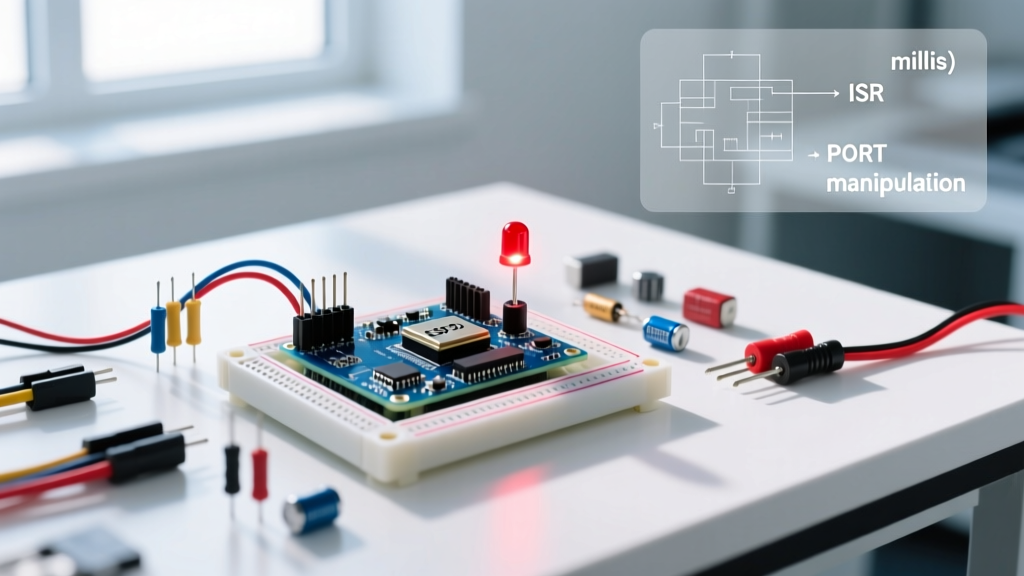
The native Arduino C++ abstraction layer (built on top of GCC and AVR-LIBC or ARM CMSIS) provides the Wire, SPI, and HardwareSerial libraries. While these are excellent for basic sensor polling, advanced communication setups (like LoRaWAN mesh networking or high-speed SPI DMA transfers) require a deeper understanding of how your chosen language interacts with the microcontroller's hardware registers and memory bus.
Language Options for Communication Protocols: A Comparison Matrix
Choosing the right language dictates your debugging workflow, memory overhead, and how you handle asynchronous data streams. Below is a technical comparison for setting up comms on modern boards like the Arduino Nano ESP32 ($27.00) or the Arduino Uno R4 WiFi ($27.50).
| Language / Environment | Memory Overhead | Comms Library Ecosystem | Setup Difficulty | Best Use Case |
|---|---|---|---|---|
| Native C++ (Arduino IDE) | Low (1-3 KB base) | Massive (Wire, SPI, WiFiNINA, ArduinoMQTT) | Moderate | Production firmware, strict timing, low-power sleep modes |
| MicroPython | High (~150 KB base) | Built-in machine module, umqtt |
Low | Rapid prototyping, REPL debugging, WiFi/BLE IoT nodes |
| Embedded Rust | Minimal (Zero-cost abstractions) | embedded-hal, embassy async |
High | Mission-critical CAN bus, DMA-driven SPI, memory-safe LoRa |
Setting Up UART & I2C in Native C++ (The Standard Route)
For the vast majority of communication setups, native C++ via the Arduino Language Reference remains the gold standard. However, relying purely on default configurations often leads to bus lockups in noisy environments.
Optimizing the I2C Physical Layer
The Arduino Wire library abstracts I2C, but it does not configure the physical pull-up resistors. When setting up an I2C bus for multi-drop communication (e.g., connecting three BME280 sensors and an OLED display):
- 100 kHz (Standard Mode): Use 4.7kΩ pull-up resistors to VCC (3.3V or 5V).
- 400 kHz (Fast Mode): Use 2.2kΩ pull-ups. You must also call
Wire.setClock(400000);in yoursetup()loop. - Bus Capacitance Limit: The I2C specification limits bus capacitance to 400pF. If your traces are long or you are using unshielded ribbon cables exceeding 30cm, the signal edges will degrade, causing NACK errors. In this scenario, switch to an I2C bus extender like the P82B96 or drop the clock speed to 50 kHz.
UART and Hardware Serial Buffers
When configuring UART for GPS modules (like the u-blox NEO-M9N) or AT-command WiFi bridges, the default 64-byte RX buffer in the Arduino AVR core is often insufficient. If a 512-byte NMEA sentence arrives while your MCU is writing to an SD card, bytes will be silently dropped. On ARM-based boards like the Uno R4 Minima, you can reallocate the buffer using Serial1.setRxBufferSize(512); before calling Serial1.begin(115200);.
MicroPython for Rapid WiFi & BLE Prototyping
If your primary goal is setting up MQTT over WiFi or BLE GATT servers, MicroPython drastically reduces iteration time. Using the machine module, hardware communication is instantiated directly in the REPL. According to the MicroPython ESP32 Quick Reference, setting up an I2C bus requires only two lines of code:
from machine import Pin, I2C
i2c = I2C(0, scl=Pin(22), sda=Pin(21), freq=400000)
The Garbage Collection (GC) Edge Case
MicroPython introduces a specific failure mode for real-time communication: Garbage Collection pauses. When parsing incoming JSON payloads over UART, MicroPython allocates temporary string objects. If the heap fills up, the GC triggers, halting the CPU for 5-20 milliseconds. If you are receiving high-speed RS-485 data at 921600 baud, a 10ms GC pause will overflow the hardware FIFO buffer, resulting in corrupted frames.
The Fix: Always manually invoke gc.collect() during idle states in your main loop, and pre-allocate bytearrays for incoming serial data rather than relying on dynamic string concatenation.
Rust on Arduino: The Emerging Memory-Safe Comms Choice
For industrial communication setups where a buffer overflow could result in catastrophic machinery failure, embedded Rust is rapidly gaining traction. Using the embedded-hal traits, Rust enforces memory safety at compile time. Unlike C++, where a rogue pointer in an SPI DMA callback can corrupt the stack, Rust's borrow checker ensures that the SPI peripheral cannot be accessed by two concurrent tasks without explicit mutex arbitration.
While setting up Rust requires abandoning the Arduino IDE in favor of cargo and probe-rs, the payoff for protocols like CAN bus (using the mcp2515 crate) is immense. You eliminate the entire class of heap-fragmentation bugs that plague C++ IoT devices operating on 2KB SRAM limits.
Real-World Troubleshooting: Language-Specific Comms Failures
When debugging communication breakdowns, the root cause is often tied to the language's memory model rather than the hardware itself. Keep these specific failure modes in mind:
C++ String Heap Fragmentation: On 8-bit AVRs (like the ATmega328P), using theStringclass to build MQTT payloads dynamically fractures the 2KB SRAM. After a few hours,client.publish()will fail silently because there is no contiguous memory block left for the TCP/IP stack. Solution: Use fixed-sizechararrays or theArduinoJsonlibrary withStaticJsonDocument.
- MicroPython I2C Clock Stretching: Some sensors (like the SCD30 CO2 sensor) hold the SCL line low to request more processing time. MicroPython's software I2C implementation does not handle clock stretching reliably, leading to
OSError: [Errno 110] ETIMEDOUT. Solution: Always use hardware I2C pins and themachine.I2Chardware driver. - C++ Wire Library Timeouts: The default Arduino
Wirelibrary can hang indefinitely if the SDA line is pulled low by a glitching slave device. Solution: Implement a watchdog timer (WDT) or manually toggle the SCL pin 9 times in software to force the slave to release the bus before reinitializing the Wire library. - ESP-IDF vs Arduino Core WiFi: For high-throughput UDP streaming, the Arduino core's WiFi wrapper adds latency. Consulting the ESP-IDF Programming Guide and using the native C API allows you to bypass the Arduino event loop, reducing UDP packet jitter from ~15ms down to <2ms.
Frequently Asked Questions
Can I use JavaScript to program Arduino communication setups?
Yes, through environments like Johnny-Five (which runs on a host PC and communicates via Firmata over UART) or Moddable XS for ESP32. However, for direct, low-level hardware peripheral control on the MCU itself, C++ and MicroPython remain the dominant choices.
Which language is best for low-power LoRaWAN nodes?
Native C++ using the arduino-lmic or RadioLib libraries is currently the most practical route for deep-sleep LoRaWAN setups. MicroPython's baseline RAM requirement prevents the MCU from entering the lowest power deep-sleep states efficiently on constrained chips like the ATmega328P or SAMD21.