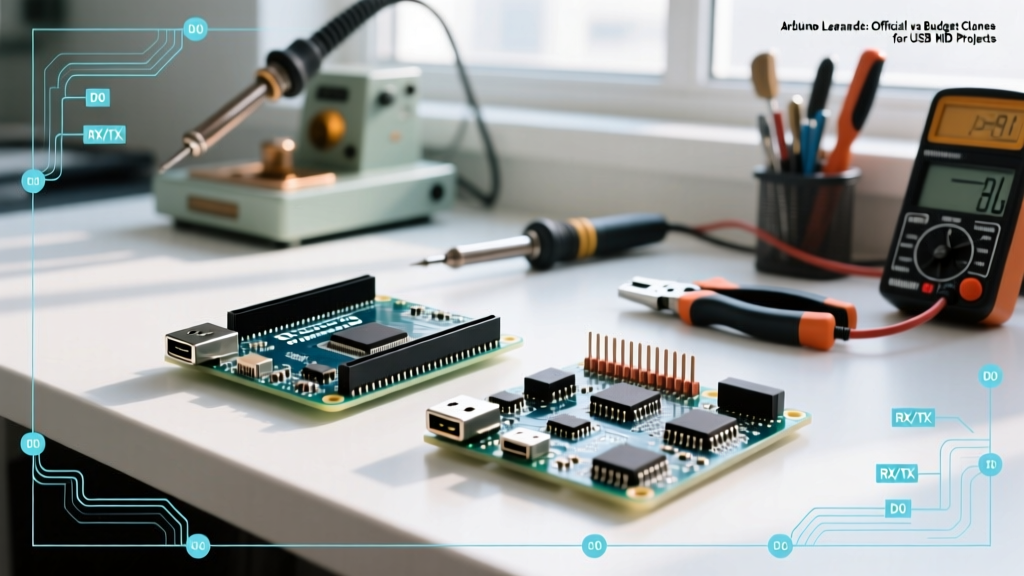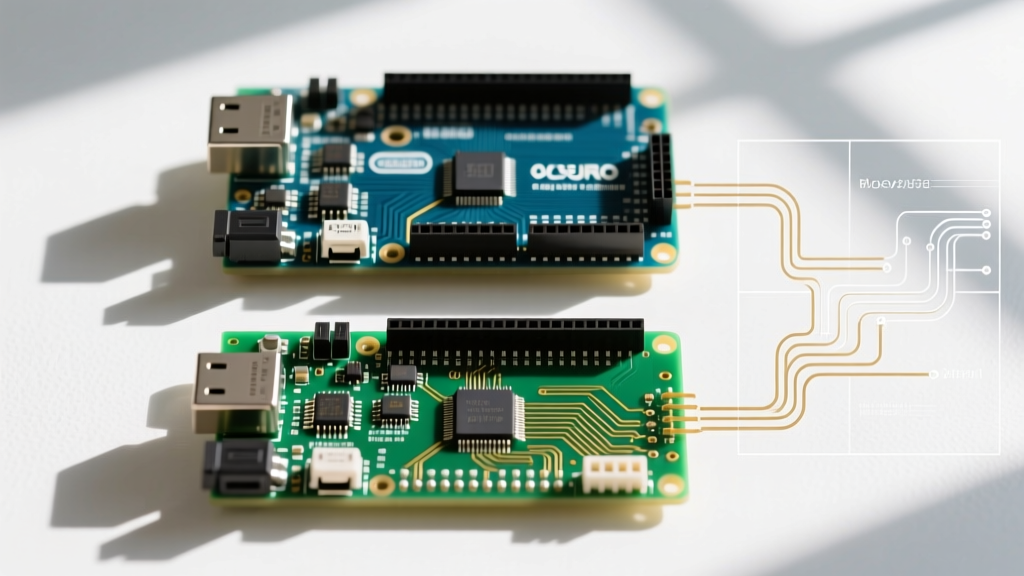

The Arduino Mega2560 Landscape
When your project outgrows the 14 digital I/O pins and 32KB flash memory of the standard Uno, the Arduino Mega2560 is the undisputed workhorse of the maker ecosystem. Built around the Microchip ATmega2560-16AU microcontroller, this board offers 54 digital I/O pins (15 of which can be used as PWM outputs), 16 analog inputs, 4 UARTs (hardware serial ports), and a massive 256KB of flash memory. Whether you are building a 3D printer controller (like the popular RAMPS 1.4 setup), a complex robotics platform, or a multi-sensor environmental data logger, the Mega2560 provides the necessary headroom.
However, the market is flooded with options. In 2026, you can purchase an official board manufactured by Arduino AB for around $52.00, or you can pick up a fully functional third-party clone from brands like Elegoo or Makerfocus for $15.00, and unbranded generic versions for as low as $11.50. This massive price disparity begs the question: where exactly are the manufacturers cutting costs, and does it matter for your specific application? This guide dissects the component-level differences, real-world failure modes, and sourcing strategies to help you decide between budget and premium Arduino Mega2560 boards.
Premium Tier: Official and Licensed Boards
The official Arduino Mega2560 Rev3, manufactured in Italy, represents the gold standard for reliability and ecosystem support. Priced typically between $49.90 and $54.00 through authorized distributors like Mouser Electronics, the premium price pays for rigorous quality control, high-grade components, and direct support for the open-source Arduino project.
Official boards utilize the ATmega16U2-MU chip as the USB-to-Serial converter. This is not just a dumb bridge; it is a fully programmable microcontroller that can act as a native USB HID device (like a keyboard or mouse) when flashed with custom firmware. Furthermore, the build quality features premium USB-B connectors, thick 1.6mm FR4 PCBs with high-quality ENIG (Electroless Nickel Immersion Gold) or heavy HASL plating, and precise 100nF reset capacitors that ensure flawless auto-reset behavior during code uploads.
Budget Tier: The Clone Ecosystem
Third-party 'compatible' boards are entirely legal, provided they do not infringe on Arduino's trademarked logos and naming conventions. Brands like Elegoo, DFRobot, and Keyestudio produce high-quality clones that hover around the $15.00 to $18.00 mark. Unbranded generic boards from direct-from-factory marketplaces drop this to $11.00.
The most immediate difference you will notice on a budget clone is the USB-to-Serial chip. Instead of the ATmega16U2, clones almost universally use the WCH CH340G or CH340C. The CH340 is a dedicated, hardwired USB-UART bridge. It is highly reliable for standard serial communication, but it lacks the HID capabilities of the 16U2. Additionally, budget boards often require you to manually download and install CH340 drivers on your operating system, whereas the official 16U2 is recognized natively by most modern OS environments. For a deeper dive into the historical context of this chip swap, the Hackaday archive on CH340 clones provides excellent technical background.
Component-Level Breakdown: Where Do Clones Cut Costs?
To achieve a sub-$15 retail price, generic manufacturers substitute several secondary support components. While the main ATmega2560-16AU chip is usually genuine (or a highly compatible Microchip variant), the surrounding circuitry tells a different story.
- 5V Voltage Regulator: Official boards use the onsemi NCP1117ST50T3G, a high-quality LDO regulator with excellent thermal dissipation. Clones typically use the AMS1117-5.0, which has a higher dropout voltage and significantly worse thermal shutdown characteristics.
- 3.3V LDO: The official board uses a dedicated LP2985 or similar high-current 3.3V regulator capable of sourcing up to 150mA. Many cheap clones tap into the CH340's internal 3.3V pin, which is limited to roughly 30mA—barely enough to power a basic ESP8266 module without causing brownouts.
- Crystal Oscillators: Premium boards use tightly-toleranced 16MHz HC49S crystals. Budget boards often use cheaper surface-mount (SMD) crystals or poorly calibrated through-hole variants that can drift in extreme temperatures, affecting serial baud rate accuracy.
- Headers and Connectors: Clone pin headers are often made from softer alloys with thinner gold flash plating, leading to looser fits after repeated jumper wire insertions.
Head-to-Head Specification & Quality Matrix
| Feature | Official Arduino Mega2560 | Premium Clone (e.g., Elegoo) | Generic Unbranded Clone |
|---|---|---|---|
| Typical Price (2026) | $52.00 | $16.99 | $11.50 |
| MCU | ATmega2560-16AU | ATmega2560-16AU | ATmega2560 (Often rebranded) |
| USB-UART Bridge | ATmega16U2-MU | CH340G / CH340C | CH340G |
| 5V Regulator | NCP1117 (High Thermal Mass) | AMS1117 (Standard) | AMS1117 (Low-grade batch) |
| 3.3V Output Capacity | ~150mA (Dedicated LDO) | ~50mA - 150mA (Varies) | ~30mA (Tied to CH340) |
| PCB Thickness | 1.6mm FR4 | 1.6mm FR4 | 1.2mm - 1.4mm FR4 |
| Auto-Reset Circuit | Precise 100nF + 10K Pullup | Standard 100nF | Poor tolerance caps (Sync errors) |
Real-World Failure Modes and Edge Cases
Understanding where budget boards fail is critical for designing robust systems. The core ATmega2560 chip rarely fails; it is the peripheral support circuitry that causes headaches in the field.
The Voltage Regulator Bottleneck
The most common failure point on budget Arduino Mega2560 clones is the AMS1117-5.0 voltage regulator. According to the onsemi NCP1117 datasheet, the premium regulator used on official boards handles thermal dissipation gracefully. The AMS1117 on clones, however, is notorious for thermal throttling. If you power a motor shield, a 20x4 LCD, and a few servos directly from the board's 5V pin while supplying 9V via the barrel jack, the regulator must dissipate the voltage difference as heat. On a clone, the AMS1117 will frequently hit its thermal shutdown threshold at around 600mA to 800mA of current draw, causing the entire board to reboot randomly. Solution: Always power high-current shields via their own dedicated 5V power rails, bypassing the Mega's onboard regulator entirely.
USB Connector Mechanical Fatigue
The USB-B connector on generic clones is often stamped from thinner metal and lacks the reinforced through-hole solder joints found on official boards. In robotics applications where the USB cable is subject to vibration and pulling, clone USB connectors frequently snap off the PCB pads after 30 to 50 insertion cycles. If your project involves physical movement, consider using a premium board or permanently mounting a USB extension cable to act as a strain relief.
Auto-Reset Capacitor Tolerance
The Arduino IDE relies on the DTR (Data Terminal Ready) signal from the USB chip to pulse the RESET pin via a 100nF capacitor, triggering the bootloader. Generic clones often use low-tolerance ceramic capacitors (e.g., +80%/-20% Y5V dielectrics). If the capacitance is too low, the reset pulse is too short, resulting in the dreaded 'avrdude: stk500v2_ReceiveMessage(): timeout' or 'sync failed' errors during code upload. Pressing the manual reset button precisely as the upload begins is the standard workaround for this edge case.
Expert Power Tip: Never back-power the Arduino Mega2560 by feeding 5V directly into the 5V pin while the USB is also connected. While official boards have a polyfuse and protection diodes to handle minor back-feeding conflicts, many budget clones omit these protection components, which can fry the USB-UART bridge chip or your computer's USB port.
Decision Framework: Which Arduino Mega2560 Should You Buy?
Choosing between a budget and premium board should be dictated by your project's deployment environment, power requirements, and production scale.
Buy Premium (Official) When:
- Commercial Deployment: You are integrating the board into a commercial product or a paid installation where a board failure results in costly service calls.
- Native USB HID is Required: Your project requires the Mega to emulate a keyboard, mouse, or gamepad via the ATmega16U2.
- High 3.3V Current Draw: You are powering 3.3V sensors, ESP32 modules, or SD card adapters directly from the board's 3.3V pin.
- Institutional Education: You are outfitting a university lab where students will frequently plug and unplug cables, requiring maximum mechanical durability.
Buy Budget (Clones) When:
- Prototyping and Breadboarding: You are in the early R&D phase and might accidentally short a pin or fry the board with a wiring mistake.
- 3D Printer Controllers: You are building a RAMPS 1.4 or similar CNC shield setup. In these setups, the shield provides its own robust power supply, and the Mega is only used for logic and step/direction signals.
- High-Volume Hobby Builds: You are building multiple identical units (e.g., a swarm of basic environmental sensors) where saving $35 per unit significantly impacts the overall budget.
- Permanent Installations: The board will be programmed once, housed in an enclosure, and never physically touched again, eliminating USB connector fatigue.
Sourcing and Authenticity Verification
If you decide to invest in the premium tier, beware of counterfeits. The market is saturated with 'fake official' boards that feature the Arduino logo but use clone-grade components. To guarantee authenticity, always purchase from authorized global distributors such as DigiKey, Mouser, or Newark, or directly from the official Arduino store. Verify the packaging includes the official holographic authenticity sticker and that the PCB silkscreen features the distinct 'Made in Italy' marking with a clean, high-resolution font. For budget boards, stick to established third-party brands with verified storefronts on major maker marketplaces to ensure you receive a board with a genuine ATmega2560 chip and a reliable CH340G implementation, rather than a bottom-tier generic reject.
Ultimately, the Arduino Mega2560 remains a cornerstone of complex DIY electronics. By understanding the anatomical differences between the $52 original and the $12 clone, you can allocate your project budget intelligently, ensuring reliability where it matters and saving money where it doesn't.