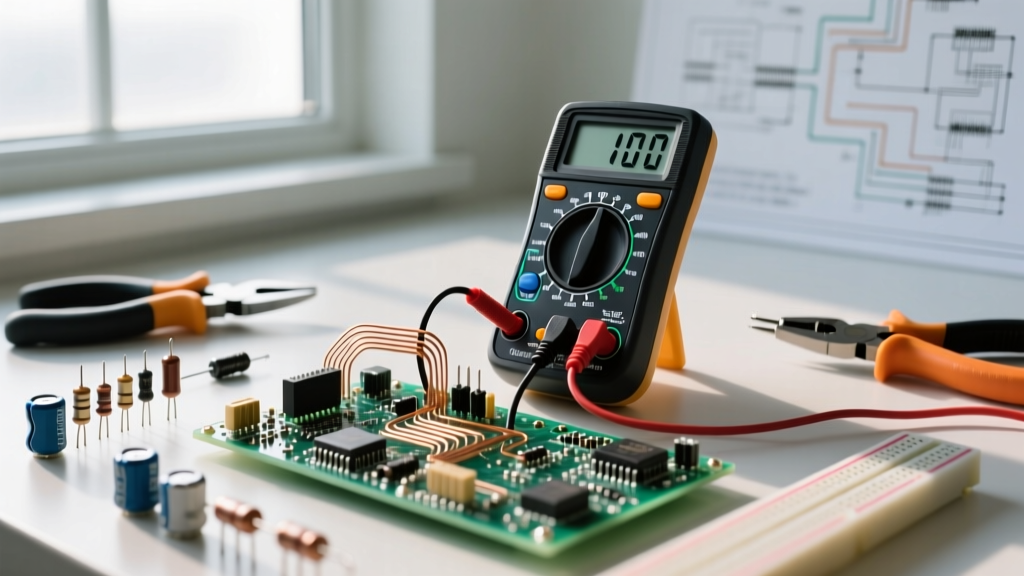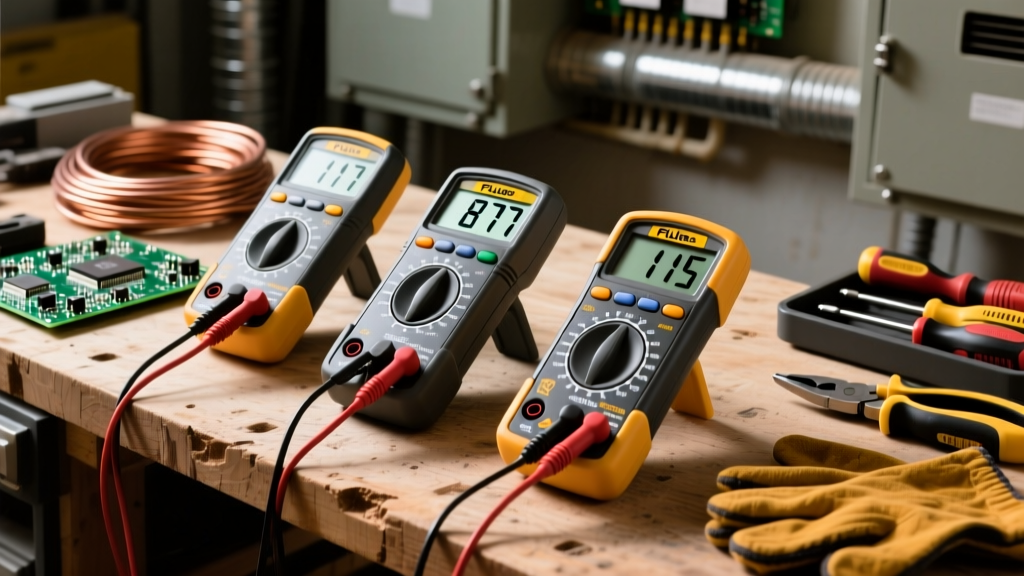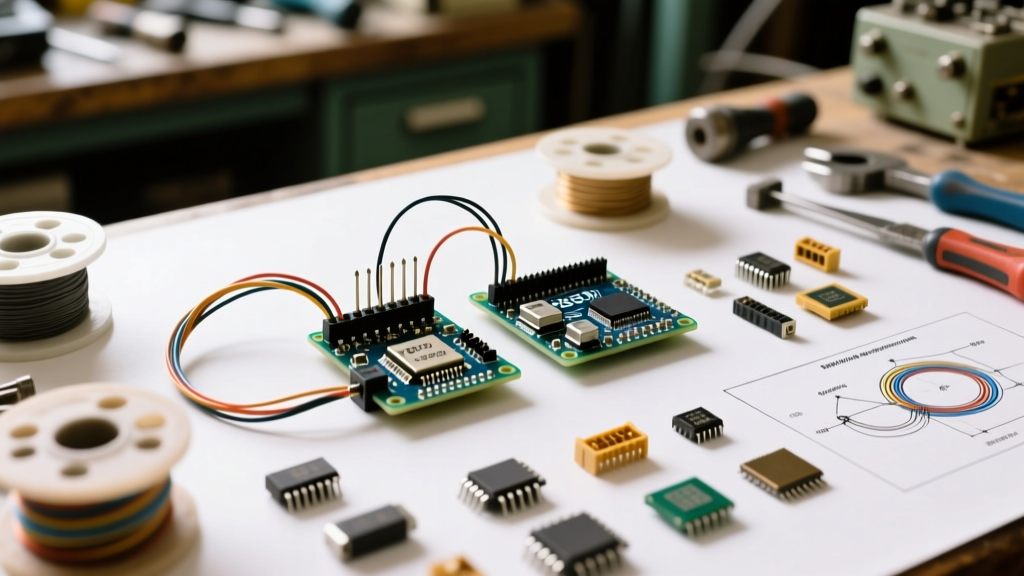

The 2026 Landscape of Obsolete and Allocating Parts
While the global semiconductor supply chain has largely stabilized from the chaotic pandemic-era shortages, a new reality has set in for engineers, repair technicians, and advanced DIYers: the 'End-of-Life' (EOL) cliff. In 2026, sourcing a standard 10kΩ resistor or a generic ESP32 module is trivial. However, tracking down hard to find electronic components—such as a specific die-revision of an Analog Devices AD9910 DDS, a military-spec Intel 80C196 microcontroller, or legacy TI LM317L variants in obsolete SOIC packages—requires navigating a complex secondary market.
This guide serves as your definitive equipment and distributor roundup for sourcing, verifying, and testing rare, allocating, and New Old Stock (NOS) electronic components. Whether you are repairing vintage aerospace equipment, maintaining legacy industrial PLCs, or building boutique synthesizers, knowing where to look and how to test your haul is critical.
Top-Tier Distributors and Independent Brokers
When authorized franchised distributors like Mouser or DigiKey show 'Out of Stock' with no lead time, you must pivot to the secondary market. Below is a comparison matrix of the most reliable channels for sourcing hard to find electronic components in 2026.
| Distributor / Broker | Market Position | Authenticity Guarantee | Typical Markup (vs MSRP) | Best Use Case |
|---|---|---|---|---|
| Rochester Electronics | Authorized Post-Manufacturing | 100% (Authorized IP & Die) | 200% - 500% | Critical aerospace, medical, and industrial EOL replacements. |
| Smith & Associates | Global Independent Broker | High (ISO 9001 / AS5553 Certified) | 50% - 300% | Hard-to-find allocating FPGAs and high-volume production gaps. |
| Win Source | Asian Surplus Aggregator | Moderate (Requires Incoming QC) | 20% - 150% | Hobbyists, prototyping, and non-life-critical legacy repairs. |
| Utsource / eBay Lots | Peer-to-Peer / Liquidation | Low (Buyer Beware) | -50% to +100% | Surplus kits, NOS passives, and DIY experimental builds. |
Industry Insight: According to the Electronic Resellers Association International (ERAI), the secondary market remains the primary target for counterfeiters. In 2026, 'blacktopping' (sanding off original markings and re-laser-etching fake part numbers) has become microscopically precise. Never skip incoming inspection when buying from non-franchised brokers.
Evaluating Surplus Kits and New Old Stock (NOS)
For DIYers and repair shops, buying 'surplus kits'—bulk lots of NOS components liquidated from closed manufacturing facilities—is a goldmine for hard to find electronic components. However, age introduces physical degradation, particularly in passives.
The NOS Electrolytic Capacitor Hazard
Aluminum electrolytic capacitors manufactured in the 1990s and early 2000s suffer from electrolyte evaporation and oxide layer degradation. If you apply full rated voltage to a 20-year-old NOS capacitor, the dielectric will likely break down, resulting in a catastrophic short or venting.
Actionable Protocol: Reforming NOS Capacitors
- Setup: Use a variable DC power supply and a current-limiting resistor (typically 1kΩ to 10kΩ, rated for 2W).
- Ramp Up: Apply 20% of the capacitor's rated voltage. Hold for 1 hour while monitoring leakage current.
- Step Increment: Increase voltage by 20% every hour until you reach 100% of the rated voltage.
- Verify: Once at full voltage, the leakage current should drop to the manufacturer's specified microamp (µA) range. If it remains high or the capacitor heats up, the dielectric is permanently compromised and the part must be discarded.
Essential Equipment for Verifying Rare Components
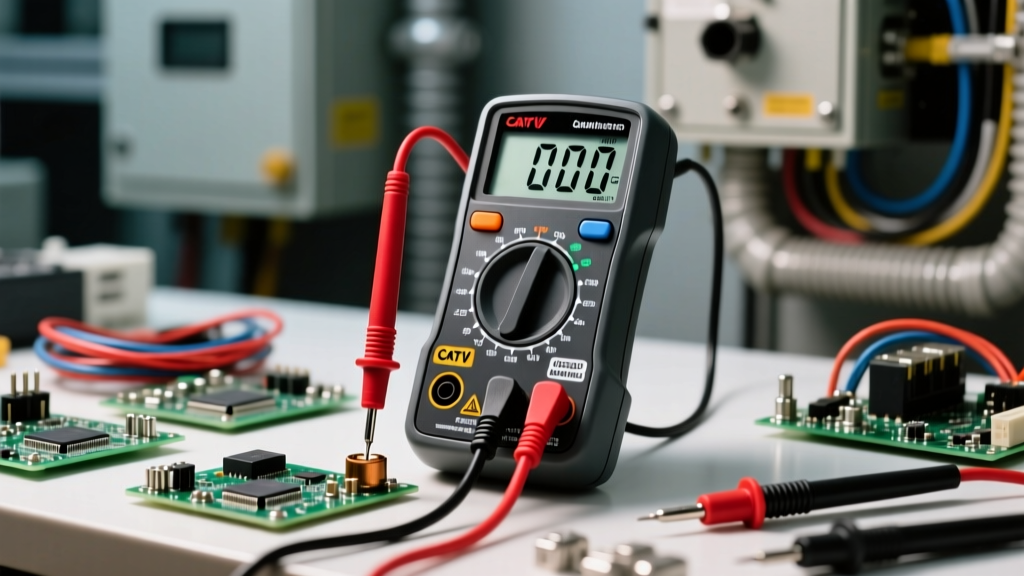
When you finally source a hard to find electronic component from a gray-market broker, you must verify its authenticity and functionality before soldering it into a high-value assembly. Here is the 2026 roundup of essential bench equipment for component verification.
1. Huntron Tracker 1000 (Signature Analysis)
The Huntron Tracker 1000 is an industry-standard curve tracer used for off-power signature analysis. By applying an AC signal to the pins of an IC and displaying the voltage-current (V-I) signature on an oscilloscope, you can compare a suspected counterfeit part against a known-good 'golden unit'. Counterfeit ICs (which are often sanded-down, cheaper die remarketed as premium parts) will exhibit distinctly different junction signatures on their I/O pins.
2. Smart Tweezers LCR-Reader MP
For verifying NOS passive kits, the LCR-Reader MP is indispensable. It automatically identifies resistors, capacitors, and inductors, measuring Equivalent Series Resistance (ESR) at 100 kHz. High ESR in a supposedly 'new' NOS ceramic or tantalum capacitor is an immediate red flag indicating moisture ingress or internal delamination.
3. Digital Microscopes with UV Illumination
A standard 10x-40x digital microscope (such as the Andonstar AD409 Pro) equipped with a UV light source is critical for inspecting IC packaging. Authentic manufacturers use specific epoxy compounds that fluoresce predictably under UV light. Furthermore, UV inspection reveals the 'ghosting' of sanded-off original text beneath the fake blacktopping layer.
Step-by-Step: Vetting a Gray Market Supplier
Before wiring funds to an overseas broker for a batch of allocating Xilinx Kintex-7 FPGAs, run them through this strict vetting framework endorsed by NASA's NEPP (NASA Electronic Parts and Packaging) program guidelines for counterfeit avoidance.
- Verify ERAI Membership: Check the broker's status on the ERAI portal. Membership requires adherence to strict quality and reporting standards.
- Request the CoC and Traceability: Demand the original Certificate of Conformance (CoC) and a chain of custody document tracing the parts back to the Original Component Manufacturer (OCM).
- Inspect Date Codes (DC): Cross-reference the Date Code on the IC packaging with the manufacturer's production logs. If a broker claims to have 'new' stock of a part that the OCM officially discontinued in 2018, the parts are either refurbished, pulls, or outright fakes.
- Mandate the Acetone Test: Require the supplier to perform an acetone rub test on a sample from the reel. Authentic laser etching will not smear when rubbed with an acetone-soaked cotton swab; painted counterfeit markings will dissolve instantly.
- Require X-Ray Inspection: For high-value BGA (Ball Grid Array) components, require X-ray images to verify internal wire bonding and lead frame geometry against the OCM's datasheet specifications.
FAQ: Navigating the Secondary Market
What is the safest way to search for obsolete parts across multiple brokers?
Use aggregator platforms like Octopart (now part of Nexar). Octopart's API pulls real-time inventory data from hundreds of franchised and independent distributors, allowing you to filter by 'In Stock' and cross-reference broker ratings before initiating a purchase.
Are 'pulled' components worth buying for DIY projects?
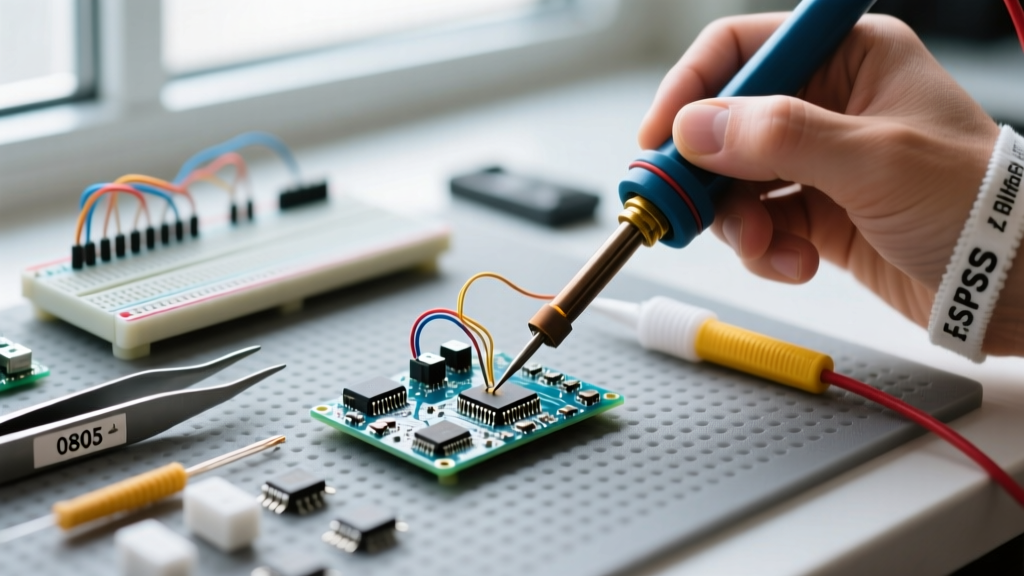
Yes, if priced correctly. 'Pulls' are components desoldered from decommissioned PCBs. They are highly reliable because they are guaranteed authentic (they survived the original manufacturing and operational life). However, expect degraded solderability on the leads. You must use a fiberglass scratch pen and fresh flux to re-tin the leads before through-hole or SMD installation.
How do I handle moisture sensitivity levels (MSL) on old ICs?
If you buy hard to find electronic components that have been stored in non-climate-controlled warehouses, assume the Moisture Barrier Bag (MBB) is compromised. Before running these ICs through a reflow oven, bake them at 125°C for 24 hours (per IPC/JEDEC J-STD-033) to drive out absorbed moisture and prevent the 'popcorn effect' during soldering.
Final Thoughts
Sourcing hard to find electronic components in 2026 is less about simply clicking 'add to cart' and more about acting as an investigator. By leveraging authorized post-manufacturing sources like Rochester Electronics for critical builds, utilizing surplus kits for prototyping, and arming your bench with signature analyzers and LCR meters, you can keep legacy hardware alive and push the boundaries of DIY electronics without falling victim to the counterfeit market.