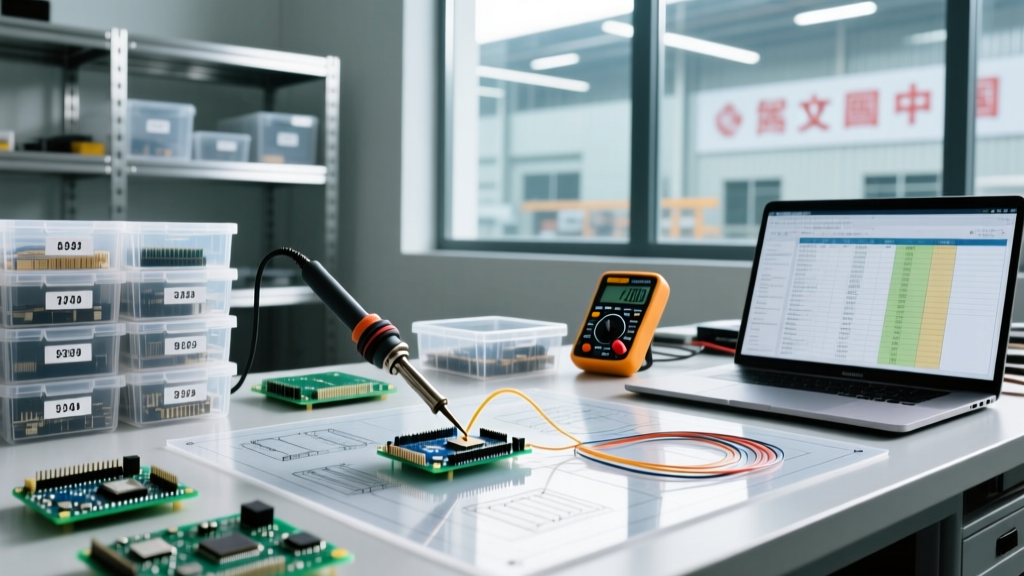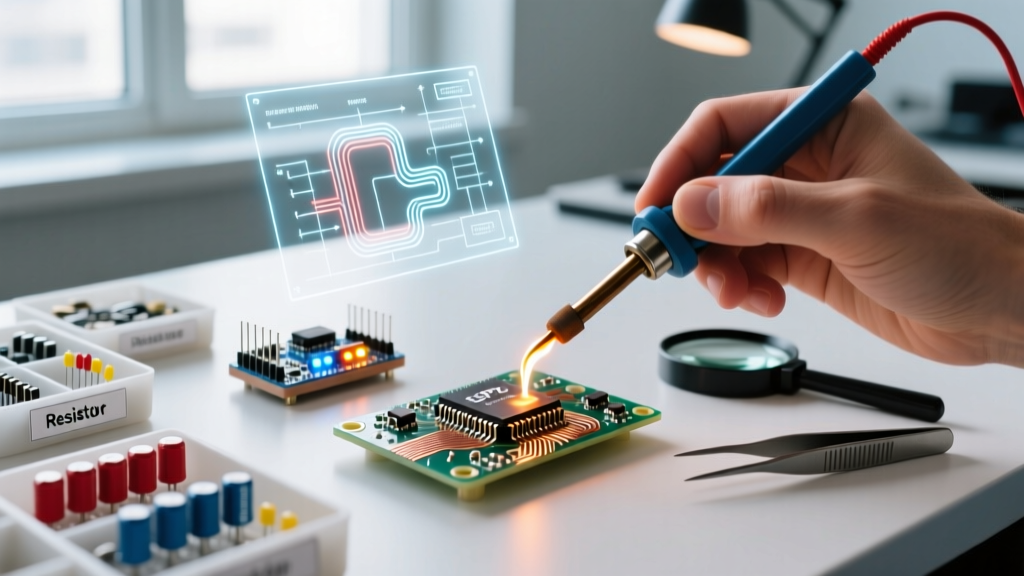

The 'Complete Kit' Myth: Do You Really Have All Electronic Components?
Every year, thousands of makers, engineering students, and DIY enthusiasts unbox a shiny new electronics starter kit, only to realize halfway through their first IoT or robotics project that they are missing a crucial logic-level MOSFET or a simple 10µF decoupling capacitor. The marketing promise of having 'all electronic components' in a single box is a compelling one, but as circuit designs shift toward 3.3V logic, USB-C power delivery, and high-frequency wireless protocols in 2026, the definition of a 'complete' kit has fundamentally changed.
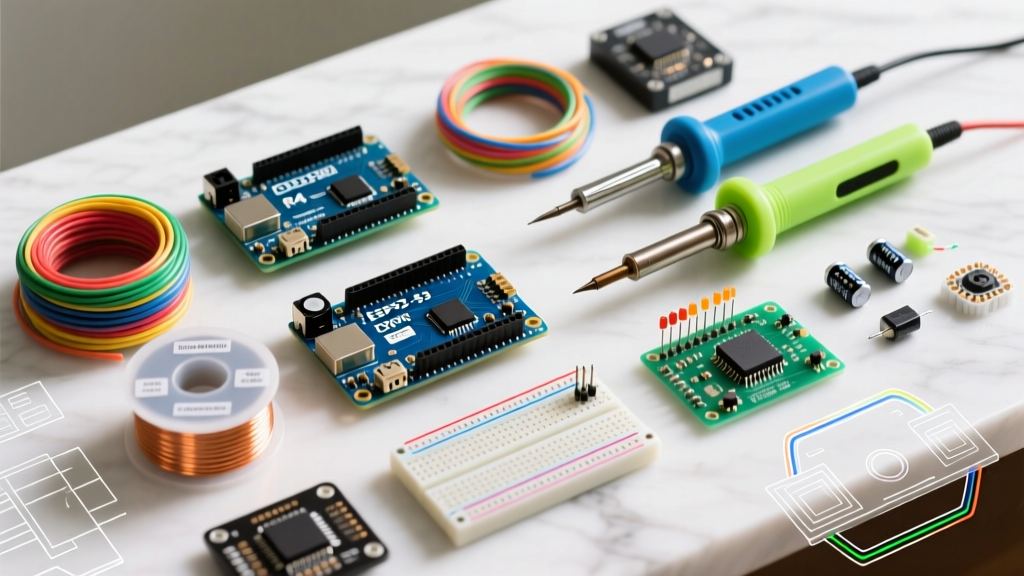
In this comprehensive roundup, we tear down three of the most popular component bundles on the market to evaluate their actual utility. We aren't just counting jumper wires; we are analyzing resistor tolerances, breadboard contact resistance, and microcontroller capabilities to determine which kit actually equips you for real-world prototyping.
Expert Insight: A truly comprehensive kit doesn't just offer breadth; it offers depth in critical areas. Having 500 carbon-film resistors is useless if your breadboard's internal clips exhibit 200mΩ of contact resistance, causing severe voltage drops in power-hungry motor circuits.
The 2026 Contenders: Deep-Dive Kit Analysis
1. Elegoo Super Starter Kit (UNO R4 Minima Edition)
Target Price: $69.99
Best For: Beginners transitioning from basic blink sketches to intermediate sensor integration.
Elegoo has dominated the budget space for years, and their 2026 refresh centers around the Arduino UNO R4 Minima. This board is a massive leap forward, featuring a 48MHz Arm Cortex-M4 processor, a 14-bit DAC, and an 8x12 LED matrix. The accompanying component kit includes an 830-point solderless breadboard, a relay module, an L293D motor driver, and a standard 5V LCD1602.
The Good: The inclusion of the UNO R4 means you are getting native USB-C and a 3.3V logic option, which is critical for modern sensors. The passive component assortment includes 1/4W metal-film resistors with 1% tolerance—a rare and welcome upgrade from the noisy 5% carbon-film resistors found in older kits.
The Missing Links: Does it contain all electronic components you need? No. It severely lacks high-current switching components. The L293D motor driver is an ancient bipolar design that drops nearly 2V across its internal H-bridge. If you are building a 2026 robotics project with modern brushless DC motors or high-torque servos, you will immediately need to order external logic-level MOSFETs (like the IRLZ44N) and modern buck converters.
2. MakerHawk ESP32-S3 IoT & Sensor Bundle
Target Price: $115.00
Best For: Intermediate makers focused on Wi-Fi 6, Bluetooth 5.0, and edge-computing sensor networks.
As the Internet of Things matures, microcontrollers need serious wireless chops. The MakerHawk bundle is built around the ESP32-S3-WROOM-1 module, boasting dual-core Xtensa LX7 processors and native AI instruction extensions. The kit leans heavily into environmental and spatial sensing, including a BME280 (temperature/humidity/pressure), an MPU6050 6-axis gyroscope, and a 1.3-inch IPS TFT display.
The Good: The sensor selection is highly curated for modern edge-AI and environmental monitoring. The BME280 is provided on a breakout board with proper I2C pull-up resistors already populated, saving you from the floating-pin headaches common in raw component bins.
The Missing Links: This kit assumes you already have a robust power supply infrastructure. It lacks linear regulators (like the LM7805 or LM317), basic optocouplers for galvanic isolation, and a comprehensive diode assortment. If your IoT node needs to interface with legacy 12V or 24V industrial equipment, this kit will leave you stranded without external isolation components.
3. Digi-Key Engineering Fundamentals Lab
Target Price: $245.00
Best For: Serious engineering students, professional prototypers, and advanced DIYers.
When you need to source all electronic components for a professional-grade home lab, curated distributor kits are the gold standard. Digi-Key's Engineering Fundamentals Lab is less about a single microcontroller and more about raw, unadulterated component theory. It includes extensive 7400-series and 4000-series logic ICs (74HC595 shift registers, CD4017 decade counters), a massive assortment of ceramic and electrolytic capacitors, and precision potentiometers.
The Good: The sheer depth of active and passive components. You get actual analog building blocks: LM358 dual op-amps, NE555 timers, and LM386 audio amplifiers. Furthermore, the tooling included—such as a high-quality flush cutter and precision SMD tweezers—far outlasts the fragile tools found in budget kits.
The Missing Links: It does not include a primary microcontroller board. You are expected to bring your own development board or build a raw MCU circuit from scratch on a perfboard.
Component Matrix: What You Actually Get
To visualize the gaps in these kits, we mapped their inventory against the core requirements of a 2026 electronics workbench.
| Category | Elegoo UNO R4 Kit | MakerHawk ESP32-S3 | Digi-Key Fundamentals Lab |
|---|---|---|---|
| Microcontroller | UNO R4 Minima (Cortex-M4) | ESP32-S3-WROOM-1 (Dual-Core) | None (Raw ICs only) |
| Resistor Assortment | 600+ (1% Metal Film) | 300+ (5% Carbon Film) | 1500+ (1% Metal Film, E24 series) |
| Capacitors | Basic Ceramic & Electrolytic | Minimal Decoupling Caps | Comprehensive (Film, Ceramic, Tantalum) |
| Active ICs | L293D, 74HC595, NE555 | BME280, MPU6050, Voltage Regulators | Op-Amps, Logic Gates, Timers, Optocouplers |
| Power Management | Basic 5V Relay Module | USB-C Breakout, LDOs | LM317, LM78xx series, Bridge Rectifiers |
| Prototyping Base | 830-point Breadboard | 400-point Breadboard (x2) | 830-point + Copper Perfboards |
The Hidden Failure Modes in Budget Kits
Having a box that claims to contain all electronic components is meaningless if the components fail under real-world conditions. Here are the specific failure modes we test for when reviewing component kits:
- Breadboard Contact Resistance: According to prototyping guidelines highlighted by SparkFun's engineering tutorials, standard solderless breadboards are rated for about 1A. However, budget kits often use thin, low-grade metal clips. We've measured contact resistances exceeding 150mΩ in cheap kits. If you push 800mA through a 5V rail, that resistance causes a 0.12V drop and localized heating, which can melt the plastic housing and permanently ruin the breadboard.
- Jumper Wire Strand Fraying: Most kits include 28AWG stranded jumper wires with pre-crimped Dupont connectors. In budget kits, the crimp is often applied without a ferrule, leading to copper strands fraying after 10-15 insertions. This creates high-resistance connections and intermittent shorts. Always inspect the crimps on your jumper wires before trusting them in a 3.3V I2C bus, where signal integrity is paramount.
- Electrolytic Capacitor ESR: Beginner kits often include no-name electrolytic capacitors with high Equivalent Series Resistance (ESR). If you use these in a switching power supply or a high-frequency audio filter, the high ESR will cause the capacitor to overheat and fail prematurely. For power rails, always supplement your kit with low-ESR Panasonic or Nichicon capacitors.
Verdict: Sourcing the Ultimate Component Arsenal
If your goal is to ensure your lab has all electronic components necessary to tackle any 2026 project, no single $70 kit will suffice. The most cost-effective and technically sound strategy is a hybrid approach.
Purchase the Elegoo UNO R4 Kit for the modern microcontroller, the high-quality metal-film resistors, and the basic prototyping hardware. Then, allocate an additional $50 to order a dedicated MOSFET and Power Management assortment from a reputable distributor like Digi-Key or Mouser. Specifically, stock up on IRLB8721 logic-level MOSFETs, TPS5430 step-down buck converters, and PC817 optocouplers. This combination bridges the gap between digital logic and real-world power actuation, giving you a truly complete, professional-grade DIY laboratory.
Frequently Asked Questions
Q: Do I need SMD components in my starter kit?
A: For 90% of beginners and intermediate hobbyists, through-hole (THT) components are superior for breadboard prototyping. However, as 2026 designs shrink, learning to solder 0805 SMD components is highly recommended. Consider buying a separate SMD tweezers and solder paste kit once you master THT.
Q: Why do modern kits focus on 3.3V instead of 5V?
A: The industry has shifted to 3.3V logic to reduce power consumption and accommodate modern lithium-ion battery topologies (which range from 3.0V to 4.2V). Connecting a 5V Arduino output directly to a 3.3V ESP32 or modern sensor will permanently destroy the silicon via gate-oxide breakdown.
Q: What is the most overlooked component in starter kits?
A: Flyback diodes (like the 1N4007). Whenever you switch an inductive load (relays, solenoids, DC motors) using a transistor or MOSFET, the collapsing magnetic field generates a massive reverse voltage spike. Without a flyback diode to clamp this spike, you will instantly fry your microcontroller's GPIO pins.