
Why Professional Catalogs Beat Amazon Kits
Every electronics hobbyist starts with the same ritual: buying a generic sensor kit from Amazon or AliExpress. While these kits are great for blinking your first LED, they quickly become a liability. The included components often lack datasheets, feature unmarked ICs, and suffer from poor manufacturing tolerances. As you transition from copying tutorials to designing your own printed circuit boards (PCBs) in 2026, you must learn to navigate a professional electronic components catalog.
A professional catalog—hosted by authorized distributors like Digi-Key, Mouser, or Newark—provides guaranteed authentic parts, complete parametric data, and real-time inventory tracking. However, staring at a database of over 15 million discrete components can induce immediate decision paralysis. This beginner tutorial will decode the interface, teaching you how to use parametric filters, interpret lifecycle statuses, and avoid expensive packaging traps.
The 'Big Three' Authorized Distributors
Before diving into search techniques, you need to know where to look. While dozens of brokers exist, authorized distributors are the only way to guarantee you are not receiving counterfeit silicon—a massive issue in the post-2024 supply chain landscape. For foundational reference on component authenticity and grading, industry hubs like Components101 and Electronics Notes offer excellent baseline primers on identifying genuine versus cloned ICs.
| Distributor | Catalog Size (Approx.) | Best Feature for Beginners | Free Shipping Threshold (US) |
|---|---|---|---|
| Digi-Key | 15M+ Parts | Most intuitive parametric filters; extensive technical article library. | $60.00 |
| Mouser | 12M+ Parts | Excellent 'New Product' discovery; integrates well with CAD tools. | $50.00 |
| Newark (Avnet) | 8M+ Parts | Strong industrial/automation focus; great for bulk wire and enclosures. | $50.00 |
Step-by-Step: Parametric Search for a Logic-Level MOSFET
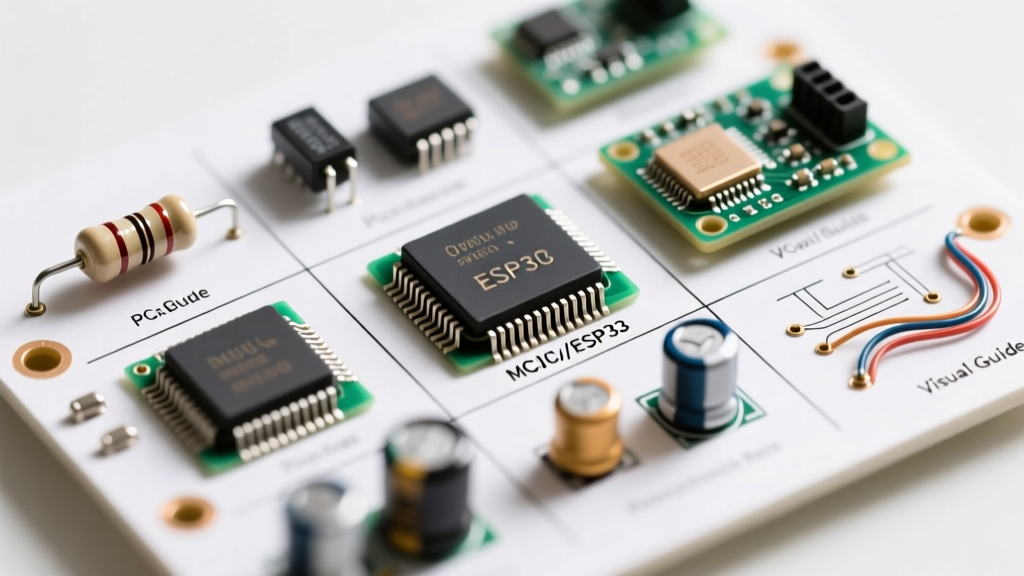
The most powerful tool in any electronic components catalog is the parametric search. Instead of searching by a vague keyword like 'transistor', you filter by exact electrical characteristics. Let us walk through a real-world scenario: you need an N-Channel MOSFET to switch a 12V motor using a 3.3V ESP32 microcontroller.
Step 1: Navigate to the Category Tree
Do not use the main search bar. Instead, navigate the category tree: Discrete Semiconductor Products > Transistors (BJT) - Single, Pre-Biased / FETs, MOSFETs - Single. Select 'MOSFETs - Single'.
Step 2: Apply the Critical Filters
Once the table loads, look at the filter panel on the left. Check the boxes for these specific parameters:
- Channel Type: N-Channel
- Drain to Source Voltage (Vdss): 30V (Must be higher than your 12V motor supply to handle inductive spikes).
- Continuous Drain Current (Id): 5A (Minimum for your motor stall current).
- Drive Voltage (Max Rds On): 4.5V. This is the most critical filter for beginners. If you select 10V, the MOSFET will not fully turn on with a 3.3V logic signal, leading to severe overheating and thermal failure.
- Package / Case: TO-220-3 (Through-hole, easy to solder on a breadboard or perfboard).
Step 3: Sort and Select
Sort the results by 'Quantity Available' descending, then by 'Unit Price' ascending. You will likely see the IRLZ44N (Infineon) or the STP16NF06L (STMicroelectronics). Both are logic-level, through-hole, and cost roughly $1.10 to $1.50 per unit in single quantities. Add one to your cart.
Decoding the Datasheet from the Catalog Link
Next to every valid part number in the catalog is a small PDF icon. This links directly to the manufacturer's datasheet. Beginners often ignore this, relying instead on third-party blog posts. The datasheet is the ultimate source of truth.
Pro-Tip: Always check the 'Absolute Maximum Ratings' table on page 2 or 3 of the datasheet. If your circuit operates at 14V, and the Absolute Maximum Vds is 15V, you are operating too close to the edge. A 20% safety margin is the industry standard for reliable DIY and commercial designs.
Furthermore, look for the Typical Application Circuit near the end of the document. For a MOSFET, this will remind you to place a 10kΩ pull-down resistor between the Gate and Source pins to prevent the motor from spinning out of control while the ESP32 is booting up and its GPIO pins are floating.
Packaging Types: Don't Get Burned by Cut Tape Fees
One of the most confusing aspects of an electronic components catalog for beginners is the 'Packaging' dropdown. Selecting the wrong packaging can ruin your budget or leave you with components you cannot physically use.
Through-Hole vs. Surface Mount Packaging
- Tube: Standard for through-hole ICs (like DIP-8 op-amps) and larger TO-220 transistors. Usually sold in quantities of 50.
- Tray: Used for large, multi-pin surface mount ICs (like QFP-64 microcontrollers). Protects fragile pins during shipping.
- Tape & Reel (TR): A continuous spool of components meant for automated pick-and-place machines. Minimum order quantities (MOQ) are usually 2,500 to 4,000 units.
- Cut Tape (CT): The catalog warehouse physically cuts a short strip from a full reel. This is what you want for SMD resistors, capacitors, and small SOT-23 transistors.
The Hidden Cost of Cut Tape
Distributors like Digi-Key charge a $0.25 cut-tape fee per unique part number. If you order 10 different values of 0603 resistors, you will pay an extra $2.50 just for the labor of cutting the tape. Actionable advice: Consolidate your BOM (Bill of Materials). Instead of buying five different resistor values on cut tape, buy a single 'Resistor Kit' from a catalog vendor, which often costs $30 and includes 10,000 sorted components, saving you massive amounts of time and cut-tape fees.
Lifecycle Status: Avoiding the 'NRND' Trap
When viewing a component's detail page, locate the Product Status or Lifecycle badge. This dictates the long-term viability of your project.
- Active: The part is in full production. Safe to use.
- NRND (Not Recommended for New Designs): The manufacturer is phasing this part out. It is still available to buy today, but if you design a PCB around it, you will not be able to reorder it in two years. Avoid NRND parts for new projects.
- Obsolete: No longer manufactured. You can only buy leftover stock from third-party brokers, which carries a high risk of counterfeit parts.
- Last Time Buy (LTB): The final window to order before the factory shuts down the production line. The deadline is usually strictly enforced.
3 Fatal Beginner Mistakes in the Catalog
Even with a grasp of the interface, beginners frequently make these specific errors when finalizing their cart:
1. Confusing Quiescent Current with Output Current
When searching for a voltage regulator, beginners often filter by 'Output Current' (e.g., 500mA). However, for battery-powered IoT projects, you must also check the Quiescent Current (Iq). A standard LM7805 has an Iq of ~5mA, which will drain a CR2032 coin cell in days. By filtering for an Iq of < 5µA, you will find modern LDOs like the MCP1700, extending battery life to months.
2. Ignoring RoHS Compliance
In 2026, nearly all professional manufacturing requires RoHS 3 compliance (Restriction of Hazardous Substances), meaning the parts are lead-free. While lead-free solder requires slightly higher iron temperatures (around 350°C / 660°F compared to 315°C for leaded), you should always filter for 'RoHS Compliant: Yes' to ensure you are getting modern, legally compliant components, especially if you plan to sell your DIY kits commercially.
3. Buying the Wrong Footprint Variant
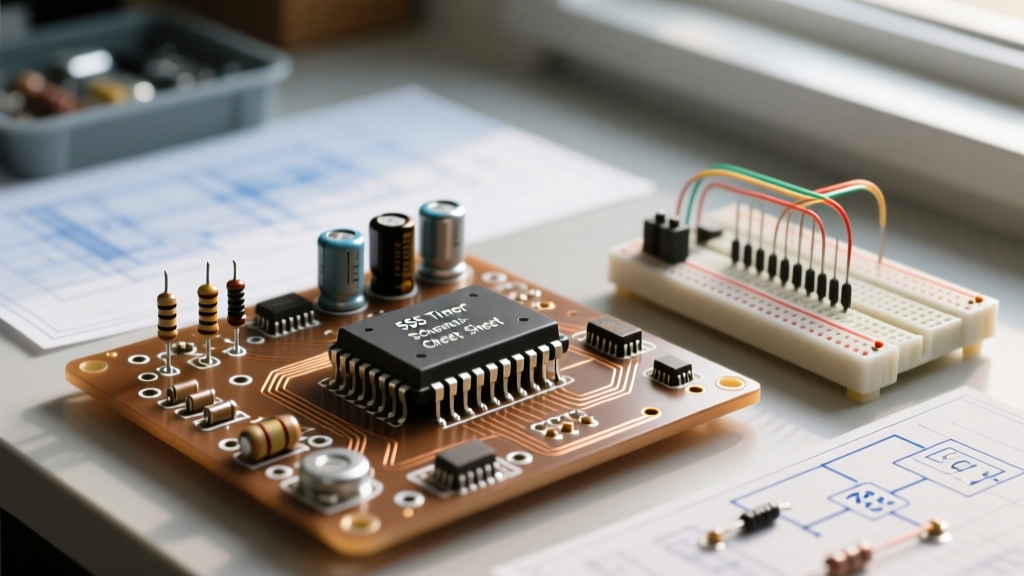
A single IC might have 15 different package variants listed in the catalog. For example, the ubiquitous 555 Timer is available in PDIP-8 (through-hole breadboard), SOIC-8 (surface mount), and VSSOP-8 (microscopic surface mount). Always verify the Package / Case column matches your physical soldering capabilities and PCB footprint before clicking 'Add to Cart'.
Final Thoughts on Building Your BOM
Mastering the electronic components catalog is a rite of passage. It shifts your mindset from 'making things work on a desk' to 'engineering reliable, reproducible hardware.' Start your next project by opening Digi-Key's main catalog, utilize the parametric filters to find the exact silicon you need, read the datasheet, and verify your packaging. Your future self—and your PCB assembler—will thank you.