
Defining Insulators of Electricity in the NEC
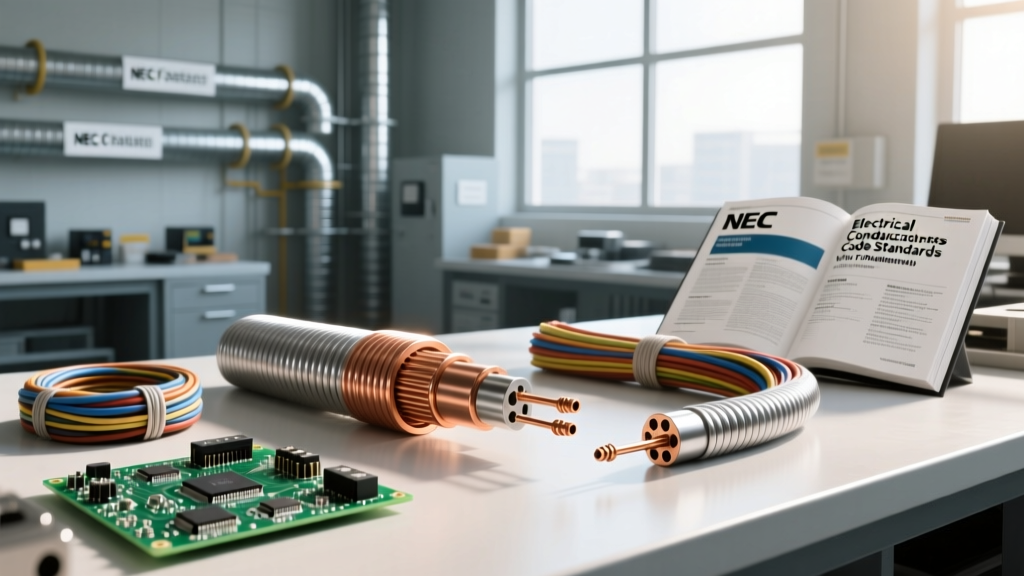
When electrical engineers and electricians discuss the insulators of electricity, they are generally referring to two distinct categories governed by the National Electrical Code (NEC) and Underwriters Laboratories (UL): dielectric wire insulation and physical insulator hardware. While both serve the fundamental purpose of preventing unwanted current flow, their code requirements, material sciences, and failure modes differ drastically.
According to the NFPA 70 (NEC), insulation must be rated for the specific voltage, temperature, and environmental conditions of the installation. A failure to match the insulator to the environment—such as using standard PVC in a high-temperature wet location—remains one of the leading causes of arc faults and ground faults in commercial infrastructure.
Wire Insulation Materials: UL and NEMA Standards
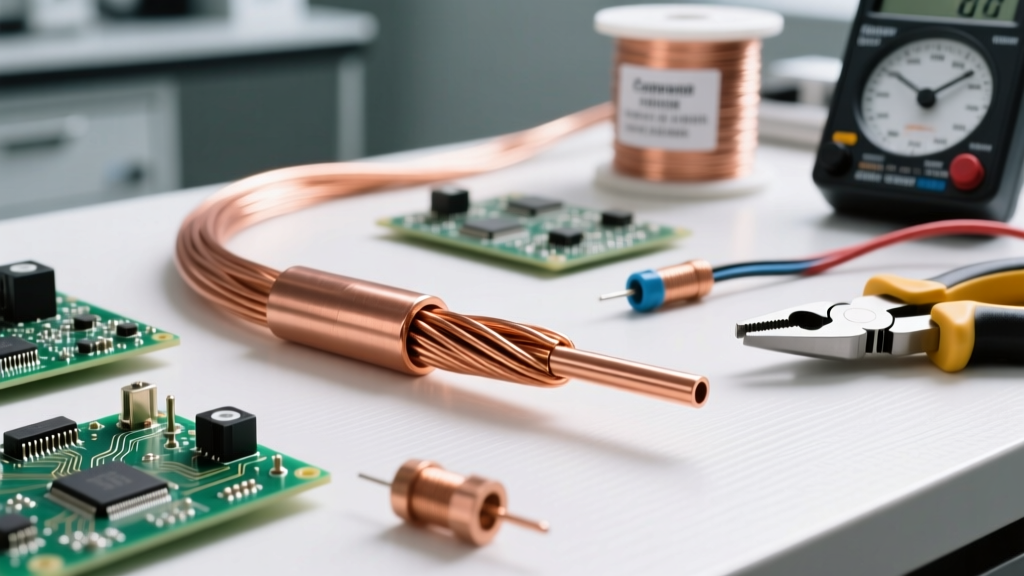
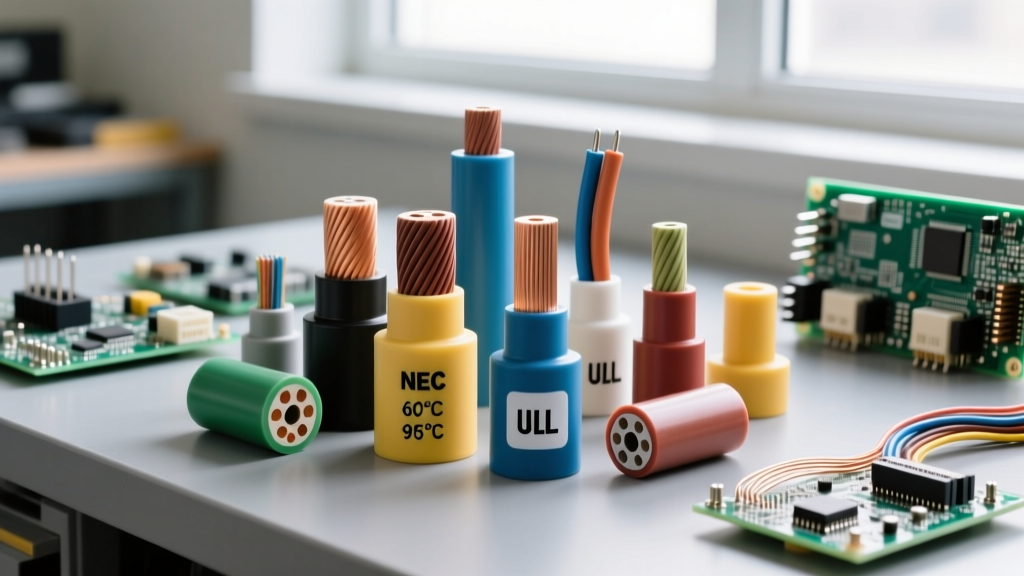
Wire insulation is the primary dielectric barrier keeping current confined to the conductor. The National Electrical Manufacturers Association (NEMA) and UL dictate strict standards for these materials. The choice of insulator dictates the ampacity derating, bend radius, and lifespan of the circuit.
| Insulation Material | Common NEC Designation | Max Temperature Rating | Dielectric Strength (kV/mm) | Primary Application |
|---|---|---|---|---|
| Polyvinyl Chloride (PVC) | THHN / THWN-2 | 90°C (Dry) / 75°C (Wet) | ~40 kV/mm | General branch circuit wiring, conduit pulls |
| Cross-Linked Polyethylene (XLPE) | XHHW-2 | 90°C (Dry & Wet) | ~50 kV/mm | Industrial feeders, underground direct burial |
| Ethylene Propylene Rubber (EPR) | RHW-2 | 90°C (Dry & Wet) | ~30 kV/mm | High-flexibility environments, mining cables |
| Polytetrafluoroethylene (PTFE) | Teflon (Specialty) | 250°C | ~60 kV/mm | Aerospace, high-temp industrial sensors |
Failure Modes: Water Treeing and Thermal Degradation
Understanding how the insulators of electricity fail is critical for preventive maintenance. In underground medium-voltage XLPE cables, water treeing is a primary failure mode. This occurs when moisture and electrical stress combine to form micro-voids in the polymer matrix, eventually bridging the gap to the ground shield and causing a catastrophic fault. Modern codes now mandate Tree-Retardant XLPE (TR-XLPE) for direct-burial medium-voltage applications.
Conversely, thermoplastic insulators like PVC suffer from plasticizer migration. Over decades of thermal cycling, the chemical plasticizers that keep PVC flexible evaporate or leach out, leaving the insulation brittle. When subjected to mechanical vibration or thermal expansion, brittle PVC cracks, exposing bare copper and creating immediate short-circuit hazards.
NEC 310.10: Temperature Limitations and Ampacity Derating
The insulators of electricity are the limiting factor for conductor ampacity. NEC Section 310.10 dictates that the temperature rating of the wire insulation must be selected to withstand the ambient temperature plus the heat generated by the conductor's resistance. If a 90°C rated XHHW-2 wire is pulled through a raceway located above a hot ceiling space where the ambient temperature reaches 110°F (43°C), the NEC requires a temperature correction factor to be applied.
Furthermore, when terminating conductors at lugs, breakers, or busbars, the lowest temperature rating in the entire circuit loop governs the final allowable ampacity. Even if you utilize a 90°C insulator for the wire, if the termination lug is only rated for 75°C, the ampacity must be calculated using the 75°C column of NEC Table 310.16. Ignoring this rule leads to thermal degradation of the termination hardware and eventual insulation meltdown at the connection point.
Physical Insulators for Service Drops and Busbars
Beyond wire jackets, the NEC strictly regulates the physical insulators of electricity used to support and isolate bare conductors, busbars, and service drops. NEC Article 230.27 explicitly requires that service-drop conductors be securely anchored to the building using insulators rated for the mechanical load and the system voltage.
Historically, ceramic and glass were the standard materials for standoff insulators due to their high dielectric strength and resistance to UV degradation. However, modern 600V and medium-voltage switchgear heavily utilize epoxy resin and silicone rubber polymer insulators. These synthetic insulators offer superior hydrophobic properties, meaning water beads up and rolls off rather than forming a continuous conductive film across the surface.
Clearance, Creepage, and Pollution Degrees
When designing or inspecting busbar supports and standoff insulators, electrical codes and international standards like IEC 60664-1 focus on two critical metrics:
- Electrical Clearance: The shortest straight-line distance through the air between two conductive parts. This dictates the insulator's height.
- Creepage Distance: The shortest path along the surface of the insulating material. Insulators feature deep skirts or ribs specifically to maximize creepage distance, preventing surface tracking in polluted or humid environments.
In heavy industrial environments with conductive dust (Pollution Degree 3 or 4), the required creepage distance on an insulator can be up to three times the required electrical clearance. Ignoring this ratio guarantees eventual surface flashover.
NEC Conductor Identification and Environmental Ratings
The insulators of electricity also serve a vital secondary function: visual identification. NEC Section 310.120 mandates strict color-coding for wire insulation to ensure safety during maintenance and troubleshooting.
- Grounded (Neutral) Conductors: Must be insulated in continuous white or gray. For larger conductors (4 AWG and up), wrapping the insulation with white tape at the terminations is code-compliant.
- Equipment Grounding Conductors (EGC): Must be bare, or covered in continuous green or green-with-yellow-stripes insulation.
- Ungrounded (Hot) Conductors: Can be any color except white, gray, or green. Standard practice dictates black, red, and blue for 3-phase systems.
Furthermore, the environmental rating of the insulator dictates where it can be legally installed. A common code violation is using THHN (dry-rated) in a wet location like an underground conduit. The insulator must carry a W designation (e.g., THWN-2 or XHHW-2) to withstand prolonged moisture exposure without degrading its dielectric properties.
Field Testing Insulation Integrity (IEEE 43)
Visual inspection is insufficient for verifying the health of wire insulation. To quantify the dielectric integrity of the insulators of electricity in motors, generators, and heavy feeders, technicians rely on IEEE Standard 43. This standard outlines the procedure for Insulation Resistance (IR) testing using a Megohmmeter.
IEEE 43-2013 establishes a minimum acceptable IR value based on the vintage of the equipment and the applied DC test voltage. A general rule of thumb for modern windings is the 1 Megohm per 1000V rule, plus an additional 1 Megohm. However, IEEE 43 recommends a minimum of 100 Megohms for most modern AC windings rated below 1kV.
Crucially, insulation resistance is highly temperature-dependent. A megger reading taken when a motor is cold (20°C) will be artificially high. The code requires technicians to apply a temperature correction factor, normalizing the reading to a standard 40°C baseline, to accurately track the degradation of the insulator over time. Failing to temperature-correct these readings leads to false positives, masking imminent insulation failures.
The Polarization Index (PI) and Dielectric Absorption
For a deeper diagnostic analysis of the insulators of electricity, IEEE 43 utilizes the Polarization Index (PI). The PI is the ratio of the 10-minute IR reading to the 1-minute IR reading. A healthy, dry, and clean insulation system will exhibit a PI of 2.0 or greater. This occurs because healthy dielectric materials slowly absorb the electrical charge (dielectric absorption), causing the resistance reading to climb over time. Conversely, a PI of less than 1.0 indicates brittle, moist, or heavily contaminated insulation that requires immediate replacement or varnish treatment.
For comprehensive manufacturing specifications, the NEMA WC 70 standard provides exhaustive testing parameters for power cables, including partial discharge testing and accelerated water treeing tests, ensuring the insulators of electricity meet rigorous lifecycle expectations before they ever reach a job site.