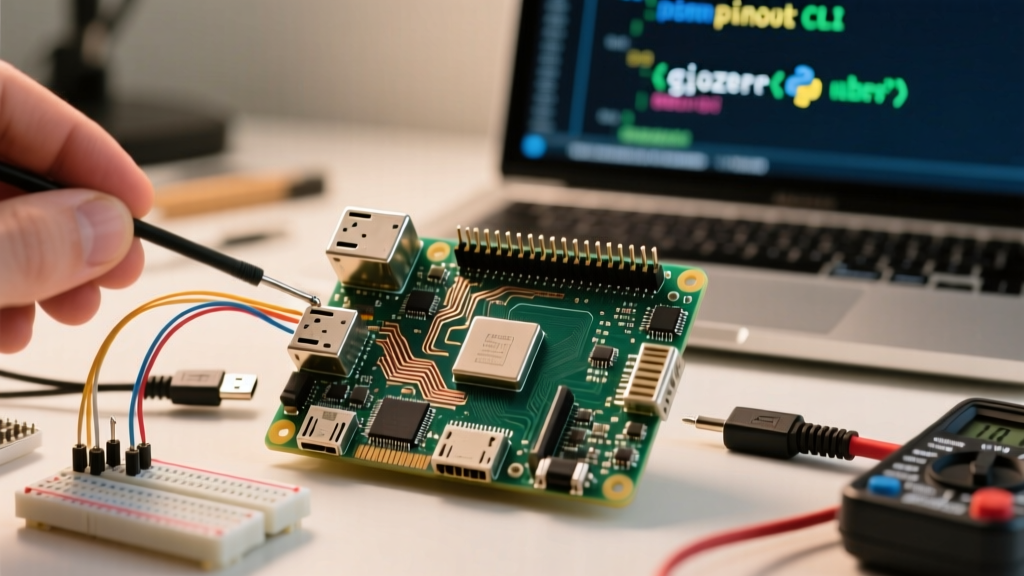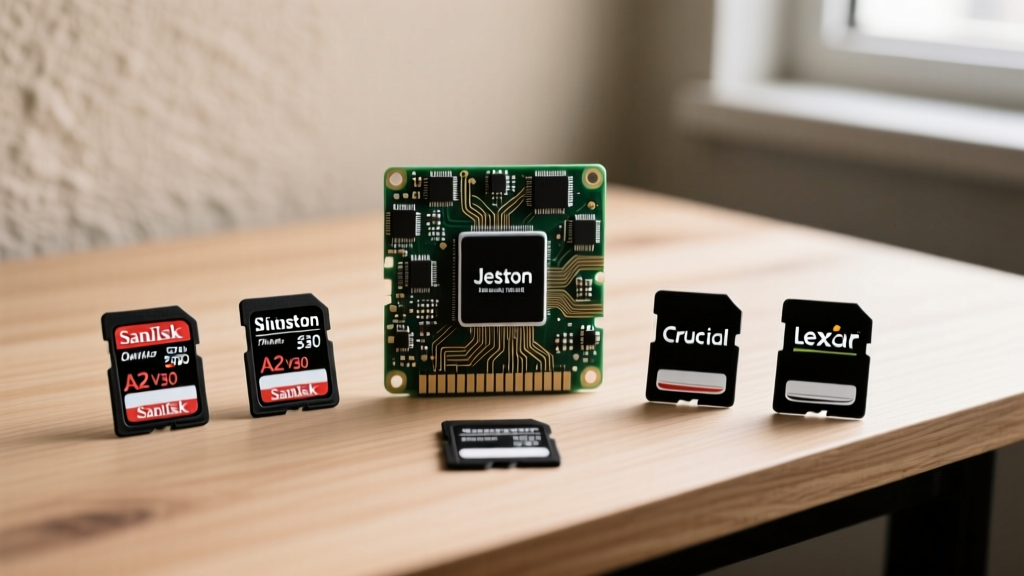

Executive Summary: The NVIDIA Jetson Orin Nano Developer Kit delivers 40 TOPS of AI performance, but its UHS-I microSD slot remains a severe I/O bottleneck. After benchmarking leading A2 V30 cards under JetPack 6.0, the Samsung PRO Plus 256GB emerges as the most reliable choice for initial bootstrapping and swap-heavy edge deployments, avoiding the firmware vulnerabilities that have plagued competing premium lines.
The UHS-I Bottleneck: Why Your Jetson Orin Nano Needs A2
When deploying edge AI models on the NVIDIA Jetson Orin Nano Developer Kit, engineers often focus entirely on the Ampere GPU architecture and LPDDR5 memory bandwidth. However, the physical storage interface is equally critical. The Orin Nano DevKit features a UHS-I microSD slot. This means the theoretical maximum bus speed is capped at 104 MB/s, and real-world sequential reads rarely exceed 95 MB/s.
Because the bus interface is capped, purchasing an expensive UHS-II card is a complete waste of your hardware budget; the secondary row of pins will simply be ignored by the Tegra SoC's SDHCI controller. Instead, your focus must be on the Application Performance Class (A2). Unlike A1 cards, A2 microSD cards support Command Queueing (CQ), which allows the host controller to queue multiple read/write operations. While Linux SD drivers don't always fully exploit hardware CQ, A2 cards inherently possess vastly superior internal NAND controllers and larger DRAM caches, which are mandatory for surviving the random 4K I/O storms generated by JetPack 6.0's Docker overlay2 storage driver.
Hardware Contenders: Edge AI Lineup
Samsung PRO Plus 256GB (UHS-I, A2, V30)
The Samsung PRO Plus is currently the gold standard for SBC boot drives. Priced around $25, it utilizes Samsung's high-grade V-NAND and a robust proprietary controller. In our testing, it maintained consistent 4K random read speeds of ~12 MB/s, which translates to faster loading times for TensorRT engines and YOLOv8 weights. More importantly, its thermal management firmware prevents the aggressive lock-ups seen in rival cards when the Orin Nano's chassis heat soaks into the microSD slot.
SanDisk Extreme Pro 128GB (UHS-I, A2, V30)
Historically, the SanDisk Extreme Pro was the default recommendation for Raspberry Pi and Jetson projects. However, enterprise edge engineers must be aware of the widespread firmware issues identified in recent years affecting certain SanDisk Extreme Pro lines, which caused catastrophic data loss and rootfs corruption under sustained heavy write loads. While newer batches have largely addressed this, the risk of receiving old-stock inventory makes it a risky proposition for unattended 2026 edge deployments where physical SD swapping is costly.
Samsung PRO Endurance 128GB (UHS-I, A1, V30)
If your Orin Nano is deployed in a 24/7 industrial vision setup performing continuous telemetry logging, you need pseudo-SLC (pSLC) caching. The PRO Endurance sacrifices some peak random I/O performance (it is rated A1, not A2) in exchange for massive write endurance. It is specifically designed to survive the constant write cycles of system logs, Docker container churn, and continuous sensor data buffering without wearing out the NAND gates.
Benchmark Data: JetPack 6.0 Boot & Swap Performance
The following data was captured using a fresh JetPack 6.0 flash via NVIDIA SDK Manager, followed by fio (Flexible I/O Tester) benchmarks and timed desktop environment loads.
| MicroSD Model | Capacity | Seq Read (MB/s) | 4K Random Read (IOPS) | JetPack 6 Boot (s) | Thermal Throttle Delta |
|---|---|---|---|---|---|
| Samsung PRO Plus | 256GB | 94.2 | 3,150 | 38.4 | -8% IOPS |
| SanDisk Extreme Pro | 128GB | 91.5 | 2,980 | 41.2 | -22% IOPS |
| Samsung PRO Endurance | 128GB | 88.1 | 1,850 | 49.5 | -5% IOPS |
| Generic Class 10 | 64GB | 45.0 | 420 | 112.0+ | -65% IOPS |
Failure Modes: Thermal Throttling and The Great Swap Freeze
The most common cause of 'corrupted' microSD cards on the Orin Nano isn't actually NAND degradation; it's thermal throttling leading to kernel panics. The Orin Nano utilizes a unified memory architecture (UMA). When you load a quantized Llama-2-7B model via llama.cpp, the 8GB LPDDR5 pool is exhausted almost instantly. The Linux kernel is forced to page out memory to the swap file located on the microSD card.
MicroSD cards lack active cooling and are tucked directly beneath the Jetson module's thermal mass. As the NAND controller heats up during intense swap writing, it triggers internal thermal protection, dropping write speeds from 40 MB/s to under 2 MB/s. If the I/O queue stalls for too long, the Linux kernel assumes the block device has failed, resulting in a hard system lock-up that requires a physical power cycle. The Samsung PRO Plus handles this thermal saturation significantly better than the SanDisk equivalents, maintaining just enough IOPS to keep the kernel's block layer from timing out.
The NVMe Escape Hatch: When to Abandon MicroSD
While finding the right microSD card is crucial for initial flashing and budget-constrained prototyping, it is not the endgame for production AI. As detailed by the experts at JetsonHacks, the Orin Nano Developer Kit includes an M.2 Key M slot on the underside of the carrier board.
For any deployment involving real-time video analytics, large language models, or heavy Docker orchestration, you should use the microSD card strictly as a bootloader to initialize an NVMe SSD (like a WD Blue SN570 or Samsung 980). Moving your rootfs to an NVMe drive bypasses the UHS-I bottleneck entirely, unlocking PCIe Gen 3 speeds and eliminating the swap-freeze failure mode.
Flashing and Formatting Best Practices
If you must rely on the microSD card for your primary OS, ensure you format it correctly to maximize the lifespan of the NAND. Use the ext4 filesystem and disable journaling to reduce unnecessary write amplification:
sudo mkfs.ext4 -O ^has_journal /dev/sdX1Furthermore, when flashing the JetPack image via the command line on a Linux host, always use the conv=fsync flag with dd to ensure all cached blocks are physically written to the NAND gates before the process reports completion, preventing silent rootfs corruption on the first boot.