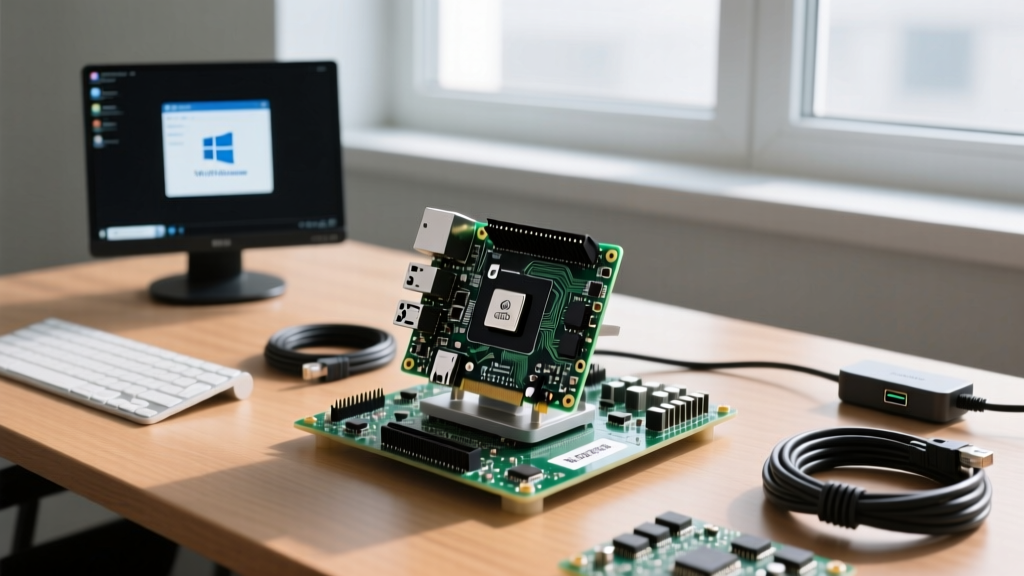

Configuring a reliable Raspberry Pi remote desktop environment is no longer as simple as enabling a single toggle in the legacy configuration menu. With the transition to Debian Bookworm and the mandatory shift from X11 to the Wayland display server protocol, the underlying mechanics of how graphical sessions are captured, compressed, and transmitted over the network have fundamentally changed. Whether you are deploying a headless Home Assistant dashboard, a remote coding station, or a digital signage controller, choosing the right operating system and remote desktop protocol (RDP, VNC, or proprietary) is critical for maintaining low latency and high frame rates.
The Wayland vs. X11 Dilemma in Modern Pi OS
For years, the Raspberry Pi remote desktop ecosystem relied heavily on X11-based VNC servers like RealVNC and TigerVNC. These tools worked by scraping the X server's framebuffer. However, Raspberry Pi OS Bookworm defaults to the Wayland compositor (specifically wayfire on Pi 4 and Pi 5). Wayland's security model isolates application windows, preventing unauthorized screen scraping. Consequently, legacy X11 VNC servers will either fail to start or capture a black screen.
To achieve a functional remote desktop on modern Raspberry Pi OS, you must use Wayland-native capture tools. The official Raspberry Pi OS integrates a Wayland-compatible RealVNC server directly into the compositor. For alternative distributions like Ubuntu or Arch Linux ARM, open-source projects like wayvnc have become the standard, utilizing the zwlr_screencopy protocol to capture frames securely and efficiently. According to the official Raspberry Pi configuration documentation, enabling the built-in VNC server via raspi-config automatically handles the Wayland handshake, but third-party tools require manual compositor configuration.
Protocol Showdown: VNC vs. RDP vs. NoMachine
Selecting the right protocol dictates your latency, color accuracy, and audio forwarding capabilities. Below is a technical comparison of the top three protocols used in the Pi ecosystem.
| Protocol | Best OS Match | Avg Latency (Local LAN) | Audio Forwarding | Headless Reliability |
|---|---|---|---|---|
| RealVNC (Wayland) | Raspberry Pi OS | 15-25ms | No (Requires workarounds) | High (Native integration) |
| XRDP (RDP) | Ubuntu / DietPi | 20-40ms | Yes (via PulseAudio) | Medium (Requires dummy plug) |
| NoMachine (NX) | All (X11/Wayland) | 5-15ms | Yes (Native) | Low (Fails without active DRM) |
RDP (Remote Desktop Protocol) via the open-source xrdp project is heavily favored by Windows users due to native client support. However, XRDP on the Pi requires the xorgxrdp backend to render the desktop environment in memory. NoMachine offers the lowest latency and best video playback due to its proprietary NX compression, but it is notoriously difficult to run on headless setups because it demands an active DRM (Direct Rendering Manager) hardware overlay.
OS-Specific Remote Desktop Configurations
Raspberry Pi OS (Bookworm)
For the official OS, stick to the native RealVNC implementation for the path of least resistance. Open the terminal and execute:
sudo raspi-configNavigate to Interface Options > VNC and enable it. Because Wayfire is running, the VNC server binds directly to the compositor. Pro Tip: If you experience severe mouse lag, edit the VNC server parameters to disable hardware cursor rendering, which often conflicts with the Pi's GPU overlay.
Ubuntu Server & Desktop
Ubuntu Desktop for ARM64 uses GNOME on Wayland. While GNOME has a built-in RDP server (gnome-remote-desktop), it is resource-heavy for the Pi's CPU. A more efficient approach is installing XRDP and forcing an Xorg session. Install the lightweight XFCE desktop to minimize RAM overhead:
sudo apt update
sudo apt install xrdp xfce4 xfce4-goodies
echo 'xfce4-session' > ~/.xsession
sudo systemctl enable xrdp --now
This configuration bypasses Wayland entirely, rendering a lightweight X11 session that XRDP can easily compress and transmit.
DietPi & Headless Minimalist Setups
DietPi is optimized for low-overhead headless operations. Using the dietpi-software utility, you can install TigerVNC or XRDP with a single command. DietPi's automated scripts handle the creation of the xstartup files, ensuring that lightweight window managers like Openbox or LXQt launch correctly without consuming the 500MB+ of RAM that a full desktop environment demands.
Overcoming the Headless HDMI Ghost Issue
The most common failure mode when deploying a Raspberry Pi remote desktop is the "Headless Ghost" issue. When a Pi boots without an HDMI monitor attached, the GPU's DRM subsystem does not initialize a display pipeline. Consequently, Wayland compositors refuse to start, VNC servers report 'no screens found', and hardware acceleration is disabled, forcing the CPU to handle software rendering.
Hardware Fix: The most reliable solution is purchasing an HDMI Dummy Plug (often called a headless ghost adapter). These $5-$8 dongles emulate an EDID chip, tricking the Pi's GPU into believing a 1080p or 4K monitor is physically connected, thereby initializing the DRM pipeline and enabling hardware-accelerated remote desktop rendering.
Software Fix: If you cannot use a dummy plug, you must force the HDMI hotplug state via the kernel command line. Edit your /boot/firmware/cmdline.txt file and append the following parameter to the end of the existing line (do not create a new line):
video=HDMI-A-1:1920x1080M@60DThis forces the kernel to generate a virtual display connector at 1080p 60Hz, satisfying the Wayland compositor's requirement for an active display node.
Advanced Troubleshooting & Latency Tweaks
Even with the correct OS and protocol, you may encounter specific edge cases. Use this diagnostic framework to resolve them:
- The XRDP Black Screen: If you connect via RDP and see a black screen with a cursor, it is usually because the Pi is already logged into a local graphical session. Linux desktop environments generally do not allow simultaneous local and remote graphical sessions for the same user. Fix: Log out of the local Pi session, or create a secondary user account specifically for remote RDP access.
- Audio Forwarding Failures: VNC does not support audio natively. If using XRDP on Ubuntu or DietPi, you must compile and install the
pulseaudio-module-xrdppackage. This module intercepts the Pi's PipeWire/PulseAudio sink and routes it through the RDP virtual channel to your client machine. - Clipboard Desynchronization: Wayland's strict security sandboxing often blocks clipboard sharing between the host and the VNC client. If using
wayvnc, ensure you are running a compatible control client likewayvncctlto manually sync the clipboard buffer via D-Bus. - Color Banding: To reduce bandwidth on congested Wi-Fi networks, force your VNC or RDP client to use 16-bit color depth (RGB565). This halves the payload size per frame, drastically reducing input latency on Pi Zero 2 W or Pi 3B+ models with limited network throughput.
Ultimately, the ideal Raspberry Pi remote desktop setup depends on your hardware generation and OS choice. For Pi 5 users running Bookworm, the native Wayland VNC offers the best balance of security and performance. For older Pi 3 or Pi 4 hardware running DietPi or Ubuntu Server, an XRDP and XFCE combination remains the undisputed champion of low-latency, headless remote administration.