
The Physics of Conductivity: Why Some Materials Lead
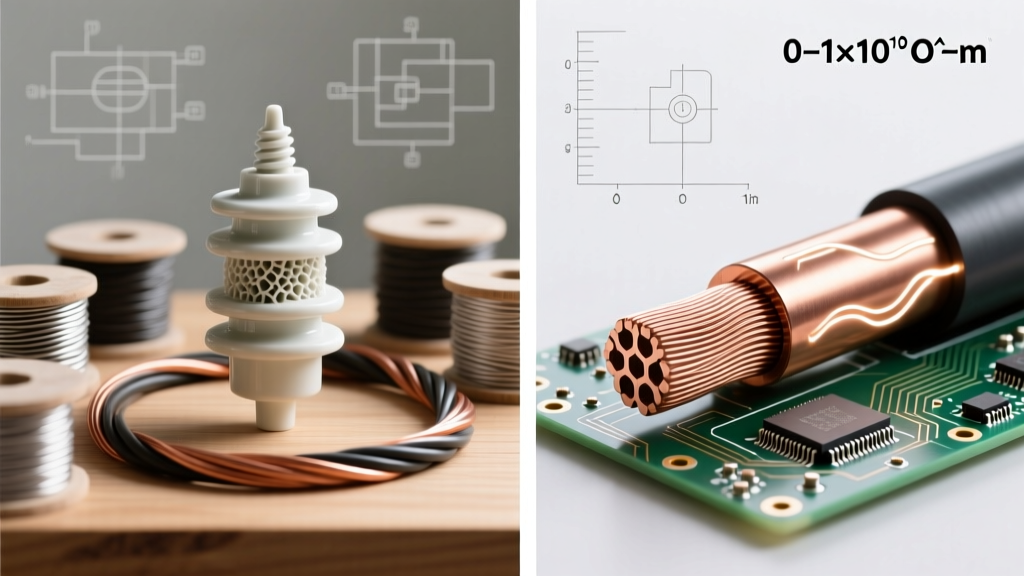
At the atomic level, a conductor is defined by its electron band structure. In conductive materials, the valence band (where electrons are bound to atoms) and the conduction band (where electrons are free to move) overlap. This creates an 'electron sea' that allows electrical charge to flow with minimal resistance when a voltage is applied. According to Britannica's guide on electrical conduction, this free-electron model is why metals dominate the electrical industry, but it also explains why certain non-metals, like carbon graphite and electrolytic solutions, can also serve as conductors under specific conditions.
When students, DIYers, and junior engineers ask, what are examples of conductors, the answer extends far beyond the standard copper wire found in residential walls. Selecting the right conductor requires balancing electrical resistivity, thermal limits, mechanical strength, and material cost. This comparison guide breaks down the most critical conductive materials used in modern electronics and electrical wiring.
What Are Examples of Conductors? The Core Metals Compared
The vast majority of electrical infrastructure relies on four primary metallic conductors. Each possesses a unique crystalline structure that dictates its performance in real-world circuits.
Silver (Ag) - The Benchmark
Silver is the most conductive pure metal at room temperature, boasting a resistivity of just 1.59 × 10⁻⁸ Ω·m at 20°C. Because of its unparalleled conductivity, silver serves as the baseline benchmark against which all other conductors are measured (often expressed as a percentage of the International Annealed Copper Standard, or IACS). However, its high cost and tendency to tarnish (forming silver sulfide, which is actually somewhat conductive but mechanically problematic) restrict its use to specialized applications. You will frequently find silver in high-end audio interconnects, aerospace RF coaxial cables, and as a plating over copper in high-frequency RF circuits to mitigate the skin effect.
Copper (Cu) - The Industry Standard
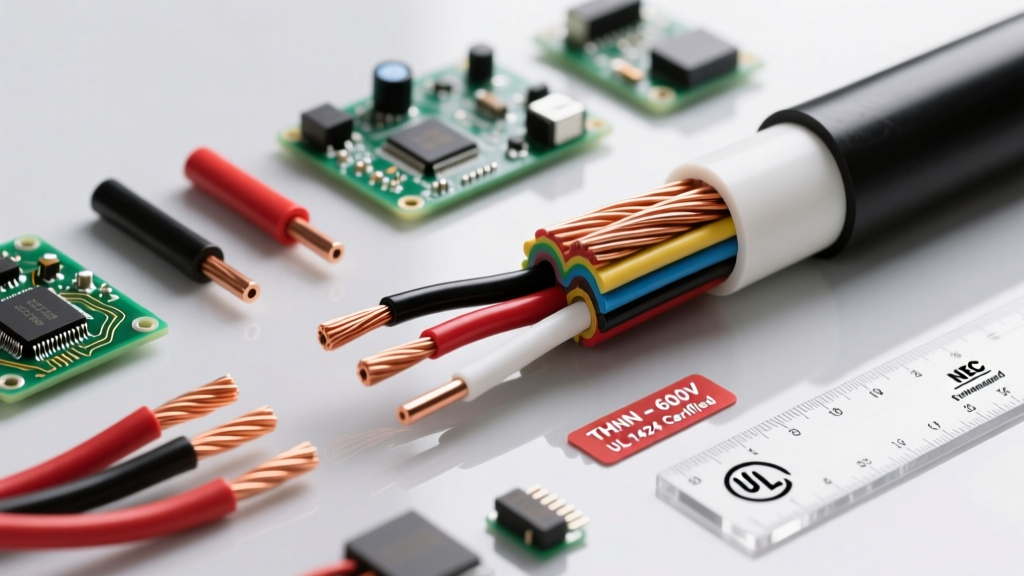
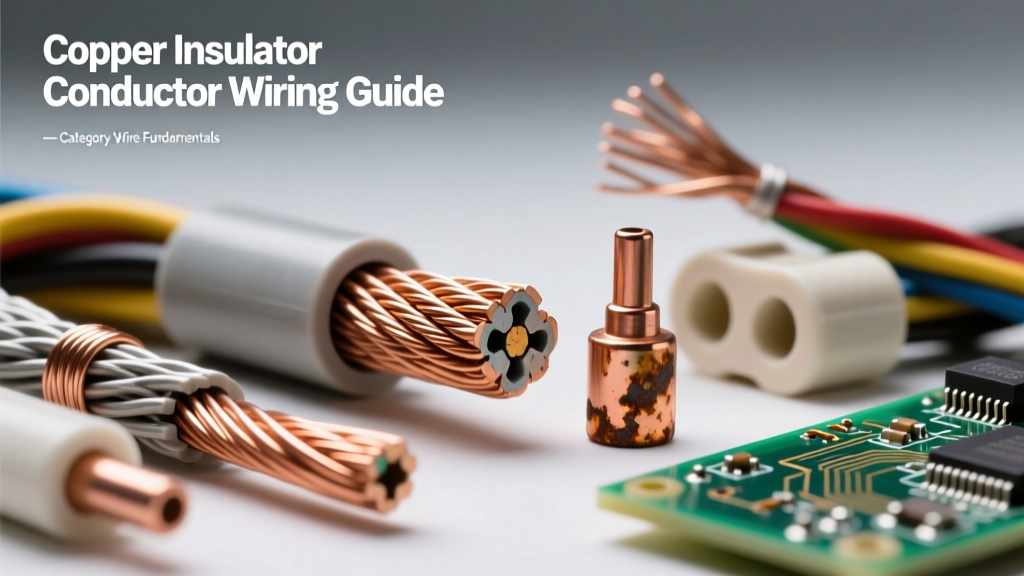
Copper is the undisputed king of electrical wiring. With a resistivity of 1.68 × 10⁻⁸ Ω·m, it offers nearly the same performance as silver at a fraction of the cost. According to the Copper Development Association, copper's high tensile strength and excellent thermal conductivity make it ideal for both branch circuit wiring and heavy-duty transformer windings. In standard residential wiring, solid copper THHN wire (such as AWG 12 for 20-amp circuits) remains the gold standard due to its resistance to galvanic corrosion and thermal creep. Furthermore, copper's ductility allows it to be drawn into incredibly fine magnet wire (down to AWG 50) for precision microcontrollers and inductor coils without snapping.
Gold (Au) - The Corrosion Champion
Gold is a poorer conductor than both silver and copper (resistivity of 2.44 × 10⁻⁸ Ω·m), but it is practically immune to oxidation and corrosion. In electronics, gold is rarely used as a bulk wire; instead, it is applied as a micro-thin plating (typically 30 to 50 microinches thick) over a nickel barrier layer on connector pins, PCB edge connectors, and switch contacts. This ensures a reliable, low-resistance connection over thousands of mating cycles, which is critical for low-voltage digital signals where even a microscopic layer of copper oxide could interrupt data transmission.
Aluminum (Al) - The Lightweight Contender
Aluminum has a higher resistivity (2.82 × 10⁻⁸ Ω·m) than copper, meaning an aluminum wire must be roughly two AWG sizes larger than a copper wire to carry the same current safely. However, aluminum is significantly lighter and cheaper. It is the exclusive choice for high-voltage overhead transmission lines, where weight dictates the structural requirements of the towers. In residential applications, the National Electrical Code (NEC) permits aluminum for heavy feeder cables (like 4/0 AL XHHW-2 for 200A service panels) but mandates the use of modern AA-8000 series alloys to prevent the thermal expansion and 'creep' issues that plagued older AA-1350 aluminum wiring in the 1970s.
Beyond Pure Metals: Alloys and Non-Traditional Conductors
While pure metals offer the lowest resistance, intentional impurities (alloying) are introduced to alter mechanical or thermal properties.
- Nichrome (NiCr): An alloy of 80% nickel and 20% chromium. Nichrome has a high resistivity and forms a protective chromium oxide layer when heated. It is the standard conductor used in toaster heating elements, 3D printer hotends, and industrial kilns.
- Brass and Bronze: Copper alloys mixed with zinc or tin. While their electrical conductivity drops to roughly 25-40% of pure copper, their superior springiness and machinability make them the ideal bulk material for fuse clips, terminal blocks, and socket contacts.
- Carbon Graphite: A non-metal conductor where delocalized pi-electrons allow current flow. Graphite is heavily used in motor brushes, where its self-lubricating properties prevent wear on the spinning copper commutator.
- Electrolytes: Ionic conductors found in batteries and electroplating baths, where charge is carried by dissolved ions (cations and anions) rather than free electrons.
Conductivity vs. Application: A Decision Matrix
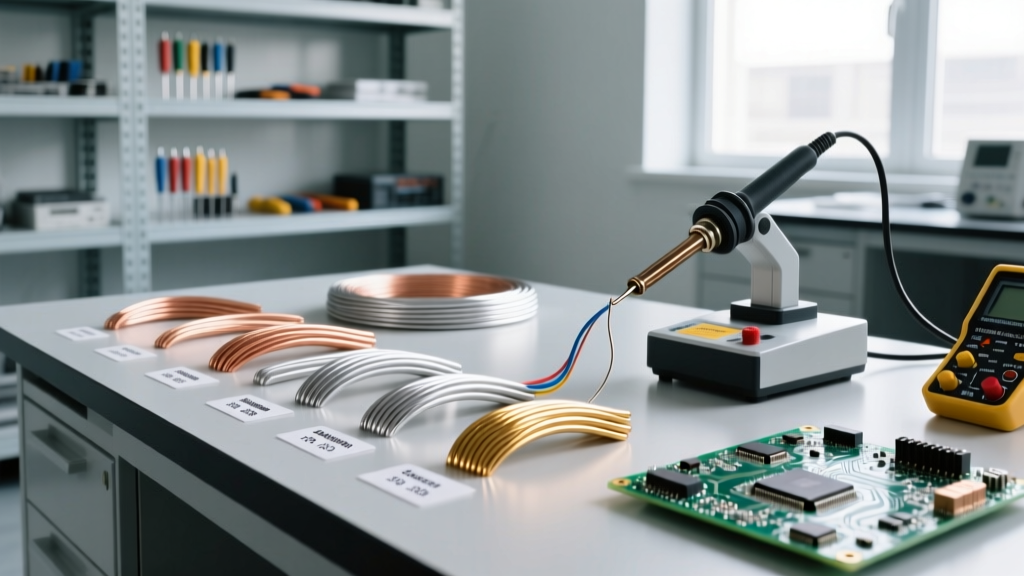
To visualize how these materials stack up, refer to the comparison table below. The 'Cost Index' is relative to Copper (set at 1.0) based on raw bulk commodity pricing trends.
| Material | Resistivity (Ω·m at 20°C) | Density (g/cm³) | Cost Index (Relative) | Primary Application |
|---|---|---|---|---|
| Silver | 1.59 × 10⁻⁸ | 10.49 | ~75.0 | RF plating, aerospace, high-end audio |
| Copper | 1.68 × 10⁻⁸ | 8.96 | 1.0 | Branch wiring, PCB traces, magnet wire |
| Gold | 2.44 × 10⁻⁸ | 19.30 | ~900.0 | Connector plating, IC wire bonding |
| Aluminum | 2.82 × 10⁻⁸ | 2.70 | ~0.3 | Transmission lines, heavy service feeders |
| Nichrome | 1.10 × 10⁻⁶ | 8.40 | ~2.5 | Heating elements, high-wattage resistors |
Real-World Failure Modes in Conductor Selection
Choosing a conductor based solely on its DC resistivity is a common engineering mistake. Real-world environments introduce failure modes that can compromise even the best materials.
Galvanic Corrosion at Dissimilar Metal Junctions
When copper and aluminum are connected directly in the presence of moisture, a galvanic cell is formed. The aluminum acts as the anode and rapidly corrodes, leading to high-resistance connections, arcing, and fires. This is why the NEC requires specific anti-oxidant pastes and AL/CU rated lugs when terminating aluminum feeder wires to copper busbars in breaker panels.
The Skin Effect in High-Frequency AC
In alternating current (AC) circuits, particularly at radio frequencies (RF), electrons are forced to the outer surface of the conductor. This 'skin effect' means the core of a thick wire carries almost no current. For high-frequency applications, using a solid silver wire is a waste of money; instead, engineers use silver-plated copper stranded wire (like MIL-SPEC RG-400 coaxial cable) to provide the surface conductivity of silver with the mechanical strength and cost-efficiency of a copper core.
Thermal Creep and Relaxation
Pure aluminum expands and contracts significantly more than copper when heated by electrical load. Over time, this thermal cycling causes the metal to 'creep' away from screw terminals, loosening the connection. Modern AA-8000 aluminum alloys incorporate trace amounts of iron and copper to lock the crystalline grain structure, virtually eliminating this creep and making modern aluminum wiring safe for long-term use.
Summary Framework for DIY and Pro Wiring
When determining what conductors to use for your next project, apply this simple decision framework:
- For general DC and 50/60Hz AC wiring: Stick to pure copper (THHN/XLPE). It is the most forgiving, easiest to solder, and mechanically robust.
- For heavy feeders (100A+): Consider AA-8000 series aluminum to save weight and cost, provided you use correct torque settings and AL/CU rated terminations.
- For low-voltage digital signals: Ensure contact surfaces are gold-plated to prevent oxidation from degrading high-speed data lines.
- For heating applications: Never use standard copper or aluminum; utilize Nichrome or Kanthal wire designed to withstand extreme oxidation at high temperatures.
Understanding the nuanced differences between these materials ensures your electrical designs are not only functional but safe, efficient, and built to last.