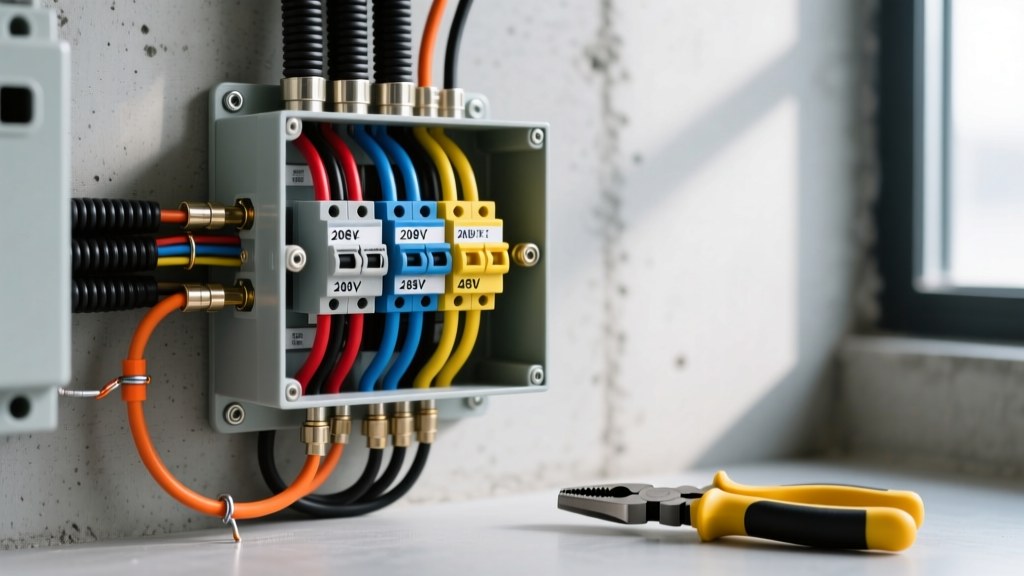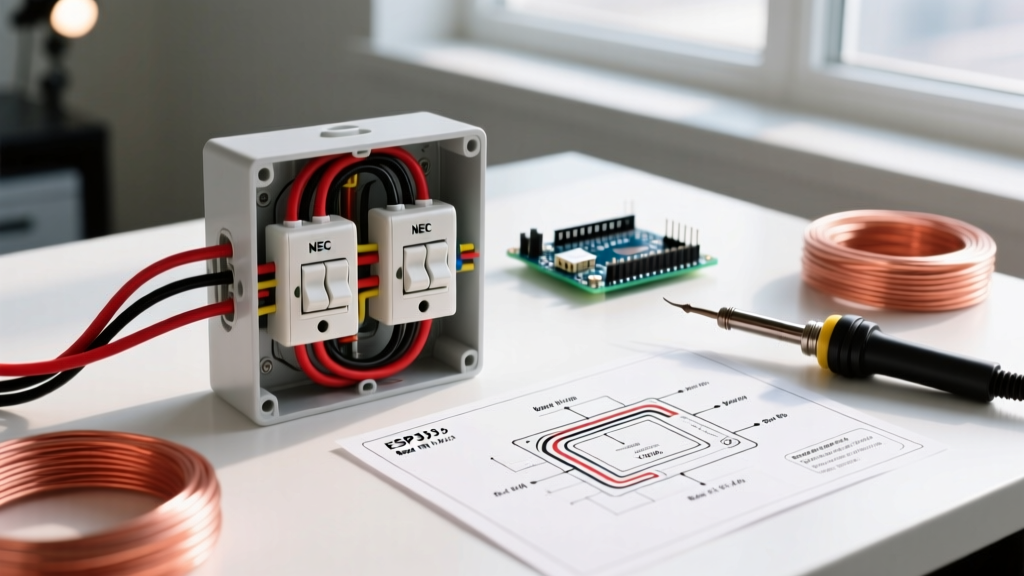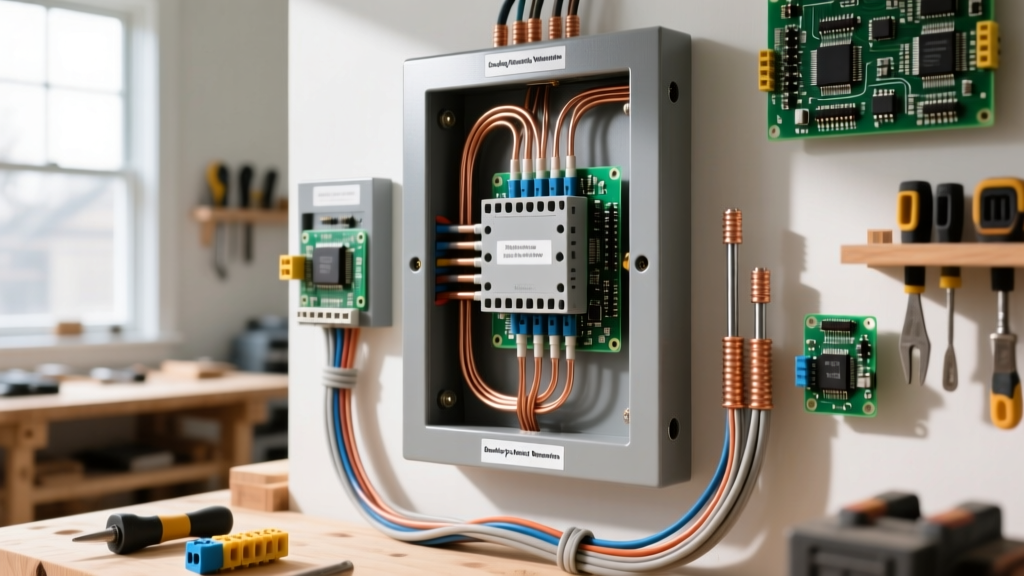

The Critical Difference: Grounding vs. Bonding in Renovations
When planning a major home renovation, gut rehab, or Accessory Dwelling Unit (ADU) build, the electrical rough-in phase is where the most critical safety infrastructure is hidden behind the walls. Among the most misunderstood concepts in this phase is the proper procedure for bonding electrical panel components. Homeowners and even some general contractors frequently confuse 'grounding' with 'bonding,' yet the National Electrical Code (NEC) treats them as distinct, vital functions.
Grounding refers to connecting your electrical system to the earth (via ground rods, ufer grounds, or metal water pipes) to stabilize voltage and dissipate lightning or surge energy. Bonding, on the other hand, is the intentional joining of all normally non-current-carrying metallic parts (panel enclosures, conduit, device boxes) to create a continuous, low-impedance path. This path ensures that if a hot wire touches a metal appliance or panel box, the fault current has a massive, unobstructed highway back to the source, tripping the breaker instantly before a fire or fatal shock can occur.
During a renovation, upgrading from a 100-amp service to a 200-amp service requires recalculating and physically upgrading these bonding pathways. Failing to properly bond the new panel can result in energized appliance casings, failed inspections, and severe electromagnetic interference (EMI) that disrupts modern smart home systems and high-end AV equipment.
Main Panel vs. Subpanel: Where the Neutral-to-Ground Bond Belongs
The most frequent code violation encountered during renovation inspections involves the neutral-to-ground bond. The NEC mandates a strict hierarchy for where the grounded conductor (neutral) and the equipment grounding conductor (EGC) are allowed to touch.
The Single Point of Connection Rule
Per NFPA 70 (NEC) Article 250.24(A)(5), the neutral and ground must be bonded together at exactly one location: the main service disconnecting means. In a standard renovation where the main panel is being replaced, this is achieved using the Main Bonding Jumper (MBJ) or the factory-installed green bonding screw that ties the neutral bar directly to the metal panel enclosure.
The Floating Neutral Rule for Additions
When your renovation includes adding a detached garage workshop, a finished basement, or an ADU, you will likely install a subpanel. The neutral in a subpanel must be completely isolated (floating) from the ground bar and the metal enclosure. If you leave the green bonding screw installed in a subpanel, normal neutral return current will split and travel back to the main panel via both the neutral wire and the bare copper ground wire. This parallel path energizes the grounding system, creating a severe shock hazard and violating NEC 250.142.
Pro-Tip for Renovators: When purchasing a subpanel (e.g., Square D HOM1224L125PGC), it often ships with a green bonding screw pre-installed for convenience if it were to be used as a main panel. Your electrician must explicitly remove this screw and install an accessory ground bar (like the Square D PK9GTA) tied only to the incoming equipment grounding conductor.
Sizing the Main Bonding Jumper: NEC Table 250.102(C)(1) Breakdown
When upgrading your main service panel during a renovation, the Main Bonding Jumper (MBJ)—the wire or strap that bonds the neutral bus to the panel enclosure—must be sized proportionally to the massive ungrounded service-entrance conductors feeding the home. If you upgrade to a 200A service using 2/0 AWG copper service wires, the factory strap is usually sufficient. However, for custom meter mains or 400A split-bus setups, you must calculate the jumper size manually based on NEC Table 250.102(C)(1).
| Ungrounded Service Conductor Size (Copper) | Minimum Main Bonding Jumper Size (Copper) | Typical Renovation Application |
|---|---|---|
| #2 AWG or smaller | #8 AWG | 60A - 100A Older Service Upgrades |
| #1 AWG or 1/0 AWG | #6 AWG | 150A Heavy-Duty Renovation Service |
| 2/0 AWG or 3/0 AWG | #4 AWG | 200A Standard Modern Home Upgrade |
| 4/0 AWG or 250 kcmil | #2 AWG | 320A / 400A Luxury Estate or ADU Feeder |
| Over 1100 kcmil | 12.5% of Conductor Area | Commercial / Multi-Family Reno Projects |
Note: If your service entrance conductors are aluminum, the bonding jumper must be sized according to the aluminum column in the NEC table, or you must use an aluminum-to-copper rated lug to prevent galvanic corrosion inside the panel gutter.
Physical Panel Bonding: Bushings, Locknuts, and Concentric Knockouts
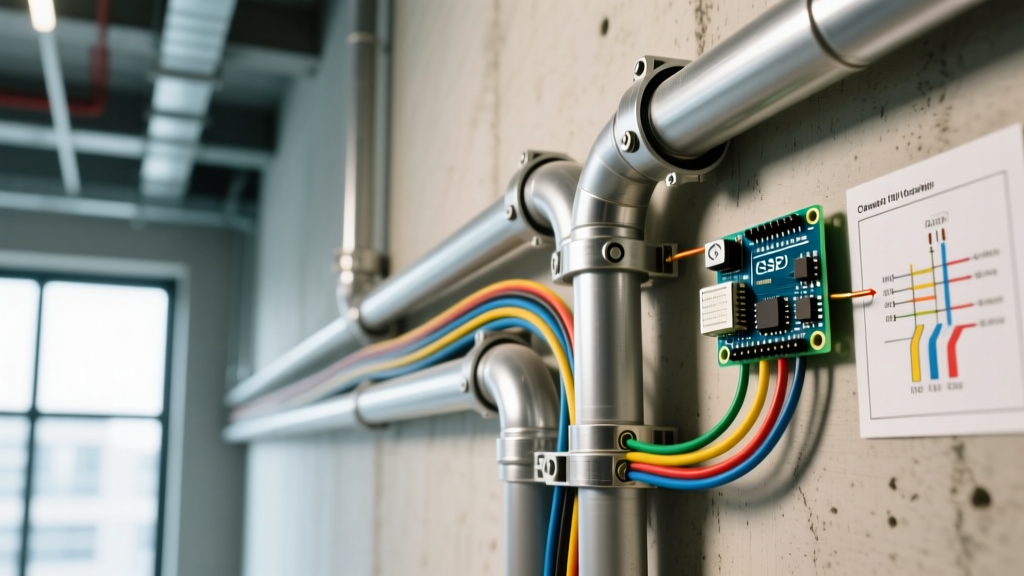
Bonding isn't just about the wires inside the panel; it is equally about the physical metal pathways connecting the panel to the rest of the home. During a renovation, electricians often run rigid metal conduit (RMC) or electrical metallic tubing (EMT) from the main panel to exterior disconnects or subpanels.
When to Use Bonding Bushings (and Specific Part Numbers)
Modern electrical panels feature concentric or eccentric knockouts (KOs) on the top and bottom gutters to allow multiple conduit entries. However, NEC 250.97 explicitly states that for circuits over 250 volts, or for any service-entrance conductors, these concentric KOs do not provide a reliable, high-fault-current bonding path. The thin metal tabs can melt under the magnetic forces of a short circuit.
If your renovation involves pulling 2-inch EMT with 4/0 THHN wires into a 200A panel, you must install a bonding bushing on the inside of the knockout.
- Appleton 3B Series: A cast malleable iron bonding bushing with an integral lay-in lug, perfect for heavy-gauge fault jumpers.
- Hubble 5134B or Raco 400: Stamped steel or die-cast options with set-screws that bite into the conduit threads, ensuring a permanent metal-to-metal bond.
Renovation Red Flags: Legacy Panels and Improper Bonds
If your renovation planning involves a home built between 1950 and 1990, you may encounter legacy panels that pose severe bonding and safety risks. You cannot simply 're-bond' or upgrade the internals of these panels; they must be replaced entirely to pass modern insurance and municipal inspections.
Expert Warning: Federal Pacific Electric (FPE) Stab-Lok, Zinsco, and Challenger panels have documented mechanical failures where the bus bars expand, breaking the neutral-to-ground bond connection internally, or the breakers fail to trip during a fault. Attempting to bond a new ground bar to an FPE enclosure is a liability. Plan for a full 200A meter-main replacement in your renovation budget, which typically ranges from $2,200 to $4,500 depending on utility drop requirements and trenching.
Pre-Drywall Inspection Checklist for Panel Bonding
Before your general contractor schedules the drywall hangers, walk the site with your lead electrician and verify the following bonding milestones. Catching these errors before the walls are closed saves thousands of dollars in remediation.
- Main Bonding Jumper Verification: Confirm the MBJ is securely fastened between the neutral bus and the panel enclosure in the main disconnect only.
- Subpanel Isolation: Physically inspect all subpanels (kitchen islands, ADUs, detached garages) to ensure the green bonding screw is removed and the neutral bar is floating on plastic insulators.
- Grounding Electrode Conductor (GEC): Verify the continuous, unspliced GEC is run from the panel neutral bus to the ground rods or Ufer ground, secured with proper acorn clamps (e.g., Cadweld or Harger).
- Conduit Bushings: Inspect all service-entrance conduit entries into the panel gutter to ensure bonding bushings and lay-in lugs are installed where concentric KOs are used.
- Water/Gas Piping Bond: Ensure the metal municipal water line entering the home is bonded to the panel ground bus within 5 feet of the point of entrance, using a listed bronze grounding clamp and appropriately sized wire.
Properly planning and executing the bonding of your electrical infrastructure ensures that your newly renovated space is not only code-compliant but fundamentally safe against electrical faults, surges, and the hidden hazards of parallel neutral currents.