
The Core Question: What Is MC Cable?
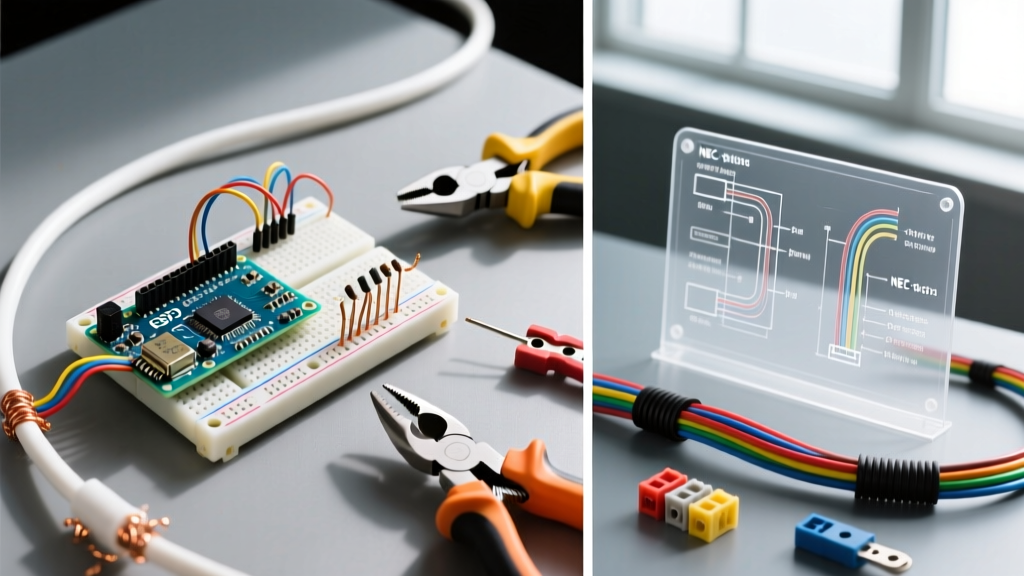
When commercial electricians, industrial engineers, and advanced DIYers ask, "what is MC cable," they are referring to Metal-Clad cable. According to the NFPA 70: National Electrical Code (NEC), MC cable is a factory-assembled wiring method consisting of one or more insulated circuit conductors enclosed in a flexible, interlocking metal armor. Unlike standard non-metallic (NM) residential wiring, MC cable is engineered to withstand severe physical stress, making it the premier choice for commercial buildings, hospitals, and industrial facilities where exposed wiring is subject to impact or environmental hazards.
NEC Definition: Metal-clad cable is an assembly of insulated conductors enclosed within a flexible metal sheath, providing both a physical barrier against damage and a robust pathway for electrical current.
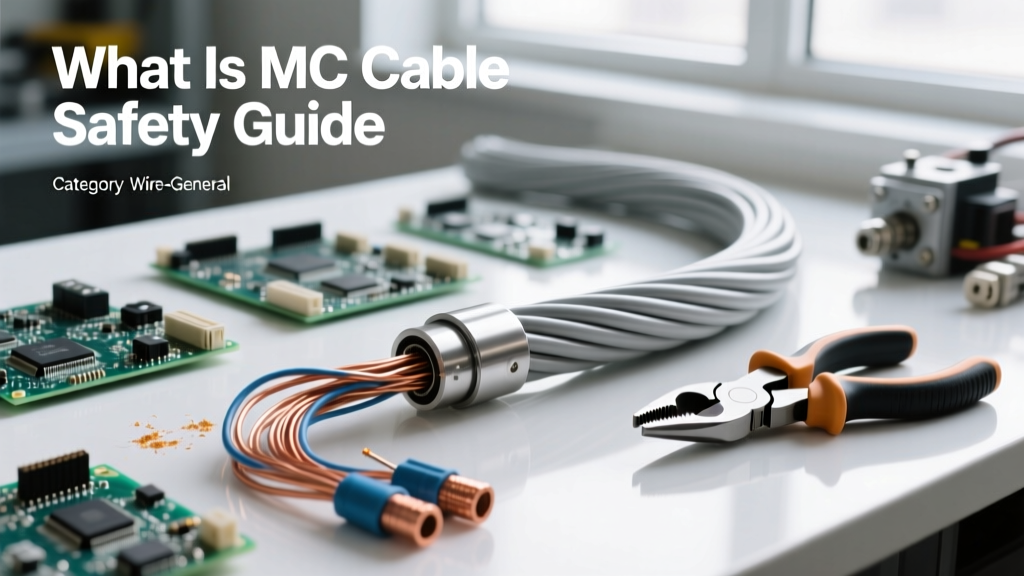
Understanding the exact anatomy of MC cable is the first step in preventing catastrophic electrical failures. The armor is typically manufactured from either galvanized steel or continuous corrugated aluminum. Inside this metallic shield, you will find individual THHN/THWN-2 insulated conductors, along with a dedicated, insulated Equipment Grounding Conductor (EGC)—usually colored green. This internal grounding wire is the defining safety feature that separates modern MC cable from older armored wiring methods.
MC vs. AC Cable: The Grounding Safety Distinction
A frequent and dangerous point of confusion on job sites is the difference between MC (Metal-Clad) and AC (Armored Cable, historically known as BX). While they look nearly identical from the outside, their internal grounding mechanisms dictate entirely different safety protocols.
| Feature | MC Cable (Standard) | AC Cable (BX) | NM-B (Romex) |
|---|---|---|---|
| Armor Material | Interlocking Steel or Aluminum | Interlocking Steel | Non-Metallic PVC |
| Grounding Method | Dedicated Insulated EGC Wire | Armor + Internal Bonding Strip | Bare Copper Wire |
| Wet Location Use | Yes (with wet-rated conductors) | No | No |
| Primary Application | Commercial, Industrial, Healthcare | Retrofit, Older Commercial | Residential Interior |
Standard AC cable relies on the metal armor itself, in conjunction with a thin internal aluminum bonding strip, to carry fault currents. Over time, vibration and thermal expansion can compromise the interlocking armor joints, leading to high-impedance ground paths and potential shock hazards. MC cable eliminates this risk by including a dedicated green insulated grounding wire. Furthermore, modern variants like MC-AP (Armored Protective) utilize a continuous aluminum armor that works in tandem with the internal EGC, providing redundant, ultra-low impedance fault clearing paths that meet the stringent demands of modern healthcare facilities.
Critical Safety Protocols for Preparing MC Cable
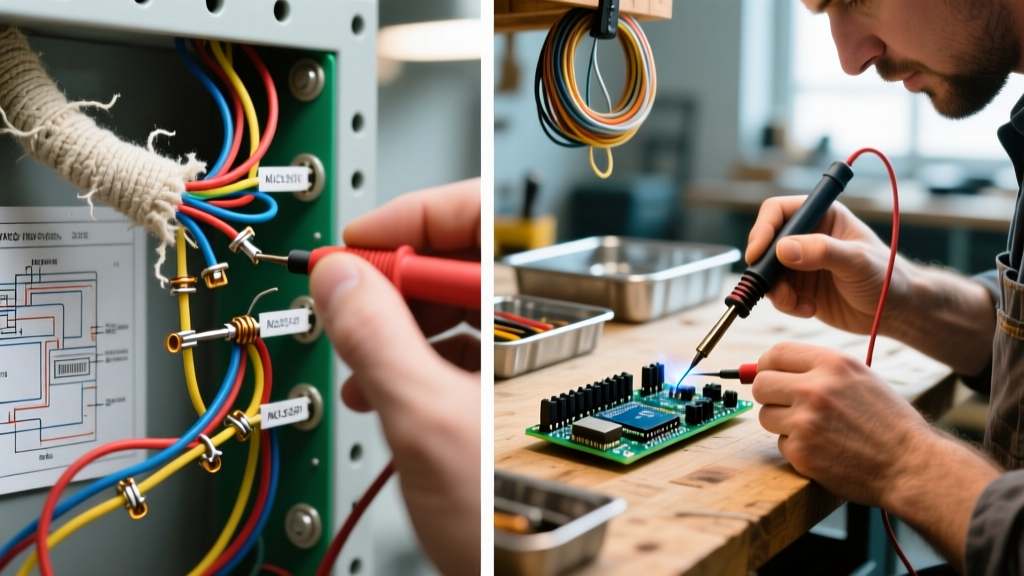
The most common safety failures involving MC cable occur during the preparation and termination phases. The metal armor is unforgiving, and improper handling can instantly compromise the integrity of the internal insulation.
Step 1: Stripping Without Scoring
Never use a standard hacksaw or a pair of diagonal cutters to shear the armor of an MC cable. These tools inevitably push the sharp, jagged edges of the cut metal inward, directly piercing the THHN insulation of the live conductors. This creates a hidden dead short or ground fault that may not trip the breaker immediately but will cause arcing and fire hazards under load.
The Safe Method: Always use a dedicated rotary MC cable stripper (such as the Klein Tools Roto-Split or similar automated stripping tools). These devices clamp onto the cable and rotate a specialized cutting wheel that scores the armor at a precise depth, allowing you to snap the metal shell off cleanly without ever touching the internal wires. For manual cutting, a specialized MC cable shear that cuts the armor in a spiral motion is the only acceptable alternative.
Step 2: Anti-Short Bushings (The Red Head Mandate)
Once the armor is cut, the exposed edge is razor-sharp. NEC Article 330.12 strictly mandates the use of anti-short bushings to protect the conductors from abrasion where they exit the metal sheath. Commonly referred to as "red heads" due to their standard color, these plastic inserts are pushed over the insulated wires and tucked inside the armor edge before the cable is pushed into a junction box or panel.
Expert Note: While some modern proprietary MC fittings feature built-in serrated grips and smooth internal throats that technically eliminate the need for a separate bushing, utilizing a standard anti-short bushing remains the gold standard for visual safety inspections and mechanical protection on conventional fittings.
Routing, Bending, and Support Safety Limits
MC cable is flexible, but it is not infinitely so. Over-bending the cable compromises the interlocking armor, causing it to kink, split, or crush inward, which damages the internal conductors and destroys the cable's physical protection rating.
NEC Article 330 Bending Radius Rules
According to Southwire Metal-Clad Cable Specifications and NEC 330.24, you must adhere to strict minimum bending radii measured to the inner edge of the bend:
- 18 AWG through 14 AWG: Minimum bend radius of 10 times the outer diameter of the cable.
- 12 AWG and 10 AWG: Minimum bend radius of 7 times the outer diameter.
- 8 AWG and larger: Minimum bend radius of 5 times the outer diameter.
Attempting to bend a 12/2 MC cable tighter than a 7x radius will visibly deform the steel or aluminum corrugations, creating a localized weak point that is highly susceptible to moisture ingress and physical crushing.
Secure Fastening Intervals
Sagging MC cable is a severe safety hazard. The weight of the metal armor can place immense mechanical stress on termination lugs, eventually pulling the wire loose from a breaker or receptacle. NEC 330.30 dictates that MC cable must be secured within 12 inches of every box, cabinet, or fitting. Furthermore, it must be supported at regular intervals not exceeding 4.5 feet. Always use listed, metal-specific MC cable straps or stackers; never use standard plastic NM-B staples, which cannot support the weight of the armored cable and will crack under the load.
Environmental Restrictions and Physical Protection
While MC cable is incredibly rugged, standard steel-armored MC is not inherently waterproof. If you are routing MC cable in wet locations, outdoors, or embedded in concrete, you must specifically source MC cable marked with wet-rated conductors (THWN-2) and a corrosion-resistant jacket or continuous aluminum armor. Standard galvanized steel MC cable will rust rapidly when exposed to moisture or the alkaline environment of poured concrete, leading to structural failure of the armor and eventual short circuits.
Additionally, when running MC cable through metal framing studs, you must use listed snap-in bushings or grommets in the knockout holes. Dragging the metal armor across the raw, punched edges of a steel stud will shave off the armor's protective coating and can slice into the internal insulation over time due to building vibration.
Expert Troubleshooting: Common MC Cable Failures
Even experienced journeymen can fall victim to specific MC cable failure modes. Recognizing these early is a cornerstone of electrical safety best practices.
- Ground Loop Hum in Audio/Visual Spaces: Because the metal armor of standard MC cable is conductive, it can inadvertently create parallel ground paths if it touches multiple grounded metal boxes. In sensitive environments like recording studios or MRI rooms, use Isolated Ground (IG) MC cable, which features an orange insulated EGC that is kept separate from the metal armor to prevent electromagnetic interference.
- Fitting Pull-Out: If the locknut on an MC connector is not tightened down with a proper wrench (not just hand-tight or pliers), the vibration from heavy machinery or HVAC systems can cause the cable to slowly back out of the fitting, exposing live conductors.
- Thermal Throttling: MC cable bundles generate significant heat. When bundling more than three MC cables together in a tight pathway, you must apply NEC 310.15 ampacity derating factors. Failing to do so will cause the internal THHN insulation to melt, leading to a catastrophic phase-to-phase fault inside the impenetrable metal armor.
Mastering what is MC cable goes far beyond simply identifying its metal sheath. It requires a disciplined adherence to bending limits, precise stripping techniques, and an unwavering commitment to proper grounding and support. By following these safety best practices, you ensure that your metal-clad installations remain robust, code-compliant, and fire-safe for decades.