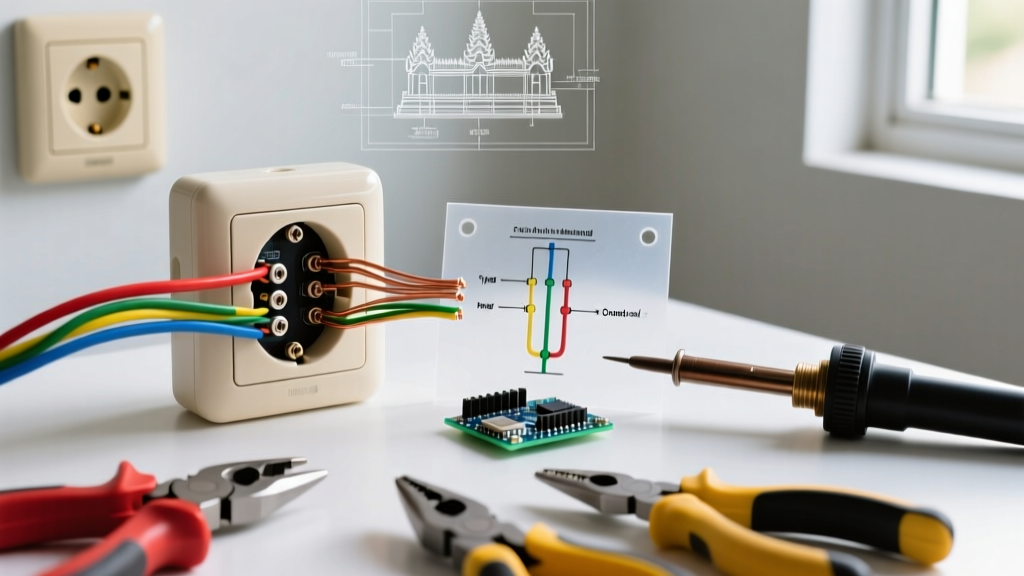
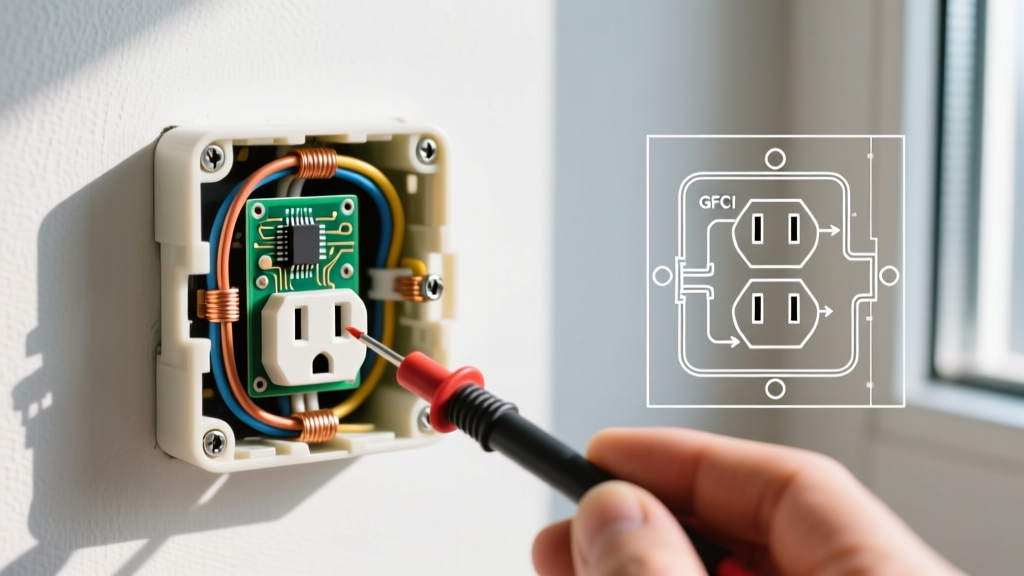
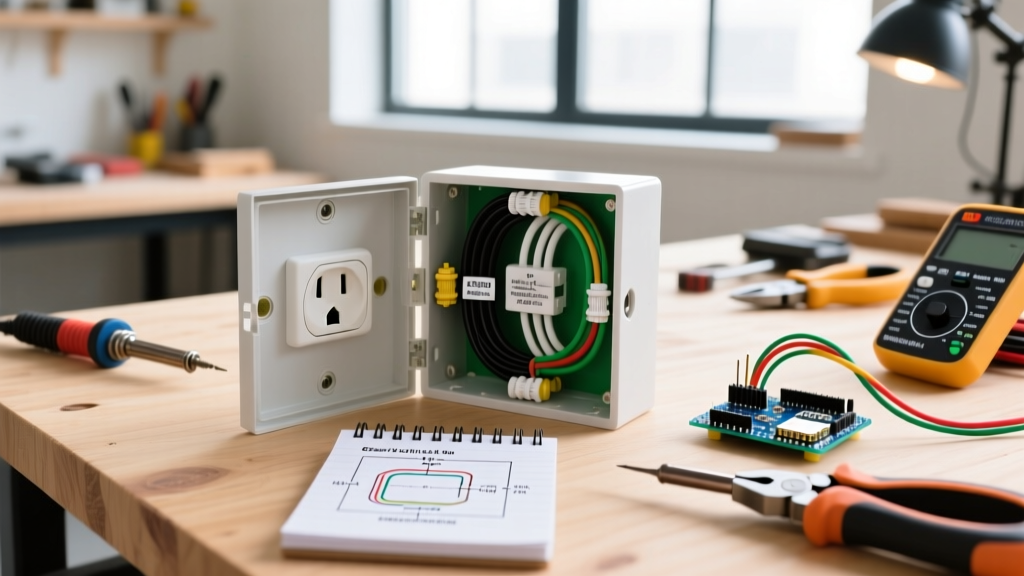
A 15 amp power socket—technically designated as a NEMA 5-15R receptacle—is a standard 120-volt AC electrical outlet designed to safely interface with plugs and deliver up to 15 amperes of current to connected devices. In a real installation, specifying this socket dictates your minimum wire gauge (14 AWG copper), your maximum overcurrent protection (15A for a single-receptacle circuit), and your absolute thermal limits for continuous loads. What people most commonly confuse is the socket’s physical rating with the circuit breaker’s rating; many DIYers falsely assume a 15A receptacle can only be installed on a 15A breaker, when in fact the National Electrical Code (NEC) explicitly permits 15A receptacles on 20A multi-outlet branch circuits.
The Anatomy and Ratings of a NEMA 5-15R Socket
When you buy a standard duplex outlet at a hardware store—like a Leviton Decora 5262 or a Hubbell 5262—you are holding a NEMA 5-15R. The nomenclature tells you exactly what it does. '5' indicates a 3-wire, 125V AC configuration (Hot, Neutral, Ground). '15' indicates the maximum amperage rating. 'R' stands for Receptacle (the female outlet), as opposed to 'P' for Plug (the male connector).
Physically, the socket features two parallel vertical slots for the hot (shorter slot) and neutral (longer slot) blades, plus a D-shaped or U-shaped hole for the equipment grounding conductor. The internal brass and nickel-plated steel contacts are engineered to maintain tension on a standard 15A plug. If you frequently plug and unplug high-draw appliances, the internal wipers can lose tension over time, leading to arcing. This is why upgrading to commercial-grade or spec-grade receptacles (which use thicker internal contacts and cost about $4-$6 compared to $1 for residential grade) is a standard recommendation for high-use areas.
The 80% Rule: Where the Math Actually Matters
The most critical concept governing a 15 amp power socket is the difference between peak (non-continuous) and continuous loads. The NEC defines a continuous load as any device expected to draw maximum current for three hours or more. For continuous loads, you must derate the circuit to 80% of its capacity.
Worked Numeric Example: Continuous vs. Peak
1. Peak Limit (Non-Continuous): 15 Amps × 120 Volts = 1,800 Watts. (e.g., A toaster used for 5 minutes).
2. Continuous Limit (80% Rule): 15 Amps × 0.80 = 12 Amps. 12 Amps × 120 Volts = 1,440 Watts. (e.g., A space heater running all night).
Takeaway: Even though the socket is rated for 15A, your safe continuous ceiling is strictly 1,440W.
If you look at standard NEMA receptacle configurations, you will see that 20A sockets (NEMA 5-20R) have a T-shaped neutral slot to accept 20A plugs, but a 15A plug will physically fit into both. The 80% rule applies to the breaker protecting the wire, not just the physical socket, but the socket remains the physical bottleneck if you only have one outlet on the circuit.
Where You Meet This in Practice
In residential wiring, the 15 amp power socket is the undisputed workhorse for general-purpose lighting and receptacle circuits. You will find them mandated or standard in:
- Bedrooms and Living Rooms: Powering TVs, lamps, phone chargers, and laptops. (Note: NEC 210.12 now requires AFCI protection for these 15A bedroom circuits).
- Hallways and Foyers: General lighting and occasional vacuum cleaner use.
- Dedicated Appliance Circuits (Rare but permitted): Sometimes used for a dedicated 1/2 HP garbage disposal or a specific sump pump, though 20A circuits are increasingly preferred for kitchens.
Scenario Walkthrough: The Winter Space Heater Trip
To understand how these limits manifest on the jobsite, let's look at a classic winter service call.
The Setup: A homeowner sets up a desk in their spare bedroom. The room is on a standard 15A, 120V AFCI breaker wired with 14/2 NM-B cable. Plugged into a single duplex 15 amp power socket are two devices: a 1,500W ceramic space heater set to 'High' and a desktop gaming PC drawing 250W under load.
The Numbers:
Total Wattage = 1,500W (Heater) + 250W (PC) = 1,750W.
Using Ohm's Law (I = P / V): 1,750W / 120V = 14.58 Amps.
The Outcome: The homeowner turns everything on. It works fine for 20 minutes. Then, the 15A breaker trips with an audible click, plunging the room into darkness.
What Went Wrong: The homeowner assumed that because 14.58A is less than the 15A breaker rating, the circuit was safe. However, a space heater running in a cold room is a continuous load. Because it runs for more than three hours, the 80% rule applies. The maximum continuous draw allowed on this circuit is 12A (1,440W). By drawing 14.58A continuously, the current heated the bimetallic strip inside the thermal-magnetic breaker. It didn't trip instantly (which would indicate a short circuit), but rather 'nuisance tripped' after 20 minutes as the thermal mass accumulated, doing exactly what it was designed to do to prevent the 14 AWG wire inside the wall from melting its insulation.
15A Receptacles on 20A Circuits: The Code Loophole
As mentioned in the introduction, a massive point of confusion is whether you can install a 15A socket on a 20A breaker. Under NEC Article 210.21(B)(3), the answer is yes, with one condition.
- Single Receptacle on an Individual Branch Circuit: If a circuit feeds only ONE single receptacle (a simplex outlet), the receptacle rating must equal or exceed the breaker rating. You cannot put a 15A simplex socket on a 20A breaker.
- Multiple Receptacles on a Branch Circuit: If a circuit feeds two or more receptacles (like a standard duplex outlet, or multiple outlets daisy-chained in a room), 15A receptacles are perfectly legal on a 20A breaker.
The logic here is practical: a 20A circuit uses 12 AWG wire to handle the heavier potential load of the entire room. However, no single plug-in device sold in the US for general use draws more than 15A (they all use standard NEMA 5-15P plugs). Therefore, the 15A socket is safe because the physical plug limits the draw of any single appliance, while the 20A breaker allows multiple 15A appliances to run simultaneously across different sockets in the room without tripping.
Frequently Asked Questions
Can I replace a 15 amp power socket with a 20 amp socket?
Only if the circuit wiring is 12 AWG copper and the breaker is rated for 20A. If your circuit uses 14 AWG wire and a 15A breaker, installing a 20A receptacle is a severe code violation. It tricks users into plugging in 20A appliances, which could overload the 14 AWG wire before the 15A breaker trips.
Why does my 15A outlet feel warm to the touch?
A properly functioning outlet should never feel warm. Warmth indicates high resistance, usually caused by loose terminal screws, back-stabbed push-in connections that have degraded, or internal contact wipers that have lost their tension. Turn off the breaker immediately, replace the receptacle, and use the side terminal screws (or screw-down back-wire clamps) rather than the push-in holes.
Do I need a tamper-resistant (TR) 15A socket?
Yes. NEC 406.12 requires all 15A and 20A, 125V receptacles in dwelling units to be tamper-resistant. TR receptacles feature internal plastic shutters that only open when equal pressure is applied to both slots simultaneously (like a plug), preventing children from inserting single metal objects into the hot slot.