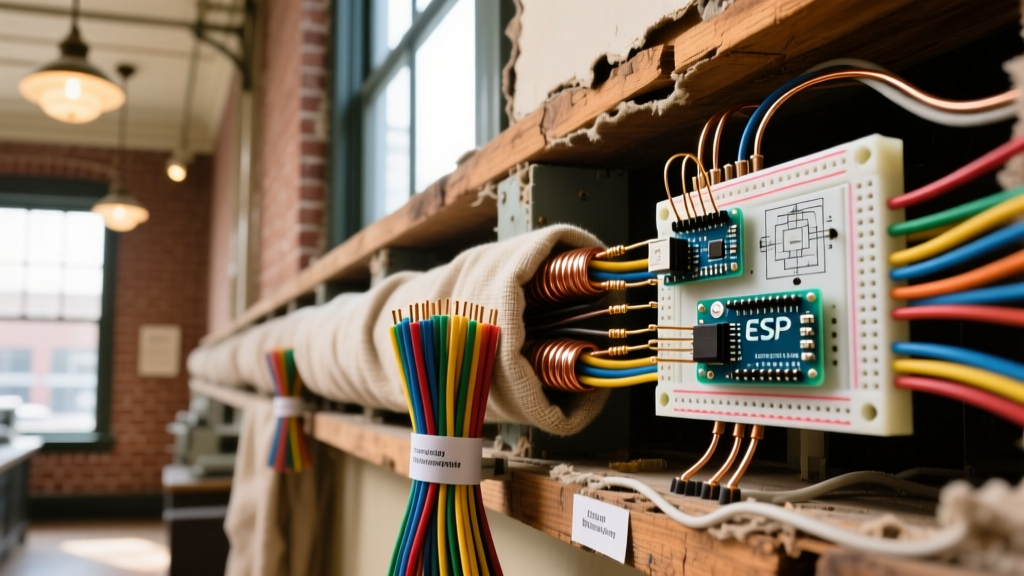

The Reality of Cloth Covered Electrical Wiring in Commercial Retrofits
As the commercial real estate market in 2026 continues to favor adaptive reuse projects—converting 1920s textile mills, historic hotels, and early-century warehouses into modern office spaces and boutique retail environments—contractors frequently encounter cloth covered electrical wiring. While this early 20th-century wiring method possesses an undeniable industrial-chic aesthetic, it presents severe life-safety, fire, and insurance liabilities. For commercial electrical contractors and facility managers, understanding the anatomy, degradation patterns, and code-compliant remediation strategies for these legacy systems is not optional; it is a critical project requirement.
This comprehensive guide details how to safely assess, abate, or aesthetically preserve cloth covered electrical wiring in commercial environments, ensuring compliance with the latest National Electrical Code (NEC) standards while respecting historical preservation mandates.
Anatomy and Failure Modes of Early Commercial Wiring
The term 'cloth covered' is a historical misnomer that leads to dangerous misconceptions. The cloth itself—typically woven cotton, rayon, or silk—was never the primary electrical insulator. Instead, it served as a mechanical protective braid over the true insulation: vulcanized rubber.
- Vulcanized Rubber Degradation: Over decades, vulcanized rubber dries out, oxidizes, and loses its dielectric properties. In commercial environments subject to heavy HVAC cycling and temperature fluctuations, this rubber turns into a brittle, conductive dust. When the cloth braid is disturbed, the rubber flakes away, leaving bare, energized copper wires resting on combustible wooden joists or metallic lath.
- Asbestos Hazards in Commercial Loom: In commercial applications, individual cloth-covered conductors were often pulled through flexible loom (a woven tube). Many commercial flexible looms manufactured between 1920 and 1950 contained an inner layer of asbestos paper or asbestos-woven fibers for fire resistance. Disturbing these runs during demolition requires strict adherence to OSHA asbestos abatement standards.
- Lack of Equipment Grounding: Early cloth-covered systems were ungrounded (2-wire). Modern commercial loads, including heavy IT infrastructure, LED drivers, and commercial kitchen equipment, strictly require an Equipment Grounding Conductor (EGC) to ensure proper fault clearing and surge protection.
Navigating NEC Compliance and Insurance Hurdles
When renovating a historic commercial property, the authority having jurisdiction (AHJ) will typically require the electrical system to be brought up to current code. The NFPA 70: National Electrical Code (NEC) does not explicitly ban existing knob-and-tube or cloth-covered wiring if it is undisturbed and properly rated, but commercial adaptive reuse triggers a change of occupancy and load recalculation.
Insurance Reality Check: Most commercial property insurers in 2026 will flatly deny coverage for buildings with active cloth covered electrical wiring. Even if the local AHJ grants a historical variance, the building owner's liability carrier will likely mandate a full rewire or selective abatement before issuing a commercial policy.
Furthermore, the National Park Service Preservation Briefs advise that while historical aesthetics should be maintained where possible, life-safety systems must be upgraded to modern standards. This means replacing concealed cloth wiring with THHN/THWN-2 conductors in EMT conduit or MC cable, while reserving aesthetic preservation for exposed, decorative runs.
Diagnostic Protocol: Testing Legacy Cloth Wiring
Before deciding between full abatement and selective preservation, commercial electricians must perform rigorous diagnostic testing. Visual inspection is insufficient because the cloth braid hides the degraded rubber beneath.
- De-energize and Isolate: Shut off the main breaker and lock out/tag out (LOTO) the panel. Disconnect all legacy circuits from the bus bars.
- Thermal Imaging Sweep: Before de-energizing (if safely possible), use a FLIR thermal camera to scan junction boxes and ceiling cavities. Look for thermal anomalies exceeding 10°C above ambient, which indicate high-resistance connections in degraded splices.
- Insulation Resistance (Megger) Testing: Use a Megohmmeter (such as the Fluke 1587 FC) to test the dielectric integrity of the cloth-covered runs. Apply 500V DC between the conductor and ground (or between conductors).
- Pass: >5 Megohms (Acceptable for temporary historical display or low-load lighting).
- Marginal: 1 to 5 Megohms (Requires immediate replacement for commercial use).
- Fail: <1 Megohm (Condemned; imminent shock/fire hazard).
- Asbestos Swab Testing: If the wiring is housed in flexible woven loom, halt work and hire a certified industrial hygienist to take bulk samples of the loom material before any physical removal begins.
Commercial Remediation Cost Matrix
Budgeting for legacy wiring remediation requires an understanding of the specific commercial approach chosen. Below is a 2026 cost estimation matrix for a standard 10,000 sq. ft. historic commercial space.
| Remediation Strategy | Description | Estimated Cost (per sq. ft.) | Timeline Impact |
|---|---|---|---|
| Full Abatement & Rewire | Complete removal of all cloth wiring; installation of modern MC cable/EMT and new panels. | $14.00 - $22.00 | +4 to 6 weeks |
| Selective Abatement | Removing wiring in high-risk areas (kitchens, server rooms) while abandoning dead cloth runs in walls. | $6.00 - $9.50 | +2 to 3 weeks |
| Aesthetic Preservation | Replacing hidden wiring with modern cable, but using code-compliant fabric-braided THHN for exposed historical runs. | $18.00 - $26.00 | +5 to 8 weeks |
Aesthetic Preservation: Modern Fabric-Braided Alternatives
In boutique commercial spaces where the industrial aesthetic of exposed cloth covered electrical wiring is a core design element, contractors can utilize modern, UL-listed fabric-braided cables. These products provide the vintage look of rayon or cotton braiding but encapsulate modern, 90°C-rated THHN conductors with a proper EGC.
Sourcing Code-Compliant Vintage-Style Cable
When specifying decorative wiring for commercial spaces, the cable must be UL-listed for the specific application (e.g., pendant drops, surface raceways). Two industry-leading suppliers in 2026 include:
- Sundial Wire: Offers custom rayon and cotton braided cables over modern THHN. Their commercial-grade 3-conductor (Hot, Neutral, Ground) 14 AWG and 12 AWG braided cords are ideal for restored industrial pendant lighting in restaurants and lobbies.
- Vintage Wire & Lighting: Specializes in UL-listed reproduction cloth wiring assemblies, including period-correct ceramic sockets and porcelain cleats that meet modern NEC spacing requirements for surface-mounted conductors.
Installation Best Practices for Exposed Braided Cable
Even when using modern fabric-covered THHN, commercial installations must adhere to strict NEC Article 344 (Metal Conduit) or Article 394 (Concealed Knob-and-Tube) equivalents for surface mounting. Always use non-combustible stand-off insulators (such as high-density porcelain or UL-rated polycarbonate cleats) to maintain a minimum 1-inch air space between the braided cable and the wooden substrate. Ensure all splices are contained within UL-listed junction boxes; never rely on 'Western Union' splices wrapped in friction tape, regardless of how historically accurate they appear.
Final Considerations for Facility Managers
Managing cloth covered electrical wiring in a commercial portfolio requires a proactive, data-driven approach. Relying on visual inspections is a recipe for catastrophic failure and severe liability. By utilizing Megger testing, adhering to OSHA asbestos protocols, and leveraging modern UL-listed fabric-braided alternatives, commercial contractors can safely bridge the gap between historical preservation and 21st-century electrical safety standards.